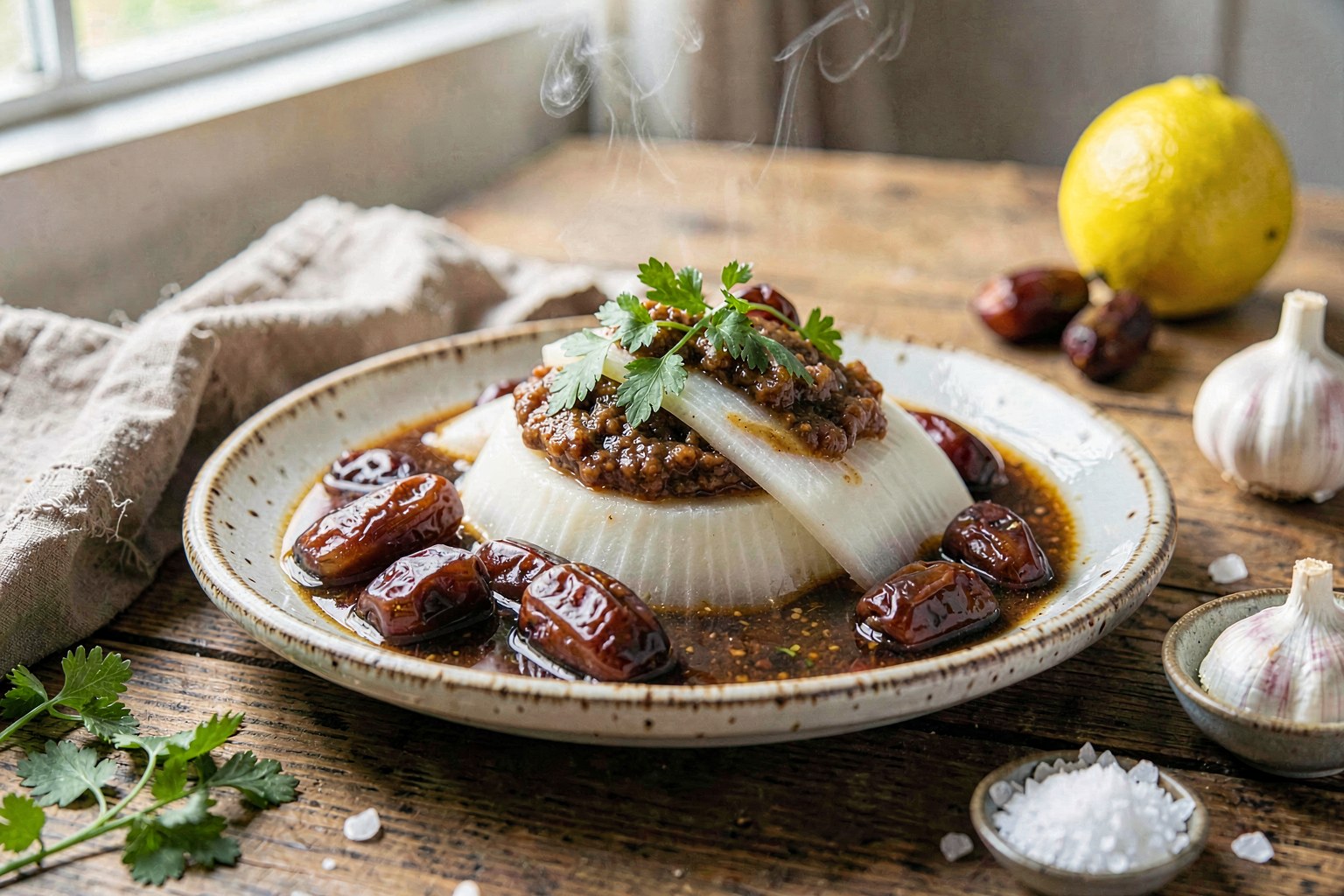
Quick-Fermented Radish (Konggyeomchi) with Sweet Doenjang
Crisp, thinly sliced daikon radish undergoes a rapid fermentation in a savory-sweet broth made from pure, unsweetened doenjang (soybean paste) and whole dates. This vibrant banchan delivers a complex umami punch with a gentle, natural sweetness, offering a probiotic-rich side dish that pairs perfectly with grain bowls or grilled proteins.
A little context
Traditionally, Konggyeomchi is a 'geotjeori' style banchan meant to be eaten immediately after salting and marinating to preserve the radish's crunch. While classic recipes often rely on corn syrup or white sugar for the brine, this version honors the tradition by using whole Medjool dates to create a rich, caramel-like sweetness without spiking blood sugar. We strictly avoid seed oils and ultra-processed bouillons, relying instead on the deep, earthy flavor of organic, stone-ground doenjang and the natural salinity of sea salt.
The longevity story
This dish leverages the gut-healing properties of fermented soybeans (doenjang), which provide bioavailable isoflavones and beneficial bacteria for microbiome diversity. The daikon radish is rich in digestive enzymes like diastase and amylase, aiding in protein and starch breakdown. By using whole dates for sweetness instead of refined sugar, we maintain a low glycemic load while introducing polyphenols. The addition of Korean red pepper flakes (gochugaru) adds capsaicin, a compound known to support metabolic health and reduce systemic inflammation.
Method
- 01
Salt and draw out moisture
Place the sliced daikon in a large bowl. Sprinkle evenly with the sea salt and toss gently. Let sit at room temperature for 20 minutes. The radish will release water and become slightly translucent and pliable.
- 02
Rinse and squeeze
Rinse the radish slices thoroughly under cold filtered water to remove excess salt. Place in a clean kitchen towel or cheesecloth and gently squeeze out as much moisture as possible without crushing the slices. This step is critical for the radish to absorb the marinade rather than diluting it.
- 03
Prepare the sweet doenjang brine
In a blender or using an immersion blender, combine the doenjang, chopped dates, minced garlic, grated ginger, gochugaru, and filtered water. Blend on high until the mixture is completely smooth and the dates have fully dissolved, creating a thick, caramel-colored liquid.
- 04
Emulsify with fat
With the blender running on low, slowly drizzle in the extra-virgin olive oil until the marinade is emulsified and slightly creamy. Taste and adjust; it should be intensely savory with a subtle, natural sweetness from the dates.
- 05
Marinate
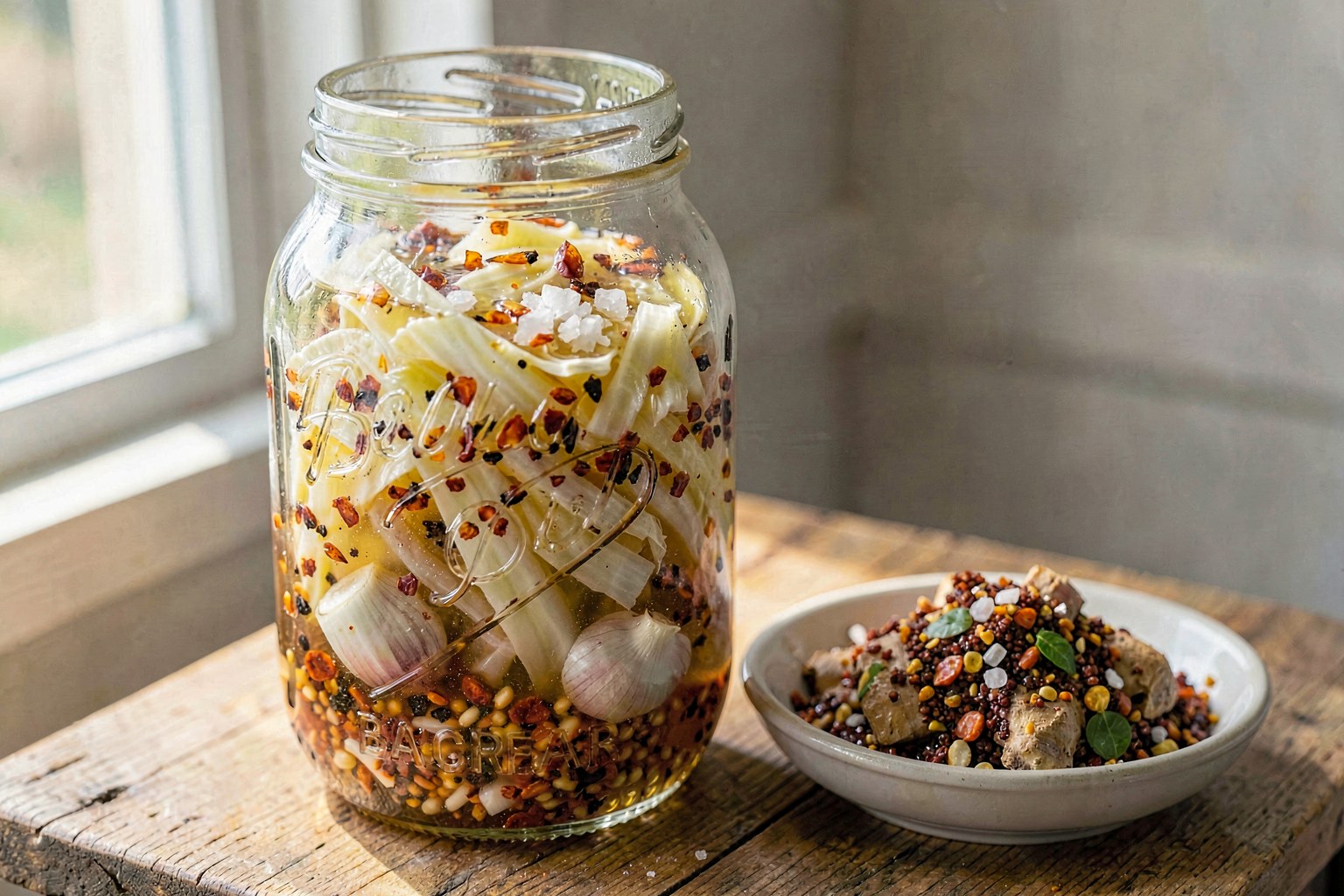
Transfer the squeezed radish slices to a clean glass jar or airtight container. Pour the marinade over the radish, ensuring every slice is coated. Seal the container.
- 06
Rapid ferment
Let the container sit on the counter at room temperature for 45 minutes to 1 hour. This short fermentation allows the live cultures in the doenjang to begin breaking down the radish fibers and infusing flavor. Do not leave longer than 2 hours, as the radish will lose its signature crunch.
- 07
Chill and serve
Refrigerate for at least 30 minutes before serving to chill the flavors. Serve cold, topped with toasted sesame seeds. Keep refrigerated in the marinade.
Nutrition facts
Per serving · 1 of 4- — Saturated
- 1 g
- — Polyunsaturated
- 1 g
- Carbohydrates
- 6 g
- — Fiber
- 3 g
- — Sugars
- 3 g
- Cholesterol
- 0 mg
- Sodium
- 1505 mg
- Potassium
- 354 mg
Estimated from USDA FoodData Central for matched ingredients (60% ingredient coverage). Values vary with brand, preparation, and exact measurements.
Pro tips
- ✦Sourcing matters: Look for organic doenjang that is fermented in traditional earthenware pots (onggi) for deeper flavor and higher probiotic counts.
- ✦Texture check: The radish should remain crisp (al dente). If it feels mushy, you likely left it in the salt too long or fermented it past 2 hours.
- ✦Date selection: Use Medjool dates for their soft, caramel-like texture; Deglet Noor dates are too dry and may not blend smoothly without extra water.
- ✦Storage: This dish is best eaten within 24 hours for maximum crunch, but will remain safe and tasty in the fridge for up to 3 days.
Shop this recipe
As an Amazon Associate we earn from qualifying purchases.
Substitutions
- daikon radish → Japanese mooli or turnip (Turnips are slightly more bitter; reduce salt time to 10 minutes if using turnips.)
- Medjool dates → pure maple syrup (1 tbsp) or monk fruit syrup (Use sparingly; the texture will be less thick than date-based brine.)
- extra-virgin olive oil → avocado oil (A neutral-tasting high-heat stable fat that works well if you dislike the grassy notes of EVOO.)
Storage
Store in an airtight glass container in the refrigerator for up to 3 days. The flavor deepens over the first 12 hours, but the texture will soften after 24 hours. Do not freeze.
What to serve with it
- Grilled wild-caught salmon or pasture-raised chicken thighs
- Buckwheat soba noodles with a sesame-ginger dressing
- Hot green tea (sencha) or unsweetened kombucha
- A glass of dry red wine like Pinot Noir or a sparkling water with lemon
FAQ
Why do I need to salt the radish before marinating?+
Salting draws out excess water via osmosis, which prevents the marinade from becoming watery and ensures the radish absorbs the intense flavors of the doenjang and dates.
Can I make this without a blender?+
You can mash the dates and doenjang vigorously with a fork, but the texture of the marinade will be chunkier. An immersion blender is highly recommended for a smooth, cohesive sauce.
Is this truly fermented?+
Yes, but it is a 'quick ferment.' The live enzymes and bacteria in the raw doenjang begin working immediately, creating a tangy profile without the weeks-long wait of traditional kimchi.
Share this recipe
Notes from the community
Sign in to leave a note.
No notes yet — be the first.
You might also like