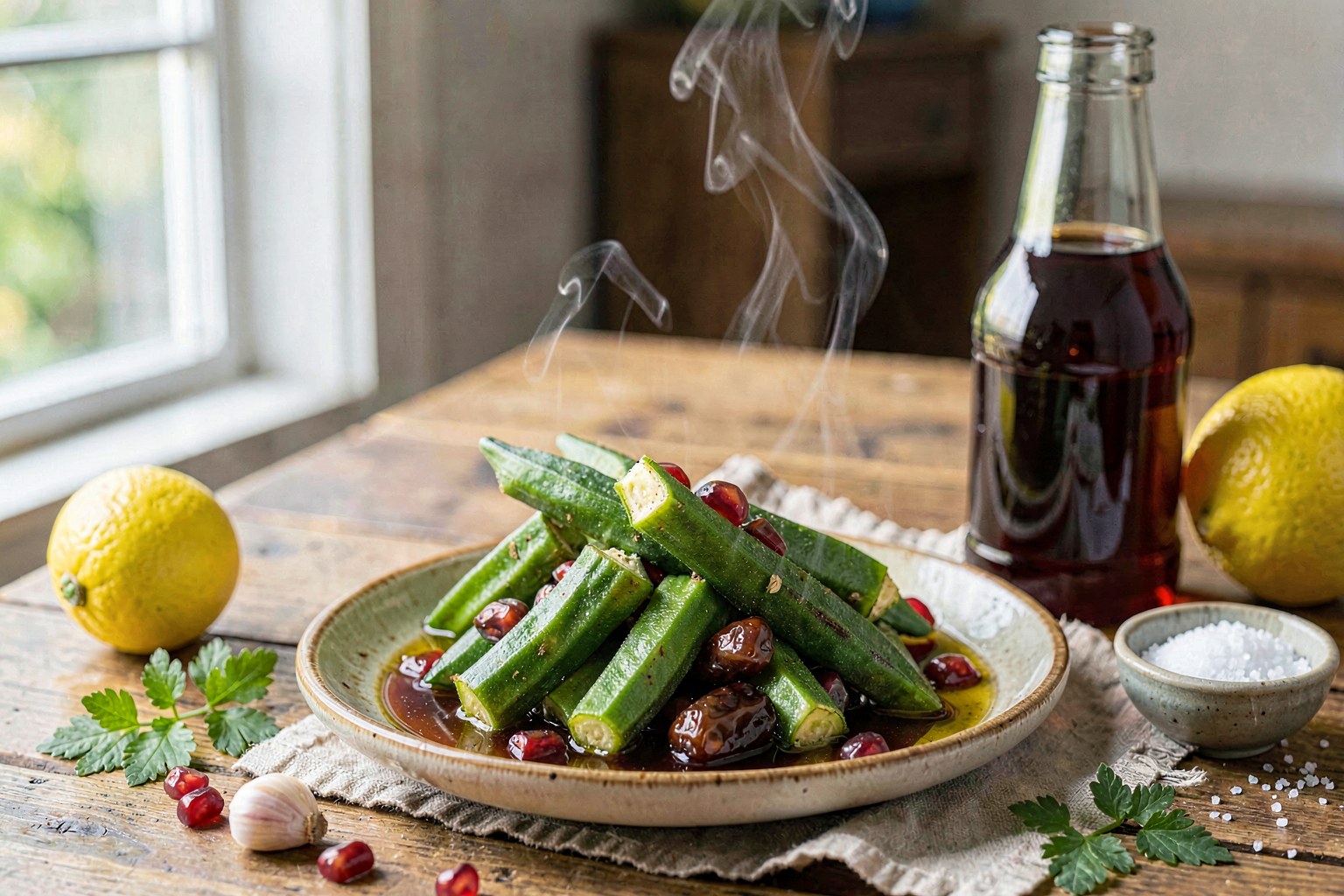
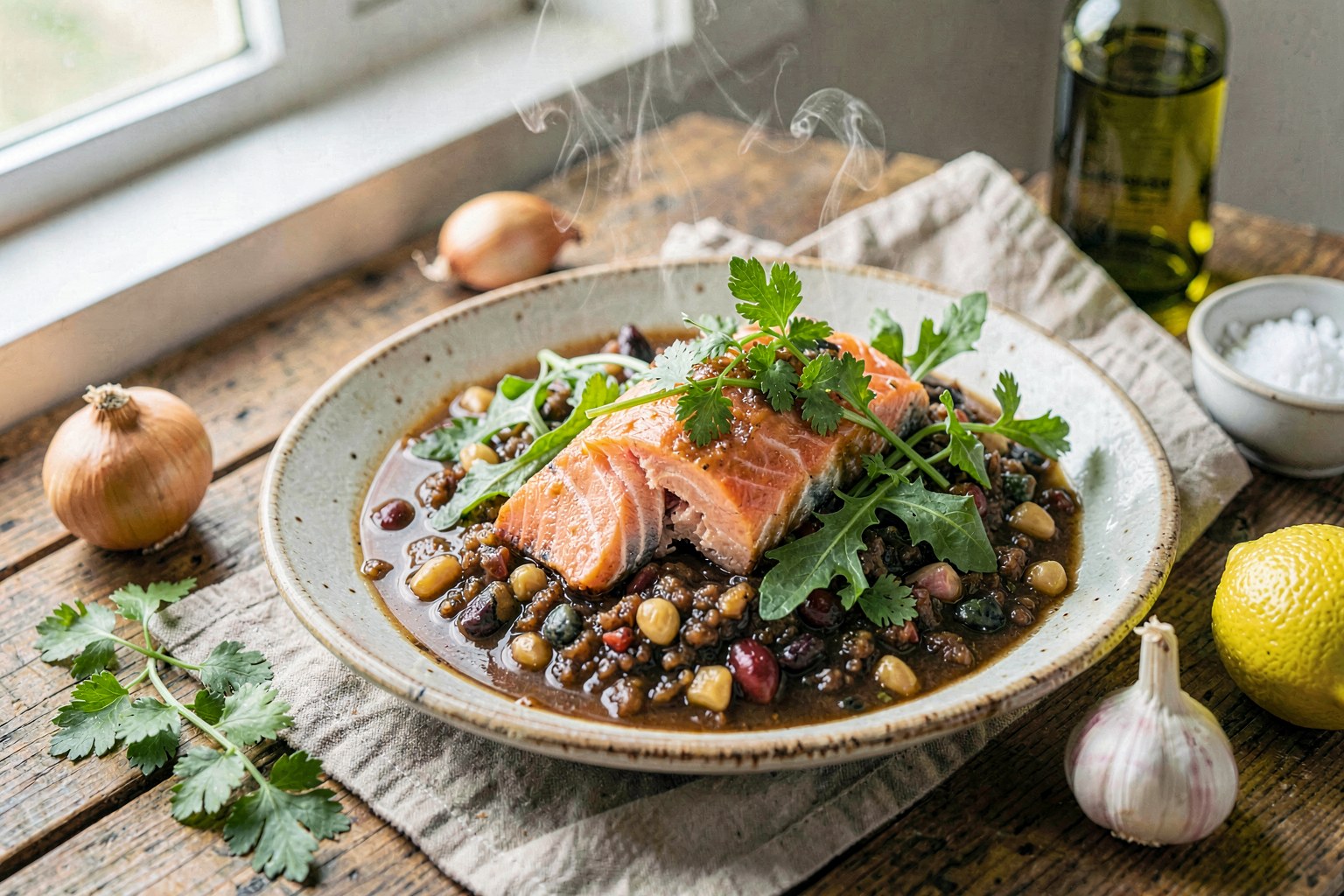
Slow-Simmered Doenjang Jjigae with Wild-Caught Salmon & Garden Greens
A deeply savory, probiotic-rich Korean stew built on a base of aged soybean paste (doenjang), simmered with wild-caught sockeye salmon, crisp seasonal greens, and a medley of root vegetables. This dish delivers a complex, umami explosion without a gram of refined sugar or seed oil, relying on the natural sweetness of roasted onions and the richness of grass-fed fats to round out the flavor.
A little context
This recipe honors the Korean tradition of 'jangdokdae' (the fermentation field) and the daily ritual of serving banchan (side dishes) alongside a hearty stew. Traditional recipes often call for a pinch of sugar or sesame oil (sometimes processed) to balance the salt; here, we use the natural caramelization of alliums and a touch of raw honey or date syrup sparingly, if needed, to respect the palate without spiking blood glucose. We have replaced standard vegetable oils with cold-pressed extra-virgin olive oil and avocado oil to align with longevity protocols while maintaining the dish's soulful warmth.
The longevity story
The star of this dish is the doenjang, a fermented soybean paste rich in isoflavones and live probiotics that support gut microbiome diversity and reduce systemic inflammation. Wild-caught sockeye salmon provides high-quality omega-3 fatty acids (EPA/DHA) essential for cellular membrane health and cognitive function, paired with the polyphenol-dense antioxidants found in dark leafy greens and garlic. By eliminating refined sugars and using extra-virgin olive oil for sautéing, we maximize the bioavailability of fat-soluble vitamins while keeping the glycemic load low.
Method
- 01
Prepare the Base
In a small bowl, whisk the aged doenjang with 1 cup of the warm broth until completely smooth and dissolved. This prevents clumps from forming in the final stew. Set aside.
- 02
Sauté Aromatics
Heat the extra-virgin olive oil in your Dutch oven over medium heat. Add the diced onion and sauté for 5-7 minutes until translucent and slightly golden. Add the minced garlic and grated ginger, cooking for another minute until fragrant, taking care not to burn the garlic.
- 03
Build the Broth
Pour in the remaining 1.2 L of broth and bring to a gentle simmer. Stir in the dissolved doenjang mixture. Taste the broth; it should be salty and savory. If it lacks depth, add the optional honey or date syrup now, stirring to dissolve.
- 04
Simmer Vegetables
Add the firm tofu cubes, sliced mushrooms, and zucchini to the simmering broth. Reduce heat to low and cover. Let it simmer gently for 10 minutes to allow the vegetables to absorb the umami flavors without becoming mushy.
- 05
Poach the Salmon
Gently nestle the wild-caught sockeye salmon fillets (skin-side down) into the stew. Do not stir vigorously. Cover and cook for 5-7 minutes, or until the salmon is just opaque and flakes easily with a fork. Overcooking will dry out the fish.
- 06
Wilt the Greens
Turn off the heat. Immediately stir in the fresh spinach or bok choy. The residual heat will wilt the greens perfectly in 1-2 minutes, retaining their vibrant color and nutrients.
- 07
Serve
Ladle the stew into bowls, ensuring each serving gets a piece of salmon and a mix of vegetables. Garnish generously with sliced scallions. Serve immediately with a side of warm brown rice or quinoa if desired, though the stew is substantial enough on its own.
Nutrition facts
Per serving · 1 of 4- — Saturated
- 4 g
- — Polyunsaturated
- 6 g
- Carbohydrates
- 32 g
- — Fiber
- 3 g
- — Sugars
- 13 g
- Cholesterol
- 79 mg
- Sodium
- 440 mg
- Potassium
- 867 mg
Estimated from USDA FoodData Central for matched ingredients (85% ingredient coverage). Values vary with brand, preparation, and exact measurements.
Pro tips
- ✦Sourcing is key: Look for doenjang that lists only soybeans, water, salt, and koji (or barley) in the ingredients. Avoid brands with corn syrup, sugar, or preservatives.
- ✦The 'resting' rule: Crush the garlic and let it sit for 10 minutes before cooking to activate the allicin, a potent anti-inflammatory compound.
- ✦Fish timing: Wild salmon cooks much faster than farmed. Add it last to prevent the delicate flesh from breaking apart in the simmering liquid.
- ✦Ferment longevity: If your doenjang is very thick, add a splash more broth to thin it before whisking. A smooth base ensures an even distribution of probiotics in every spoonful.
Shop this recipe
As an Amazon Associate we earn from qualifying purchases.
Substitutions
- wild-caught sockeye salmon → wild-caught Arctic char or mackerel (both offer high omega-3 profiles and hold up well in stews)
- extra-virgin olive oil → avocado oil (excellent for higher heat sautéing if you prefer a neutral flavor profile)
- tofu → tempeh (adds extra fiber and a nuttier texture, also fermented)
Storage
Store in an airtight glass container in the refrigerator for up to 3 days. The flavors often deepen overnight. Reheat gently on the stovetop; do not boil vigorously to preserve the probiotic activity of the doenjang. Freezing is not recommended as the texture of the tofu and fish may degrade.
What to serve with it
- Hot, unsweetened green tea (matcha or sencha) to complement the polyphenols
- Sparkling water with a wedge of fresh yuzu or lemon
- A side of kimchi (homemade, no sugar) for extra probiotic diversity
- Small portion of warm brown rice or millet
FAQ
Is this dish spicy?+
Not inherently. Traditional Doenjang Jjigae is savory and salty. If you want heat, add a pinch of gochugaru (Korean red pepper flakes), which is naturally low in sugar and rich in capsaicin, or a dash of fresh chili.
Can I use regular soy sauce instead of doenjang?+
No. Doenjang is a fermented bean paste that provides the unique umami depth and probiotic benefits. Soy sauce is a liquid extract and lacks the texture and live cultures essential to this dish.
Share this recipe
Notes from the community
Sign in to leave a note.
No notes yet — be the first.
You might also like