Farm-Fresh Katsudon: No-Refined-Sugar, Seed-Oil-Free
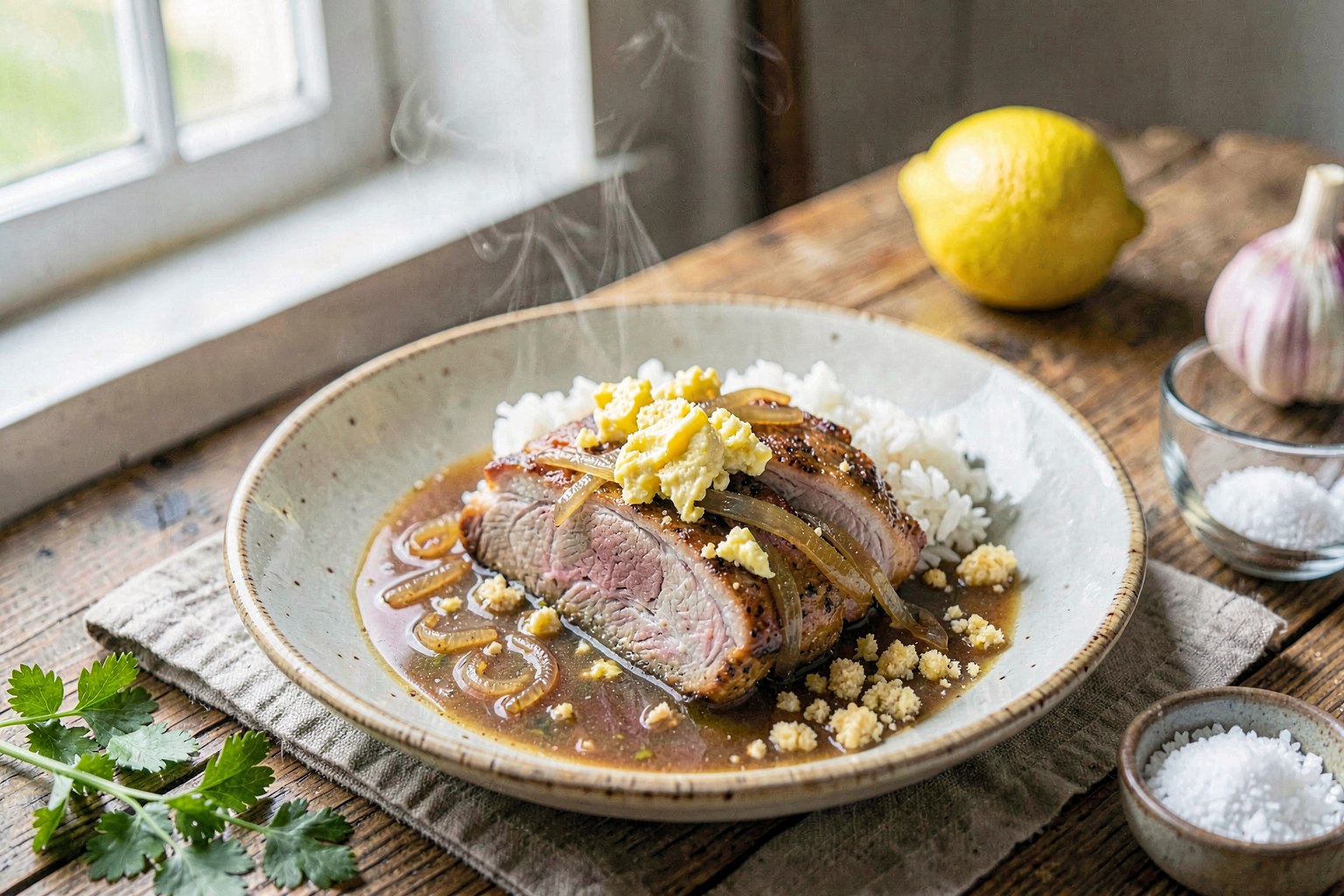
A comforting Japanese rice bowl featuring a tender, pasture-raised pork cutlet simmered in a savory-sweet broth with caramelized onions and soft-scrambled eggs. This version honors the traditional Washoku method while strictly eliminating refined sugar and seed oils, relying on the natural sweetness of ripe dates and the healthy fats of avocado oil for a clean, nutrient-dense meal.
A little context
Katsudon is a beloved staple of Japanese home cooking, traditionally designed as a quick, energizing meal for students and athletes. We honor this tradition by maintaining the essential technique of simmering the cutlet in dashi to infuse flavor, but we replace the standard refined sugar (sato) with a paste of whole Medjool dates and swap industrial seed oils for stable, high-heat avocado oil. The result is a dish that tastes authentically Japanese but aligns with modern longevity standards.
The longevity story
This dish centers on the bioavailability of high-quality protein from pasture-raised pork, rich in B-vitamins and zinc essential for metabolic function. The cooking liquid is fortified with the polyphenols found in organic dashi and soy sauce, while the inclusion of eggs provides choline for cognitive health. By using avocado oil instead of seed oils, we avoid pro-inflammatory omega-6 fatty acids, and the simmered onions offer prebiotic fiber and quercetin to support gut and cardiovascular health.
Method
- 01
Prepare the Date Broth
In a small blender, combine the pitted Medjool dates, hot dashi, coconut aminos, sake, and grated ginger. Blend until completely smooth. Set aside; this replaces the traditional sugar and soy mixture.
- 02
Bread the Pork
Pat the pork loin dry with paper towels. Season generously with sea salt. Dredge each piece first in the sprouted flour (shake off excess), dip into the beaten egg wash, and finally coat thoroughly in the organic panko. Press the crumbs firmly to adhere.
- 03
Pan-Fry the Cutlets
Heat the avocado oil in your deep sauté pan over medium-high heat until it reaches 175°C (350°F). Carefully place the cutlets in the pan, ensuring they do not overlap. Fry for 3-4 minutes per side until golden brown and the internal temperature reaches 63°C (145°F). Transfer to a wire rack to drain briefly.
- 04
Simmer Onions and Cutlet
Pour out most of the oil, leaving about 1 tablespoon. Add the sliced onions to the same pan and sauté for 2-3 minutes until they begin to soften. Pour in the date-dashi broth and bring to a gentle simmer. Place the fried pork cutlets back into the pan, nestling them into the onions and liquid.
- 05
Infuse the Meat
Cover the pan and simmer for 8-10 minutes. This step is crucial: the cutlet absorbs the savory-sweet broth, and the onions break down to create a rich sauce. Flip the cutlet halfway through to ensure even flavor penetration.
- 06
Add the Egg
Remove the lid. Pour the beaten eggs evenly over the cutlet and onions. Do not stir. Cover immediately and cook for just 45-60 seconds. The egg should be set but still soft and creamy on top, not fully scrambled.
- 07
Serve
Divide the steaming hot rice among four deep bowls. Carefully slide the cutlet and onion mixture on top, spooning the remaining sauce and onions over the meat. Garnish with fresh shiso leaves or a sprinkle of toasted sesame seeds if desired.
Nutrition facts
Per serving · 1 of 4- — Saturated
- 14 g
- — Polyunsaturated
- 1 g
- Carbohydrates
- 44 g
- — Fiber
- 2 g
- — Sugars
- 10 g
- Cholesterol
- 99 mg
- Sodium
- 377 mg
- Potassium
- 828 mg
Estimated from USDA FoodData Central for matched ingredients (62% ingredient coverage). Values vary with brand, preparation, and exact measurements.
Pro tips
- ✦Source your pork from a local farm that practices rotational grazing; the fat profile of pasture-raised pork is significantly higher in omega-3s and CLA than conventionally raised pork.
- ✦When blending the dates, add a splash more dashi if the paste is too thick; you want a pourable consistency that coats the back of a spoon.
- ✦Do not overcook the egg at the end; the residual heat of the pork and broth will finish cooking the egg as you serve, keeping it luscious.
- ✦If your pan is too small, fry the cutlets in two batches. Crowding the pan drops the oil temperature and results in greasy, soggy breading.
Shop this recipe
As an Amazon Associate we earn from qualifying purchases.
Substitutions
- pasture-raised pork loin → grass-fed beef sirloin or wild-caught chicken breast (Adjust cooking time; beef may need less simmering to stay tender, chicken must be cooked through.)
- avocado oil → grass-fed ghee or pastured lard (Both have high smoke points and stable fats suitable for frying, adding a distinct richness.)
- coconut aminos → tamari or liquid aminos (Ensure the brand is gluten-free and contains no added sugar or corn syrup.)
Storage
Store leftovers in a glass container in the refrigerator for up to 3 days. The pork and rice reheat well, though the egg texture will firm up slightly. Do not freeze, as the texture of the fried breading and soft egg will degrade significantly upon thawing.
What to serve with it
- Hot sencha green tea (high in EGCG polyphenols)
- Unsweetened kombucha with ginger flavor
- Sparkling water with a wedge of yuzu or lemon
- Miso soup with wakame seaweed (fermented, gut-friendly)
FAQ
Why use dates instead of sugar?+
Traditional katsudon uses white sugar, which spikes blood glucose. Whole Medjool dates provide sweetness along with fiber, potassium, and polyphenols, creating a slower, more sustained energy release.
Can I make this gluten-free?+
Yes. Use certified gluten-free tamari instead of soy sauce, and substitute the panko with crushed rice crackers or gluten-free sprouted breadcrumbs.
Is the oil safe for frying?+
Avocado oil has a very high smoke point (270°C/520°F) and a stable monounsaturated fat profile, making it far superior to seed oils like canola or soybean for high-heat cooking.
Share this recipe
Notes from the community
Sign in to leave a note.
No notes yet — be the first.
You might also like