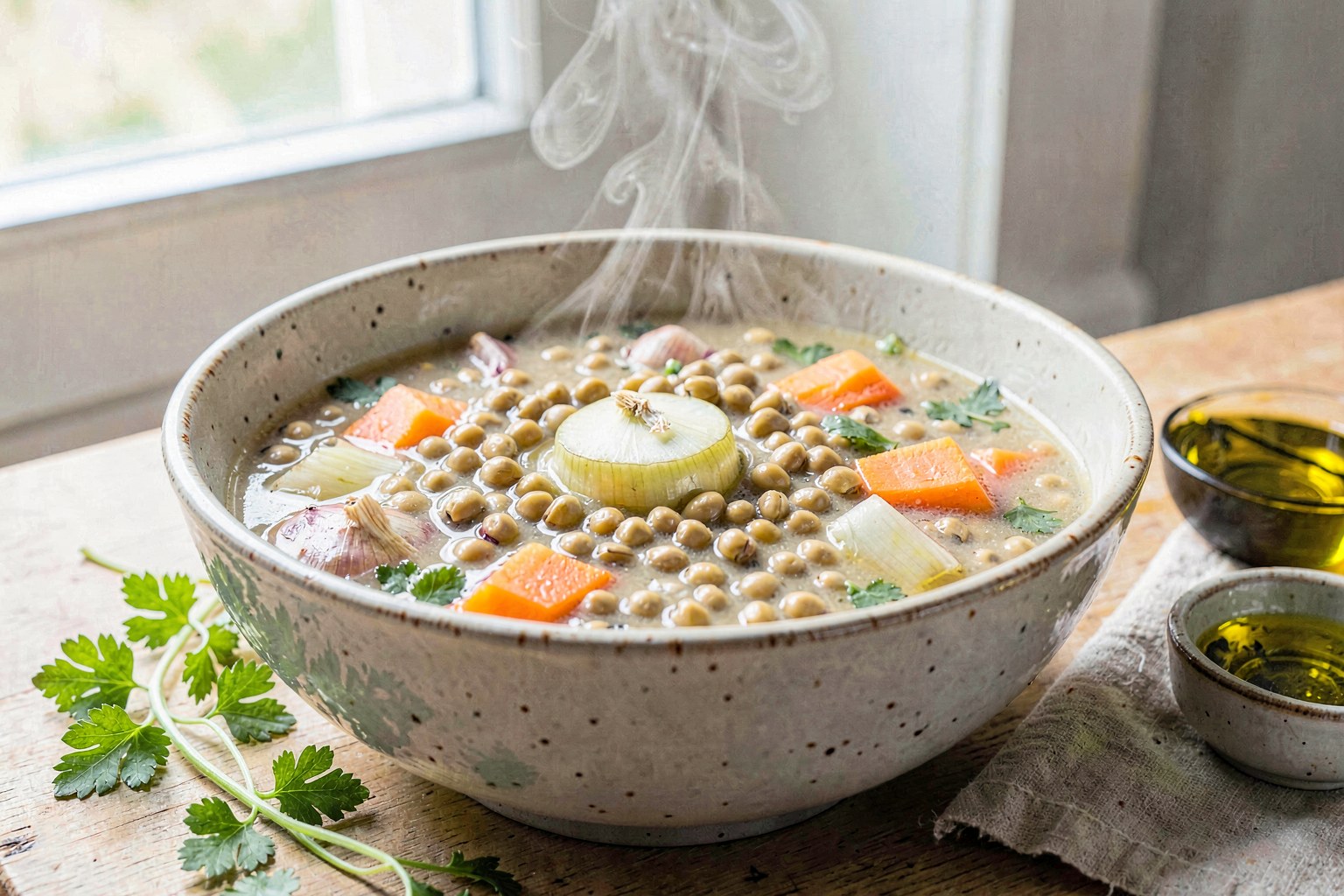
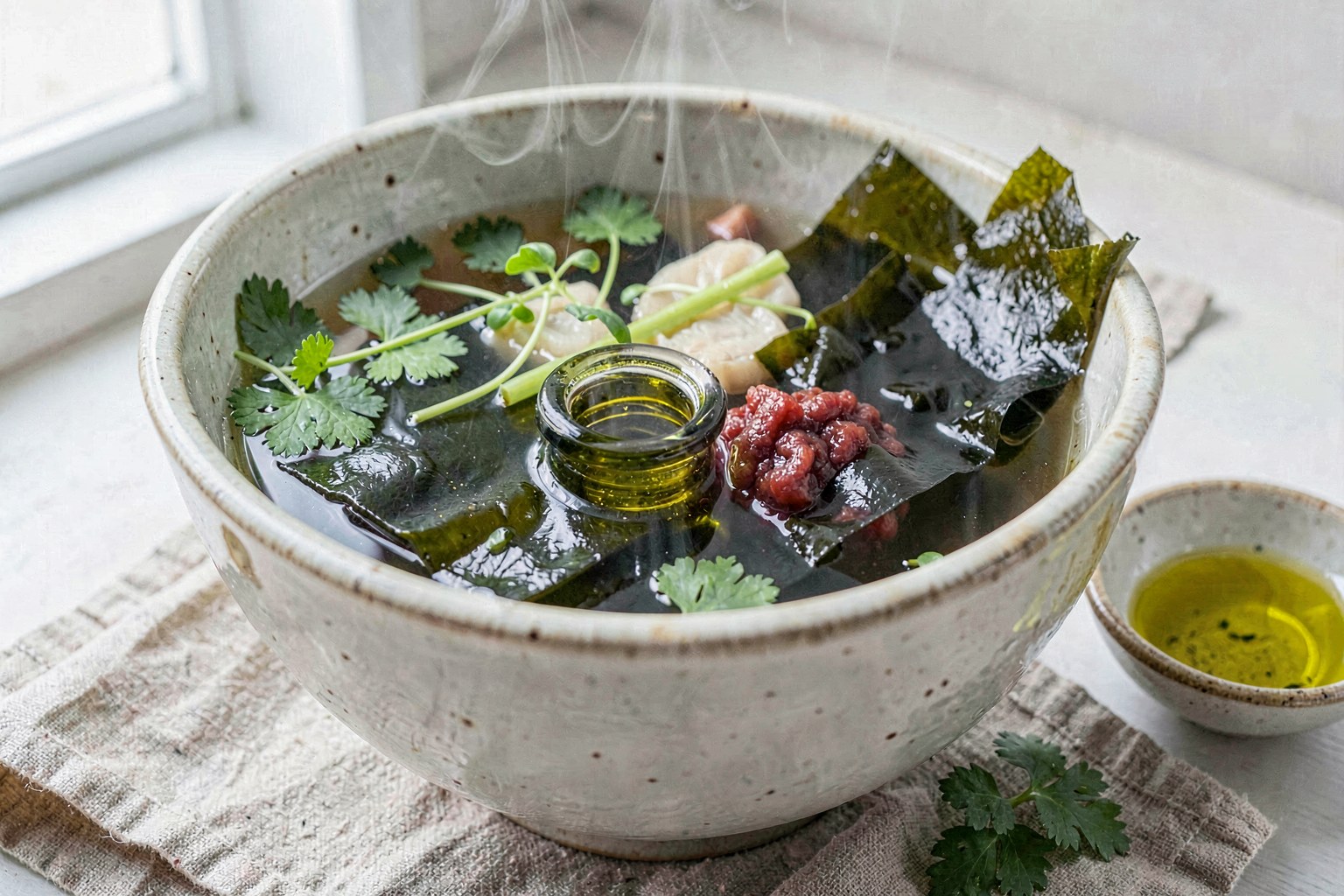
Okinawan Kombu Miso Soup (Seaweed Umami Broth)
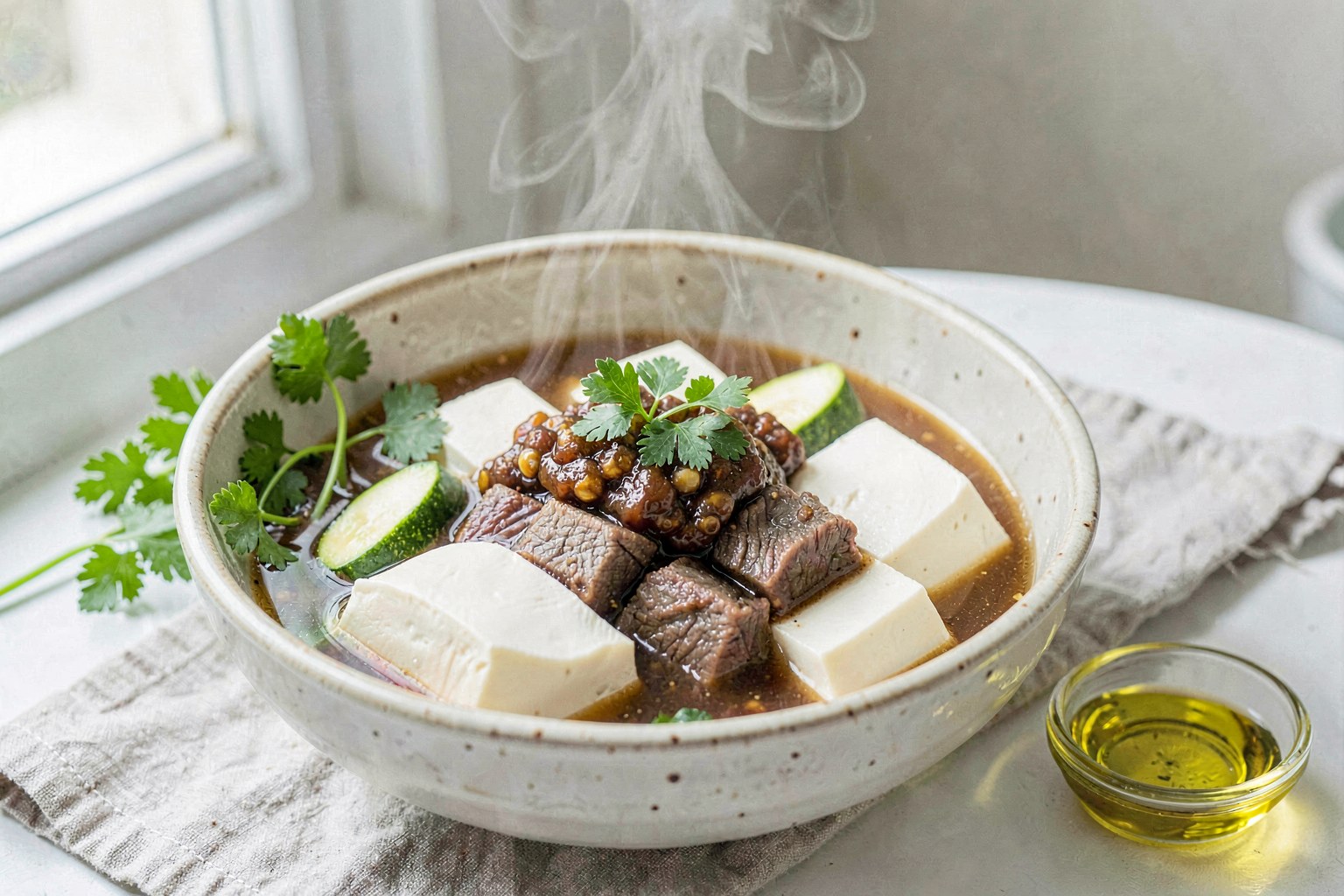
This is the essence of Okinawan longevity: a crystal-clear, deeply savory broth made solely from rehydrated kombu and fermented miso. It delivers a powerful umami punch without vegetables or tofu, relying on the mineral density of seaweed and the probiotic richness of unpasteurized miso to nourish the gut.
A little context
In Okinawa, this clear soup (often called 'Suimono' style) is a daily staple, valued for hydration and mineral replenishment rather than bulk. Traditional recipes sometimes add a dash of sugar or mirin (sweet rice wine) to balance salt; we have strictly omitted these to align with the Blueprint philosophy of zero refined sugars. We honor the tradition by using high-quality, artisanal miso and organic kombu, ensuring the fermentation benefits remain intact without the metabolic cost of added sweeteners.
The longevity story
The primary nutritional engine here is kombu (kelp), which is exceptionally high in iodine, essential for thyroid function and metabolic rate. Kombu also provides fucoidan and alginate, bioactive compounds with potent anti-inflammatory and antioxidant properties. The unpasteurized miso contributes live enzymes and beneficial bacteria (probiotics) that support the gut microbiome, crucial for longevity. Unlike standard broths, this recipe avoids inflammatory seed oils and refined sugars, focusing entirely on polyphenol-dense, mineral-rich whole foods.
Method
- 01
Prepare the Kombu
Take the organic kombu and gently wipe it with a damp cloth to remove dust. Do not rinse under running water, as the white powdery residue (mannitol) is a natural source of umami and sweetness. Cut the kombu into 5 cm (2 inch) squares or strips to increase surface area.
- 02
Cold Infusion
Place the kombu squares into the pot with 1.5 L (6 1/4 cups) of cold filtered water. Let this sit at room temperature for 20 minutes. This slow extraction pulls the minerals and glutamates without triggering bitterness.
- 03
Gentle Heat
Place the pot over medium-low heat. Bring the water to just below a simmer (approx. 80°C / 175°F). You should see small bubbles forming at the bottom, but no rolling boil. If it boils, the kombu will become slimy and the flavor will turn bitter.
- 04
Simmer and Remove
Once the water is hot and aromatic (about 10-15 minutes), remove the kombu squares immediately. Do not overcook the kombu. Set the kombu aside if you wish to use it as a side dish (tsukudani) later, or discard it.
- 05
Temper the Miso
While the broth is still hot (but not boiling), ladle about 1/2 cup of the hot broth into a small bowl. Add the unpasteurized miso paste to this small bowl and whisk vigorously until completely smooth and dissolved. This prevents lumps and protects the delicate probiotic enzymes from the direct heat of the pot.
- 06
Combine and Finish
Pour the dissolved miso mixture back into the main pot. Stir gently. Do not bring the soup to a boil after adding the miso, as high heat kills the beneficial bacteria. Turn off the heat immediately once combined.
- 07
Serve
Ladle the clear broth into small bowls. Drizzle with the cold-pressed extra-virgin olive oil if desired. Serve immediately while warm to enjoy the full aromatic profile and live enzymes.
Nutrition facts
Per serving · 1 of 4- — Saturated
- 1 g
- — Polyunsaturated
- 0 g
- Carbohydrates
- 1 g
- — Fiber
- 0 g
- — Sugars
- 1 g
- Cholesterol
- 0 mg
- Sodium
- 2 mg
- Potassium
- 10 mg
Estimated from USDA FoodData Central for matched ingredients (50% ingredient coverage). Values vary with brand, preparation, and exact measurements.
Pro tips
- ✦Sourcing is everything: Look for 'Awa Miso' or 'Hatcho Miso' which are traditionally fermented without additives. The label must explicitly state 'unpasteurized' to get the gut-health benefits.
- ✦Never boil the miso: Boiling destroys the live probiotics and changes the flavor profile to a harsh, salty taste rather than a deep umami.
- ✦The white bloom on kombu is gold: Do not scrub it off; it is mannitol, a natural sugar alcohol that provides the subtle sweetness usually replaced by refined sugar in other recipes.
- ✦Texture control: If you prefer a clearer soup, strain through a fine-mesh sieve after removing the kombu. If you like a rustic texture, leave the sediment.
Shop this recipe
As an Amazon Associate we earn from qualifying purchases.
Substitutions
- unpasteurized red miso → unpasteurized white (Shiro) miso (White miso is sweeter and milder; use slightly less if you prefer a less salty profile, but maintain the no-sugar rule.)
- extra-virgin olive oil → avocado oil or grass-fed ghee (Avocado oil is neutral and high-stability; ghee adds a dairy richness if you are not strictly dairy-free.)
Storage
Store in a glass container in the refrigerator for up to 3 days. Note that the probiotic activity will decrease over time. Do not freeze, as freezing can alter the texture of the fermented miso and degrade live enzymes.
What to serve with it
- Serve with a cup of high-quality Sencha green tea to amplify the catechin intake.
- Pair with a small side of fermented pickles (tsukemono) made without sugar or vinegar for extra gut diversity.
- Drink alongside sparkling water with a slice of fresh lemon to aid mineral absorption.
FAQ
Can I use regular pasteurized miso from the grocery store?+
You can, but you lose the primary health benefit: the live probiotics. Pasteurization kills the beneficial bacteria. For a Blueprint-aligned recipe, always seek out unpasteurized, refrigerated miso.
Why didn't you add tofu or vegetables?+
This specific Okinawan tradition focuses on the clarity and purity of the broth itself. Adding vegetables dilutes the mineral concentration of the kombu. We keep it simple to maximize the bioavailability of the seaweed nutrients.
Share this recipe
Notes from the community
Sign in to leave a note.
No notes yet — be the first.
You might also like