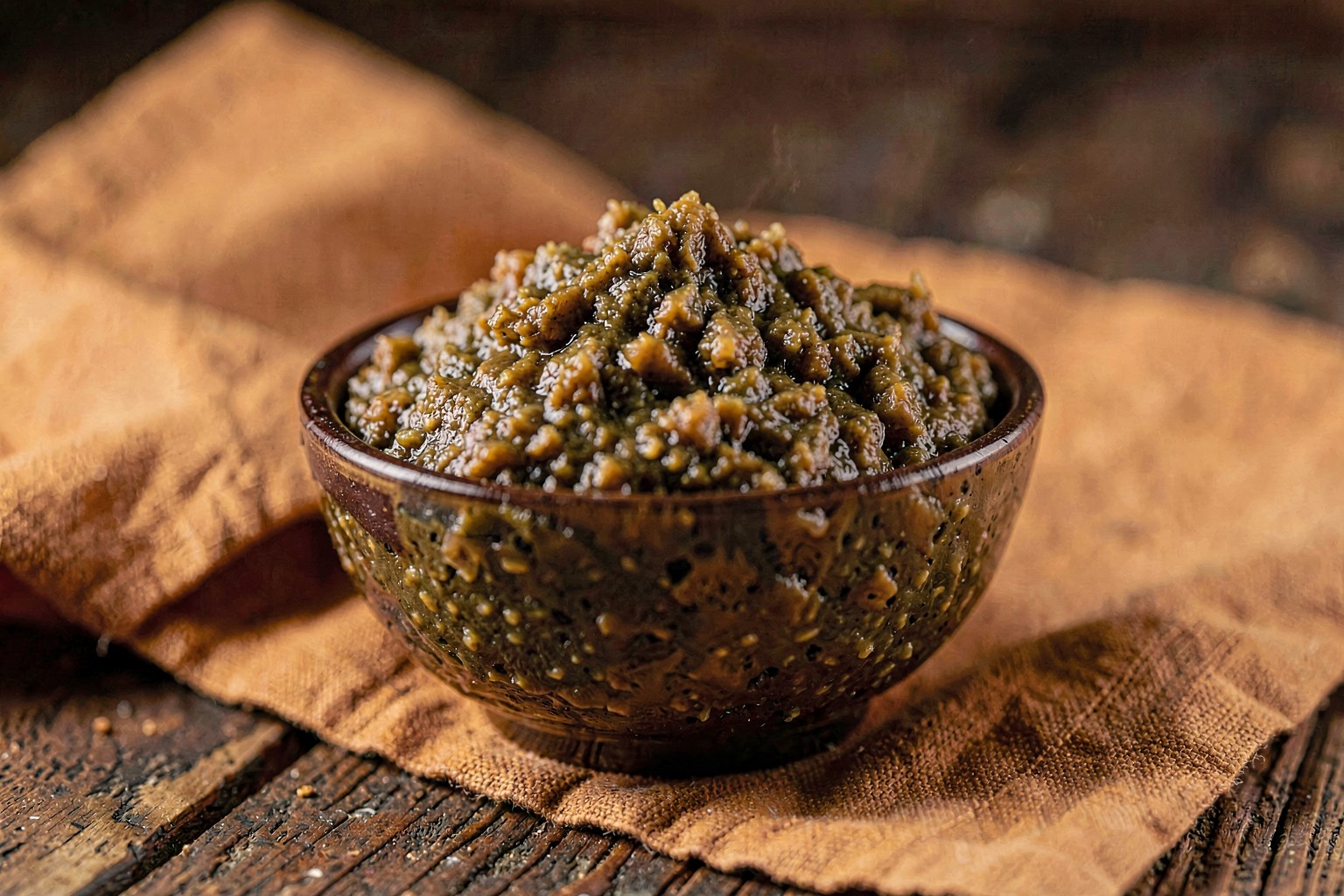
Miso
Miso is a savory, fermented soybean paste made by culturing soybeans with salt and a grain starter called koji, resulting in a concentrated umami bomb used to season soups, sauces, and marinades.
What it is
Miso is produced by fermenting cooked soybeans with koji (Aspergillus oryzae), a mold grown on steamed rice, barley, or soybeans, along with salt. This fermentation process, which can last from a few months to several years, breaks down proteins into amino acids, creating the ingredient's signature deep umami flavor. The color and intensity vary wildly based on the ratio of soybeans to grain, the type of koji used, and the fermentation duration. White miso (shiro) is sweeter and milder due to a higher rice koji content and shorter fermentation, while red miso (aka) is saltier, funkier, and more pungent, often fermented with barley or pure soybeans for extended periods. Yellow miso (shinshu) sits comfortably in the middle, offering a balanced savory profile. In Japanese cuisine, miso is the backbone of the flavor profile, serving as the primary seasoning agent rather than just a soup base. It is rarely boiled vigorously, as high heat destroys its delicate aromatic compounds and beneficial enzymes. Instead, it is dissolved into warm liquids at the end of cooking or used as a glaze for fish and vegetables. The paste comes in various textures, from smooth and creamy to coarse and chunky, depending on whether the soybeans were mashed or left partially whole during the process.
How to buy
Look for miso sold in plastic tubs or vacuum-sealed pouches, preferably in the refrigerated section of a grocery store. While shelf-stable varieties exist, refrigerated miso is fresher and retains more complex flavor notes. Check the ingredient list for additives like sugar, artificial flavors, or preservatives; high-quality miso should contain only soybeans, koji, salt, and perhaps a grain like rice or barley. Avoid brands that list soy sauce or hydrolyzed vegetable protein as primary ingredients, as these are often shortcuts that lack depth. If you cannot find it in the refrigerated section of a mainstream supermarket, head to an Asian grocery store, where you will find a wider variety of regional styles (like hatcho or miso) at better prices. Brands like Marukome, Hikari, and Eden Foods are reliable entry points for home cooks.
Storage
Miso is incredibly shelf-stable due to its high salt content but requires refrigeration after opening to preserve its flavor and prevent oxidation. Keep it tightly sealed in its original container or transfer it to an airtight glass jar, pressing a piece of plastic wrap directly onto the surface before sealing to minimize air exposure. Stored correctly in the refrigerator, miso can last for a year or more, gradually darkening and intensifying in flavor over time. Signs of spoilage are rare but include a distinct ammonia smell, visible mold growth on the surface (which should be scraped off if it's just surface-level, though discarding is safer if unsure), or an off-putting sourness that differs from its natural tang.
How to use
The cardinal rule of cooking with miso is to never let it boil. Add it at the very end of the cooking process, dissolving a tablespoon or two into a ladle of warm broth before stirring it into the pot. This preserves the probiotics and the subtle aromatic top notes that vanish under high heat. When using it as a glaze or marinade, dilute it slightly with mirin, sake, or water to prevent burning, and apply it to proteins or vegetables during the last few minutes of grilling or broiling. Start with small amounts; miso is intensely salty, and a little goes a long way. If a recipe calls for miso but you find the dish too salty, balance it with a splash of acid like rice vinegar or a touch of sweetness.
Where it comes from
Originating in China as a soybean paste called 'jiang' before evolving in Japan, miso has been a cornerstone of the Japanese diet for over a millennium, historically serving as a vital source of protein and salt for peasants and samurai alike. It is deeply embedded in the concept of 'shokunin' (craftsmanship), with families often passing down fermentation techniques and starter cultures (hishio) through generations. In traditional households, miso soup is the first thing served at breakfast, symbolizing the start of the day with warmth and nourishment. Its presence extends beyond soup, acting as a fundamental seasoning in pickling, braising, and glazing, making it as essential to Japanese cuisine as butter is to French cooking.
Substitutions
- Doubanjiang (Chinese fermented broad bean paste) — Offers a similar fermented funk and saltiness but is spicier and darker; reduce added salt and chili in the recipe.
- Soy sauce mixed with a pinch of sugar and a dash of tahini — A pantry swap for when you lack miso; provides salt and body but lacks the deep, rounded umami complexity of fermentation.