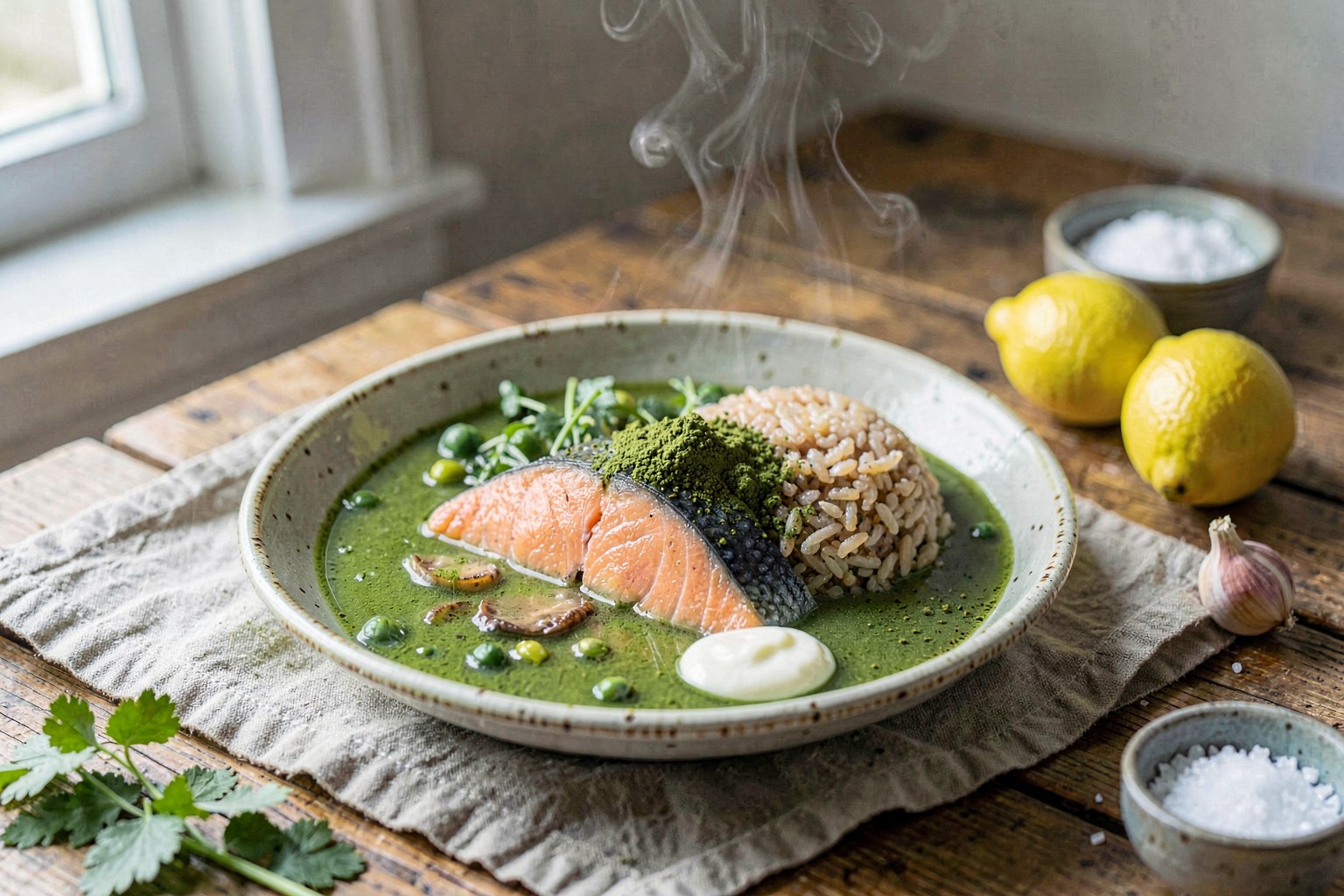
Matcha Ochazuke with Wild-Caught Salmon and Fermented Miso
This modern take on the Japanese comfort classic replaces refined sugar and processed dashi with a nutrient-dense broth of wild-caught salmon, fermented miso, and ceremonial-grade matcha. The dish features toasted sprouted brown rice topped with seared salmon and a hot, polyphenol-rich tea infusion that gently steams the toppings, creating a savory, umami-rich meal that warms the body from within.
A little context
Ochazuke is a humble 'tea rice' tradition from the Edo period, historically served to clean the palate or provide a quick, warming meal. While traditional versions often include a dashi made with sugar or seed oils (like canola in modern instant mixes), this version honors the spirit of Washoku by using only whole, unprocessed ingredients: wild fish, organic sprouted grains, and pure tea. We have stripped out the refined sugar often found in commercial sauces, replacing it with the natural umami of kelp and shiitake, ensuring the dish remains a true longevity food.
The longevity story
The core of this dish is the synergy between the catechins in matcha and the omega-3 fatty acids (EPA/DHA) in wild-caught sockeye salmon, which work together to support cellular membrane integrity and reduce systemic inflammation. We utilize fermented miso paste to introduce beneficial probiotics and enzymes that aid digestion, while the sprouted brown rice offers a lower glycemic impact and higher bioavailability of minerals compared to white rice. The absence of seed oils ensures the fatty acids remain stable, and the use of organic, unsweetened ingredients prevents the insulin spikes associated with traditional sugary broths.
Method
- 01
Prepare the Sprouted Rice
If using dry sprouted brown rice, soak for 12 hours, then drain. Combine rice with 240 ml (1 cup + 2 tbsp) of water in your pot. Bring to a boil, reduce heat to low, cover, and simmer for 40-45 minutes until tender but still slightly chewy. Let it rest covered for 10 minutes before fluffing with a wooden paddle.
- 02
Sear the Salmon
Pat the wild salmon fillets completely dry with paper towels. Season both sides generously with sea salt. Heat the extra-virgin olive oil in the heavy skillet over medium-high heat until it shimmers. Place the salmon skin-side down. Press gently to ensure even contact. Cook for 4-5 minutes until the skin is crisp and golden. Flip carefully and cook for another 2-3 minutes until just cooked through but still moist in the center. Remove from heat and let rest.
- 03
Create the Matcha Broth Base
While the salmon rests, bring 1000 ml (4 cups) of filtered water to a simmer in a separate pot, then remove from heat. Let the water cool for 1 minute to reach approximately 90°C (195°F). Whisk in the white miso paste until fully dissolved. Sift in the matcha powder and whisk vigorously until no clumps remain and the liquid is frothy and emerald green.
- 04
Assemble the Bowls
Divide the warm, fluffy sprouted rice evenly among four deep ceramic bowls. Top each bowl with a portion of the seared salmon (skin-side up for texture). Arrange the sliced shiitake mushrooms, half of the scallions, and nori strips over the salmon and rice.
- 05
Pour and Serve
Immediately pour the hot matcha-miso broth over the rice and toppings, filling the bowl about 3/4 full. The heat will gently steam the mushrooms and release the aroma of the salmon. Garnish with the remaining fresh scallions. Serve immediately while the broth is hot but not boiling.
Nutrition facts
Per serving · 1 of 4- — Saturated
- 2 g
- — Polyunsaturated
- 2 g
- Carbohydrates
- 51 g
- — Fiber
- 5 g
- — Sugars
- 1 g
- Cholesterol
- 57 mg
- Sodium
- 845 mg
- Potassium
- 794 mg
Estimated from USDA FoodData Central for matched ingredients (80% ingredient coverage). Values vary with brand, preparation, and exact measurements.
Pro tips
- ✦Sourcing is critical: Look for wild-caught sockeye salmon with a deep red color and firm flesh; avoid farmed salmon which often contains synthetic astaxanthin and lower omega-3s.
- ✦Do not boil the matcha water; temperatures above 90°C (195°F) degrade the delicate catechins and make the tea bitter.
- ✦Toast your rice lightly in a dry pan before boiling if you want a nuttier, more complex flavor profile that mimics traditional 'toasted rice' ochazuke.
- ✦If using store-bought miso, check the label to ensure no sugar or preservatives were added; organic unpasteurized miso is best for gut health.
Shop this recipe
As an Amazon Associate we earn from qualifying purchases.
Substitutions
- wild-caught sockeye salmon → wild-caught Arctic char or rainbow trout (Both have similar high omega-3 profiles and firm texture that holds up to the broth.)
- sprouted brown rice → sprouted white rice or short-grain sushi rice (Sushi rice creates a softer texture but has a higher glycemic index; sprouted white rice is a good middle ground.)
- extra-virgin olive oil → avocado oil or ghee (Ghee adds a rich, nutty flavor that pairs well with the earthy matcha; avocado oil has a higher smoke point if you prefer a crispier sear.)
Storage
Store cooked rice and salmon separately in airtight glass containers in the refrigerator for up to 2 days. The broth can be kept for 24 hours but loses some matcha potency. Reheat components gently; do not microwave the matcha broth to preserve enzymes.
What to serve with it
- A cup of hot sencha or hojicha tea
- Small side of pickled ginger (unsweetened) to aid digestion
- Sparkling water with a wedge of organic lemon
- Dry sake (Junmai) if alcohol is desired
FAQ
Why use sprouted rice instead of white rice?+
Sprouting breaks down anti-nutrients like phytic acid, making minerals more bioavailable and lowering the glycemic impact, which aligns with longevity goals.
Can I make this vegan?+
Yes, omit the salmon and add extra shiitake mushrooms, edamame, or tofu. Ensure the miso is vegan (some contain bonito fish stock).
Is the matcha safe for dinner?+
Ceremonial matcha contains caffeine, but the L-theanine provides a calm alertness. If you are sensitive to caffeine, use roasted hojicha powder instead, which is naturally caffeine-free.
Share this recipe
Notes from the community
Sign in to leave a note.
No notes yet — be the first.
You might also like