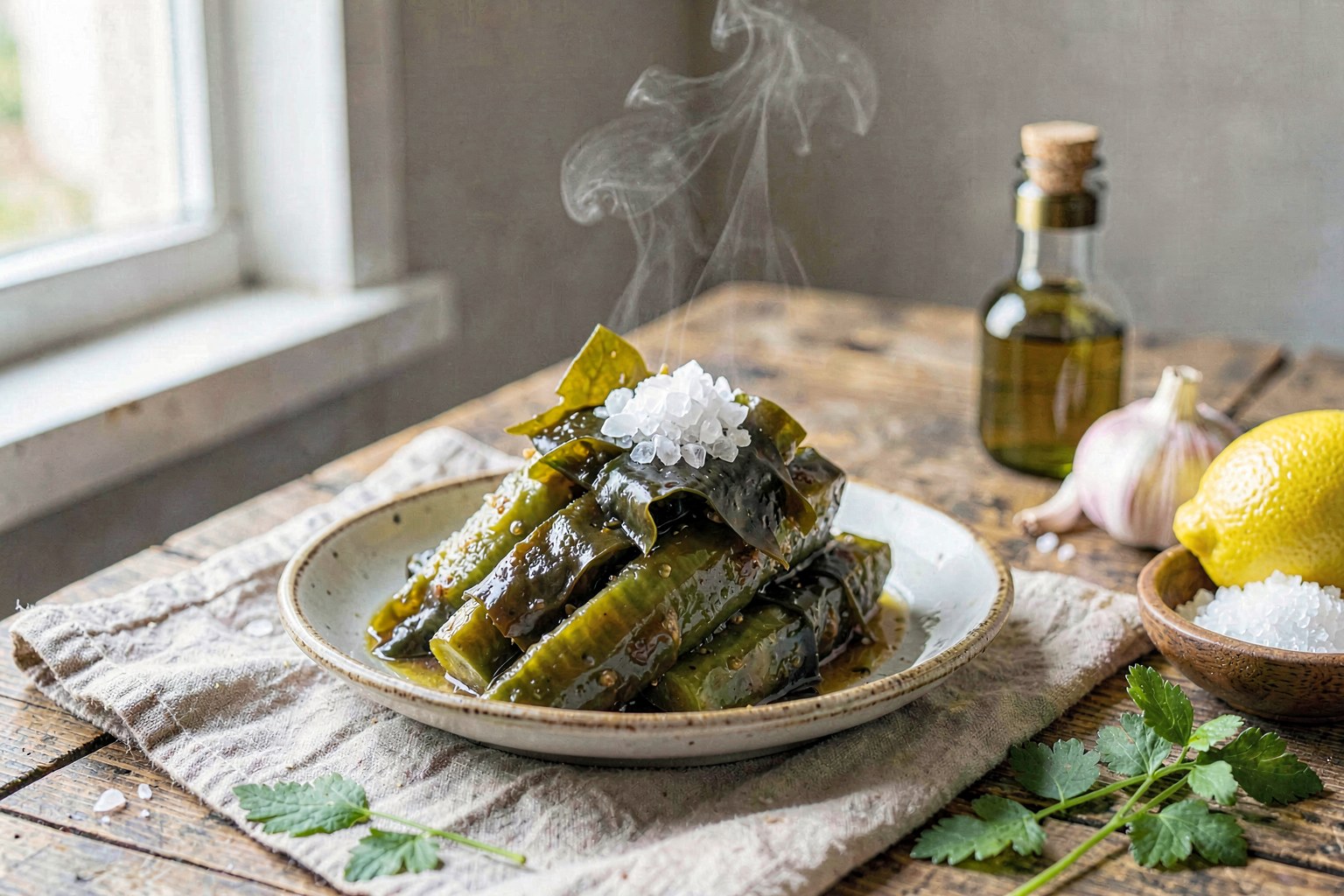
Goya Suke: Fermented Bitter Melon with Wild Kelp & Olive Oil
This dish transforms the intensely bitter, polyphenol-rich Goya melon into a tangy, probiotic-rich pickle using traditional Okinawan fermentation techniques. The result is a bright, bracing side dish where the bitterness is mellowed by lactic acid fermentation and brightened by extra-virgin olive oil, offering a complex, savory-sour profile without a drop of refined sugar.
A little context
In Okinawa, the 'Blue Zone' known for exceptional longevity, bitter melon (Goya) is a daily staple, traditionally prepared with pork or in fermented pickles called 'suke'. While traditional recipes often rely on refined sugar and soy sauce (which may contain wheat or additives), this version honors the tradition by using the natural sweetness of ripe dates and the umami of pure, fermented miso to balance the bitterness, eliminating seed oils and processed sugars entirely.
The longevity story
Goya is a powerhouse of momordicin and charantin, compounds linked to improved insulin sensitivity and blood glucose regulation. The fermentation process introduces beneficial lactobacilli, supporting gut microbiome diversity and immune function, while the addition of wild kelp (kombu) provides essential iodine and algal polyphenols. Extra-virgin olive oil contributes oleocanthal, a potent anti-inflammatory agent that enhances the absorption of fat-soluble vitamins found in the melon.
Method
- 01
Prepare the Goya
Wash the bitter melons thoroughly. Slice them lengthwise, scrape out the white pith and seeds with a spoon (this reduces excessive bitterness). Slice the flesh into uniform 3mm half-moons. Place in a large bowl.
- 02
Salt the Melon
Sprinkle 15g of the coarse sea salt over the sliced melon. Toss gently to coat. Let sit for 15 minutes to draw out excess moisture and soften the texture. Do not rinse.
- 03
Make the Brine
In a separate bowl, dissolve the remaining 25g of salt and the chopped dates (if using) in the filtered water. Stir until fully dissolved. If using dates, ensure they are fully broken down or strain the liquid if you prefer a clear brine.
- 04
Pack the Jar
Pack the salted melon tightly into the clean glass jar. Place the kombu strips in between the layers of melon. Pour the brine over the melon until it is completely submerged by at least 2cm.
- 05
Ferment
Place the ceramic weight on top to keep the melon underwater. Seal the jar with the airlock lid. Leave at room temperature (20-22°C / 68-72°F) for 24 to 48 hours. Taste after 24 hours; it should be tangy and slightly softened but still crisp.
- 06
Finish and Dress
Once fermented to your liking, remove the jar from the counter. Stir in the dissolved miso paste directly into the brine. Drizzle with the high-quality extra-virgin olive oil just before serving to preserve the polyphenols.
- 07
Serve
Serve immediately as a side dish with grilled wild-caught fish or a warm bowl of brown rice. The flavor will continue to deepen if stored in the fridge for up to 5 days.
Nutrition facts
Per serving · 1 of 4- — Saturated
- 2 g
- — Polyunsaturated
- 2 g
- Carbohydrates
- 11 g
- — Fiber
- 3 g
- — Sugars
- 6 g
- Cholesterol
- 3 mg
- Sodium
- 4319 mg
- Potassium
- 438 mg
Estimated from USDA FoodData Central for matched ingredients (71% ingredient coverage). Values vary with brand, preparation, and exact measurements.
Pro tips
- ✦Sourcing tip: Look for Goya with deep green, warty skin; avoid any with yellowing spots, which indicate over-ripeness and excessive bitterness.
- ✦If you don't have an airlock jar, use a standard mason jar and 'burp' it (open briefly) twice a day to release gas, ensuring the melon stays submerged.
- ✦The white powder on the kombu is natural glutamates; do not wash it off, as it provides the savory depth usually replaced by MSG or stock cubes.
- ✦For a sharper tang, extend fermentation to 48 hours, but monitor closely to ensure no Kahm yeast (white film) forms on the surface.
Shop this recipe
As an Amazon Associate we earn from qualifying purchases.
Substitutions
- Medjool dates → 1 tsp pure maple syrup or monk fruit syrup (use only if you need a quicker dissolve; dates provide better fiber and texture.)
- Kombu → dried shiitake mushrooms (adds a different umami profile; soak for 10 mins before adding.)
- White Miso → Red Miso (Aka Miso) (will make the dish saltier and deeper; reduce added salt in brine by 5g if using.)
Storage
Store in the fermentation jar in the refrigerator for up to 5 days. The flavor improves after 24 hours of cold fermentation. Do not freeze, as the texture of the melon will become mushy.
What to serve with it
- Grilled wild-caught mackerel or salmon
- Warm short-grain brown rice or quinoa
- Hot genmaicha or hojicha tea
- Sparkling water with a slice of yuzu or lemon
FAQ
Is this too bitter to eat?+
The fermentation process significantly reduces the harsh bitterness of raw Goya, replacing it with a complex, sour, and savory flavor profile. If you are new to bitter foods, start with a smaller portion.
Can I skip the fermentation step?+
You can pickle it quickly with vinegar, but you will lose the probiotic benefits and the unique flavor depth that lactic acid fermentation provides.
Share this recipe
Notes from the community
Sign in to leave a note.
No notes yet — be the first.
You might also like