Okinawa Black Soy Milk (Kuro Mame Gyu) — Warm Fermented Longevity Elixir
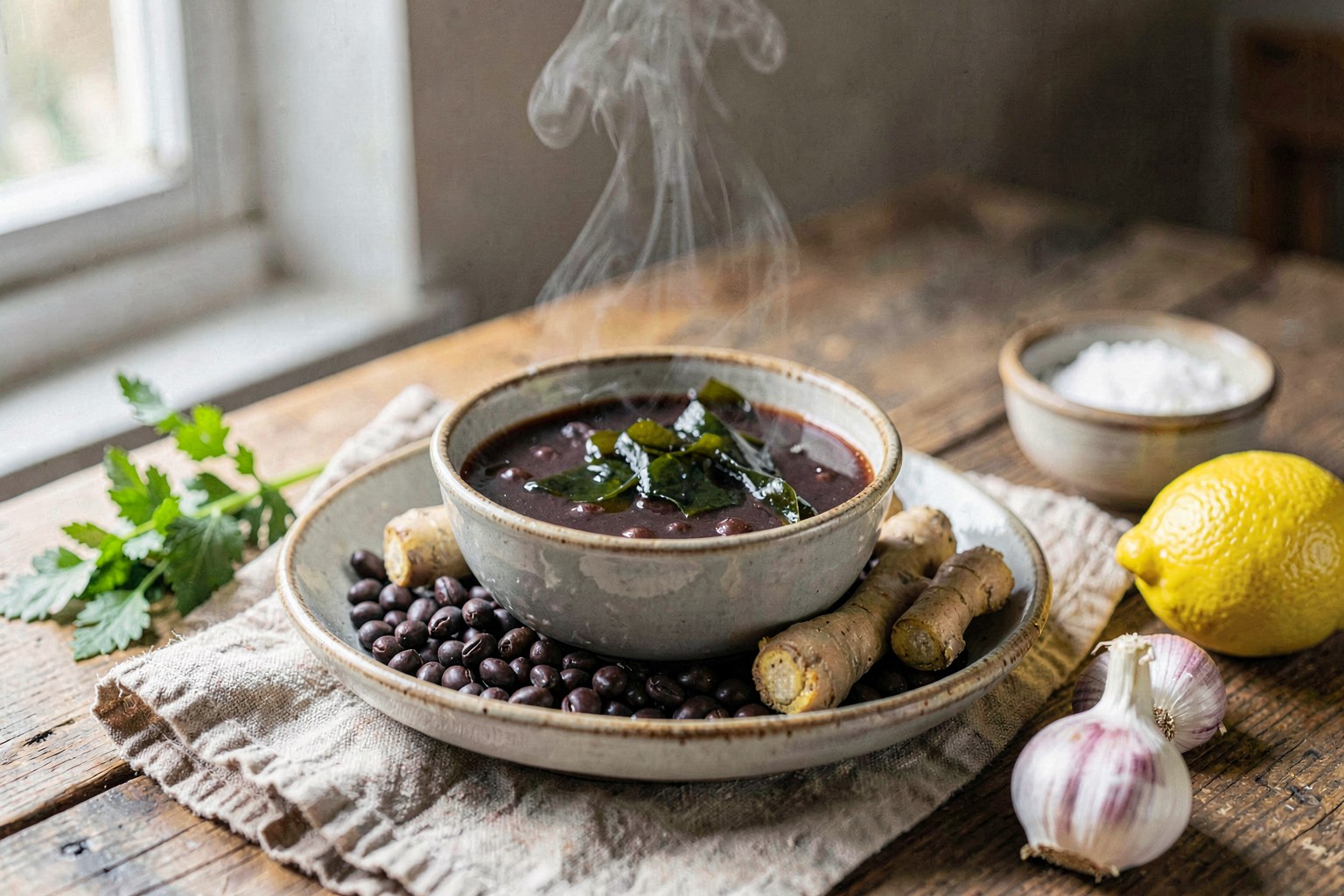
A warm, velvety elixir made from organic black soybeans, gently fermented with koji to unlock nutrients, then blended with a touch of wild kelp and ginger. This dish offers a savory, deeply nutty flavor profile that soothes the digestive tract while delivering a potent dose of isoflavones and polyphenols, perfect as a restorative dinner.
A little context
In Okinawa, black soybeans are a staple of the 'Blue Zone' diet, historically consumed to promote vitality and longevity. Traditional preparations often include refined sugar or excessive salt; we honor the tradition by using the natural sweetness of ripe dates and the savory depth of miso and kombu instead. This version strips out all seed oils and processed thickeners, relying solely on the emulsifying power of the beans and a splash of extra-virgin olive oil for healthy fats.
The longevity story
The core of this recipe relies on black soybeans, which are uniquely rich in anthocyanins—the same potent antioxidants found in blueberries that combat oxidative stress. Fermentation with Koji (Aspergillus oryzae) breaks down complex proteins and anti-nutrients like phytic acid, significantly improving mineral absorption and introducing beneficial enzymes for gut health. The addition of wild-harvested kombu provides iodine for thyroid support and glutamates for natural umami, while fresh ginger and turmeric deliver gingerols and curcumin to actively lower systemic inflammation.
Method
- 01
Ferment the Soybeans
Drain and rinse the soaked black soybeans thoroughly. In a clean glass bowl, mix the beans with the koji and 100 ml (½ cup) of filtered water. Cover with a breathable cloth and let sit in a warm spot (28-30°C / 82-86°F) for 12-18 hours. The beans will become fragrant and slightly sweet, indicating enzymatic breakdown has begun.
- 02
Simmer the Base
Transfer the fermented bean mixture to a heavy-bottomed pot. Add the kombu strips, fresh ginger, and turmeric. Pour in the remaining 1100 ml (4½ cups) of filtered water. Bring to a gentle boil, then immediately reduce heat to low. Simmer uncovered for 40 minutes, ensuring the water does not evaporate completely. The beans should be tender enough to mash easily between fingers.
- 03
Remove Aromatics
Remove the pot from heat. Discard the kombu strips, ginger chunks, and turmeric pieces. The water should now be a deep, dark amber color infused with the minerals and spices.
- 04
Blend and Emulsify
Add the pitted dates to the pot. Carefully transfer the entire contents (beans, liquid, dates) to a high-speed blender. Blend on high for 2-3 minutes until the mixture is completely smooth and hot. The friction of the blender will further heat the liquid.
- 05
Strain for Silkiness
Place a fine-mesh nut milk bag or chinois over a large bowl. Pour the blended mixture through the strainer, pressing firmly with a spatula to extract all the liquid. Discard the remaining fibrous pulp (or save for baking). The result should be a rich, dark, opaque liquid.
- 06
Finish and Serve
Return the strained liquid to the pot over low heat. Whisk in the white miso paste until fully dissolved. Remove from heat immediately to preserve the live enzymes in the miso. Stir in the extra-virgin olive oil. Serve warm in small bowls. The texture should be creamy like a light custard.
Nutrition facts
Per serving · 1 of 4- — Saturated
- 2 g
- — Polyunsaturated
- 5 g
- Carbohydrates
- 17 g
- — Fiber
- 5 g
- — Sugars
- 5 g
- Cholesterol
- 0 mg
- Sodium
- 332 mg
- Potassium
- 420 mg
Estimated from USDA FoodData Central for matched ingredients (67% ingredient coverage). Values vary with brand, preparation, and exact measurements.
Pro tips
- ✦Sourcing is critical: Look for 'non-GMO' and 'organic' black soybeans to avoid glyphosate residues, which are common in conventional soy crops.
- ✦The fermentation step is non-negotiable for gut health; if you cannot wait 12 hours, you will lose the enzymatic benefits and the texture will be gritty.
- ✦Do not boil the mixture after adding the miso, as high heat kills the beneficial probiotics.
- ✦If the mixture is too thick, thin it with warm water; if too thin, blend in a few soaked raw cashews for extra creaminess without dairy.
- ✦Store the leftover pulp in the freezer; it is excellent for thickening soups or adding fiber to oatmeal.
Shop this recipe
As an Amazon Associate we earn from qualifying purchases.
Substitutions
- black soybeans → organic adzuki beans (Will be lighter in color and slightly less polyphenol-dense, but still gut-friendly.)
- white shiro miso → yellow miso (Adds a deeper umami flavor; ensure it is gluten-free if needed.)
- Medjool dates → pure monk fruit syrup or 1 tsp pure maple syrup (Use sparingly to maintain low glycemic load.)
Storage
Refrigerate in a glass container for up to 3 days. The mixture will thicken as it cools; reheat gently on the stove with a splash of water. Do not freeze, as the emulsion may separate upon thawing.
What to serve with it
- A small side of pickled daikon radish (without sugar)
- Matcha tea (unsweetened) to complement the polyphenol load
- A small portion of steamed leafy greens (kale or chard) tossed in lemon and EVOO
FAQ
Why is it called 'soy milk' if it's fermented?+
In Okinawa, 'soy milk' often refers to the final liquid extraction. The fermentation with koji is a traditional method to pre-digest the beans, making them easier to absorb and reducing gas, which is crucial for longevity diets.
Can I skip the fermentation step?+
You can cook the beans directly, but you will lose the probiotic and enzyme benefits of the koji. The texture will also be less creamy and more 'beany'.
Is this high in estrogen?+
Soy contains phytoestrogens, but fermentation significantly reduces their bioavailability and shifts the profile to be more gut-friendly. For most people, moderate consumption of fermented soy is beneficial, not harmful.
Share this recipe
Notes from the community
Sign in to leave a note.
No notes yet — be the first.
You might also like