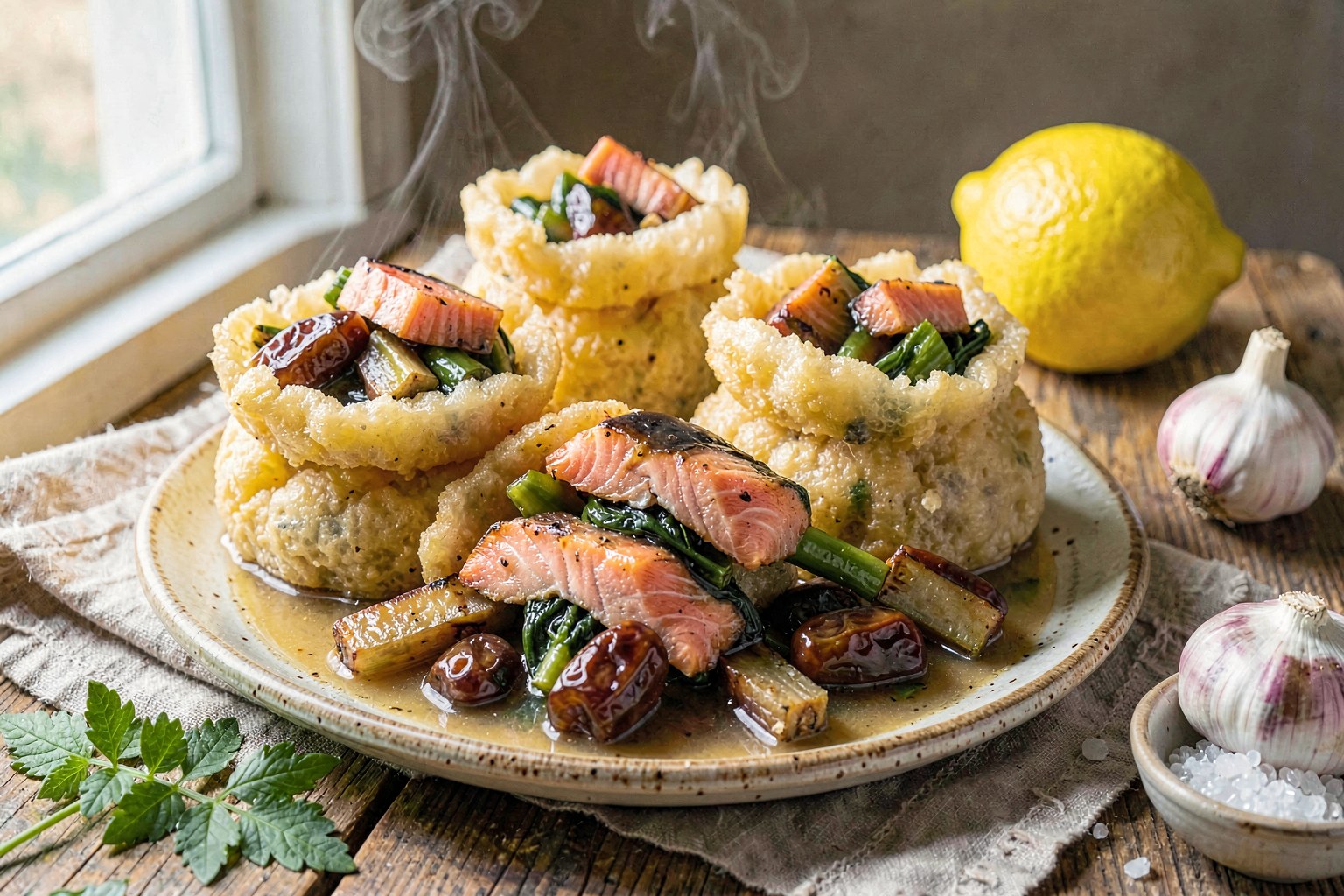
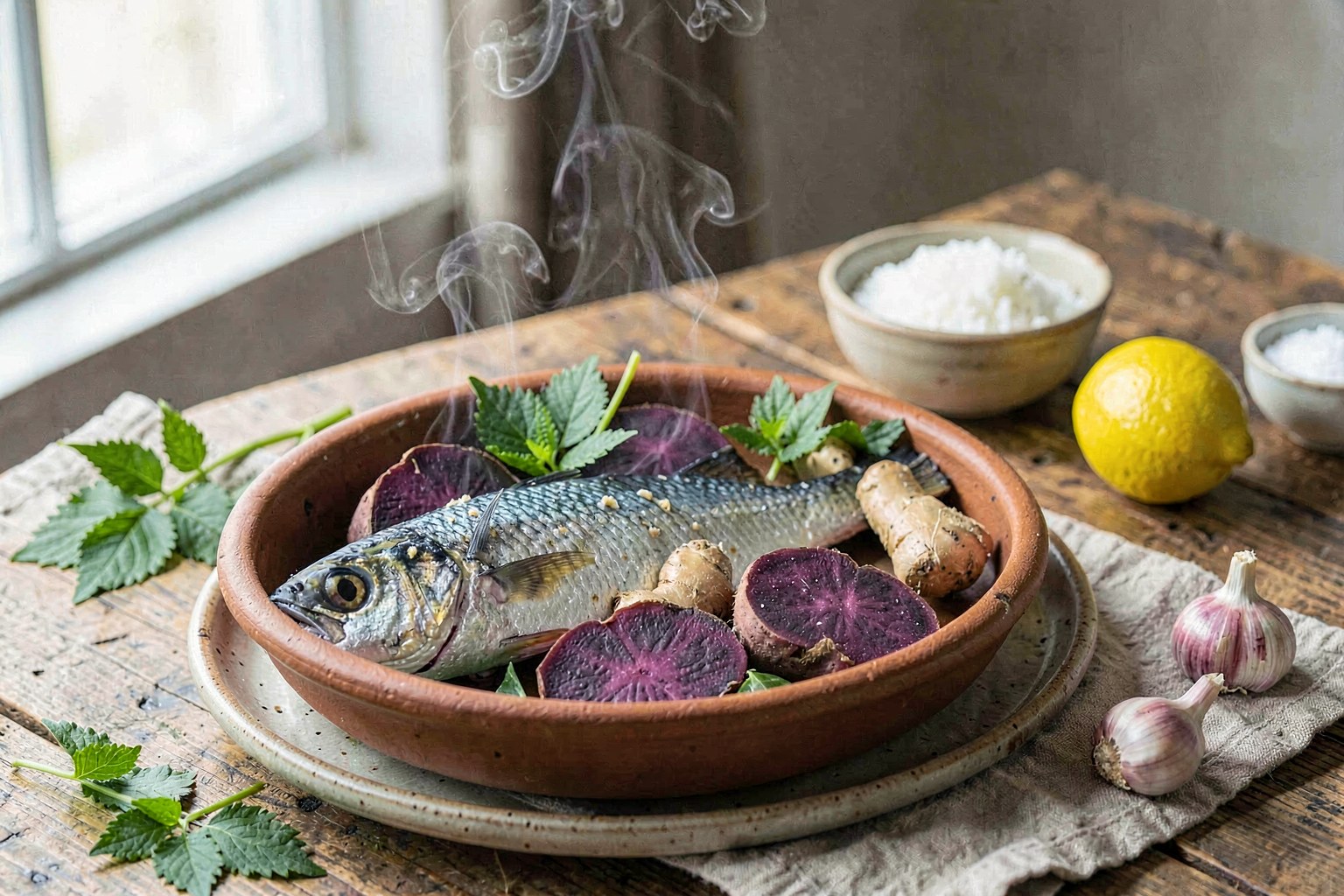
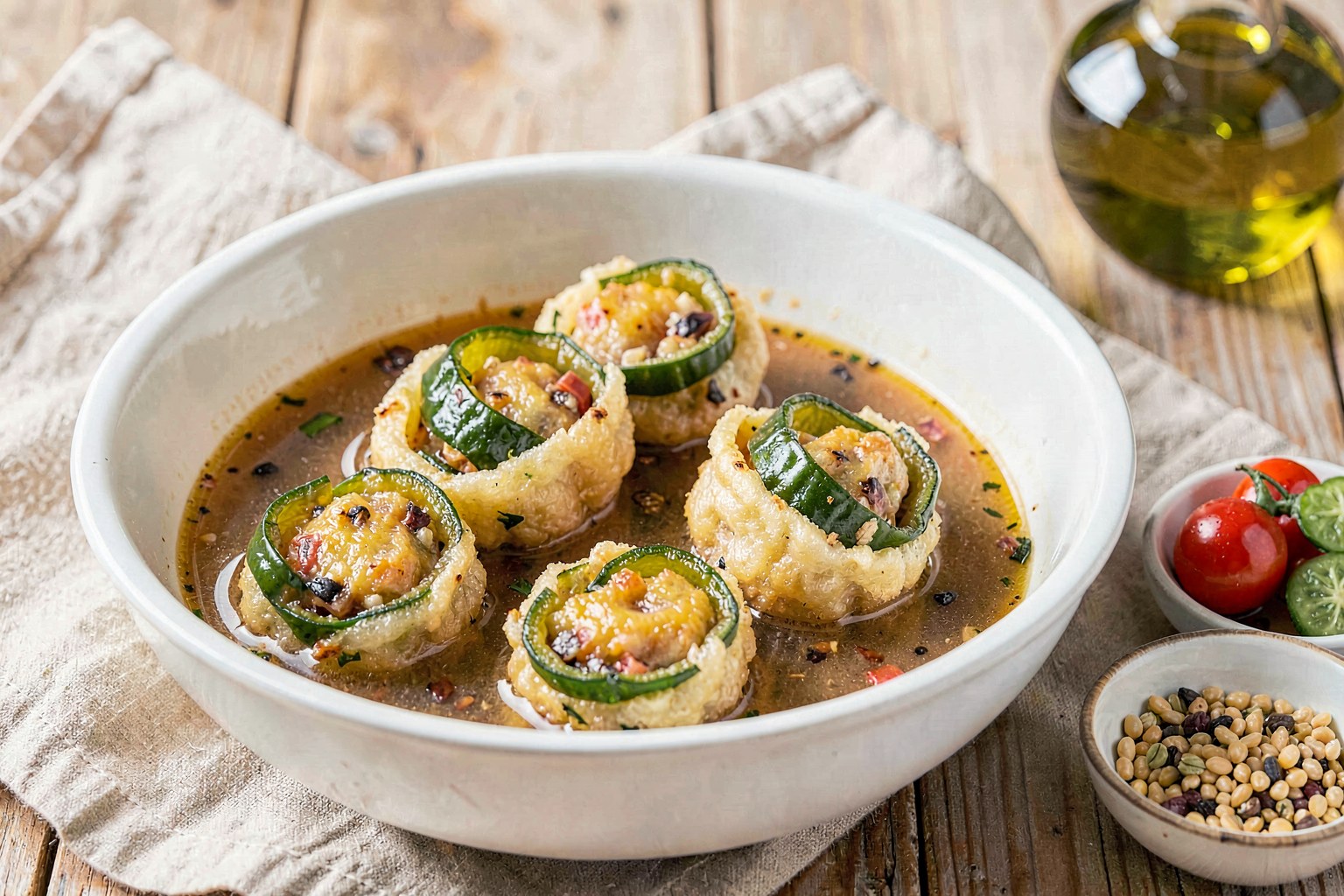
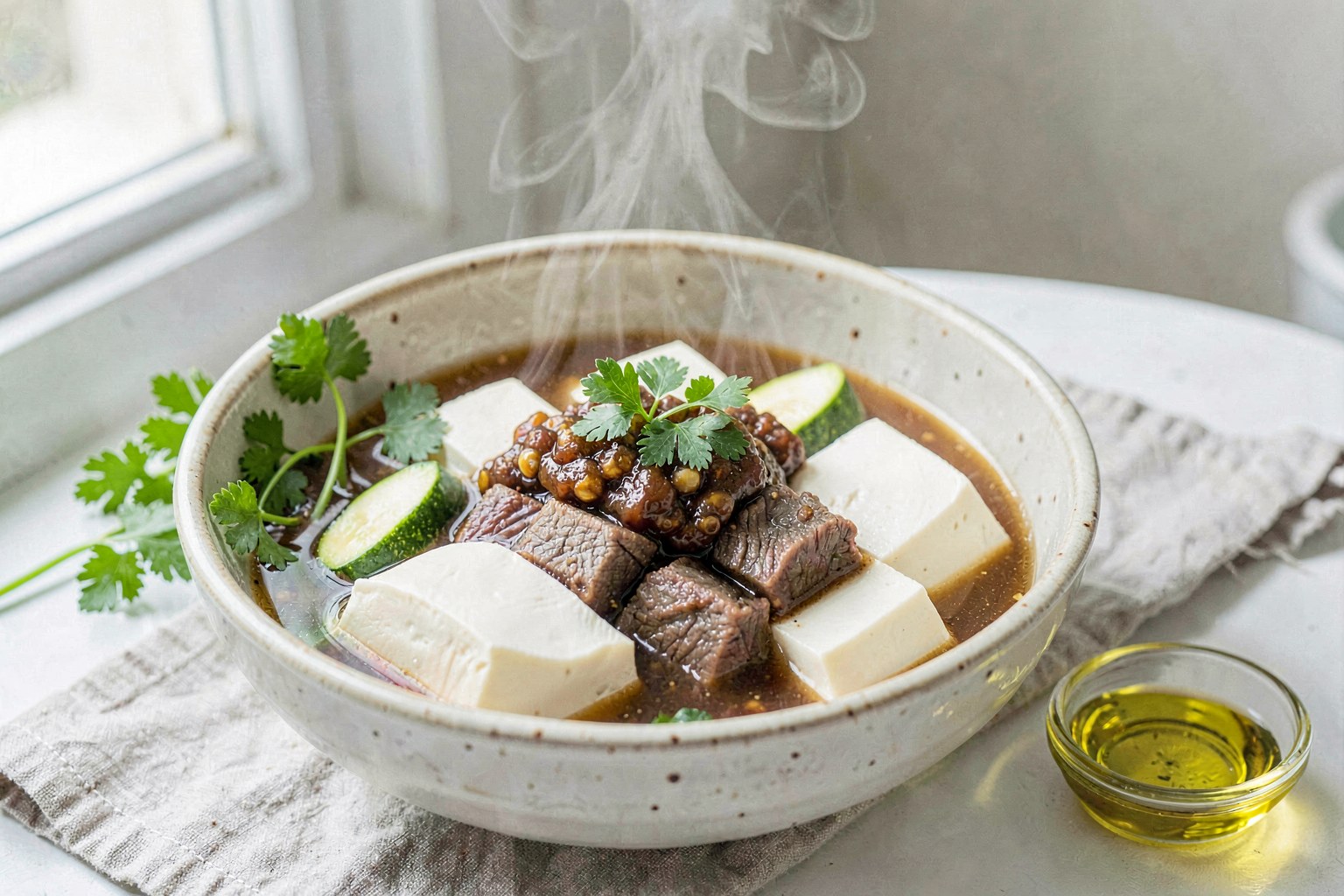
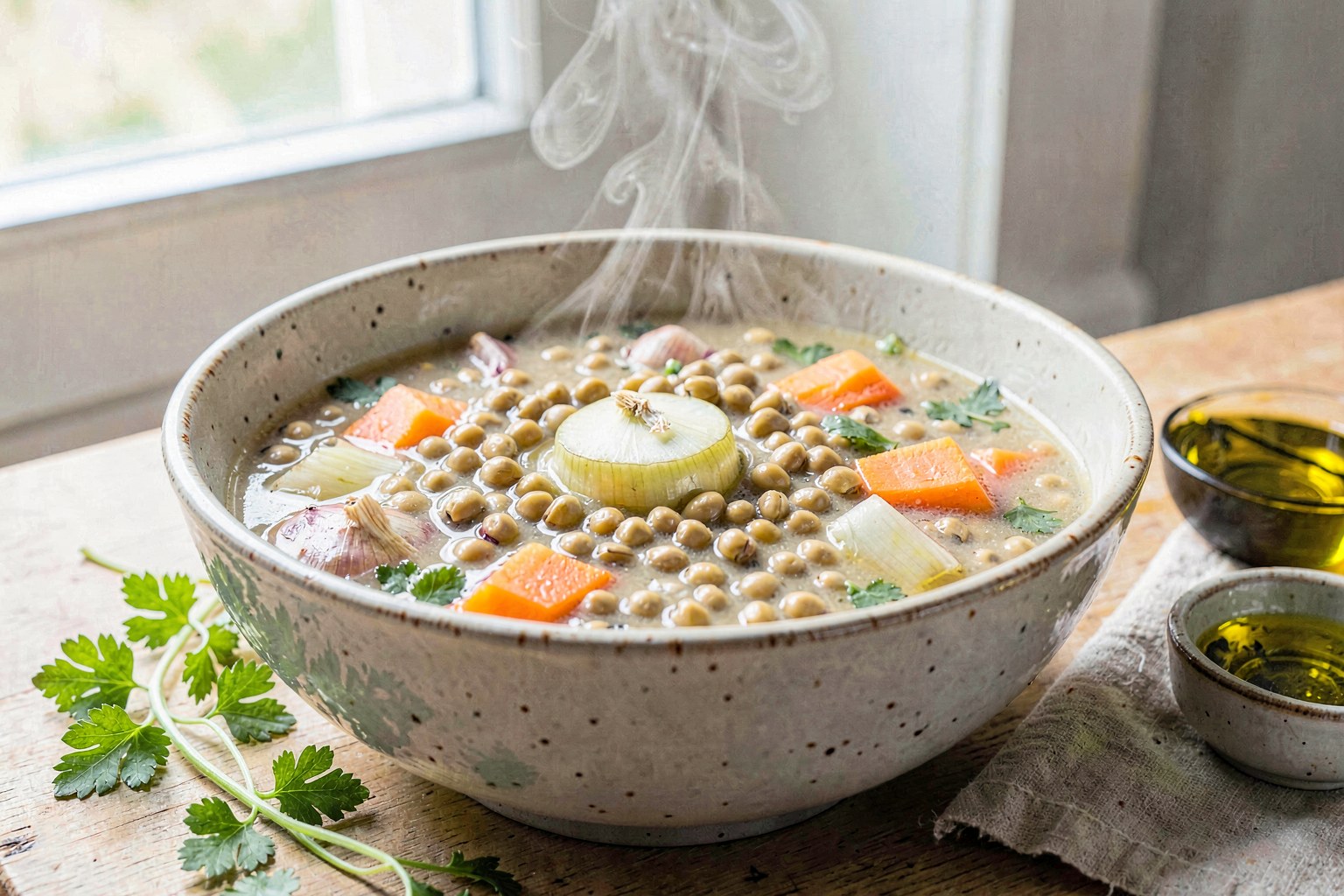
Tubimoto: Okinawan Herring & Daikon Stew
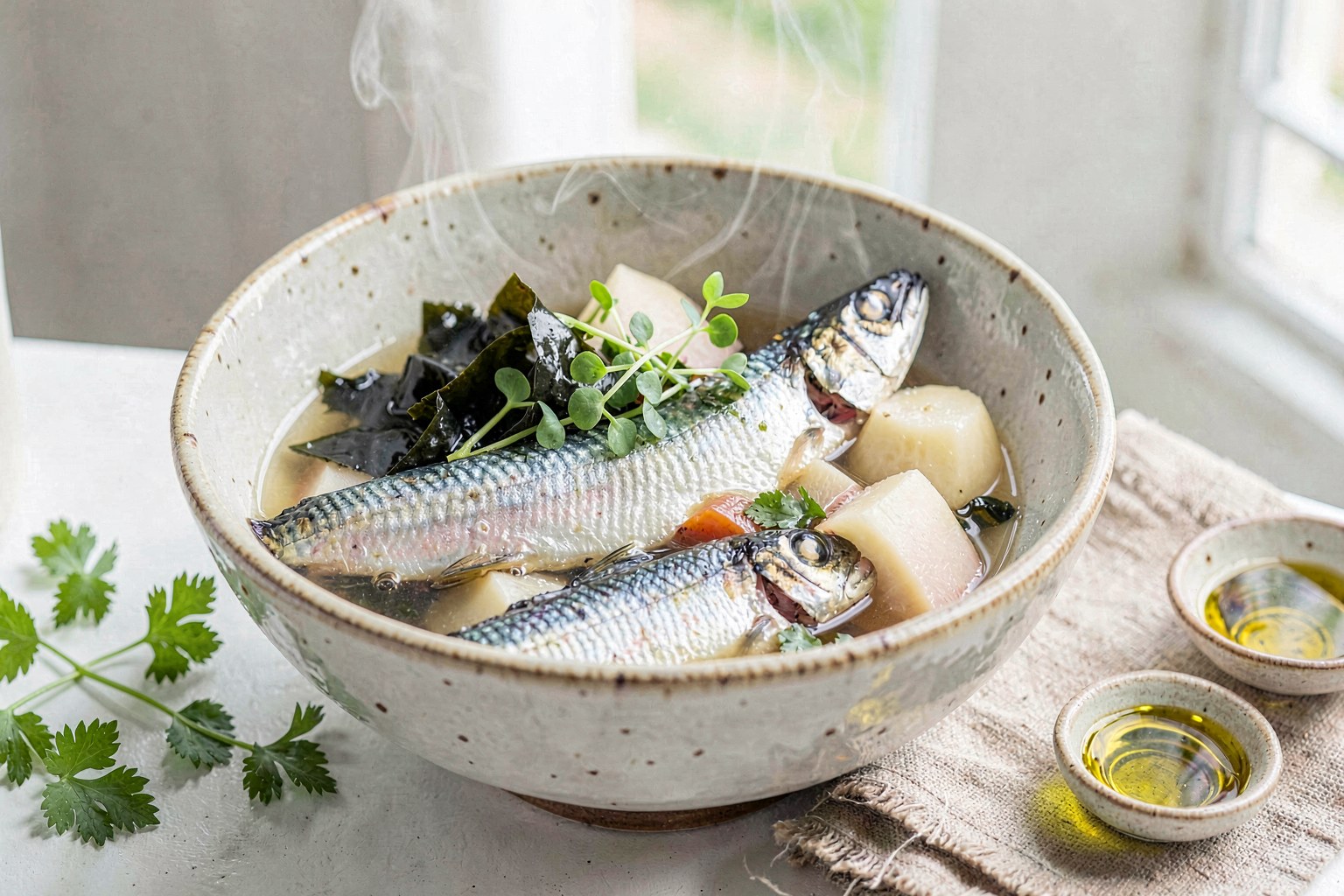
A nourishing Okinawan staple where wild-caught herring simmers with digestive daikon radish and mineral-rich seaweed in a clean dashi broth. Savory, umami-rich, and lightly sweetened with whole dates instead of refined sugar, this stew delivers deep flavor without inflammatory load.
A little context
Tubimoto is a traditional Okinawan dish often prepared for longevity celebrations. We honor the tradition by keeping the herring and daikon base intact but swap refined sugar for date syrup and use organic, traditionally brewed soy sauce to eliminate ultra-processed additives and seed oils.
The longevity story
Wild herring provides dense omega-3 fatty acids crucial for cellular membrane health and inflammation reduction. Daikon radish contains diastase enzymes that support protein digestion, while kombu seaweed offers iodine and polyphenols for thyroid and metabolic function. The broth avoids refined sugars, relying on the natural sweetness of root vegetables and a touch of date syrup for balance.
Method
- 01
Prepare the Dashi
Combine filtered water and kombu in the pot. Soak for 30 minutes to extract minerals, then heat over medium until just below a boil. Remove kombu immediately to prevent bitterness.
- 02
Prep the Herring
Pat herring fillets dry with paper towels. Use a sharp knife to lightly score the skin in a crosshatch pattern to prevent curling during the simmer.
- 03
Sauté Aromatics
Heat the extra-virgin olive oil over medium heat. Add ginger and garlic, cooking for 1 minute until fragrant but not browned to preserve volatile oils.
- 04
Simmer Daikon
Add the daikon rounds to the dashi broth. Bring to a gentle simmer and cook for 15 minutes until the radish is translucent and tender.
- 05
Season the Broth
Stir in the organic tamari and date syrup. Taste the broth; it should be savory with a subtle sweet balance. Adjust carefully.
- 06
Poach the Fish
Nestle the herring fillets into the broth, skin side up. Reduce heat to low and simmer gently for 10 minutes. Do not stir vigorously to keep fillets intact.
- 07
Finish with Seaweed
Turn off the heat. Add the rehydrated wakame and let steep in the hot broth for 2 minutes to absorb flavor without overcooking.
- 08
Serve
Ladle into deep bowls, ensuring each serving gets fish, daikon, and broth. Garnish generously with sliced green onions.
Nutrition facts
Per serving · 1 of 4- — Saturated
- 4 g
- — Polyunsaturated
- 10 g
- Carbohydrates
- 24 g
- — Fiber
- 9 g
- — Sugars
- 5 g
- Cholesterol
- 0 mg
- Sodium
- 635 mg
- Potassium
- 973 mg
Estimated from USDA FoodData Central for matched ingredients (73% ingredient coverage). Values vary with brand, preparation, and exact measurements.
Pro tips
- ✦Source herring from cold waters (North Atlantic) for the best omega-3 profile and firm texture.
- ✦Do not overcook the fish; it continues to cook in the hot broth after the heat is off.
- ✦Use a knife to score the skin to prevent curling during the simmering process.
- ✦Rehydrate wakame in cold water first to remove excess salt and prevent a mushy texture.
- ✦Save the leftover broth; it freezes well and makes an excellent base for future miso soup.
Shop this recipe
As an Amazon Associate we earn from qualifying purchases.
Substitutions
- wild-caught herring → wild-caught mackerel or sardines (similar fat profile, adjust cooking time slightly for smaller fish)
- organic gluten-free tamari → coconut aminos (lower sodium, similar umami, naturally gluten-free)
- date syrup → monk fruit syrup (zero glycemic impact for stricter low-carb adherence)
Storage
Fridge 3 days in a glass container; freezes well portioned up to 2 months. Thaw in fridge overnight before reheating gently.
What to serve with it
- Matcha green tea
- Warm brown rice (sprouted)
- Sparkling water with lemon
- Dry red wine (optional, in moderation)
FAQ
Can I use canned herring?+
Fresh or high-quality frozen fillets are best to control sodium and texture. Canned versions often contain added oils or salt that disrupt the clean broth balance.
Why date syrup instead of sugar?+
Traditional recipes use white sugar. We use date syrup to maintain the sweet-savory balance without spiking blood glucose or introducing refined carbohydrates.
Can I add katsuobushi (bonito flakes)?+
Yes, adding 10g of organic bonito flakes during the dashi soak adds depth. Remove before simmering daikon to prevent bitterness.
Share this recipe
Notes from the community
Sign in to leave a note.
No notes yet — be the first.
You might also like