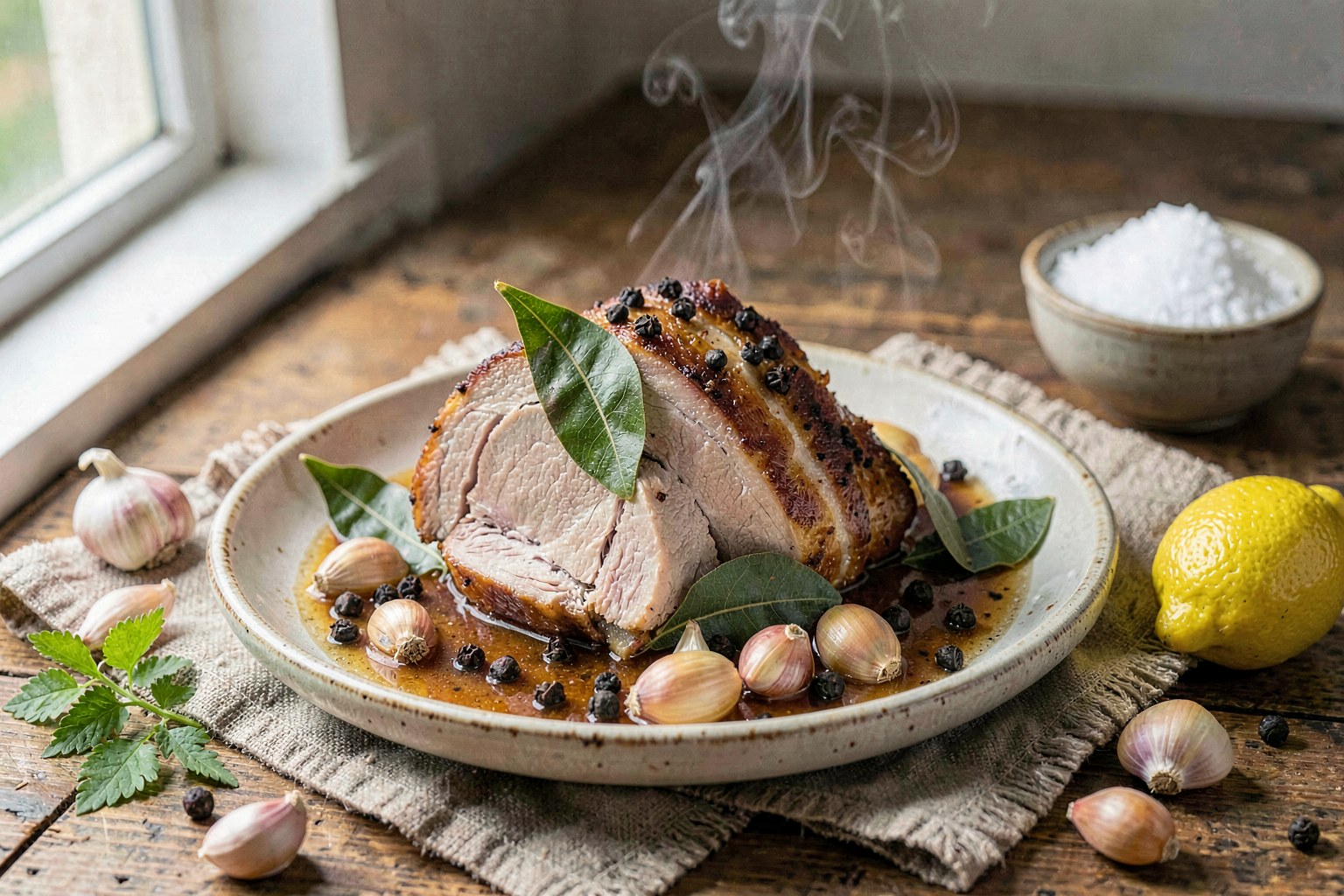
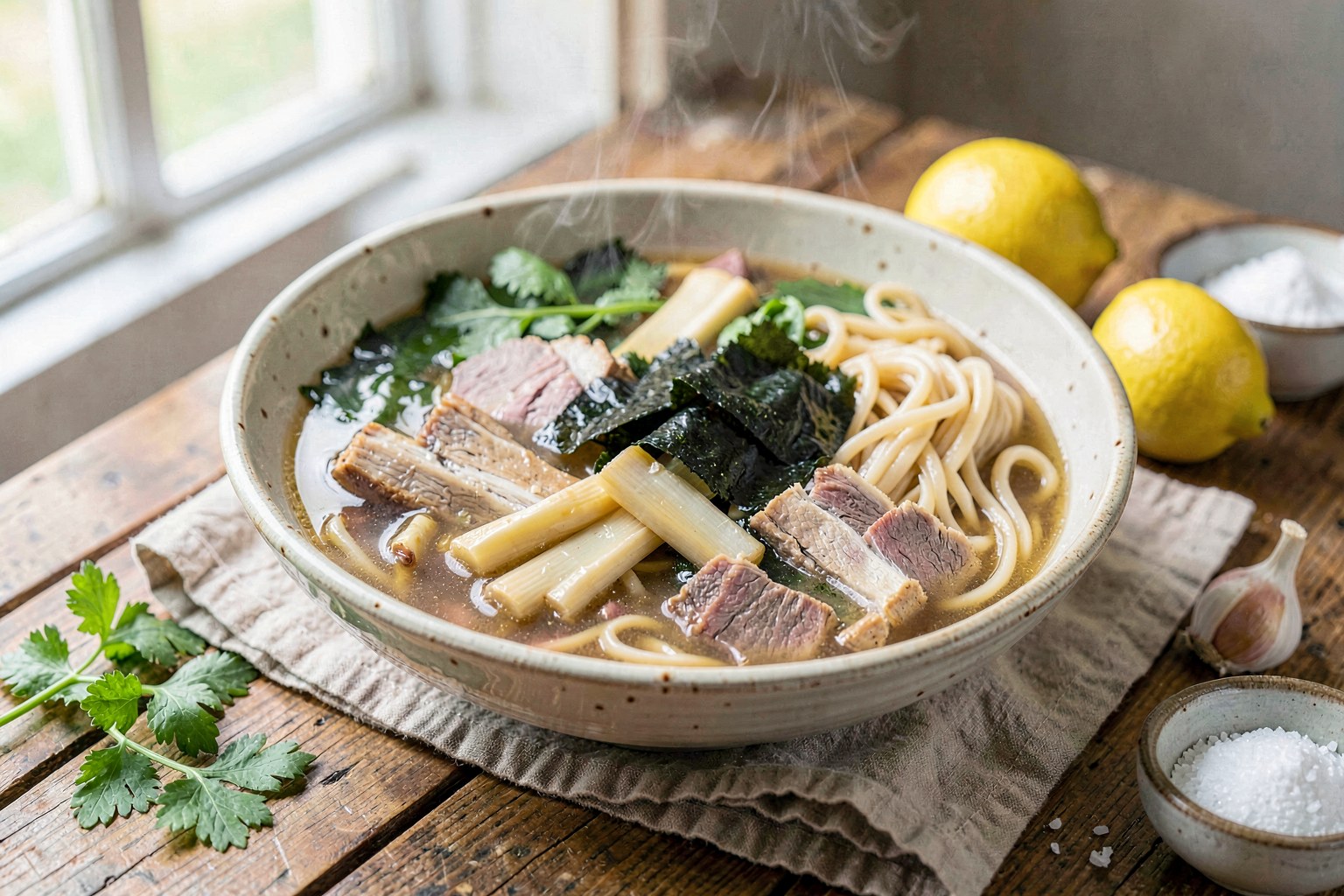
Okinawan Longevity Kishimen-Style Broth Bowl
Flat rice noodles swim in a rich, pasture-raised pork bone broth layered with bamboo shoots, seaweed, and fresh greens. This dish delivers the savory depth of traditional ramen without refined sugar or seed oils, focusing on collagen-rich stocks and polyphenol-dense vegetables.
A little context
This recipe adapts the Okinawan Blue Zone tradition of 'Hara Hachi Bu' (eating until 80% full) and high vegetable intake. While traditional Kishimen uses wheat, we use flat rice noodles to honor the Okinawan preference for lower-glycemic carbohydrates. We have swapped the traditional sugar-heavy tare for a clean date syrup and coconut aminos blend to eliminate refined sugars while preserving the umami profile.
The longevity story
The bone broth provides bioavailable collagen and glycine, supporting gut lining integrity and joint health. Bamboo shoots offer prebiotic fiber that feeds beneficial gut bacteria, while kombu seaweed adds iodine and polyphenols for thyroid and antioxidant support. By replacing refined sugar in the tare with date syrup, we maintain flavor complexity without spiking insulin, aligning with longevity protocols.
Method
- 01
Blanch the bones
Place pork bones in the stockpot, cover with cold water, and bring to a boil for 5 minutes. Drain and rinse bones thoroughly to remove impurities that cloud the broth.
- 02
Simmer the stock
Return bones to the clean pot with 2 L filtered water, sliced ginger, and kombu. Bring to a bare simmer (do not boil) and cook for 45 minutes. The kombu should be removed after 20 minutes to prevent bitterness.
- 03
Prepare the tare
While the stock simmers, whisk together coconut aminos and date syrup in a small bowl. Taste and adjust; it should be salty-sweet but not cloying.
- 04
Cook the noodles
Boil a separate pot of salted water. Cook flat rice noodles according to package instructions until al dente. Drain and rinse briefly with warm water to prevent sticking.
- 05
Sear the pork topping
Heat avocado oil in a skillet over medium-high heat. Sear the sliced pork belly for 2-3 minutes until edges crisp. Set aside.
- 06
Blanch the greens
Drop the spinach or choy sum into the boiling noodle water for 30 seconds. Remove and drain well.
- 07
Strain the broth
Remove bones and ginger from the stock pot. Pour the broth through a chinois or fine-mesh strainer into a clean pot. Keep warm over low heat.
- 08
Assemble the bowls
Divide noodles among 4 deep bowls. Ladle hot broth over noodles. Add the tare mixture to the bottom of each bowl before adding broth, or drizzle over top.
- 09
Garnish and serve
Top with bamboo shoots, seared pork belly, blanched greens, and green onions. Serve immediately while broth is piping hot.
Nutrition facts
Per serving · 1 of 4- — Saturated
- 13 g
- — Polyunsaturated
- 1 g
- Carbohydrates
- 32 g
- — Fiber
- 4 g
- — Sugars
- 4 g
- Cholesterol
- 0 mg
- Sodium
- 104 mg
- Potassium
- 637 mg
Estimated from USDA FoodData Central for matched ingredients (58% ingredient coverage). Values vary with brand, preparation, and exact measurements.
Pro tips
- ✦Source kombu from a trusted supplier to ensure it is harvested from clean waters free of heavy metals.
- ✦Do not overcook the rice noodles; they absorb broth quickly and can turn mushy if not timed perfectly.
- ✦For a richer broth, add a dash of miso paste (check for no sugar) at the very end, off the heat.
- ✦Blanch the greens briefly to retain their bright color and crunch.
Shop this recipe
As an Amazon Associate we earn from qualifying purchases.
Substitutions
- pasture-raised pork bones → organic chicken carcasses or beef marrow bones (adjust simmer time: chicken 30 min, beef 2+ hours)
- flat rice noodles → shirataki noodles (lower calorie, higher fiber, requires rinsing well)
- date syrup → monk fruit syrup (zero glycemic impact for stricter protocols)
Storage
Store broth and noodles separately in glass containers. Broth keeps 5 days refrigerated; noodles should be eaten within 2 days. Freeze broth in portions for up to 3 months.
What to serve with it
- Hot green tea or hojicha to aid digestion
- Sparkling water with a wedge of yuzu or lemon
- Side of fermented pickled radish (no sugar)
FAQ
Why use coconut aminos instead of soy sauce?+
Traditional soy sauce often contains added sugar and wheat. Coconut aminos provide the necessary umami without the refined sugar or gluten, fitting the longevity profile.
Can I make the broth ahead?+
Yes, the broth actually improves in flavor after 24 hours in the fridge. Make it 2 days in advance for a quick dinner assembly.
Share this recipe
Notes from the community
Sign in to leave a note.
No notes yet — be the first.
You might also like