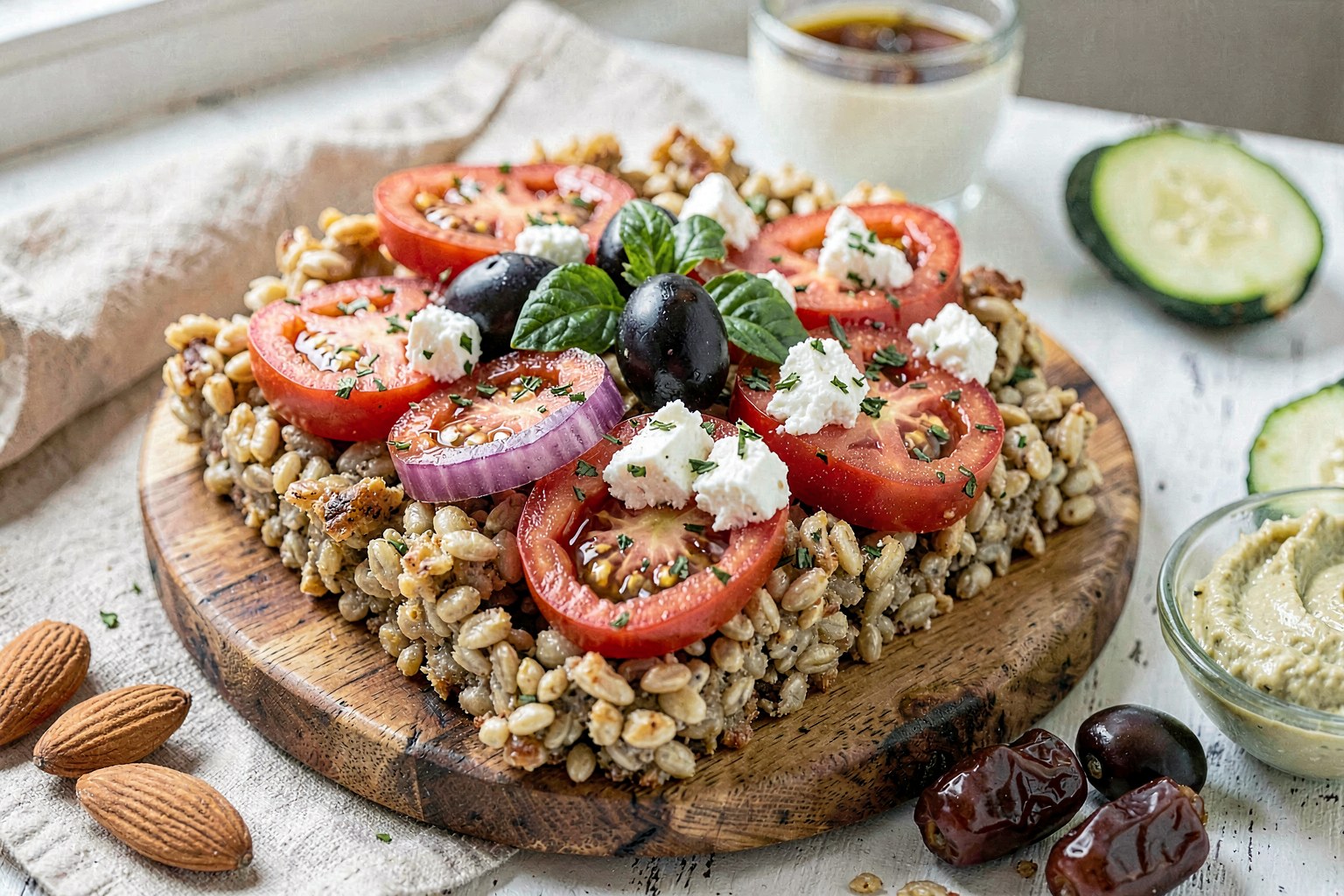
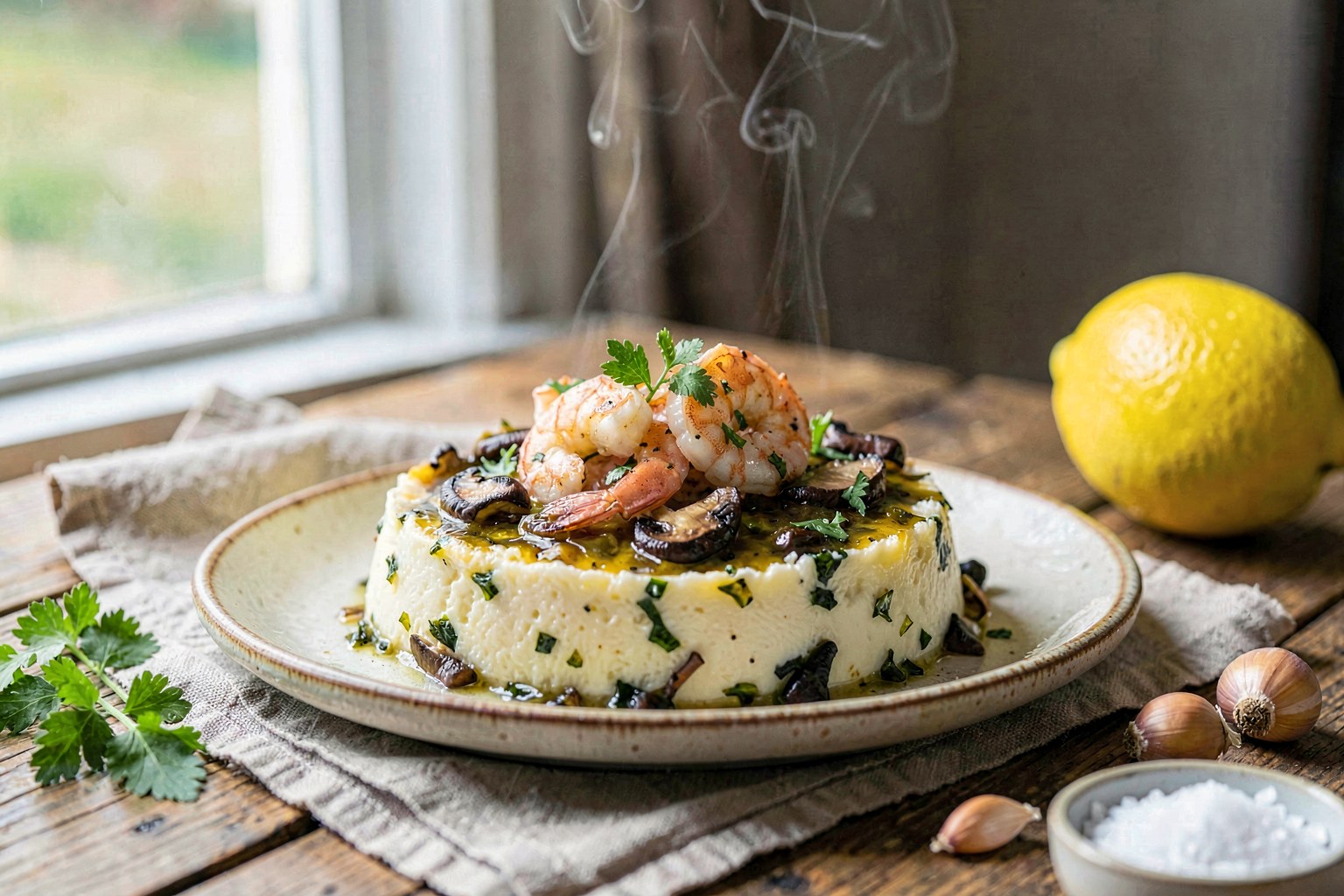
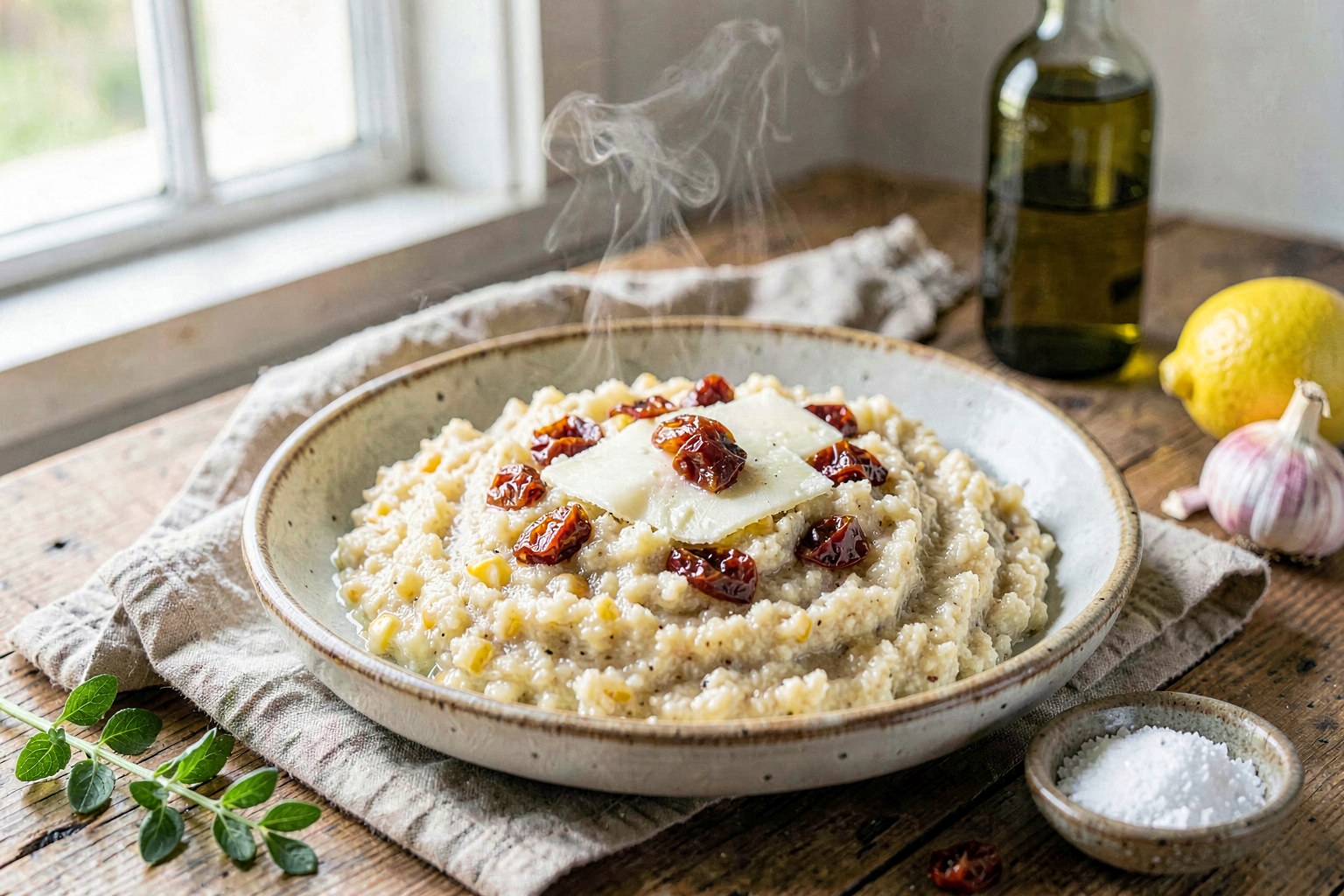
Polenta alla Sarda: Creamy Cornmeal with Aged Pecorino & Sun-Dried Tomatoes
A slow-cooked, velvety cornmeal porridge rooted in Sardinian tradition, elevated with the umami depth of aged Pecorino Romano and the concentrated antioxidants of sun-dried tomatoes. This breakfast delivers sustained energy through complex carbohydrates and healthy fats, free from refined sugars and industrial seed oils.
A little context
In the Blue Zone of Sardinia, polenta is a daily staple, traditionally cooked over open fires with local sheep's milk cheese. We honor this heritage by using organic, non-GMO cornmeal and high-quality, pasture-raised sheep's milk cheese, stripping away any modern shortcuts like butter substitutes or added sugars that sometimes creep into contemporary versions.
The longevity story
This dish leverages the polyphenol density of extra-virgin olive oil and sun-dried tomatoes to combat oxidative stress, while the fermentation in aged Pecorino supports gut microbiome diversity. The stone-ground cornmeal provides a low-glycemic fiber source that prevents insulin spikes, unlike refined wheat breakfasts. Grass-fed dairy fats and the antioxidants in the tomatoes work synergistically to reduce systemic inflammation, aligning with longevity protocols.
Method
- 01
Prepare the liquid base
In your heavy-bottomed pot, bring 1000 ml (4 cups) of filtered water to a gentle simmer over medium heat. Add the sea salt and 15 ml (1 tbsp) of extra-virgin olive oil.
- 02
Sift and stream the cornmeal
While the water simmers, sift the 250 g (1 ¼ cups) of cornmeal into a bowl to remove any large husk fragments. Slowly pour the cornmeal into the simmering water in a thin, steady stream while whisking continuously to prevent lumps from forming.
- 03
The slow cook
Reduce the heat to low. Switch to a wooden spoon if using a whisk. Stir frequently, scraping the bottom and corners of the pot to ensure even cooking. Cook for 40–45 minutes until the polenta is thick, creamy, and the raw corn taste has disappeared. It should pull away slightly from the sides of the pot when stirred.
- 04
Enrich with cheese
Remove the pot from the heat. Immediately stir in half of the grated Pecorino Romano (50 g / ½ cup) and the reserved sun-dried tomato oil (or fresh EVOO). Stir vigorously until the cheese melts completely and the polenta becomes glossy.
- 05
Rest and aerate
Cover the pot and let the polenta rest for 5 minutes. This allows the starches to fully hydrate and the texture to stabilize. Give it one final stir to fluff it up.
- 06
Plate and finish
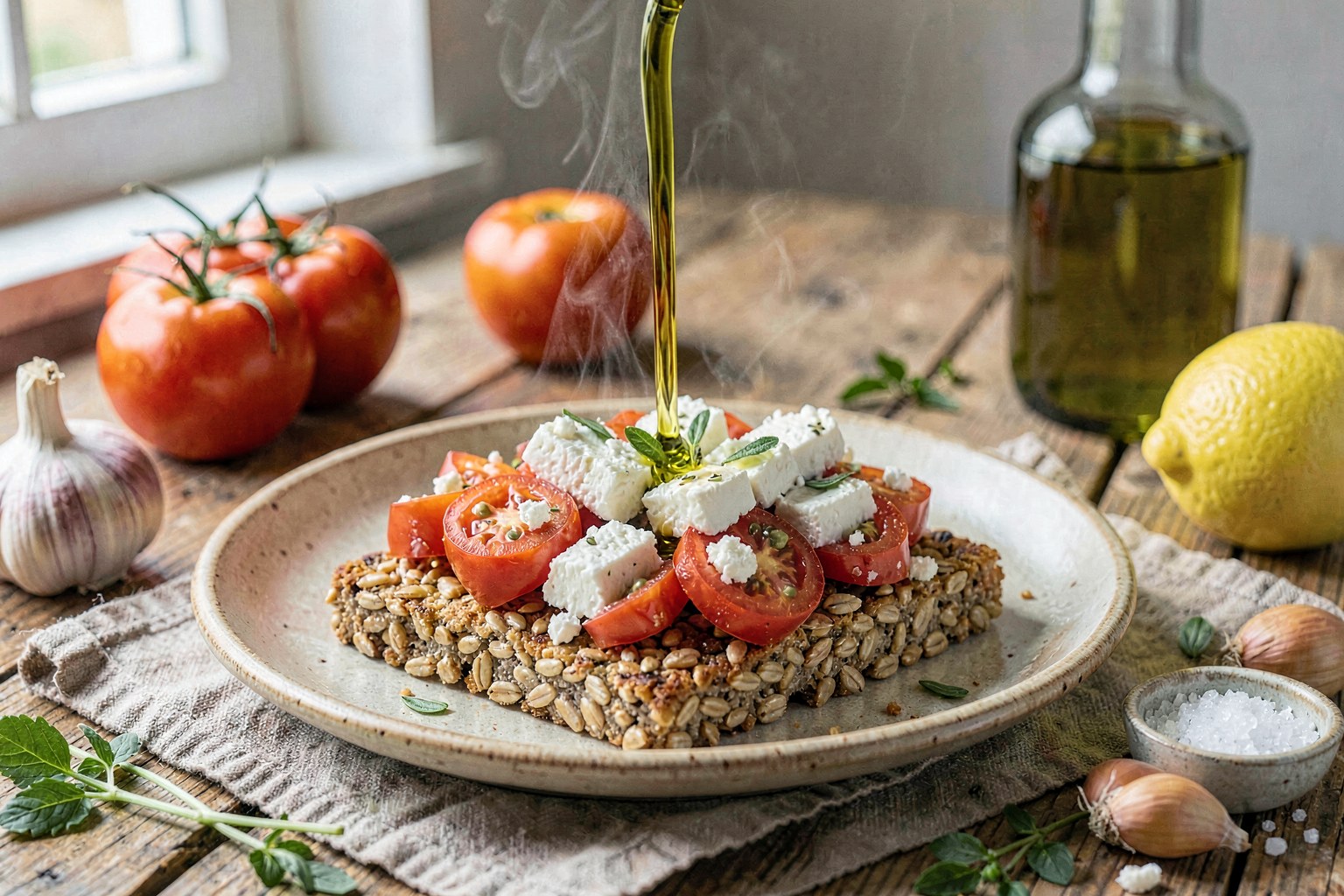
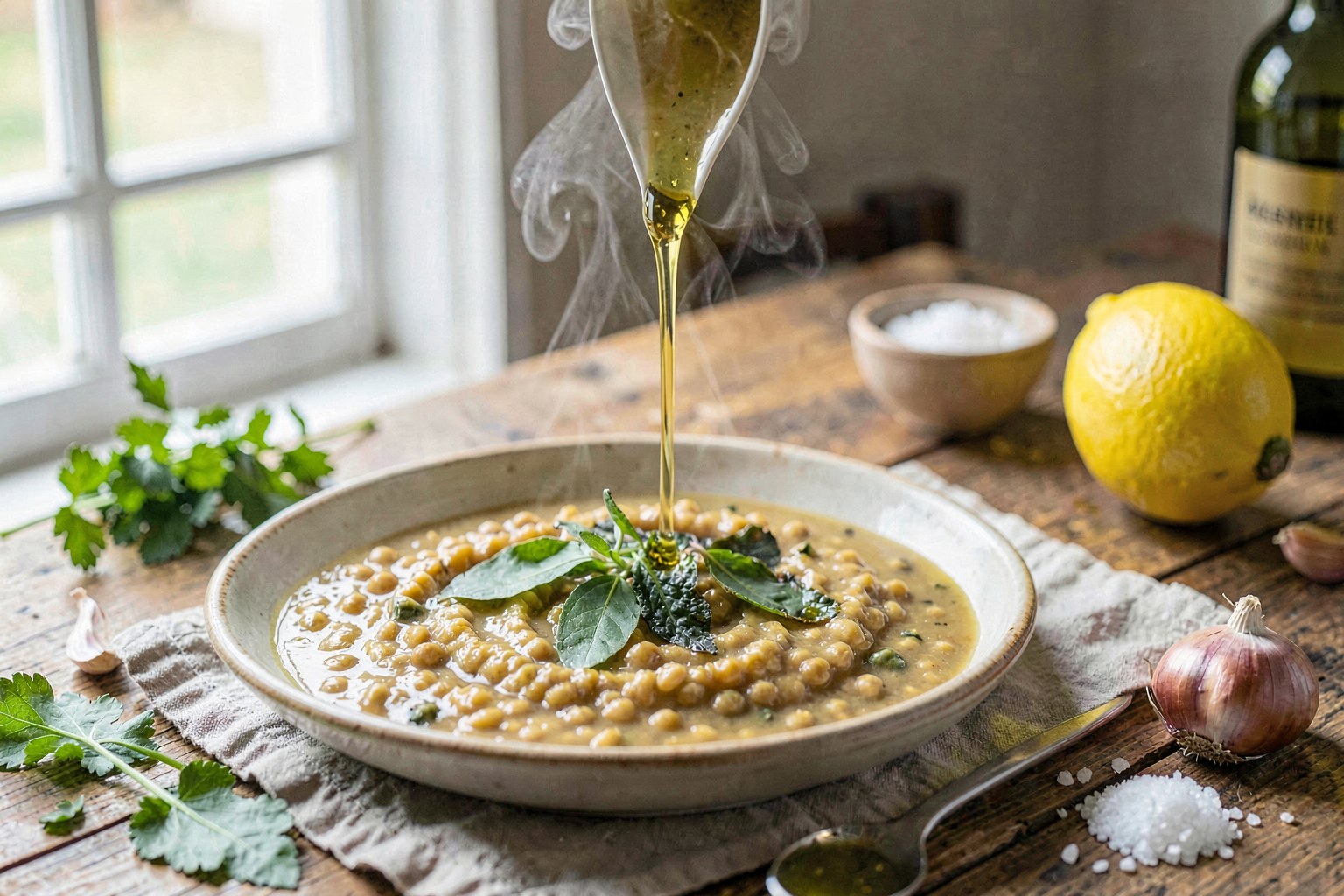
Divide the hot polenta into four shallow bowls. Top generously with the remaining grated Pecorino, the chopped sun-dried tomatoes, and fresh torn basil. Drizzle with a final thread of high-quality extra-virgin olive oil before serving.
Nutrition facts
Per serving · 1 of 4- — Saturated
- 3 g
- — Polyunsaturated
- 3 g
- Carbohydrates
- 53 g
- — Fiber
- 7 g
- — Sugars
- 1 g
- Cholesterol
- 0 mg
- Sodium
- 544 mg
- Potassium
- 570 mg
Estimated from USDA FoodData Central for matched ingredients (75% ingredient coverage). Values vary with brand, preparation, and exact measurements.
Pro tips
- ✦Patience is the secret ingredient: Rushing the cooking time results in a gritty texture; the 45-minute low-and-slow method is non-negotiable for creaminess.
- ✦Source your sun-dried tomatoes carefully: Many commercial brands add sugar or sulfites; look for 'organic, sun-dried in olive oil' with no other ingredients listed.
- ✦The 'wooden spoon test': The polenta is done when the spoon leaves a clear trail through the mixture that slowly fills back in, rather than the mixture being liquid or rock hard.
- ✦Cheese quality matters: Ensure the Pecorino is 100% sheep's milk and aged at least 12 months for the complex, savory umami that balances the corn sweetness.
- ✦Temperature control: If the polenta thickens too much while resting, stir in a splash of warm water to loosen it back to a pourable consistency.
Shop this recipe
As an Amazon Associate we earn from qualifying purchases.
Substitutions
- Pecorino Romano → Grass-fed aged sheep's milk cheese or high-quality Parmigiano Reggiano (Parmigiano is cow's milk but offers similar umami; ensure it is grass-fed for better omega-3 profile.)
- Sun-dried tomatoes → Fresh roasted cherry tomatoes or high-quality tomato paste cooked down with EVOO (Fresh tomatoes will be less concentrated in polyphenols but are a valid seasonal alternative.)
- Stone-ground cornmeal → Organic polenta flour (fine grind) (Cook time may be reduced to 20-25 minutes; texture will be less rustic.)
Storage
Store cooled polenta in a glass container in the refrigerator for up to 3 days. Reheat gently with a splash of water or milk to restore creaminess. Do not freeze, as the texture of cornmeal can become grainy upon thawing.
What to serve with it
- Hot matcha green tea or ceremonial grade green tea
- Sparkling water with a wedge of fresh lemon and a pinch of sea salt
- A small glass of dry, low-sulfite red wine (e.g., Cannonau from Sardinia) if consuming later in the day
- Fresh orange segments or a small handful of walnuts for added crunch
FAQ
Why does my polenta taste gritty?+
This usually means it wasn't cooked long enough or the heat was too high. Polenta requires 40+ minutes of low heat to fully gelatinize the starches. Also, ensure you are using stone-ground cornmeal, not instant.
Can I make this vegan?+
Yes, omit the Pecorino and use a high-quality nutritional yeast or a cashew-based cheese sauce, though the traditional sheep's milk cheese provides a specific fermentation profile that is hard to replicate.
Is corn gluten-free?+
Corn is naturally gluten-free, but cross-contamination can occur in processing. Always buy certified gluten-free organic cornmeal to be safe.
Share this recipe
Notes from the community
Sign in to leave a note.
No notes yet — be the first.
You might also like