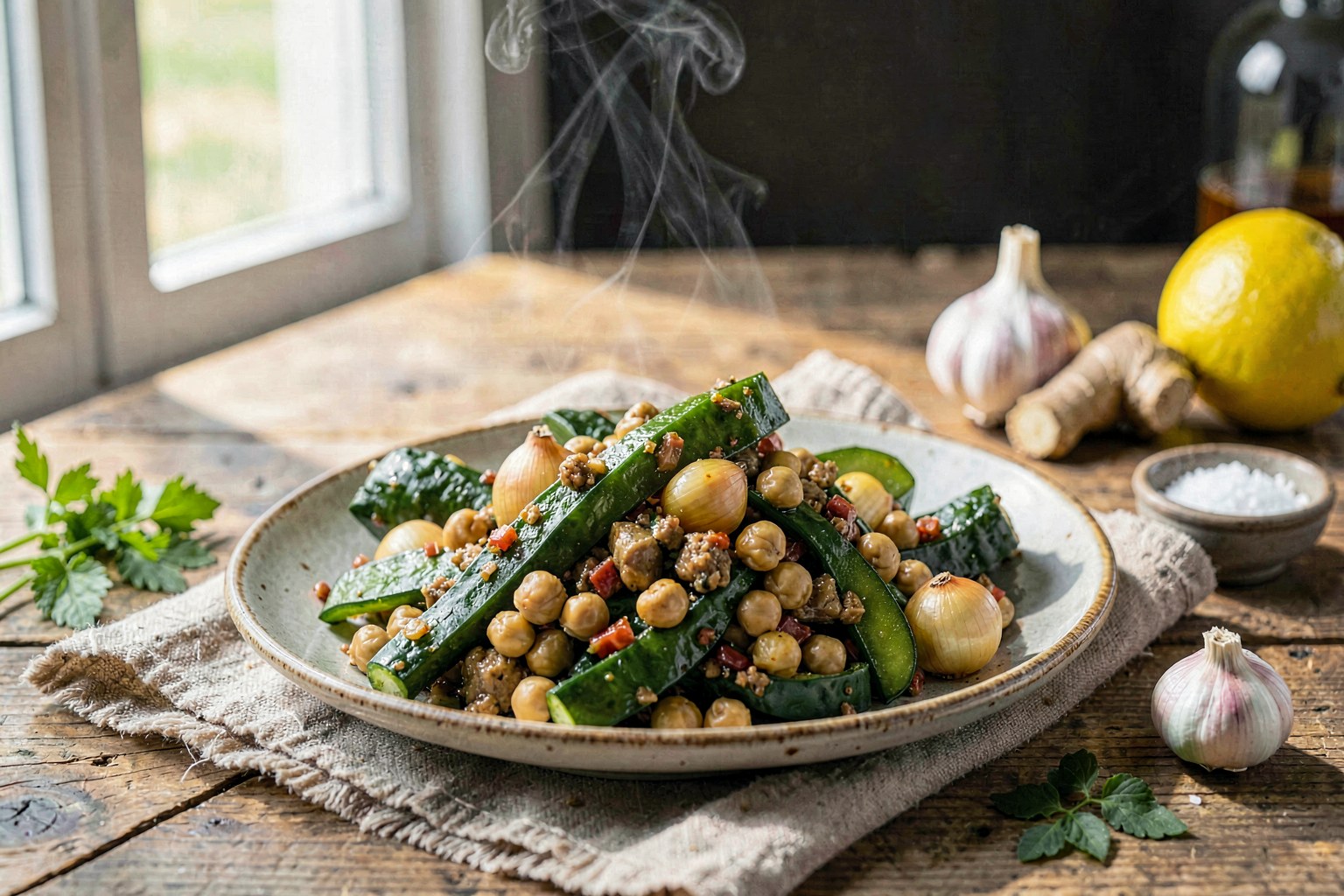
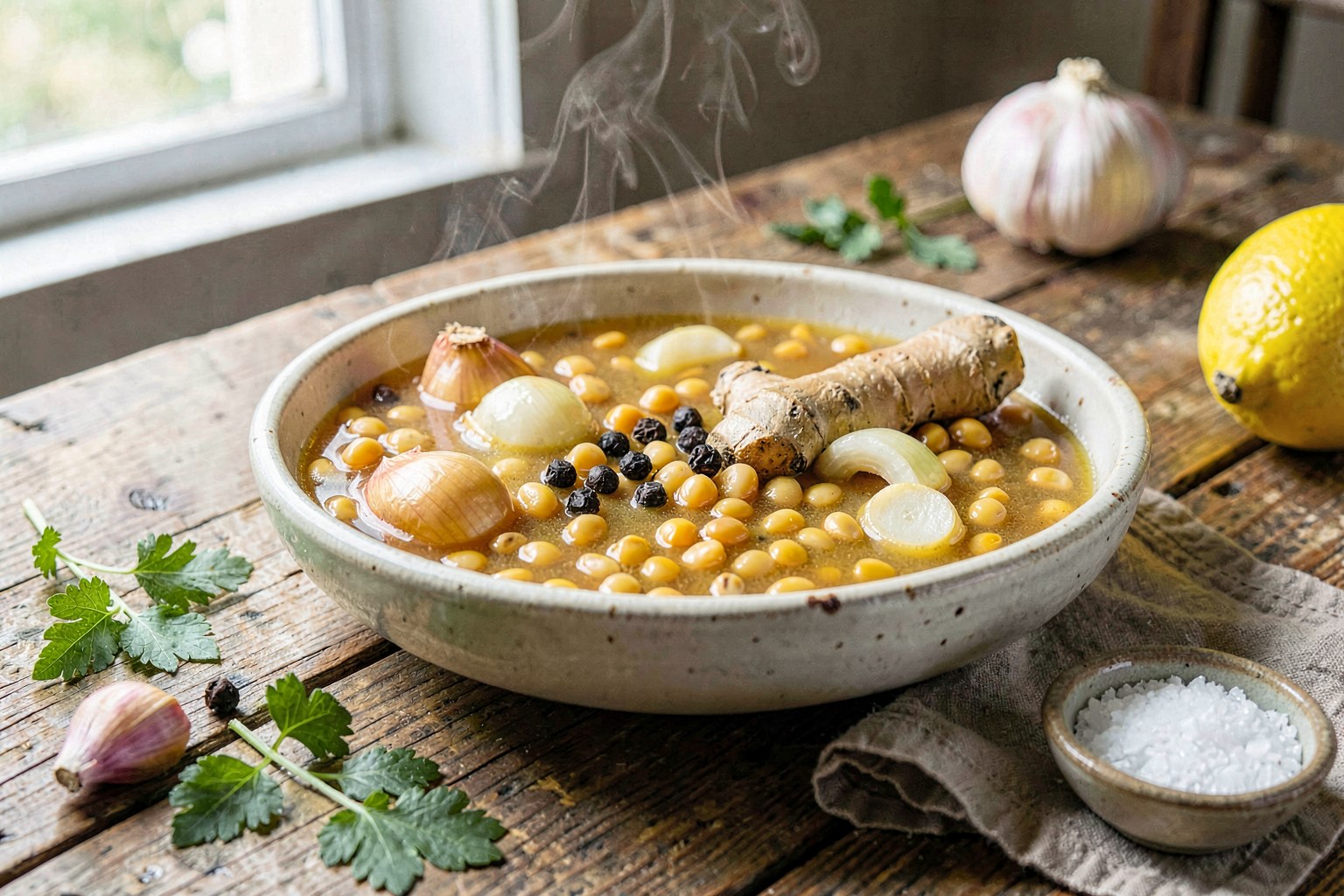
Golden Turmeric Khichdi (Ayurvedic Modern)
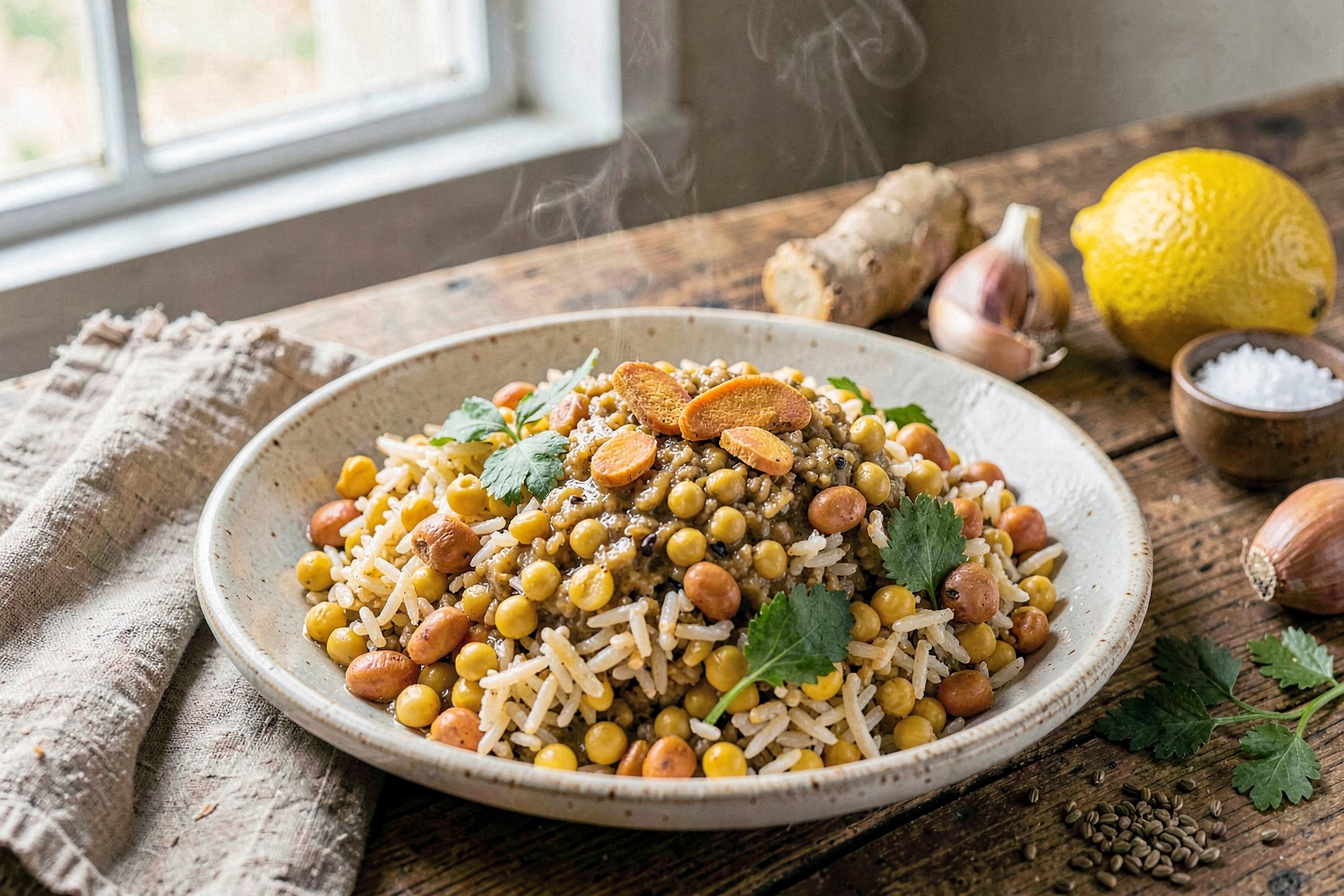
A comforting, one-pot breakfast of split yellow moong dal and premium basmati rice simmered in grass-fed ghee until creamy and golden. Infused with fresh turmeric, ginger, and cumin, this dish delivers grounding energy without the blood sugar spike of refined grains or sugar.
A little context
Rooted in the Ayurvedic tradition of 'sattvic' eating, khichdi is historically a restorative meal for digestion and immunity. We honor this by using traditional whole grains and legumes but strictly eliminate the refined sugar often added for balance and the seed oils used for frying. Instead, we rely on the rich, nutty profile of grass-fed ghee and the natural sweetness of the vegetables to create a deeply satisfying, modern longevity dish.
The longevity story
This recipe leverages the synergistic bioavailability of turmeric (curcumin) and black pepper, enhanced by the healthy fats in grass-fed ghee to maximize anti-inflammatory effects. The split yellow moong dal provides easily digestible plant protein and soluble fiber, supporting gut motility and stable glucose levels. Fresh ginger and cumin stimulate digestive enzymes (aggni), while the absence of seed oils prevents the oxidative stress often associated with traditional restaurant-style khichdi.
Method
- 01
Rinse and Soak
Combine the rinsed moong dal and basmati rice in a bowl. Cover with water and let soak for 30 minutes. This step reduces cooking time and ensures the grains cook evenly, preventing a mushy texture.
- 02
Temper the Spices
In your heavy pot, melt the grass-fed ghee over medium heat. Add the cumin seeds, dried red chili, and cracked black peppercorns. Sauté for 45 seconds until the cumin crackles and becomes aromatic, being careful not to burn them.
- 03
Sauté Aromatics
Add the grated fresh turmeric, minced ginger, and diced carrots to the pot. Stir constantly for 3-4 minutes until the carrots soften slightly and the turmeric releases its vibrant golden color into the ghee.
- 04
Combine Grains
Drain the soaked rice and dal thoroughly. Add them to the pot and stir gently to coat the grains in the spiced ghee mixture. Toast for 2 minutes; this seals the exterior of the grains for a better texture.
- 05
Simmer
Pour in the hot filtered water or vegetable broth and add the sea salt. Bring to a rolling boil, then immediately reduce the heat to low, cover the pot with a tight-fitting lid, and simmer for 25-30 minutes without lifting the lid.
- 06
Rest and Finish
Turn off the heat. Stir in the chopped spinach or kale, replace the lid, and let the pot sit for 5 minutes. The residual heat will wilt the greens perfectly without overcooking them, preserving their polyphenol density.
- 07
Fluff and Serve
Remove the lid and fluff the khichdi gently with a fork. The texture should be soft and creamy, not dry. Serve immediately while hot, optionally topped with a small drizzle of extra ghee or a squeeze of fresh lemon juice.
Nutrition facts
Per serving · 1 of 4- — Saturated
- 10 g
- — Polyunsaturated
- 1 g
- Carbohydrates
- 26 g
- — Fiber
- 8 g
- — Sugars
- 5 g
- Cholesterol
- 61 mg
- Sodium
- 996 mg
- Potassium
- 837 mg
Estimated from USDA FoodData Central for matched ingredients (83% ingredient coverage). Values vary with brand, preparation, and exact measurements.
Pro tips
- ✦Source fresh turmeric root that is firm and unblemished; if the skin is wrinkled, the rhizome is old and less potent.
- ✦Do not skip the soaking step for the dal; it significantly reduces the cooking time and makes the protein easier to digest for sensitive stomachs.
- ✦If the khichdi is too thick after resting, add warm water 1 tablespoon at a time to reach your desired consistency.
- ✦For a deeper flavor profile, add a small strip of organic kombu seaweed to the pot while simmering; remove before serving.
- ✦Ensure your ghee is grass-fed to maximize the CLA and Vitamin K2 content, which are critical for this anti-inflammatory meal.
Shop this recipe
As an Amazon Associate we earn from qualifying purchases.
Substitutions
- basmati rice → white jasmine rice or brown rice (Jasmine works for similar texture; brown rice requires 15 extra minutes of cooking and more water.)
- grass-fed ghee → coconut oil or avocado oil (Coconut oil adds a slight sweetness; avocado oil is neutral but lacks the milk solids of ghee that aid in spice absorption.)
- spinach/kale → frozen peas or zucchini (Add peas in the last 5 minutes; zucchini can be added with the carrots.)
Storage
Store in an airtight glass container in the refrigerator for up to 4 days. Reheat gently with a splash of water to restore creaminess. Freezing is possible for up to 3 months, though the texture of the rice may soften slightly upon thawing.
What to serve with it
- hot green tea or matcha to enhance the antioxidant load
- small side of homemade fermented pickles (lacto-fermented, no sugar) for probiotics
- freshly brewed ginger-turmeric tea
- plain full-fat Greek yogurt (optional, if dairy is tolerated) for a cool contrast
FAQ
Why soak the rice and dal?+
Soaking activates enzymes that break down phytic acid, making the minerals more bioavailable and the meal easier to digest, which is central to the Ayurvedic approach.
Can I make this vegan?+
Yes, simply substitute the grass-fed ghee with high-quality coconut oil or avocado oil. The dish remains anti-inflammatory and whole-food based.
Is this low-carb?+
While it contains grains, the combination of split dal and basmati rice has a lower glycemic load than white rice alone. For strict low-carb, reduce the rice portion and increase the dal and vegetables.
Share this recipe
Notes from the community
Sign in to leave a note.
No notes yet — be the first.
You might also like