Satoimo Mochi (Taro Rice Cake)
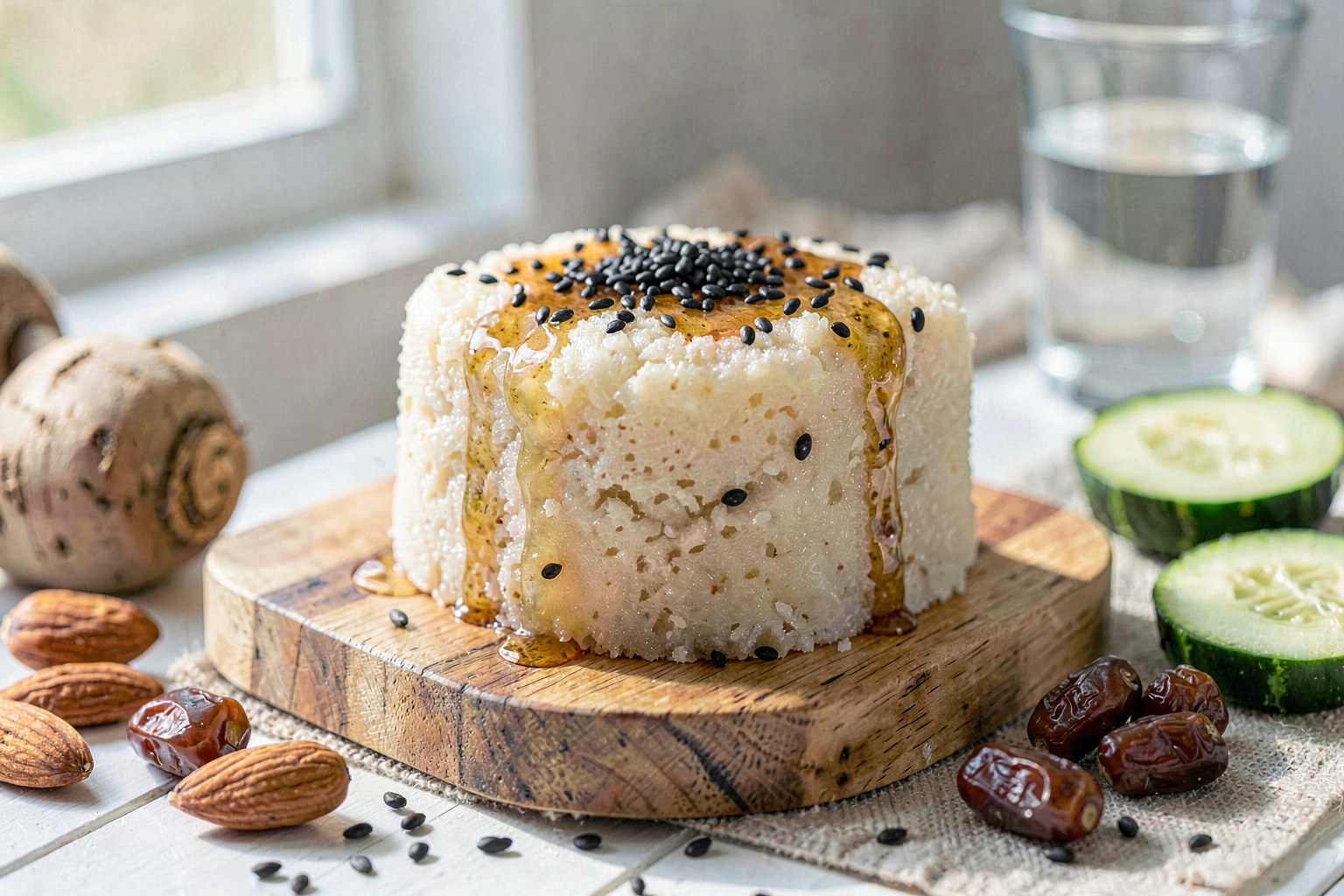
Soft, chewy steamed dumplings made from earthy Okinawan taro and organic glutinous rice flour. Sweetened sparingly with raw honey and dusted with black sesame for a nutrient-dense snack that honors the Blue Zone diet.
A little context
Rooted in Okinawan longevity traditions where taro is a daily staple carb rather than a dessert. We honor this heritage by avoiding the refined brown sugar often used in modern versions, opting for raw honey instead to maintain the low-glycemic intent of the original diet.
The longevity story
Taro root provides resistant starch that feeds beneficial gut bacteria without spiking blood glucose as sharply as white rice. Raw honey contributes trace enzymes and polyphenols absent in refined sucrose, supporting metabolic health. Black sesame seeds add lignans and calcium, boosting the antioxidant profile of this traditional staple.
Method
- 01
Prepare the taro
Wear disposable gloves to peel the taro. Rinse thoroughly under cold water to remove any dirt from the skin crevices. Cut into uniform 2 cm cubes.
- 02
Steam the root
Place taro cubes in the bamboo steamer lined with parchment paper. Steam over boiling water for 15 minutes until fork-tender but not mushy.
- 03
Mash the base
Transfer hot taro to a food processor. Pulse until smooth. Add the warm water and raw honey, processing until fully incorporated.
- 04
Form the dough
Add the sifted glutinous rice flour to the processor. Pulse until a cohesive dough forms. If too sticky, add 1 tbsp more flour; if too dry, add 1 tsp water.
- 05
Shape the mochi
Dust hands lightly with extra flour. Divide dough into 12 equal portions. Roll each into a smooth ball using the palms.
- 06
Final steam
Place balls in the steamer lined with fresh parchment. Steam for 10 minutes until the surface looks glossy and firm.
- 07
Coat and serve
Brush lightly with melted coconut oil to prevent sticking. Roll immediately in toasted black sesame seeds. Serve warm.
Nutrition facts
Per serving · 1 of 4- — Saturated
- 3 g
- — Polyunsaturated
- 0 g
- Carbohydrates
- 79 g
- — Fiber
- 5 g
- — Sugars
- 7 g
- Cholesterol
- 0 mg
- Sodium
- 17 mg
- Potassium
- 783 mg
Estimated from USDA FoodData Central for matched ingredients (67% ingredient coverage). Values vary with brand, preparation, and exact measurements.
Pro tips
- ✦Source organic taro whenever possible as root vegetables absorb soil contaminants easily.
- ✦Wear gloves when handling raw taro; the calcium oxalate crystals can cause significant skin itching.
- ✦Do not skip the second steaming; it gelatinizes the starch fully for the signature chewy texture.
- ✦Store in a single layer to prevent them from sticking together while cooling.
Shop this recipe
As an Amazon Associate we earn from qualifying purchases.
Substitutions
- organic taro → organic purple sweet potato (gives a similar texture but changes flavor profile to be sweeter)
- raw local honey → pure maple syrup (use slightly less as maple is more liquid; reduces polyphenol count slightly)
Storage
Cool completely before storing in an airtight glass container in the fridge for up to 3 days. Reheat in steamer for 2 minutes to restore texture.
What to serve with it
- Matcha tea (unsweetened)
- Fermented ginger tea
- Sparkling water with a slice of yuzu
FAQ
Can I use regular rice flour instead of glutinous?+
No, regular rice flour will not provide the chewy, elastic texture required for mochi. You must use glutinous rice flour (mochiko).
Why wear gloves for taro?+
Raw taro contains calcium oxalate raphides which can cause intense itching and irritation on skin and mucous membranes.
Share this recipe
Notes from the community
Sign in to leave a note.
No notes yet — be the first.
You might also like