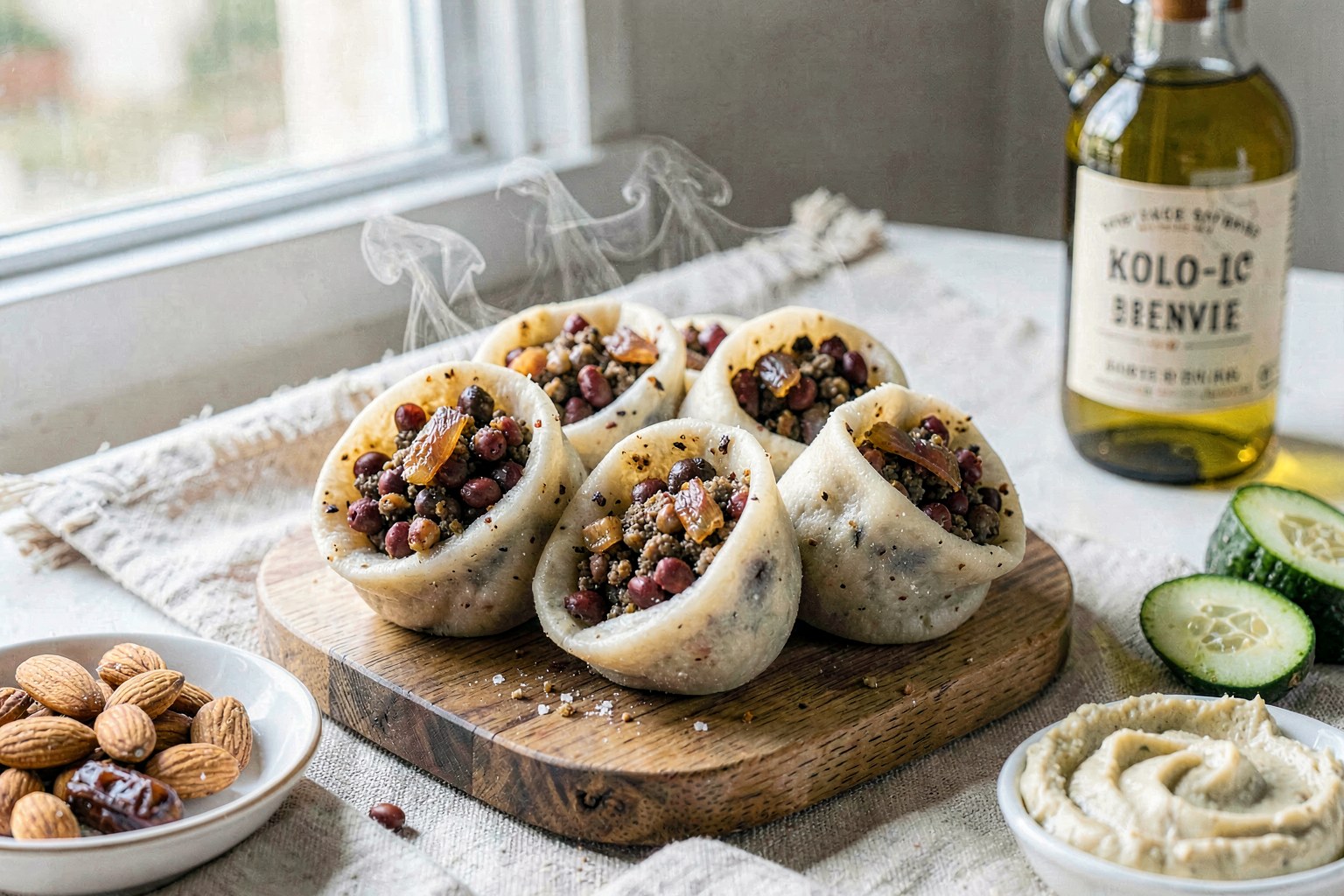
Kolo-Style Spiced Lentil Dumplings
Steamed whole-grain dough pockets filled with spiced red lentils, caramelized onions, and aromatic berbere. Savory, earthy, and rich in fiber without refined wheat or seed oils. A nutrient-dense snack rooted in Ethiopian spice traditions but optimized for longevity.
A little context
Traditional Ethiopian kolo is a dry-roasted barley or chickpea snack. This adaptation transforms the concept into a steamed dumpling to increase nutrient retention and satiety, honoring the spice profile (berbere, niter kibbeh aromatics) while removing seed oils and refined flour. We use sprouted spelt and extra-virgin olive oil to stay true to whole-food principles without losing the soul of the dish.
The longevity story
This dish leverages the polyphenol density of extra-virgin olive oil and the anti-inflammatory compounds in turmeric and ginger found in the berbere blend. Red lentils provide sustained-release carbohydrates and prebiotic fiber to support gut microbiome diversity. The use of sprouted spelt flour improves mineral bioavailability compared to refined wheat, reducing the glycemic load while maintaining satiety.
Method
- 01
Prepare the dough
In a large bowl, combine sprouted spelt flour and sea salt. Add warm water and extra-virgin olive oil. Knead by hand for 5 minutes until smooth and elastic. Cover with a damp cloth and rest for 20 minutes.
- 02
Cook the lentils
Drain soaked lentils and place in a small pot. Cover with fresh water by 2 inches. Bring to a boil, reduce heat, and simmer for 15 minutes until tender but not mushy. Drain well and set aside.
- 03
Sauté aromatics
Heat extra-virgin olive oil in a skillet over medium heat. Add diced onion and cook slowly for 10 minutes until golden and caramelized. Add garlic, ginger, turmeric, and berbere spice. Cook for 1 minute until fragrant.
- 04
Combine filling
Stir the cooked lentils into the onion-spice mixture. Add vegetable broth if the mixture seems too dry. Mash slightly with a spoon to bind flavors but keep texture chunky. Let cool completely.
- 05
Shape the dumplings
Divide dough into 12 equal pieces (approx 40 g each). Roll each into a thin circle, about 10 cm diameter. Place 1 tablespoon of filling in the center.
- 06
Fold and seal
Fold the dough over the filling to create a half-moon shape. Pinch edges firmly to seal. Use a fork to crimp the edges if desired for extra security.
- 07
Steam the dumplings
Line your steamer basket with parchment paper or lightly oiled cabbage leaves. Place dumplings inside, ensuring they do not touch. Steam over boiling water for 12 minutes.
- 08
Rest and serve
Remove from heat and let sit for 2 minutes before serving to allow the dough to set. Serve warm.
Nutrition facts
Per serving · 1 of 4- — Saturated
- 2 g
- — Polyunsaturated
- 1 g
- Carbohydrates
- 58 g
- — Fiber
- 10 g
- — Sugars
- 3 g
- Cholesterol
- 0 mg
- Sodium
- 676 mg
- Potassium
- 561 mg
Estimated from USDA FoodData Central for matched ingredients (83% ingredient coverage). Values vary with brand, preparation, and exact measurements.
Pro tips
- ✦Check your berbere blend label: traditional spice mixes sometimes contain seed oils or anti-caking agents; make your own or find a clean brand.
- ✦Ensure your lentils are fully drained before mashing; excess moisture will make the dumpling dough soggy during steaming.
- ✦Sprouted flour absorbs water differently than refined flour; add water gradually to reach a pliable, non-sticky texture.
- ✦For deeper flavor, roast the onions longer until they are deeply golden before adding the spices.
Shop this recipe
As an Amazon Associate we earn from qualifying purchases.
Substitutions
- sprouted spelt flour → teff flour blend (50% teff, 50% rice flour) (makes the recipe gluten-free and more authentic to Ethiopian staples)
- red lentils → green or brown lentils (requires longer cooking time (30-40 min) but holds shape better)
- extra-virgin olive oil → avocado oil (higher smoke point for sautéing, similar neutral profile)
Storage
Refrigerate in a glass container for up to 3 days. Freeze uncooked dumplings on a baking sheet, then transfer to a bag for up to 2 months. Steam from frozen for 15 minutes.
What to serve with it
- hot green tea with fresh mint
- unsweetened hibiscus tea
- sparkling water with lemon wedge
FAQ
Can I make this gluten-free?+
Yes, substitute the sprouted spelt with a teff and rice flour blend. Teff is the traditional Ethiopian grain and is naturally gluten-free.
Why not use canola oil like some traditional recipes?+
Canola is a seed oil high in omega-6 linoleic acid which can promote inflammation. We use extra-virgin olive oil for its polyphenol content and health benefits.
How do I know if my berbere spice is clean?+
Read the label for 'vegetable oil' or 'natural flavors'. If the ingredient list is just spices and salt, it is safe. Otherwise, make your own blend.
Share this recipe
Notes from the community
Sign in to leave a note.
No notes yet — be the first.
You might also like