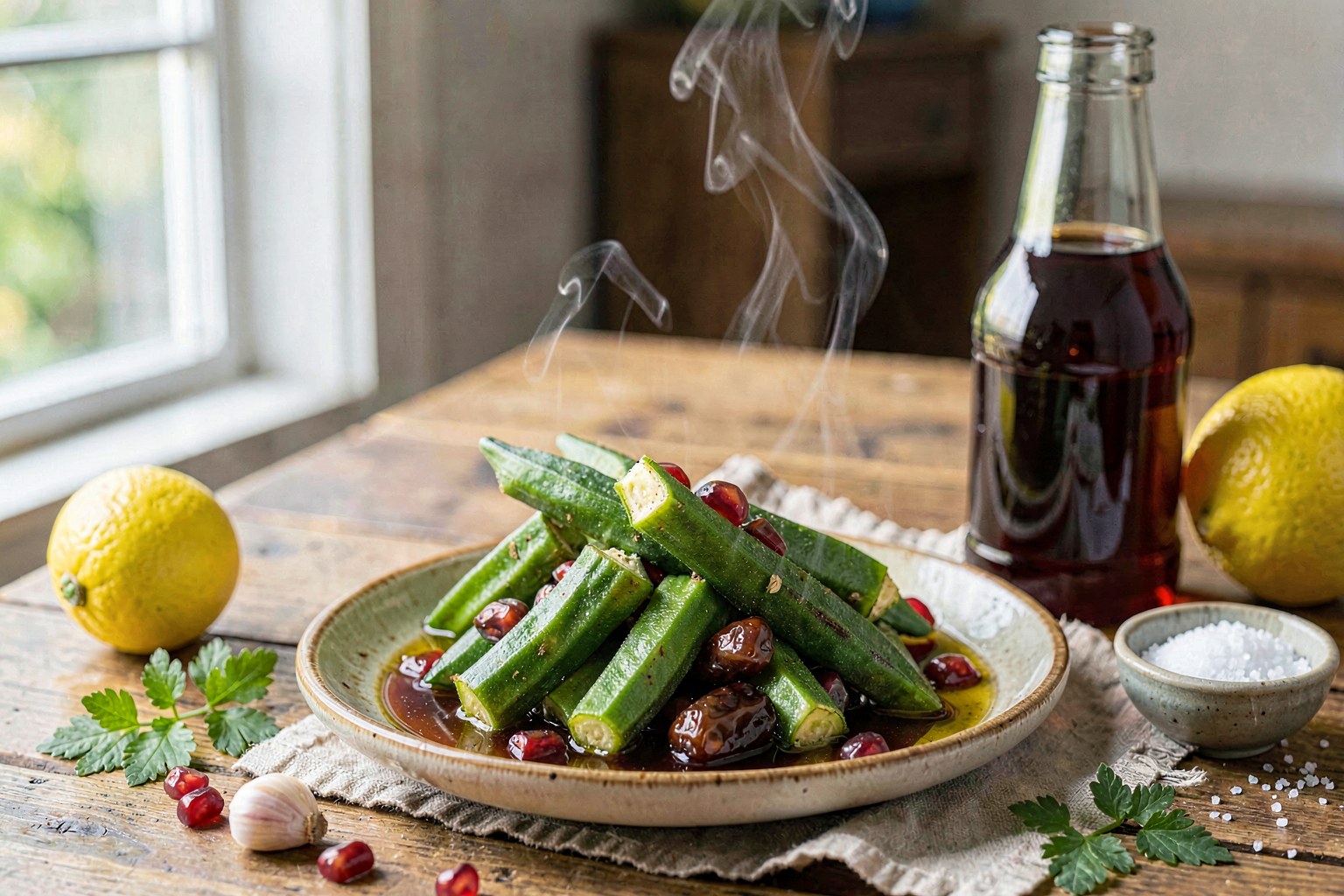
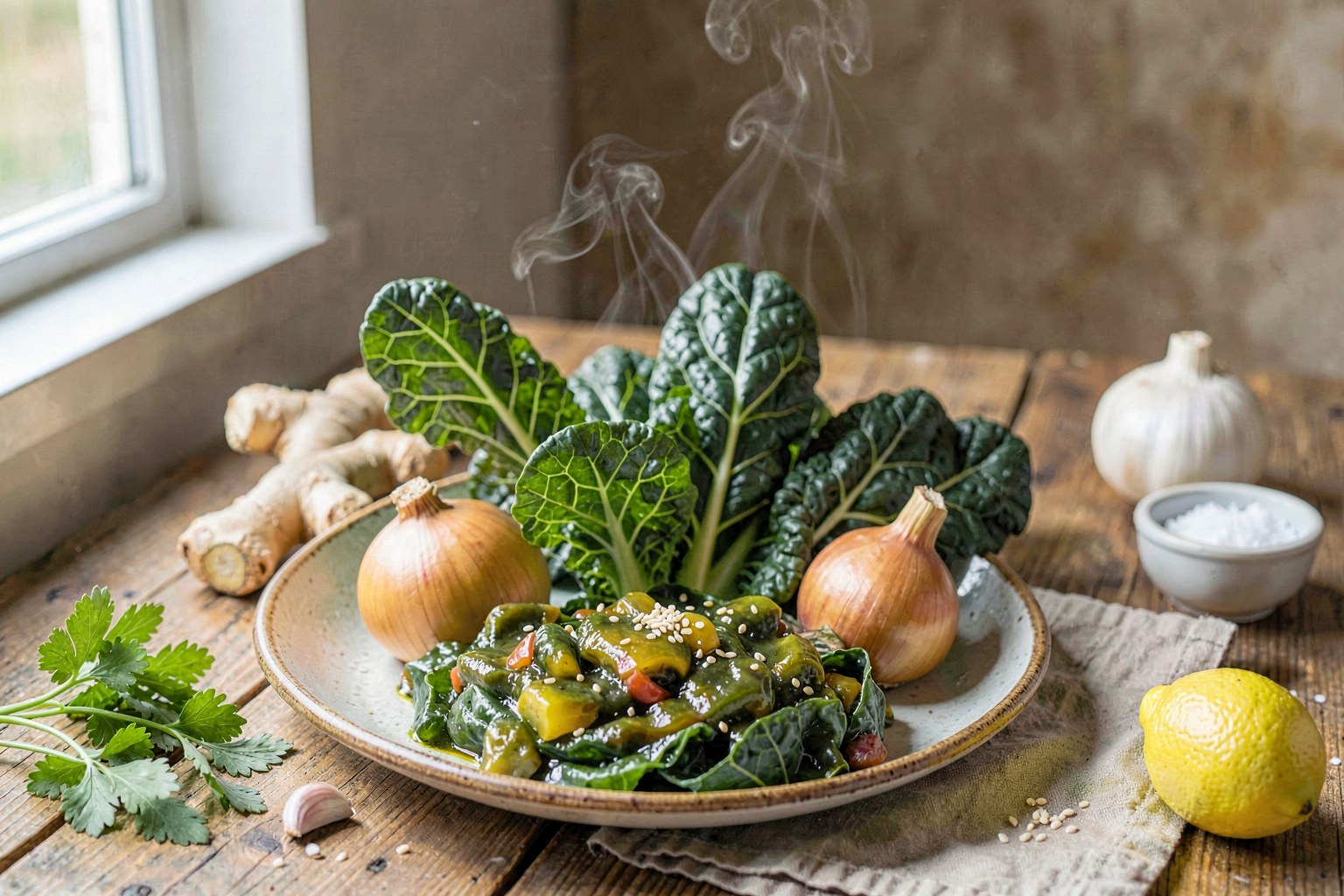
Gomen: Slow-Simmered Ethiopian Collard Greens & Kale
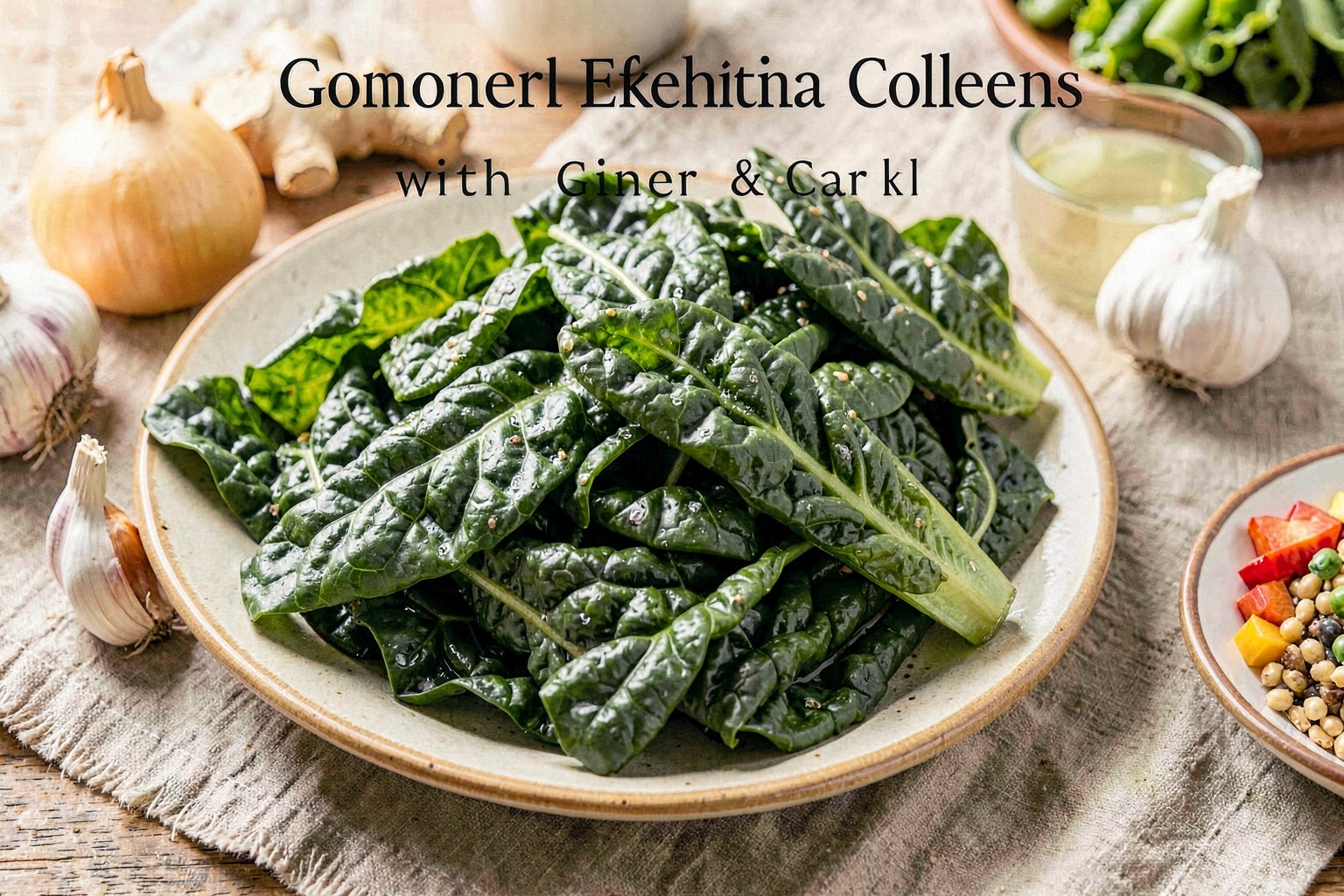
This version of Gomen honors the Ethiopian tradition of slow-steamed greens by replacing industrial seed oils with nutrient-dense extra-virgin olive oil and sesame oil. The collard greens and kale are wilted to a tender, deep emerald texture, infused with the sharp warmth of fresh ginger and garlic, creating a savory, earthy side dish rich in micronutrients.
A little context
In Ethiopian cuisine, Gomen is a staple side dish traditionally served on injera, often cooked with niter kibbeh (spiced butter). We honor this tradition by using organic, farm-fresh greens and replacing the butter with a blend of extra-virgin olive oil and toasted sesame oil to maintain the rich mouthfeel while adhering to a plant-forward, longevity-focused diet. We have omitted the traditional pinch of sugar often added to balance bitterness, relying instead on the natural sweetness of caramelized onions and the depth of slow-cooked aromatics.
The longevity story
Collard greens and kale are powerhouses of sulforaphane and kaempferol, potent polyphenols that support cellular defense and reduce systemic inflammation. The use of extra-virgin olive oil adds hydroxytyrosol, a phenolic compound linked to improved cardiovascular health and longevity. Fresh garlic and ginger provide allicin and gingerol, respectively, which support gut motility and immune function without the inflammatory load of seed oils or processed sugars often found in restaurant versions.
Method
- 01
Wash and prep the greens
Thoroughly wash the collard greens and kale in cold water to remove any grit. Remove the tough central stems by folding the leaf in half and slicing along the stem. Stack the leaves, roll them into a tight cigar shape, and slice crosswise into 2 cm (3/4 inch) ribbons.
- 02
Sweat the aromatics
Heat the extra-virgin olive oil in the Dutch oven over medium heat. Add the finely diced onions and a pinch of salt. Cook gently for 10–12 minutes until the onions are soft, translucent, and just beginning to caramelize. Do not let them brown deeply, as this can introduce bitterness.
- 03
Activate the ginger and garlic
Add the minced ginger and garlic to the onions. Stir constantly for 1–2 minutes until fragrant. The heat should be low enough that the garlic does not sizzle aggressively; we want to release the oils, not burn them.
- 04
Wilt the greens in batches
Add half of the chopped greens to the pot. They will look like a mountain; stir gently as they wilt, allowing the volume to reduce. Once reduced, add the remaining greens. Continue to stir until all greens are coated in the oil and aromatics and have wilted significantly, about 5 minutes.
- 05
Slow steam
Pour in the vegetable broth (or water) and the black pepper. Increase heat to bring to a simmer, then immediately reduce to low. Cover the pot tightly with a lid.
- 06
Simmer to tenderness
Cook for 30–40 minutes, checking every 10 minutes to ensure there is still liquid at the bottom. If the pot looks dry, add a splash of water. The greens are ready when they are deeply tender and have absorbed the liquid, leaving a rich, concentrated sauce.
- 07
Finish with sesame oil
Remove the pot from the heat. Stir in the toasted sesame oil and adjust the sea salt to taste. The residual heat will release the nutty aroma of the sesame without cooking off its flavor.
- 08
Rest and serve
Let the Gomen rest for 5 minutes before serving. This allows the flavors to meld and the texture to settle. Serve warm alongside injera, quinoa, or a simple grain.
Nutrition facts
Per serving · 1 of 4- — Saturated
- 3 g
- — Polyunsaturated
- 3 g
- Carbohydrates
- 20 g
- — Fiber
- 9 g
- — Sugars
- 4 g
- Cholesterol
- 0 mg
- Sodium
- 650 mg
- Potassium
- 1960 mg
Estimated from USDA FoodData Central for matched ingredients (70% ingredient coverage). Values vary with brand, preparation, and exact measurements.
Pro tips
- ✦Source organic greens whenever possible; collard greens are on the EWG's 'Dirty Dozen' list due to pesticide accumulation.
- ✦The key to authentic Gomen is patience. Do not rush the onion sweating phase; the natural sugars in the onion are what balance the bitterness of the greens.
- ✦If the greens taste too bitter, add a teaspoon of pure maple syrup or a chopped date to the pot during the last 10 minutes of cooking to round out the flavor profile naturally.
- ✦Always wash greens in a bowl of water, lifting them out, rather than running water over them, to ensure all grit settles to the bottom.
Shop this recipe
As an Amazon Associate we earn from qualifying purchases.
Substitutions
- collard greens and kale mix → 100% curly kale or mustard greens (Mustard greens will be spicier; reduce ginger slightly if using.)
- vegetable broth → filtered water with a pinch of sea salt (Ensure your water is high quality if not using broth.)
Storage
Store in an airtight glass container in the refrigerator for up to 4 days. The flavors deepen overnight. Can be frozen for up to 3 months; thaw in the fridge overnight and reheat gently with a splash of water.
What to serve with it
- Serve with warm, homemade injera (made with teff flour) or a side of quinoa.
- Pair with a glass of unsweetened hibiscus tea or a small glass of dry Ethiopian red wine.
- Complement with a side of lentil stew (Misir Wot) for a complete protein meal.
FAQ
Why do I need to remove the stems?+
Collard stems are very fibrous and take much longer to cook than the leaves. Removing them ensures the dish has a uniform, tender texture without chewy bits.
Can I make this in a pressure cooker?+
Yes, but the texture will be softer. Use the 'Sauté' function for the onions, then pressure cook on high for 5 minutes with natural release. Do not add the sesame oil until after releasing.
Share this recipe
Notes from the community
Sign in to leave a note.
No notes yet — be the first.
You might also like