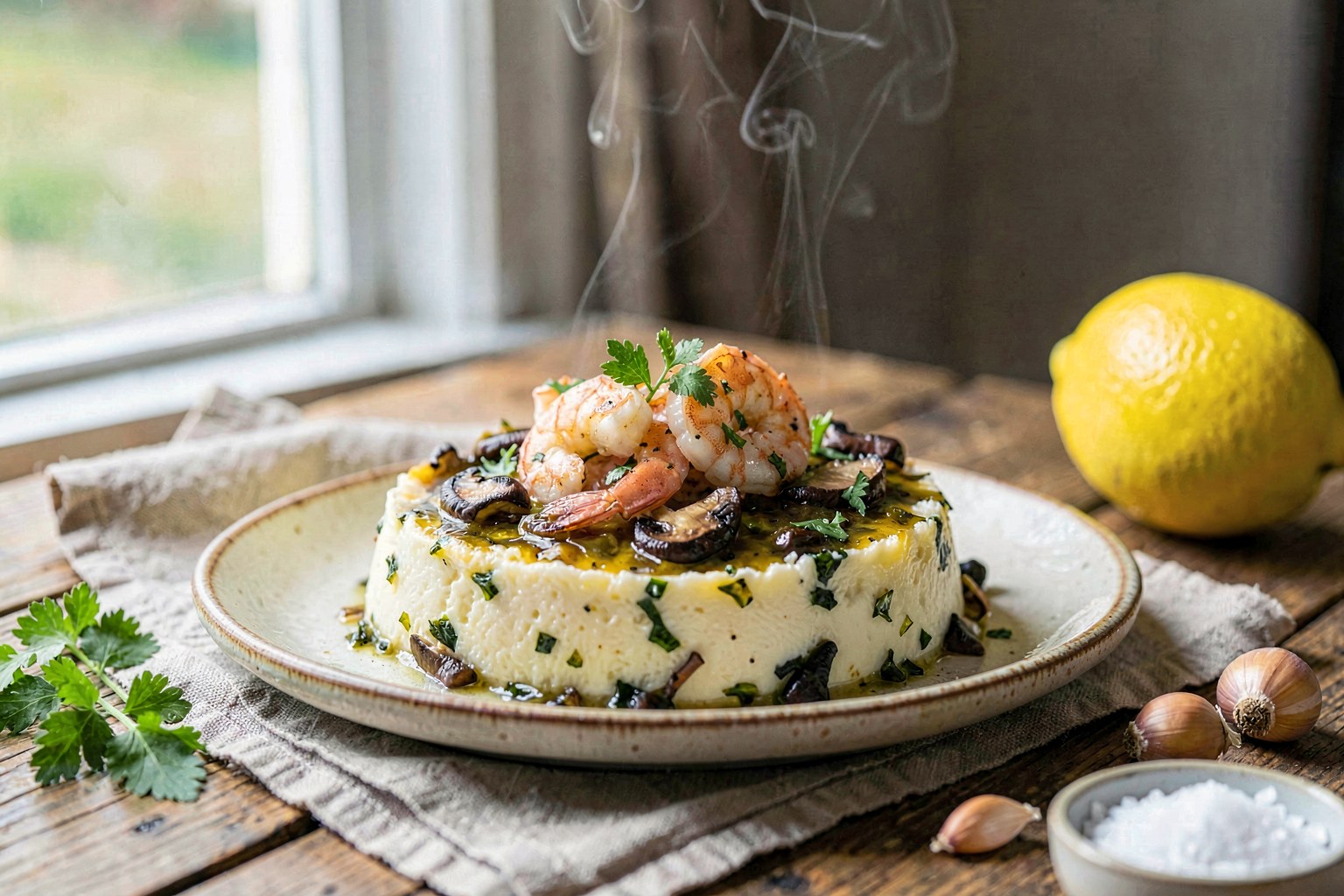
Golden Semolina Harcha with Date-Honey Glaze
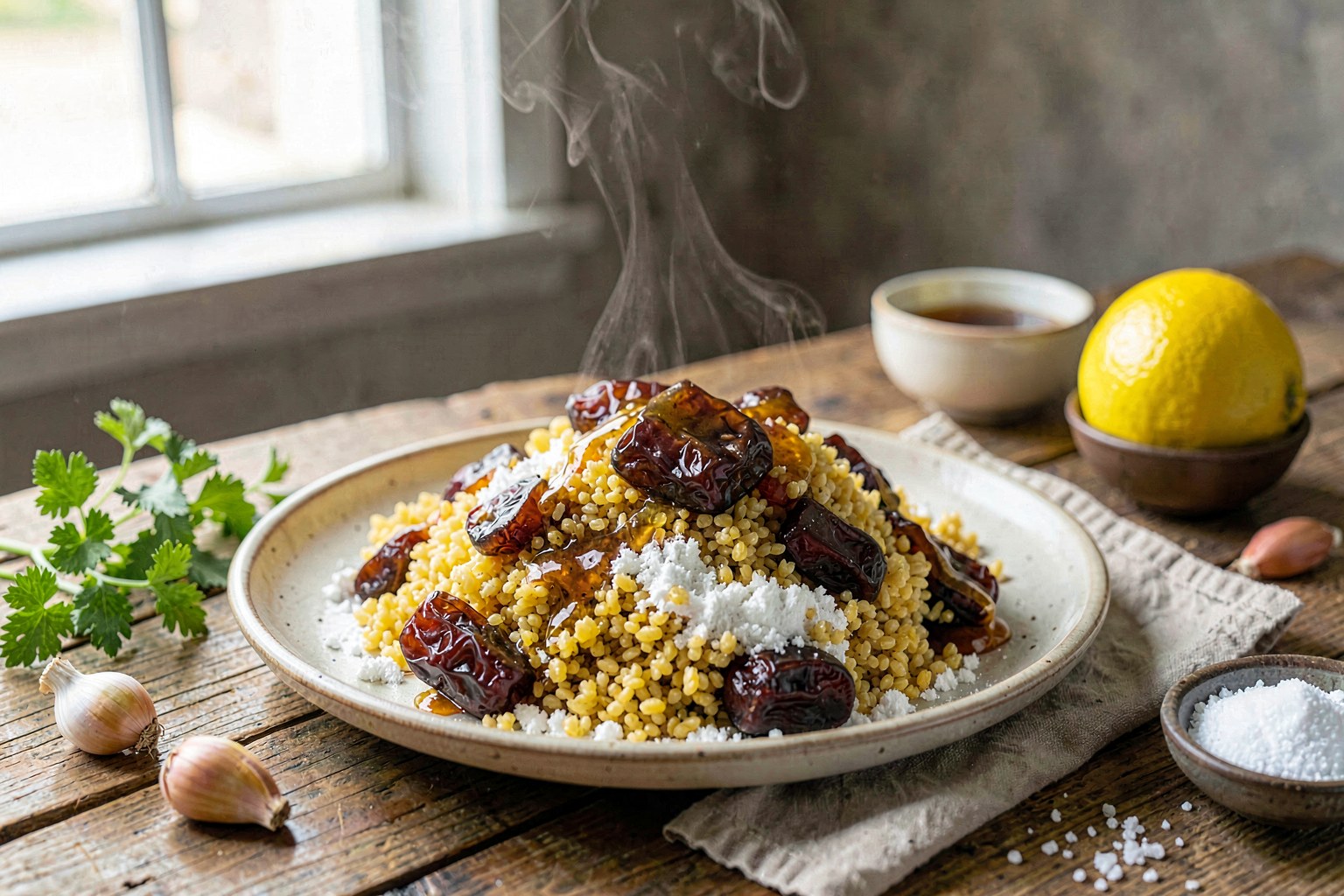
This farm-fresh take on the North African staple Harcha replaces refined sugar and seed oils with a glaze of whole Medjool dates and pastured ghee. The result is a golden, crispy-on-the-outside, tender-on-the-inside semolina bread rich in polyphenols and free from inflammatory fats, perfect for a longevity-focused breakfast.
A little context
Harcha is a beloved North African bread traditionally fried in butter or oil and often dusted with sugar. We honor this tradition by keeping the rustic, dense texture and the frying method but swapping refined sugar for whole-date syrup and seed oils for grass-fed ghee and high-quality olive oil. This adaptation respects the original flavor profile while aligning with modern longevity science and the elimination of ultra-processed ingredients.
The longevity story
The semolina provides slow-digesting complex carbohydrates, while the use of extra-virgin olive oil and pastured ghee delivers stable, anti-inflammatory fats rich in oleic acid and butyrate. Sweetness is derived entirely from whole Medjool dates, which retain their fiber and polyphenol content, preventing the blood sugar spikes associated with refined sucrose. The addition of turmeric and black pepper introduces curcumin, a potent anti-inflammatory compound, while the fermentation of the dough (if left to rest) supports gut health by pre-digesting gluten proteins.
Method
- 01
Activate the yeast
In a small bowl, dissolve the yeast in the warm filtered water. Let sit for 5–10 minutes until foamy. If it doesn't foam, your yeast is dead; start over with fresh yeast.
- 02
Prepare the date glaze
Combine the pitted Medjool dates, 2 tbsp of the melted ghee, and the turmeric and black pepper in a blender. Blend until a smooth, thick syrup forms. Add a splash of water only if necessary to get the blades moving, but keep it thick. Set aside.
- 03
Mix the dry ingredients
In a large mixing bowl, whisk together the semolina flour, spelt (or einkorn) flour, and sea salt. Ensure the spices are evenly distributed throughout the flour.
- 04
Form the dough
Make a well in the center of the flour. Pour in the yeast mixture and the remaining 1 ½ tbsp of melted ghee. Mix with a wooden spoon until a shaggy dough forms, then turn out onto a lightly floured surface.
- 05
Knead for gluten development
Knead the dough by hand for 8–10 minutes until it is smooth, elastic, and no longer sticky. It should feel soft but firm, similar to a firm earlobe. This develops the structure needed to hold the oil without becoming greasy.
- 06
First rise
Place the dough in a lightly oiled bowl, cover with a damp cloth, and let rise in a warm spot for 45–60 minutes, or until doubled in size.
- 07
Shape the bread
Punch down the dough and divide it into 4 equal portions. Shape each into a flat disc about 2 cm (¾ inch) thick. Do not roll them too thin, or they will become hard when fried.
- 08
Heat the fat
In your cast-iron skillet, combine the remaining melted ghee and the extra-virgin olive oil. Heat over medium heat until the oil shimmers but does not smoke (approx. 325°F / 160°C). The mix of ghee and EVOO prevents burning while adding polyphenols.
- 09
Fry the Harcha
Carefully place 2 discs into the skillet. Fry for 4–5 minutes per side until deep golden brown and crispy. Do not overcrowd the pan, or the temperature will drop and the bread will absorb too much fat.
- 10
Glaze and serve
Remove the bread to a wire rack. Immediately brush both sides generously with the warm date-turmeric glaze. Let cool for 5 minutes before serving warm. The glaze will caramelize slightly on the hot bread.
Nutrition facts
Per serving · 1 of 4- — Saturated
- 9 g
- — Polyunsaturated
- 1 g
- Carbohydrates
- 39 g
- — Fiber
- 3 g
- — Sugars
- 17 g
- Cholesterol
- 38 mg
- Sodium
- 487 mg
- Potassium
- 231 mg
Estimated from USDA FoodData Central for matched ingredients (90% ingredient coverage). Values vary with brand, preparation, and exact measurements.
Pro tips
- ✦Sourcing matters: Look for 'grass-fed' or 'pasture-raised' on the ghee label; conventional ghee often comes from grain-fed cows, reducing the CLA and Omega-3 content.
- ✦If your dates are rock hard, soak them in warm water for 10 minutes before blending, then drain thoroughly to keep the glaze thick.
- ✦The dough should be slightly tacky but not sticky; if it sticks to your hands, add a dusting of semolina, not all-purpose flour, to avoid altering the texture.
- ✦Test your oil temperature with a small piece of dough; it should sizzle gently and rise to the surface immediately. If it sinks, the oil is too cold.
Shop this recipe
As an Amazon Associate we earn from qualifying purchases.
Substitutions
- spelt flour → einkorn flour or oat flour (Einkorn is lower in gluten and easier to digest; oat flour adds a chewier texture.)
- Medjool dates → whole ripe bananas (mashed) (Use ½ cup mashed banana for a milder sweetness, though the texture will be less syrupy.)
- ghee → pastured lard or avocado oil (Lard adds a rich, savory depth; avocado oil is neutral but lacks the buttery flavor of ghee.)
Storage
Store cooled Harcha in an airtight glass container at room temperature for up to 2 days. Reheat in a dry skillet to restore crispiness. Freezing is not recommended as the texture becomes tough upon thawing.
What to serve with it
- Green tea (matcha or sencha) to boost polyphenol intake
- Freshly squeezed blood orange juice (no added sugar)
- A side of plain, full-fat Greek yogurt with a sprinkle of cinnamon
- Fresh berries (blueberries or blackberries) for antioxidant pairing
FAQ
Can I make this gluten-free?+
Yes, substitute the semolina and spelt with a 1:1 gluten-free blend (almond, cassava, or teff based), but note the texture will be more crumbly and require a binder like xanthan gum if your blend doesn't have it.
Why use both ghee and olive oil for frying?+
Ghee has a high smoke point and rich flavor, while EVOO adds polyphenols. Mixing them creates a stable frying medium that won't oxidize easily, unlike seed oils.
Share this recipe
Notes from the community
Sign in to leave a note.
No notes yet — be the first.
You might also like