Alicha-Style Raw Onion Salad with Spicy Berbere Oil
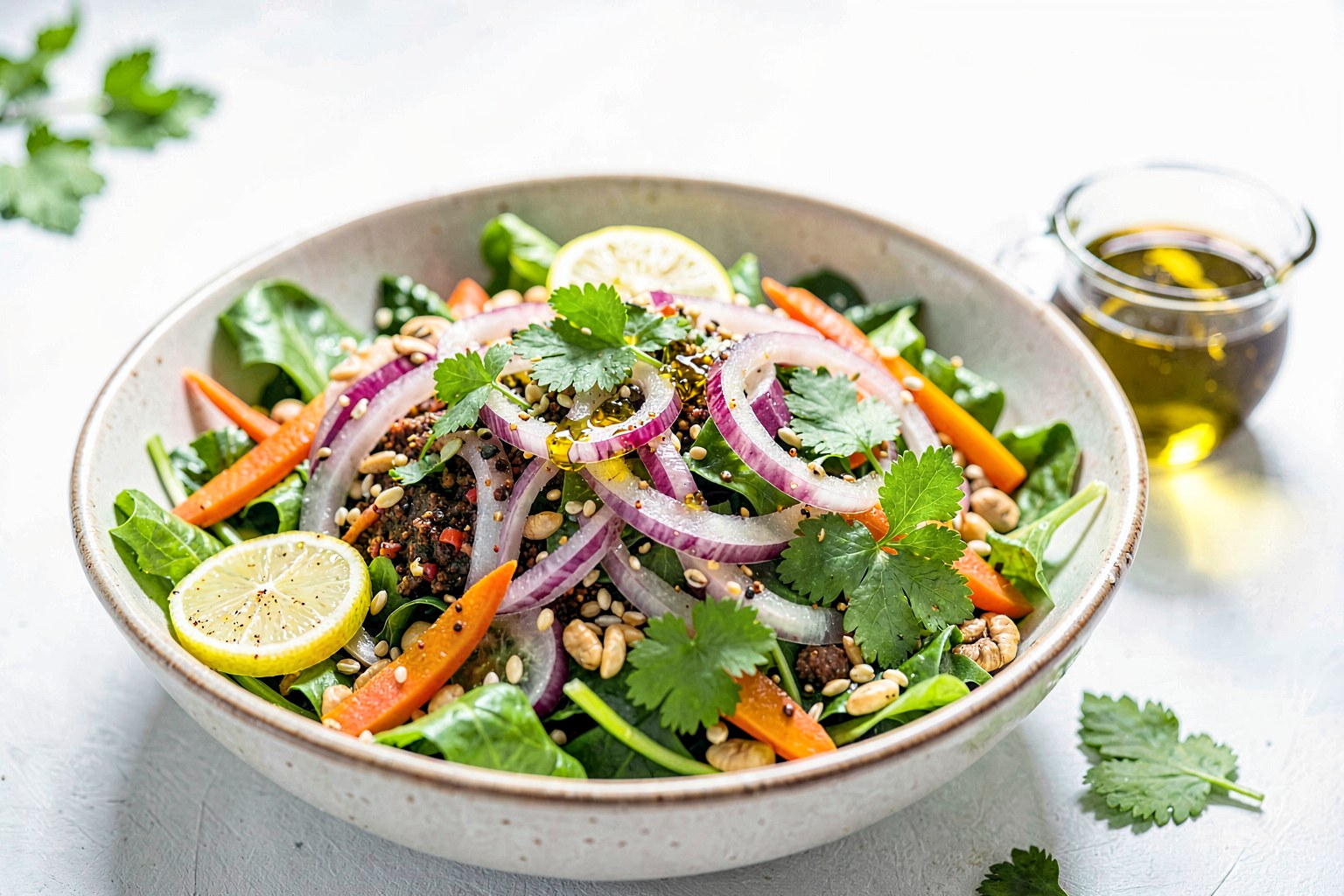
This vibrant salad transforms the humble red onion into a longevity-focused centerpiece, dressed with a warm, spiced olive oil infusion. It captures the bright acidity of Ethiopian cuisine without the heavy stews, maximizing polyphenol retention through raw preparation and clean fats.
A little context
Traditional Ethiopian Alicha is a mild, turmeric-based stew, but this recipe honors the vegetable-forward spirit of the cuisine by utilizing raw preparations common in side salads. We have stripped out the seed oils often found in modern adaptations and replaced them with high-quality olive oil, ensuring the dish fits a longevity framework while respecting the bold spice profiles of the region.
The longevity story
Red onions provide quercetin, a potent flavonoid that supports vascular health and reduces oxidative stress. The extra-virgin olive oil carries oleocanthal, a natural anti-inflammatory compound, while the garlic contributes allicin for immune modulation. Berbere spices like turmeric and ginger add curcumin and gingerol, enhancing systemic inflammation reduction without the need for processed additives.
Method
- 01
Prepare the onions
Slice the red onions thinly and place them in a bowl. Cover with cold water and add a squeeze of lemon juice. Let soak for 15 minutes to mellow the sulfur bite while retaining crunch.
- 02
Infuse the oil
In a small saucepan over low heat, warm the extra-virgin olive oil. Add the minced garlic and berbere blend. Warm gently for 3 minutes just until fragrant; do not brown the garlic to preserve allicin.
- 03
Combine and season
Drain the onions well and pat dry. Toss with the warm spiced oil, fresh lemon juice, and sea salt. Fold in the chopped parsley immediately.
- 04
Rest and serve
Let the salad sit for 10 minutes before serving to allow the flavors to meld. Serve at room temperature to maximize the aroma of the spices.
Nutrition facts
Per serving · 1 of 4- — Saturated
- 5 g
- — Polyunsaturated
- 3 g
- Carbohydrates
- 16 g
- — Fiber
- 3 g
- — Sugars
- 6 g
- Cholesterol
- 0 mg
- Sodium
- 496 mg
- Potassium
- 261 mg
Estimated from USDA FoodData Central for matched ingredients (86% ingredient coverage). Values vary with brand, preparation, and exact measurements.
Pro tips
- ✦Select red onions that feel heavy for their size with dry, papery skins; this indicates freshness and lower water content.
- ✦Soaking onions in acid (lemon water) reduces pungency without leaching out the beneficial quercetin compounds.
- ✦If making berbere from scratch, dry-toast whole spices before grinding to unlock volatile oils without adding oil.
- ✦Always use glass containers for storage to prevent oil absorption from plastic.
Shop this recipe
As an Amazon Associate we earn from qualifying purchases.
Substitutions
- red onions → shallots or sweet vidalia onions (shallots are milder; reduce soaking time to 5 minutes)
- extra-virgin olive oil → avocado oil (higher smoke point but slightly lower polyphenol count)
- homemade berbere spice blend → clean store-bought berbere (check label for hidden sugar or vegetable oils)
Storage
Store in a glass container in the fridge for up to 3 days. The oil may solidify slightly when cold; let sit at room temperature for 15 minutes before serving.
What to serve with it
- warm lentil stew (misir wot) without dairy
- green tea with a slice of lemon
- sparkling water with fresh mint
- fermented cabbage (sauerkraut) for extra probiotics
FAQ
Can I make this ahead of time?+
Yes, but add the fresh parsley just before serving to maintain its vibrant color and enzymatic activity.
Is the berbere blend safe for long-term storage?+
Homemade blends should be used within 3 months for peak potency; store-bought blends vary, so check the expiration date.
Share this recipe
Notes from the community
Sign in to leave a note.
No notes yet — be the first.
You might also like