Ukameshi: Okinawan Seaweed & Purple Sweet Potato Rice Bowl
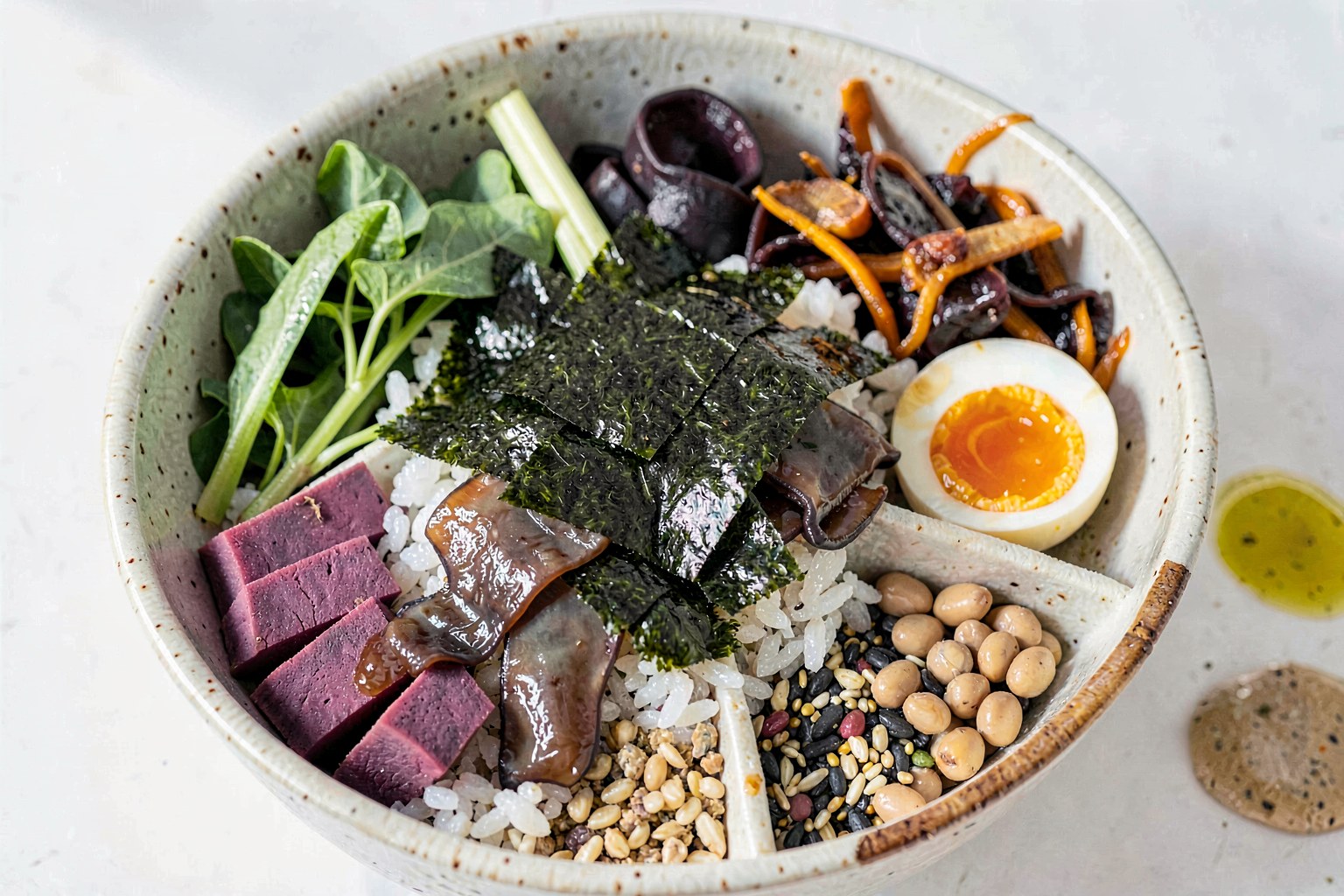
This Okinawan-inspired bowl layers fluffy short-grain rice with nutrient-dense purple sweet potato, rehydrated dried abalone, and a generous topping of nori. The dish offers a savory, oceanic depth without refined sugars, relying on the natural sweetness of the potato and the umami of the sea for flavor.
A little context
In Okinawa, Ukameshi traditionally celebrates the harvest of purple sweet potatoes and the bounty of the ocean. We honor this tradition by using wild-caught abalone and organic rice, stripping away the refined sugar often added to modern versions to balance the saltiness. The cooking method remains unchanged: steaming the potatoes directly with the rice to infuse the grain with their vibrant color and earthy sweetness.
The longevity story
The purple sweet potato (beni imo) is rich in anthocyanins, potent antioxidants that protect cellular integrity and support vascular health. Dried abalone provides a concentrated source of taurine and glycine, amino acids critical for collagen synthesis and mitochondrial function. The nori adds iodine for thyroid support and polysaccharides that act as prebiotics for gut microbiome diversity. By avoiding seed oils and refined sugars, this dish minimizes inflammatory markers while maximizing micronutrient density.
Method
- 01
Rehydrate and Simmer Abalone
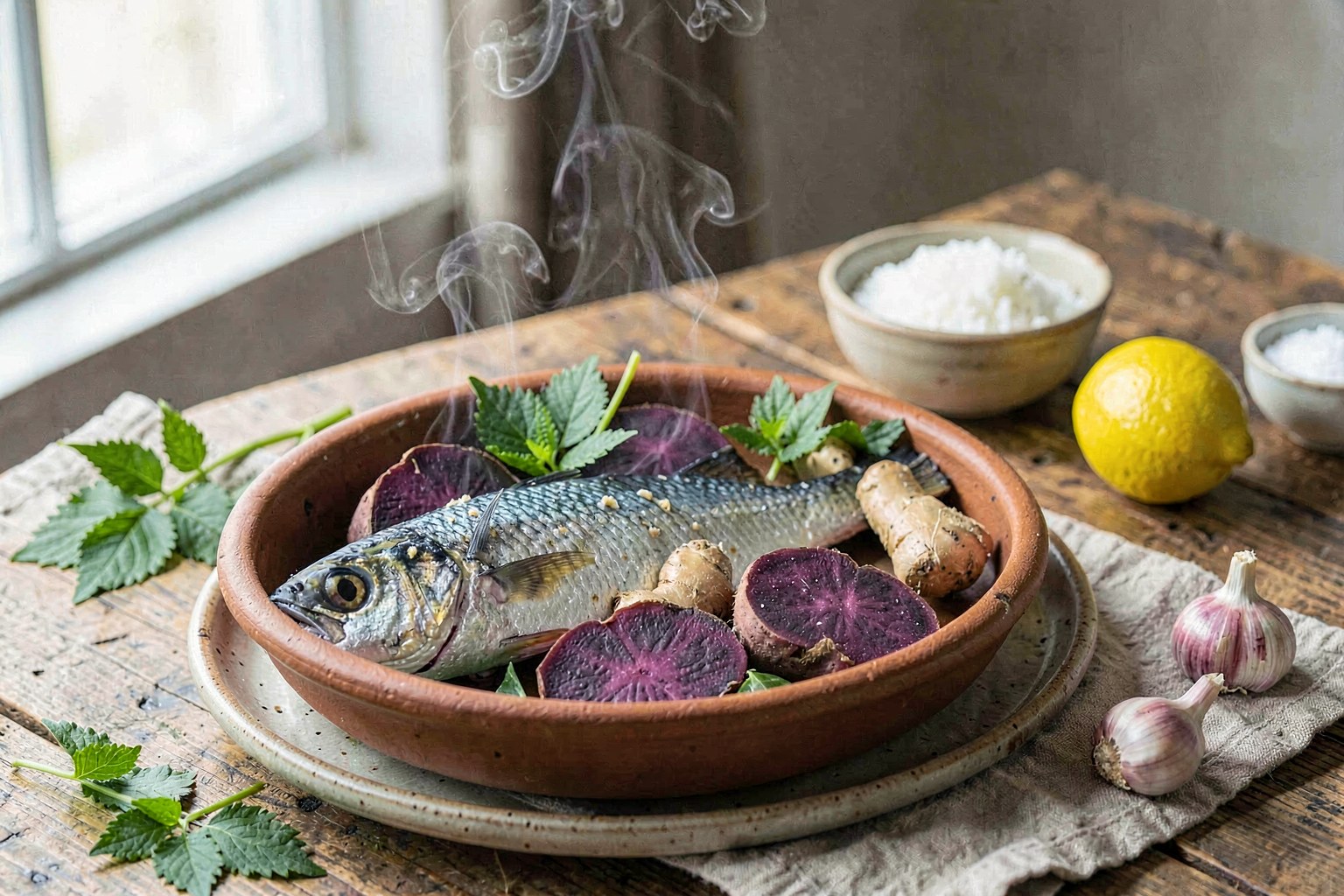
Soak the dried abalone in cold water overnight (or at least 8 hours). Drain, place in a small saucepan with fresh water, and simmer on low heat for 1–2 hours until tender. Slice thinly against the grain and set aside, reserving the cooking liquid.
- 02
Prepare the Rice
Rinse the organic short-grain rice in a fine-mesh sieve under cold running water, agitating gently, until the water runs completely clear. This removes excess surface starch for a fluffier texture. Drain thoroughly and let sit for 15 minutes.
- 03
Combine Ingredients
In the heavy-bottomed pot, combine the drained rice, peeled purple sweet potato cubes, and the sliced abalone. Pour in the filtered water (350 ml) and the reserved abalone cooking liquid (enough to reach the 350 ml total mark if needed). Add the tamari and extra-virgin olive oil.
- 04
Initial Rest
Cover the pot tightly and let the mixture rest for 20 minutes at room temperature. This allows the rice to absorb the liquid and the potatoes to soften slightly before heat is applied.
- 05
Steam the Bowl
Place the pot over high heat. Once the water begins to boil (about 5 minutes), immediately reduce the heat to the lowest possible setting. Cover and cook undisturbed for 12–15 minutes. Do not lift the lid.
- 06
Rest and Fluff
Remove the pot from the heat and let it stand, still covered, for 10 minutes. This finishes the steaming process and ensures the potatoes are fully tender. Uncover, fluff the rice gently with a rice paddle or fork, mixing the purple potato color throughout.
- 07
Serve
Divide the rice among four bowls. Top generously with the remaining sliced abalone, strips of roasted nori, and fresh shiso leaves. Serve immediately while warm.
Nutrition facts
Per serving · 1 of 4- — Saturated
- 3 g
- — Polyunsaturated
- 4 g
- Carbohydrates
- 62 g
- — Fiber
- 7 g
- — Sugars
- 14 g
- Cholesterol
- 6 mg
- Sodium
- 396 mg
- Potassium
- 592 mg
Estimated from USDA FoodData Central for matched ingredients (62% ingredient coverage). Values vary with brand, preparation, and exact measurements.
Pro tips
- ✦Sourcing the dried abalone: Look for 'wild-caught' on the label; farmed abalone often has a softer texture and less mineral density.
- ✦The purple color of the sweet potatoes will bleed into the rice, turning it a beautiful violet hue; this is a sign of high anthocyanin content.
- ✦If you cannot find dried abalone, high-quality dried shiitake mushrooms can be substituted for a different but equally deep umami profile, though the amino acid profile will differ.
- ✦Do not skip the resting period after cooking; it allows the moisture to redistribute, preventing a gummy texture.
- ✦For the best polyphenol boost, use a high-quality, cold-pressed EVOO with a peppery finish rather than a mild one.
Shop this recipe
As an Amazon Associate we earn from qualifying purchases.
Substitutions
- dried abalone → dried shiitake mushrooms or cooked wild-caught mussels (mussels provide similar oceanic minerals; shiitake offers a meaty texture and lentinan for immune support)
- purple sweet potato → orange sweet potato or yam (will lack the specific anthocyanin profile but still provides excellent fiber and beta-carotene)
- tamari → coconut aminos (slightly sweeter and naturally gluten-free; reduces sodium further)
Storage
Store in airtight glass containers in the refrigerator for up to 3 days. Reheat gently with a splash of water to restore moisture. Freezing is not recommended as the texture of the abalone and rice may degrade.
What to serve with it
- Hot sencha green tea to enhance the umami and provide catechins
- Sparkling water with a wedge of yuzu or lemon
- A small side of miso soup made with dashi and wakame
FAQ
Can I use canned abalone instead of dried?+
Canned abalone is often packed in brine with added sugar or preservatives. Dried abalone allows you to control the soaking and simmering process, ensuring no hidden sugars or seed oils are introduced.
Why use EVOO instead of sesame oil?+
Traditional recipes often use sesame oil, but sesame oil has a lower smoke point and can be highly processed. EVOO is more stable and provides a superior polyphenol profile for longevity goals, while still complementing the seafood flavors.
Share this recipe
Notes from the community
Sign in to leave a note.
No notes yet — be the first.
You might also like