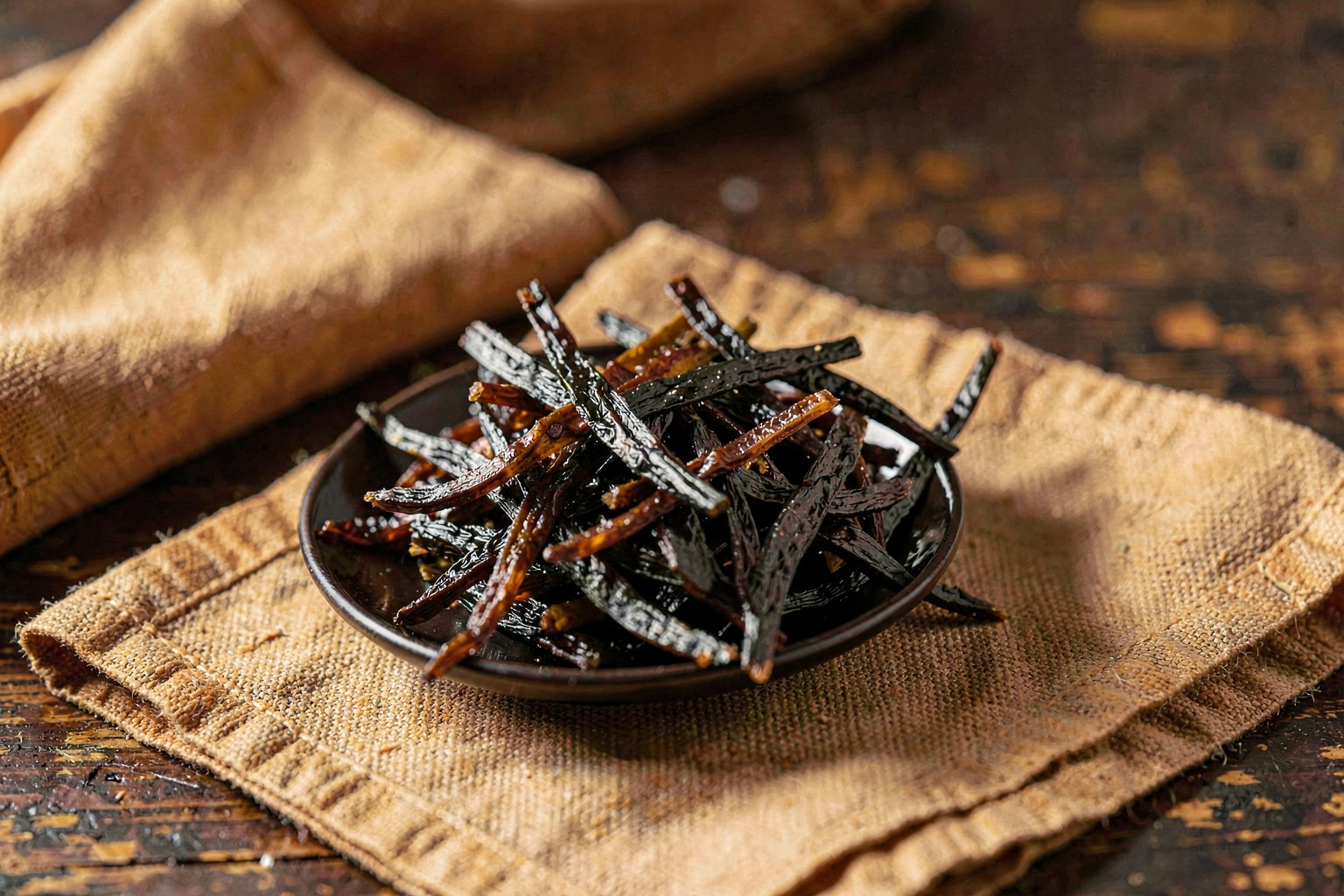
Katsuobushi
Katsuobushi is smoked, fermented, and mold-cured skipjack tuna that has been dried into a rock-hard block, shaved into paper-thin flakes to create the savory umami base of Japanese dashi broth.
What it is
Katsuobushi begins with skipjack tuna ( katsuo) that is filleted, boiled, and then smoked repeatedly over oak or pasola wood for weeks until the moisture content drops below 20%. The critical step follows: the fillets are inoculated with Aspergillus glaucus mold, a process called shio-dashi, which draws out remaining moisture and breaks down proteins into amino acids. This cycle of mold growth and sun-drying is repeated until the fish resembles a dark, rock-hard brick. The resulting product is incredibly hard, often requiring a specialized wooden grater (katsuobushi oroshi) to shave. It possesses an intense, smoky, fish-forward umami flavor profile that is distinct from dried shrimp or anchovies due to its high inosinate content.
How to buy
Purchase whole blocks (hon-katsuobushi) only if you have a dedicated grater and plan to use the ingredient within a few weeks; once shaved, the delicate oils oxidize rapidly, turning the flakes gray and rancid. For most home cooks, pre-shaved flakes (kezuribushi) are the practical choice, but check the packaging date strictly. Avoid bags where the flakes look dull, gray, or clumped together with moisture, as this indicates age or poor storage. Look for products labeled 'hon-katsuobushi' for the highest quality, or 'arabushi' (less fermented, more affordable) for everyday cooking. These are standard in any well-stocked Asian grocer or online specialty retailers, but rarely found in mainstream supermarkets outside the international aisle.
Storage
Store unopened pre-shaved flakes in a cool, dark pantry for up to one month, though flavor peaks within two weeks of opening. Once opened, seal the bag tightly with a clip and refrigerate immediately; the cold slows oxidation significantly. Do not freeze shaved flakes as condensation upon thawing will ruin the texture and flavor. Whole blocks can be stored at room temperature in a dry place for up to a year, but must be kept in airtight containers to prevent pest infestation and moisture absorption. Discard any flakes that develop a sour, cheesy, or overly fishy smell distinct from the normal oceanic aroma.
How to use
The primary technique is shaving the flakes directly into simmering water (not boiling) to make dashi; remove the pot from heat as soon as it simmers to prevent the broth from turning bitter. For garnish, sprinkle the flakes over hot tofu, okonomiyaki, or takoyaki, where the residual heat causes them to dance and wilt slightly. When making dashi, use a ratio of roughly 10g of flakes per 1 liter of water. A common mistake is boiling the flakes vigorously, which releases unwanted tannins and creates a cloudy, astringent soup. Another error is using old, oxidized flakes which will impart a stale, cardboard-like taste to delicate dishes.
Where it comes from
Originating in Japan, katsuobushi is the cornerstone of the 'five fundamental tastes' (umami) in Japanese cuisine, historically vital for preservation in an archipelago with limited refrigeration. It is essential to the concept of 'kombu-dashi' and 'katsuo-dashi,' forming the liquid soul of miso soup, noodle broths, and simmered dishes (nimono). Its production is a UNESCO-recognized intangible cultural heritage in certain regions, representing a centuries-old mastery of fermentation and drying that defines the savory depth of Japanese food culture.
Substitutions
- Niboshi (dried baby sardines) — Provides a stronger, fishier flavor with less smokiness; use in equal parts for a robust dashi, but remove the heads and guts of the fish before simmering to avoid bitterness.
- Anchovy fillets + Smoked paprika — A pantry emergency swap for umami depth in soups; dissolve a few fillets in oil and add a pinch of smoked paprika to mimic the savory-salty profile, though it lacks the specific clean finish of true katsuobushi.