Afouma: Sand-Baked Spiced Lamb Pockets with Fried Egg
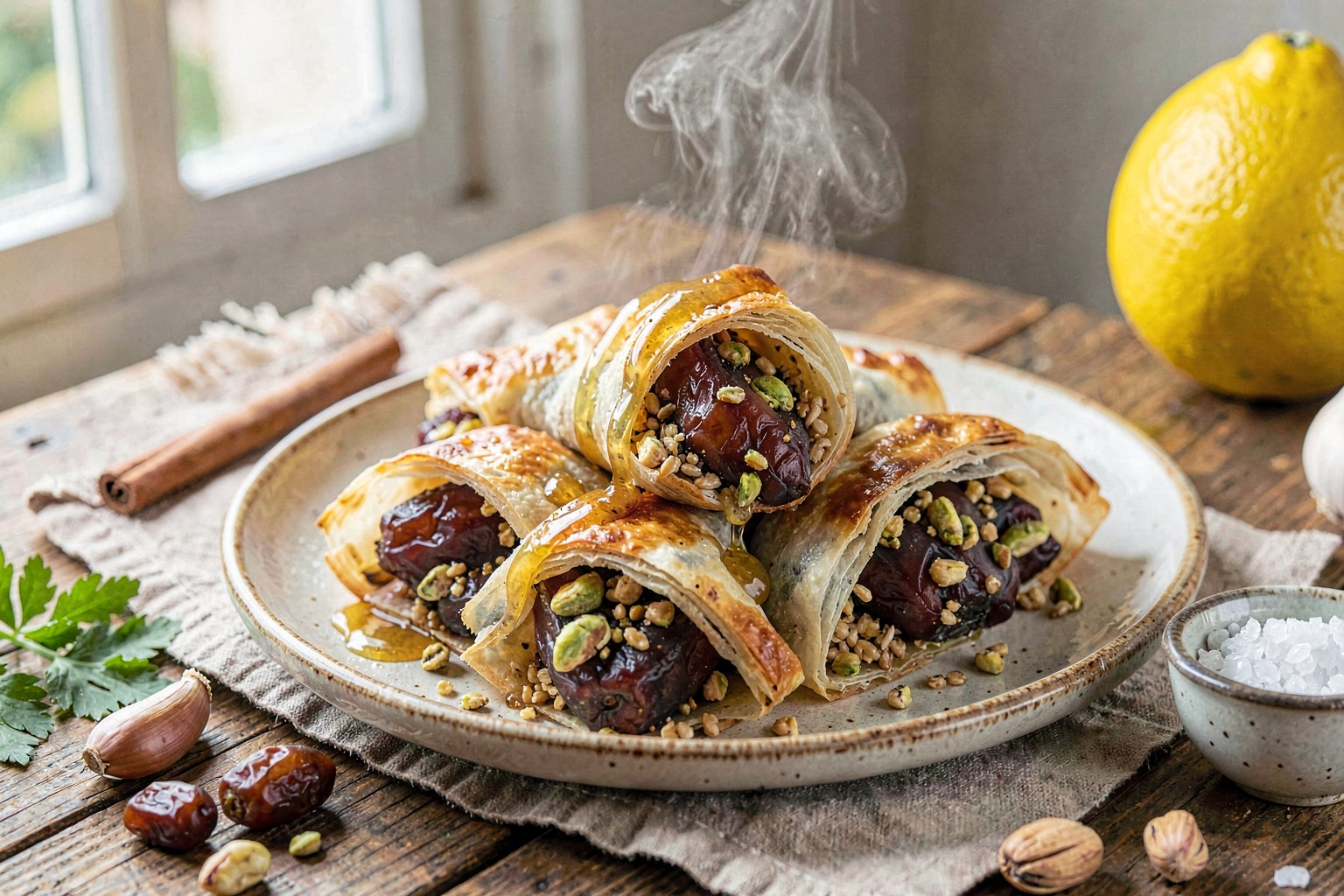
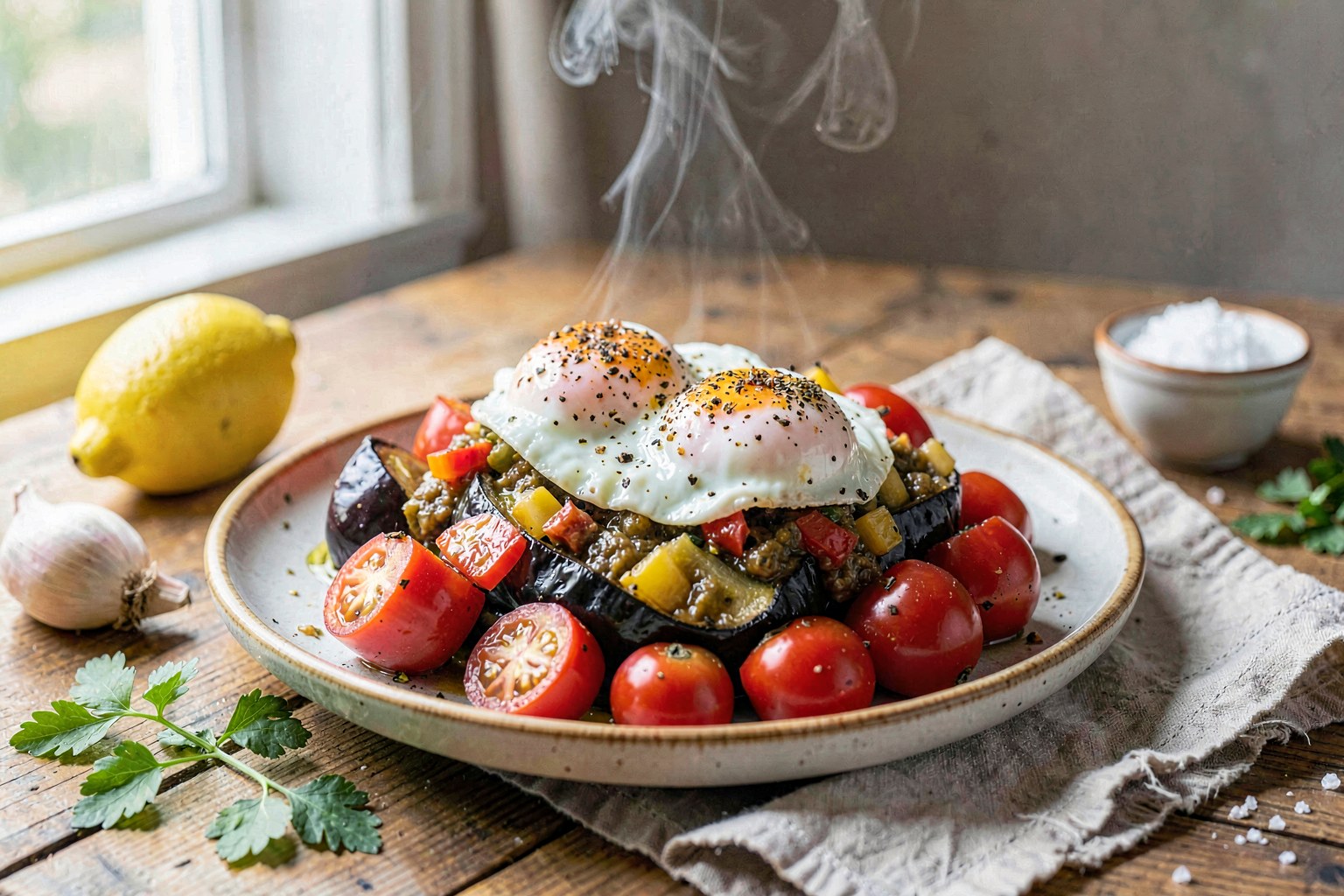
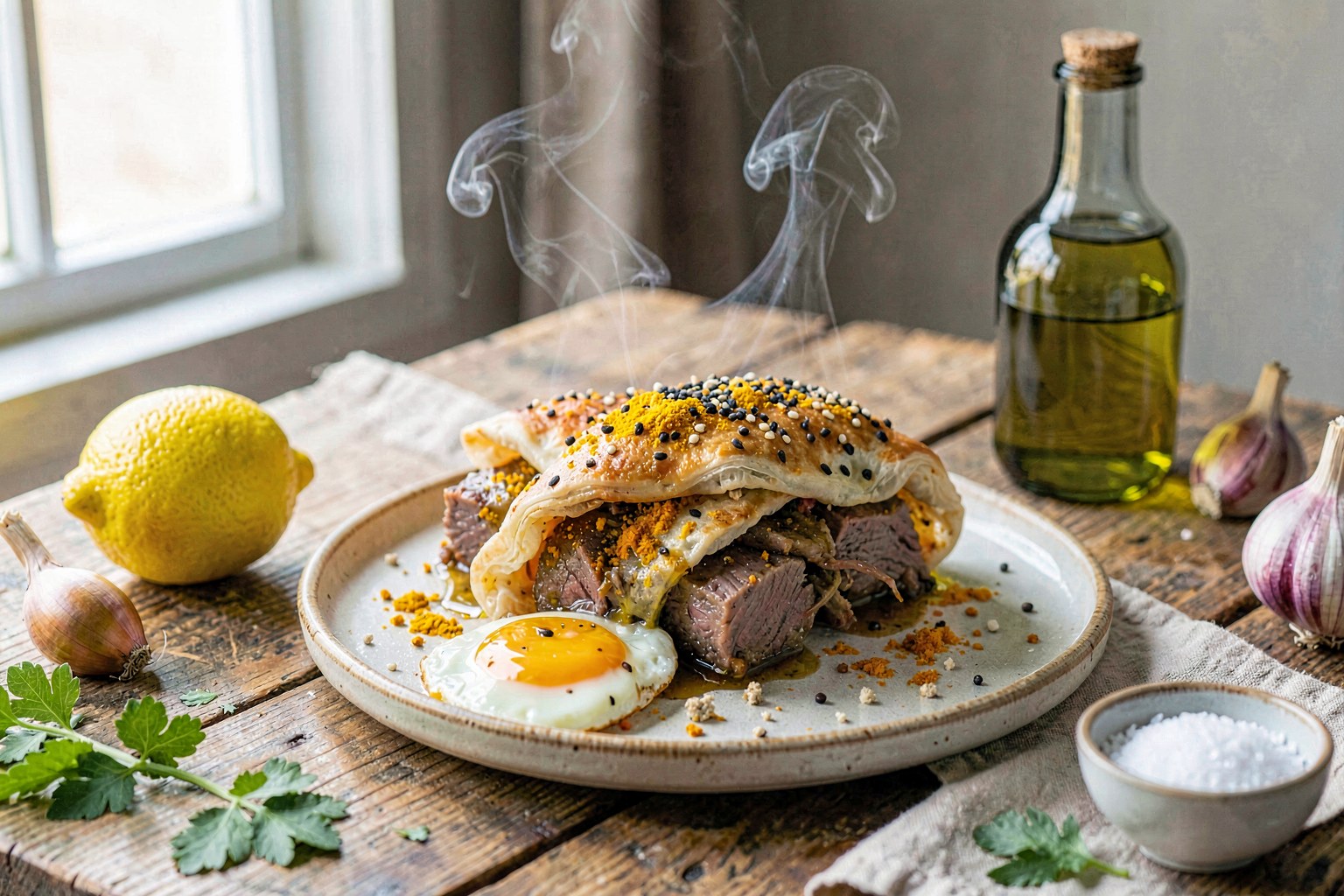
This modern interpretation of the Moroccan souq classic Afouma features flaky, sprouted-grain pastry pockets filled with slow-simmered pasture-raised lamb spiced with turmeric and ginger, crowned with a perfectly fried pastured egg. Baked in a bed of clean sand or a tandoor-style oven for authentic heat distribution, this dish delivers a rich, savory depth without refined sugars or inflammatory seed oils.
A little context
Traditionally, Afouma is a street food of the Moroccan souks, where dough is filled with spiced meat, sealed, and buried in hot sand or baked in a communal tandoor. We honor this technique by using a cast-iron skillet buried in clean, food-grade silica sand to replicate the intense, dry heat. While traditional recipes often sweeten the filling with white sugar, we have replaced it with the natural sweetness of Medjool dates, and substituted seed oils with grass-fed ghee and extra-virgin olive oil to align with longevity principles.
The longevity story
The dish leverages the anti-inflammatory synergy of turmeric and black pepper to boost curcumin bioavailability, while the pasture-raised lamb provides high-quality protein and conjugated linoleic acid (CLA). Extra-virgin olive oil in the dough and filling delivers potent polyphenols like oleocanthal, supporting cellular health. The use of sprouted whole-grain flour offers a lower glycemic load and increased mineral absorption compared to refined wheat, while the egg yolk contributes choline and lutein for cognitive and eye health.
Method
- 01
Prepare the dough
In a large bowl, combine the sprouted whole-wheat flour and a pinch of salt. Gradually add the melted grass-fed ghee and warm water, kneading by hand for 5-7 minutes until a smooth, elastic dough forms. Cover with a damp cloth and rest at room temperature for 20 minutes to relax the gluten.
- 02
Sear the lamb
While the dough rests, heat the extra-virgin olive oil in a heavy skillet over medium-high heat. Add the diced pasture-raised lamb in a single layer and sear until browned on all sides, about 4-5 minutes. Do not overcrowd the pan.
- 03
Build the filling base
Reduce heat to medium. Add the diced onion and grated ginger to the skillet with the lamb. Sauté for 5 minutes until the onion softens and becomes translucent. Stir in the turmeric, cumin, and sea salt, cooking for 1 minute until fragrant.
- 04
Sweeten and simmer
Stir in the chopped Medjool dates. Add just enough warm water to barely cover the meat (about 100 ml). Cover and simmer on low heat for 25-30 minutes, stirring occasionally, until the lamb is tender and the liquid has reduced to a thick, rich glaze. The dates will dissolve slightly, sweetening the sauce naturally without refined sugar.
- 05
Shape the pockets
Preheat your oven to 220°C (425°F). Divide the rested dough into 8 equal balls. On a lightly floured surface, roll each ball into a thin circle, about 15 cm (6 inches) in diameter. Place a generous spoonful of the lamb filling in the center of each circle.
- 06
Seal and crimp
Fold the dough over the filling to create a half-moon shape. Press the edges firmly with your fingers, then use a fork to crimp the edges tightly, ensuring no filling can escape during baking. Place the sealed pockets on a parchment-lined baking sheet.
- 07
Prepare the sand bath
Pour the sterilized sand into the bottom of your heavy cast-iron skillet or Dutch oven, creating a layer about 2-3 cm deep. Place the skillet in the preheated oven for 10 minutes to heat the sand thoroughly.
- 08
Bake in the sand
Carefully remove the hot skillet. Bury the Afouma pockets halfway into the hot sand, leaving the top exposed. Return the skillet to the oven and bake for 15-18 minutes, until the pastry is golden brown and flaky.
- 09
Fry the eggs
While the pastries bake, heat a small amount of grass-fed ghee in a separate small skillet over medium heat. Fry the pasture-raised eggs sunny-side up until the whites are set but the yolks remain runny.
- 10
Serve
Using tongs, carefully remove the hot pastries from the sand, brushing off any excess grains. Serve immediately, topped with a fried egg and a generous sprinkle of fresh cilantro. Serve with a side of fermented vegetables or a glass of green tea.
Nutrition facts
Per serving · 1 of 4- — Saturated
- 18 g
- — Polyunsaturated
- 3 g
- Carbohydrates
- 94 g
- — Fiber
- 7 g
- — Sugars
- 21 g
- Cholesterol
- 130 mg
- Sodium
- 292 mg
- Potassium
- 746 mg
Estimated from USDA FoodData Central for matched ingredients (86% ingredient coverage). Values vary with brand, preparation, and exact measurements.
Pro tips
- ✦Sourcing is critical: Ensure your sand is labeled 'food-grade' or 'aquarium silica sand' and sterilize it in the oven before use to eliminate any pathogens.
- ✦For the best polyphenol boost, choose an EVOO labeled 'high polyphenol' (often found in early harvest oils) for the filling.
- ✦When selecting lamb, look for 'grass-fed' or 'pasture-raised' labels to ensure a better omega-3 to omega-6 ratio compared to grain-fed options.
- ✦If you cannot find sprouted flour, soak whole wheat berries in water with a splash of lemon juice for 24 hours, rinse, and blend into a fresh flour for the highest nutrient availability.
- ✦Do not skip the resting period for the dough; it ensures the sprouted grains rehydrate fully, making the pastry tender rather than tough.
Shop this recipe
As an Amazon Associate we earn from qualifying purchases.
Substitutions
- pasture-raised lamb shoulder → pasture-raised chicken thighs or turkey (reduce cooking time in step 4 to 15 minutes as poultry cooks faster)
- sprouted whole-wheat flour → sprouted spelt flour or almond flour blend (almond flour will require more ghee and a different hydration ratio)
- Medjool dates → pureed ripe figs or a small amount of monk fruit syrup (figs provide a similar texture and fiber profile)
Storage
Cool completely and store in an airtight glass container in the refrigerator for up to 3 days. Reheat in a skillet with a splash of water to restore flakiness. Do not freeze the fried egg; freeze the pastries without the egg and fry fresh when ready to serve.
What to serve with it
- Hot mint tea with fresh spring water
- Fermented beet kvass for gut health
- Sparkling water with a wedge of lemon and fresh rosemary
- A glass of dry, organic red wine (low sulfite) if alcohol is permitted in your routine
FAQ
Is the sand safe to eat?+
No, the sand is strictly a cooking medium to transfer heat. It must be brushed off the pastries before eating. Ensure you use food-grade silica sand, not beach sand, which may contain bacteria or toxins.
Can I make this without the sand bath?+
Yes, you can bake the pastries on a parchment-lined sheet pan at 220°C (425°F) for 18-20 minutes. The texture will be slightly less crisp than the sand-baked version, but still delicious.
Why use sprouted flour instead of regular flour?+
Sprouting breaks down phytic acid, making the minerals more bioavailable and the gluten easier to digest, aligning with the Blueprint philosophy of optimizing nutrient absorption.
Share this recipe
Notes from the community
Sign in to leave a note.
No notes yet — be the first.
You might also like