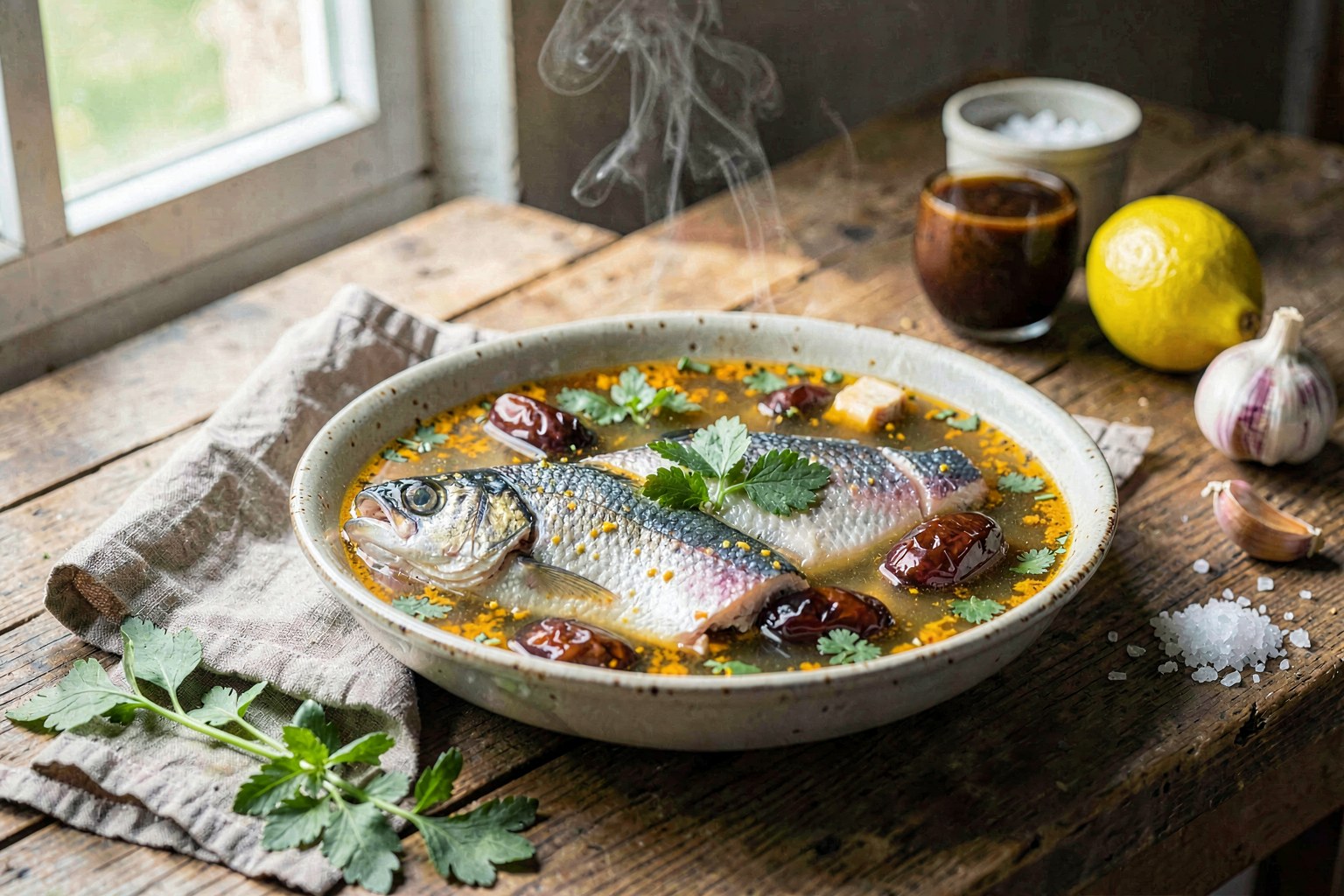
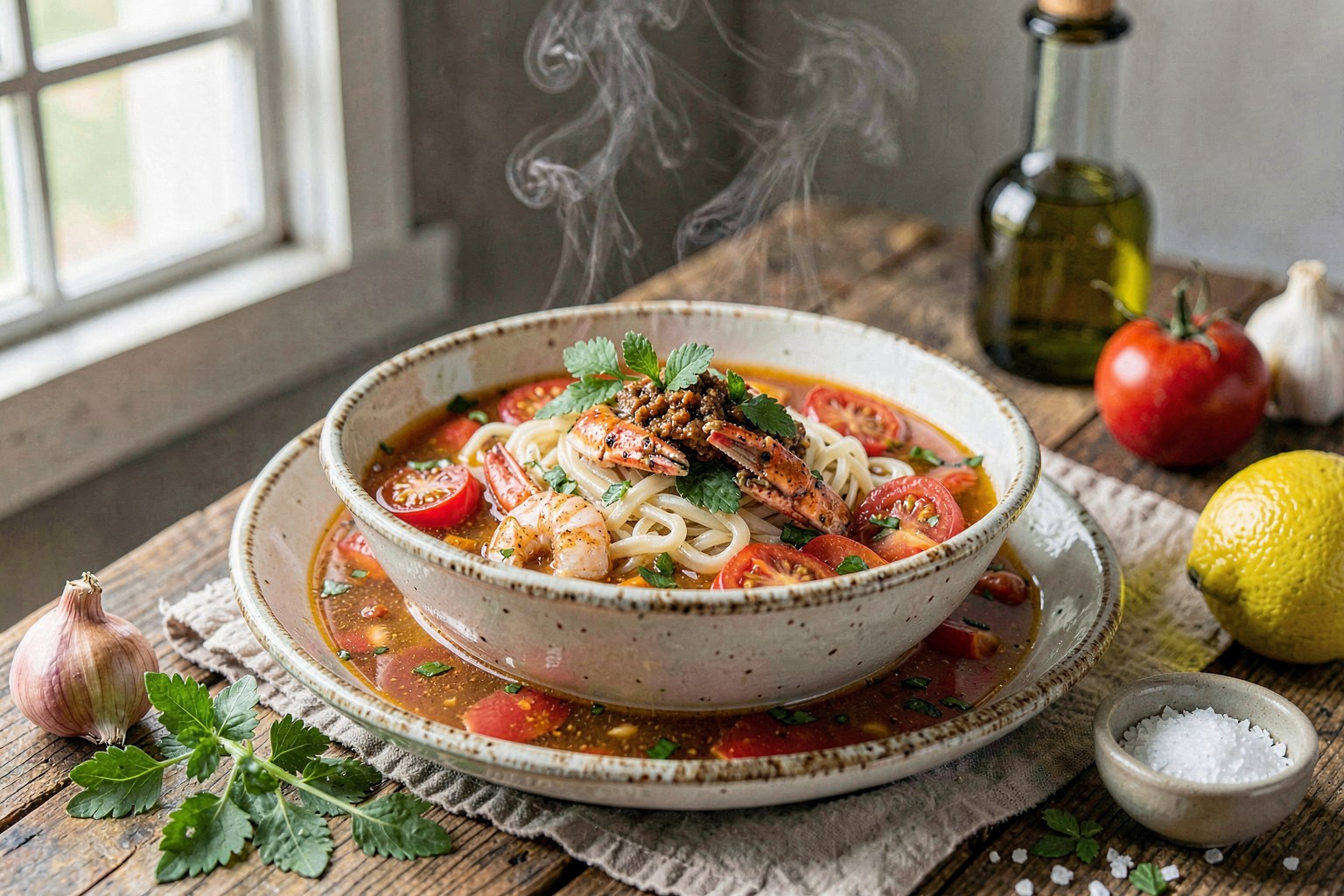
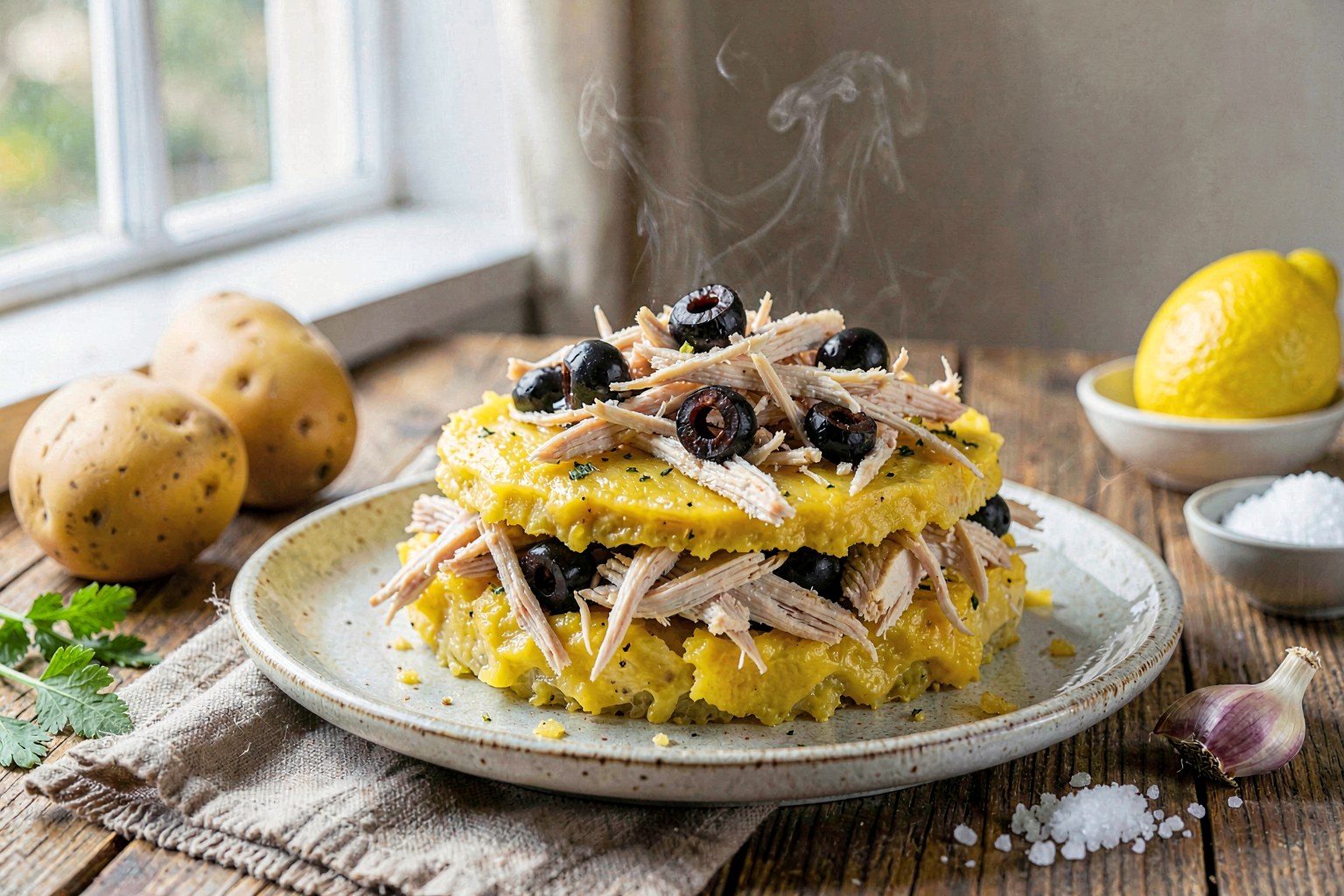
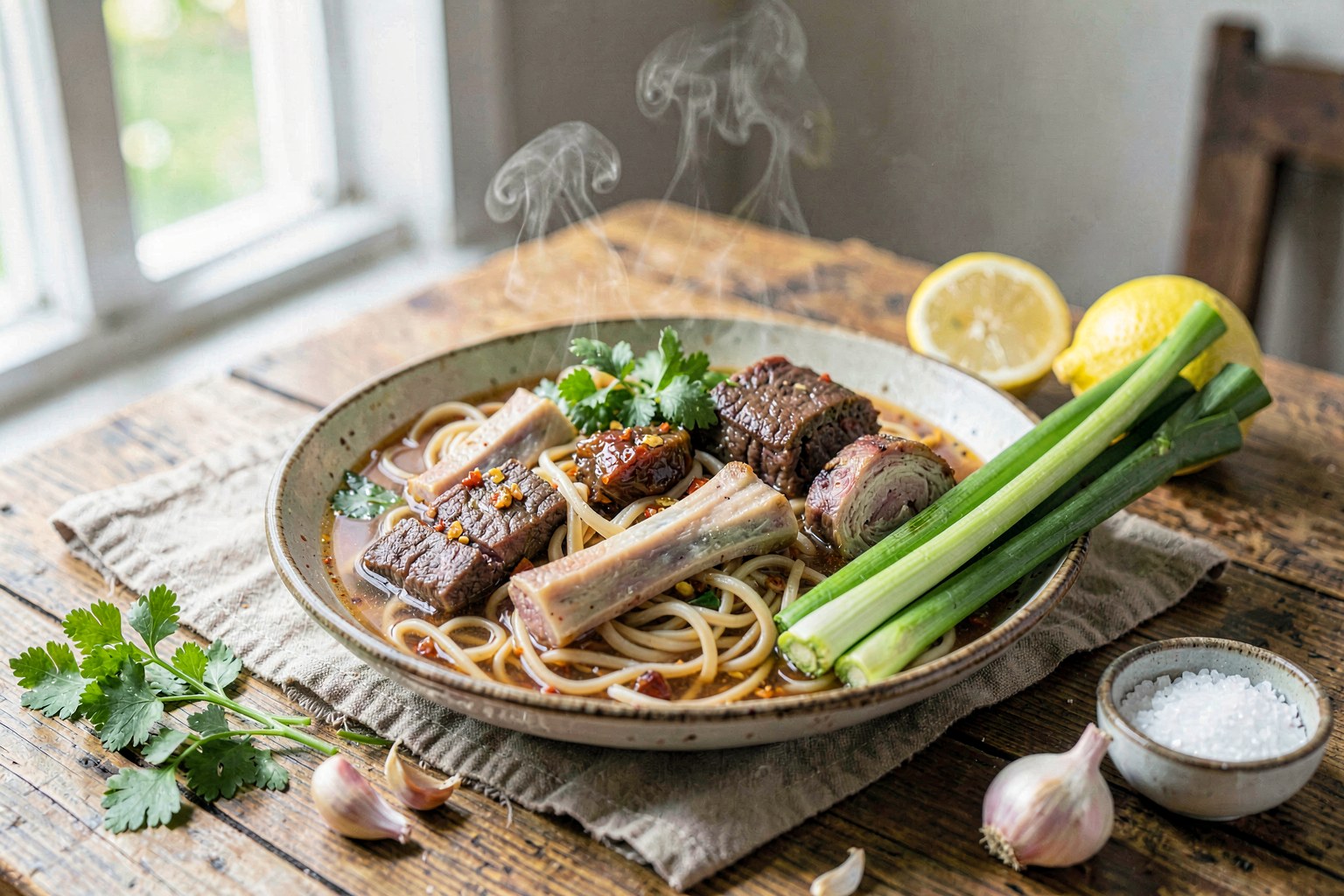
Bún Bò Huế (Vietnamese Herb-Broth Tradition)
A vibrant, spicy beef and pork noodle soup rooted in Hue imperial cuisine. This version honors the tradition by using grass-fed bones for collagen, date syrup instead of sugar, and avocado oil instead of seed oils for the signature chili oil.
A little context
Originating from the former imperial capital of Hue, this soup is known for its lemongrass-forward aroma and spicy heat. We honor the tradition by roasting the aromatics for depth, but we replace refined sugar with whole dates and use cold-pressed avocado oil for the chili infusion to eliminate inflammatory seed oils.
The longevity story
This dish is a collagen powerhouse due to the slow-simmered grass-fed beef shank and pork bones, supporting joint health and gut lining integrity. The broth is rich in polyphenols from star anise, cinnamon, and fresh chilies, which aid circulation and inflammation response. Fermented shrimp paste provides probiotics and umami depth without processed MSG, while fresh herbs add volatile oils that support digestion.
Method
- 01
Roast bones and aromatics
Preheat oven to 220°C (425°F). Place beef and pork bones on a baking sheet. Roast for 30 minutes until deeply browned. Add halved shallots and garlic to the tray for the last 15 minutes. This Maillard reaction creates the deep color and flavor base.
- 02
Make the chili oil
Heat avocado oil in a skillet over medium heat. Add blended fresh chilies and cook gently for 5 minutes until fragrant but not burnt. Remove from heat. This infusion replaces the traditional seed-oil based chili paste.
- 03
Simmer the broth
In the pressure cooker or stockpot, add roasted bones, beef shank, and pork shoulder. Cover with cold water by 5 cm (2 inches). Bring to a boil, skim scum, then add lemongrass, star anise, cinnamon, roasted dates, and shrimp paste. Pressure cook for 45 minutes or simmer gently for 3 hours.
- 04
Rest the meat
Remove beef shank and pork shoulder to a cutting board. Let rest for 15 minutes to redistribute juices. Reserve the broth. Strain the broth through a fine mesh sieve and discard solids.
- 05
Slice and season
Slice the meat thinly against the grain. Season the strained broth with sea salt to taste. Reheat the broth until simmering.
- 06
Assemble bowls
Place rice vermicelli in deep bowls. Top with sliced beef and pork. Ladle boiling broth over the meat. Drizzle with 1 tablespoon of the homemade chili oil per bowl. Garnish with bean sprouts, Thai basil, mint, and cilantro. Finish with a swirl of extra-virgin olive oil.
Nutrition facts
Per serving · 1 of 4- — Saturated
- 7 g
- — Polyunsaturated
- 4 g
- Carbohydrates
- 88 g
- — Fiber
- 4 g
- — Sugars
- 8 g
- Cholesterol
- 135 mg
- Sodium
- 1590 mg
- Potassium
- 1356 mg
Estimated from USDA FoodData Central for matched ingredients (42% ingredient coverage). Values vary with brand, preparation, and exact measurements.
Pro tips
- ✦Skim the scum off the top of the broth during the first 15 minutes of boiling to ensure a clear, clean-tasting soup.
- ✦When buying lemongrass, choose stalks that are firm and brightly colored at the base; if they are dry or brown, the oil content is low.
- ✦Roasting the shrimp paste in foil prevents the smell from permeating your kitchen while preserving the fermented umami flavor.
- ✦If you cannot find artisanal shrimp paste, use high-quality fish sauce instead, but reduce the salt in the broth accordingly.
Shop this recipe
As an Amazon Associate we earn from qualifying purchases.
Substitutions
- grass-fed beef shank → grass-fed oxtail (adds more marrow fat and gelatin; requires longer simmer)
- avocado oil → grass-fed tallow (traditional fat for searing, high smoke point)
- fresh red chilies → dried Thai bird's eye chilies (soak in hot water for 10 minutes before blending)
Storage
Store broth and meat separately in glass containers for up to 4 days in the refrigerator. Freeze broth portioned up to 3 months. Do not freeze noodles; cook fresh.
What to serve with it
- Green tea (unsweetened) to aid digestion
- Sparkling water with lime wedge
- Dry red wine (low sulfite) if alcohol is permitted in your protocol
FAQ
Why use dates instead of sugar?+
Refined sugar spikes insulin and lacks nutrients. Dates provide sweetness along with fiber and minerals, aligning with a whole-food approach.
Can I make this without a pressure cooker?+
Yes, but simmering time increases to 3-4 hours to extract enough collagen from the bones. Skim scum regularly.
Is the shrimp paste safe for gut health?+
Traditional fermented shrimp paste contains beneficial bacteria, but it is high in sodium. Use artisanal brands without additives and balance with fresh herbs.
Share this recipe
Notes from the community
Sign in to leave a note.
No notes yet — be the first.
You might also like