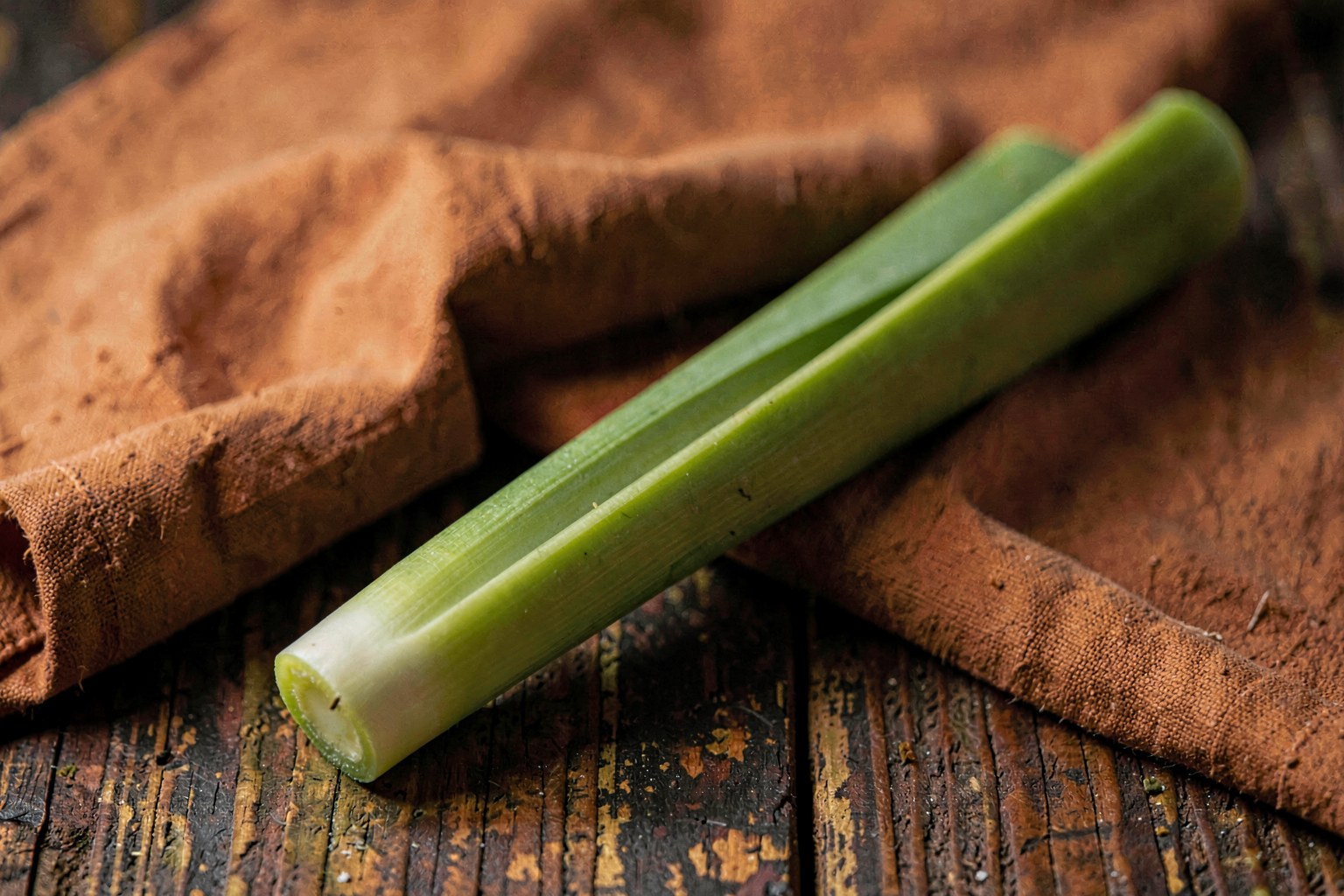
Lemongrass
A citrusy, aromatic stalk essential to Southeast Asian cooking, offering a bright lemon flavor without the acidity.
What it is
Lemongrass (Cymbopogon citratus) is a perennial grass native to tropical regions, prized for its lower bulbous stalk rather than its leaves. The tough, fibrous outer layers are typically discarded or used for infusions, while the tender inner core is minced or pounded into pastes. Its flavor profile is distinctly lemony and floral with subtle herbal and ginger-like undertones, lacking the sharp acidity of actual citrus fruit. In culinary traditions, it acts as a foundational aromatic, often bruised to release oils before being removed from finished dishes or ground into curry pastes.
How to buy
Look for stalks that are firm, pale yellow at the base, and green at the top with no signs of drying or browning. Avoid stalks that feel spongy or have significant brown spots, as this indicates age and loss of flavor. Fresh lemongrass is commonly found in the produce section of Asian grocery stores, though some mainstream supermarkets carry it in limited quantities. Dried lemongrass is available online or in spice aisles, but it lacks the fresh vibrancy and requires rehydration.
Storage
Wrap fresh stalks tightly in plastic wrap or place them in a resealable bag in the refrigerator crisper drawer for up to two weeks. For longer storage, freeze whole stalks for up to six months; they can be grated directly from frozen. Discard if the stalk becomes mushy, extremely dry, or develops a sour smell.
How to use
To extract maximum flavor, bruise the stalk with the flat side of a knife before adding it to soups or curries, then remove it before serving to avoid a fibrous texture. For pastes and stir-fries, slice the tender bottom 4 inches thinly against the grain or pound it in a mortar. Avoid overcooking fresh stalks, as they can become woody; add them early for infusions but late if finely minced to retain aroma.
Where it comes from
Indigenous to India and Southeast Asia, lemongrass is a cornerstone of Thai, Vietnamese, and Indonesian cuisines. It is considered essential for balancing the sweet, sour, salty, and spicy elements characteristic of these regions. In traditional medicine, it is also valued for its digestive and anti-inflammatory properties, often brewed as a tea.
Substitutions
- Lemon verbena or lemon balm — Provides citrus aroma but lacks the grassy depth; best for teas or light sauces.
- Lemon zest plus ginger — Replicates the citrus and heat notes; use 1 tsp zest and 1/4 tsp grated ginger per stalk.