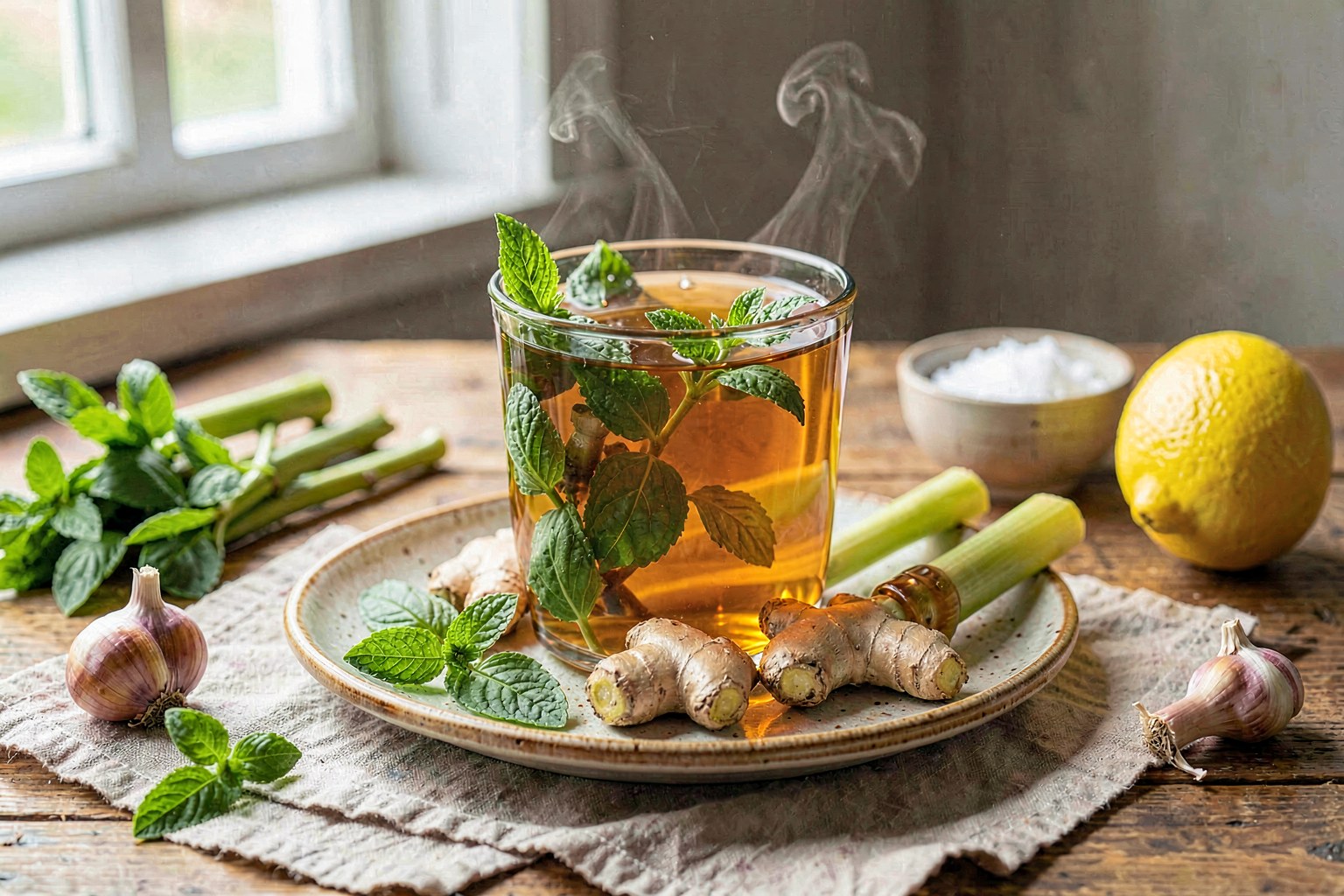
Tulsi Ginger Honey Tea (Ayurvedic Modern Tradition)
A deeply warming, aromatic infusion of Holy Basil (Tulsi), fresh ginger, and raw honey designed to settle the nervous system before bed. This tea balances spicy heat with floral sweetness, delivering a soothing ritual that supports immunity and reduces inflammation without any refined sugars or processed additives.
A little context
Rooted in the ancient Ayurvedic tradition of 'Rasayana' (rejuvenation), this tea honors the use of fresh herbs and natural sweeteners to balance the doshas. We have stripped away the traditional jaggery or refined cane sugar often used in modern adaptations, replacing them with raw honey and whole fruit sweetness to align with a longevity-focused, anti-glycation diet. The preparation method respects the traditional decoction style but ensures all ingredients are farm-fresh and organic to maximize phytonutrient density.
The longevity story
This blend leverages the adaptogenic properties of Tulsi (Ocimum tenuiflorum), which is rich in eugenol and ursolic acid to modulate cortisol and support the immune response. Fresh ginger provides potent gingerols and shogaols, bioactive compounds known to reduce systemic inflammation and aid digestion. The raw, unpasteurized honey adds trace enzymes and antioxidants, while the absence of refined sugar prevents blood sugar spikes that can disrupt sleep architecture and glycation.
Method
- 01
Prepare the aromatics
Wash the fresh Tulsi leaves and ginger thoroughly under cold running water. Slice the ginger into very thin coins (2mm) to maximize surface area for extraction. If using lemongrass, bruise the stalks with the back of a knife to release essential oils.
- 02
The initial infusion
Place the filtered water, sliced ginger, and lemongrass (if using) into your heavy-bottomed pot. Bring to a rolling boil over medium-high heat.
- 03
Simmer the root
Once boiling, reduce the heat to low, cover the pot, and simmer gently for 25 minutes. This allows the gingerols to fully extract into the water without evaporating the volatile oils.
- 04
Add the Holy Basil
Remove the pot from the heat. Immediately add the fresh Tulsi leaves. Stir gently and cover the pot. Do not boil the basil, as high heat destroys its delicate adaptogenic compounds and turns the leaves bitter.
- 05
Steep for potency
Let the mixture steep off the heat for 15–20 minutes. The water should remain hot enough to continue extracting, but the temperature will drop slightly to preserve the basil's integrity.
- 06
Strain and sweeten
Pour the tea through a fine-mesh strainer into a serving vessel or individual mugs. Allow the tea to cool for 5 minutes until it is warm (below 40°C/104°F) before stirring in the raw honey. Adding honey to boiling water destroys its beneficial enzymes.
- 07
Serve immediately
Serve warm in ceramic or glass mugs. Enjoy slowly as a calming pre-dinner ritual or post-dinner digestif.
Nutrition facts
Per serving · 1 of 4- — Saturated
- 0 g
- — Polyunsaturated
- 0 g
- Carbohydrates
- 5 g
- — Fiber
- 1 g
- — Sugars
- 4 g
- Cholesterol
- 0 mg
- Sodium
- 10 mg
- Potassium
- 128 mg
Estimated from USDA FoodData Central for matched ingredients (40% ingredient coverage). Values vary with brand, preparation, and exact measurements.
Pro tips
- ✦Sourcing: Look for organic Tulsi at local farmers' markets or grow your own in a pot; it thrives in warm, sunny conditions and is much more potent than dried versions.
- ✦Temperature Control: Never boil the honey. If the tea is too hot, the enzymes in raw honey denature, turning it into simple sugar syrup rather than a functional food.
- ✦Ginger Prep: Slice ginger with the grain for a milder, smoother sip; slice against the grain for a spicier, more robust kick.
- ✦Storage: This tea is best consumed fresh, but leftover brew can be refrigerated in a glass jar for up to 24 hours. Reheat gently without boiling.
Shop this recipe
As an Amazon Associate we earn from qualifying purchases.
Substitutions
- fresh Tulsi (Holy Basil) → organic dried Tulsi leaves or organic green tea (lower polyphenol count) (If using dried, reduce quantity to 30g and add during the ginger simmer step.)
- raw honey → pure maple syrup or monk fruit syrup (Use sparingly (1 tsp) if strict low-glycemic adherence is required, though honey is preferred for its enzymatic profile.)
Storage
Refrigerate in a sealed glass container for up to 24 hours. Reheat gently on the stove or in a microwave (low power) until warm, never boiling. Do not freeze as the texture of the herbs may change.
What to serve with it
- Serve alongside a small bowl of warm, spiced oatmeal or a handful of raw almonds.
- Pair with a light, fermented vegetable side dish like sauerkraut to enhance gut health.
- Enjoy with a small piece of dark chocolate (85%+ cacao) for a polyphenol boost.
FAQ
Can I use regular store-bought basil instead of Tulsi?+
While sweet basil (Ocimum basilicum) is in the same family, it lacks the specific adaptogenic compounds (ocimarin, eugenol) found in Holy Basil (Tulsi). For the intended health benefits, Tulsi is essential.
Why do I add the honey after brewing?+
Raw honey contains heat-sensitive enzymes and antioxidants. Adding it to water above 40°C (104°F) destroys these benefits, leaving only the sugar content.
Share this recipe
Notes from the community
Sign in to leave a note.
No notes yet — be the first.
You might also like