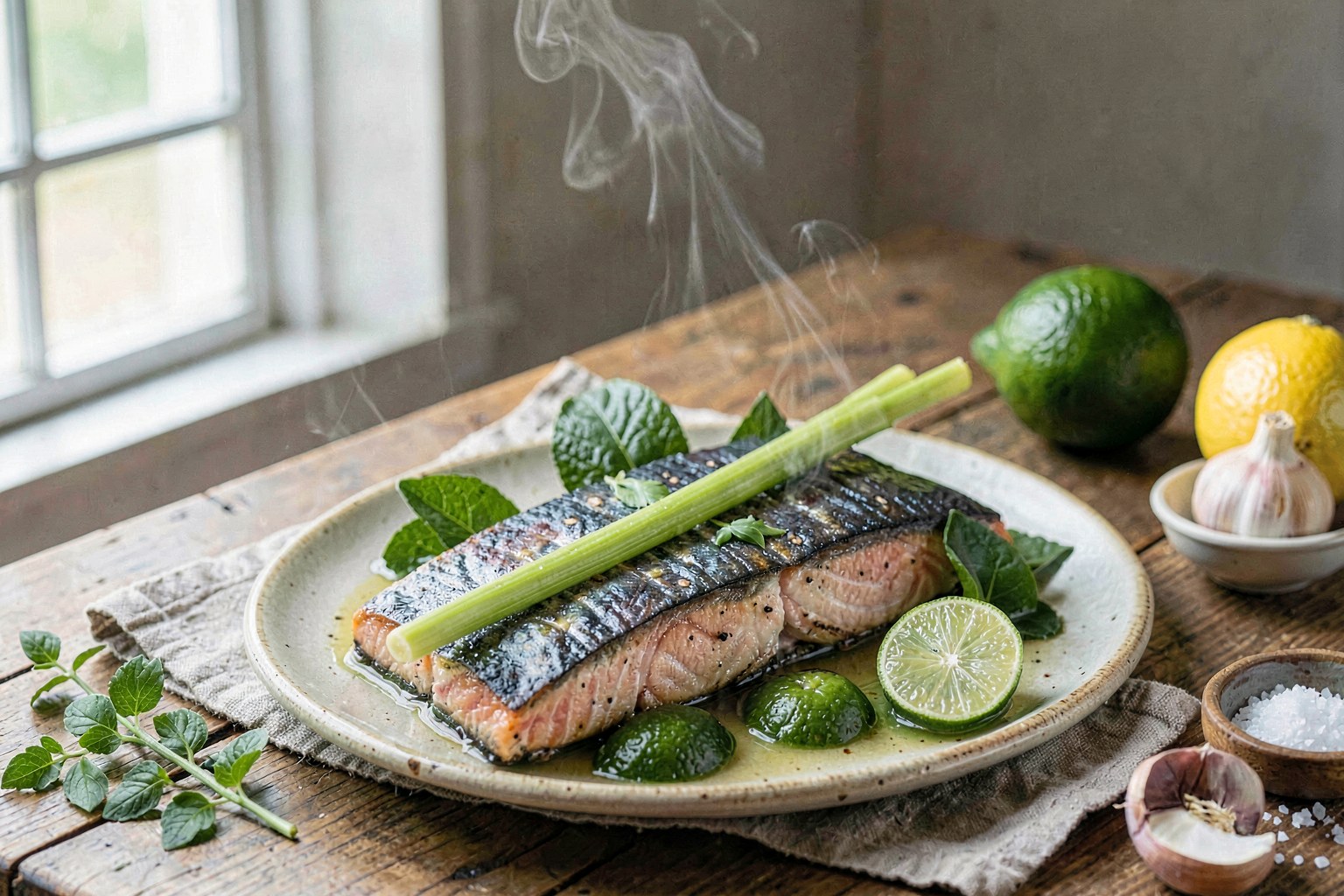
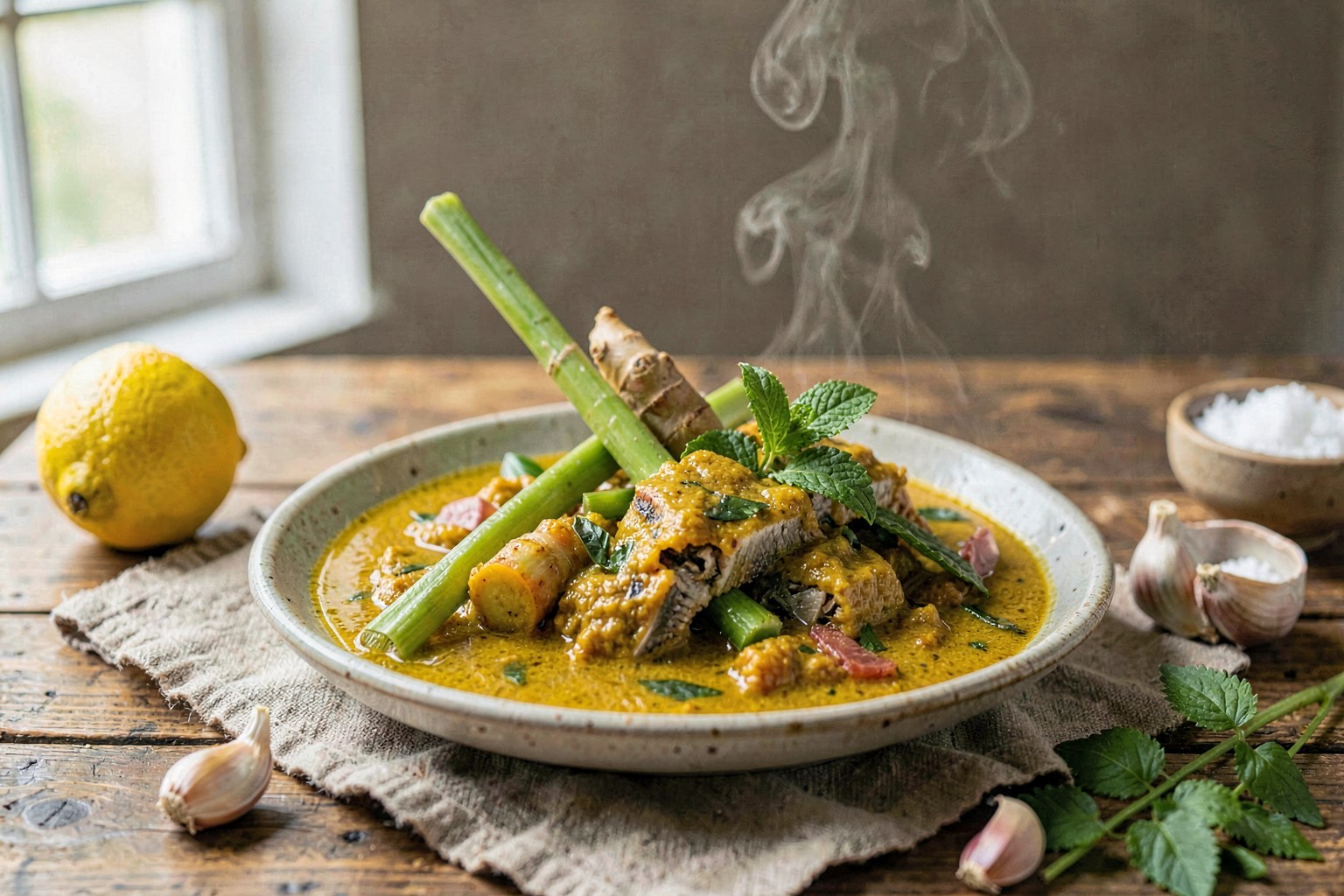
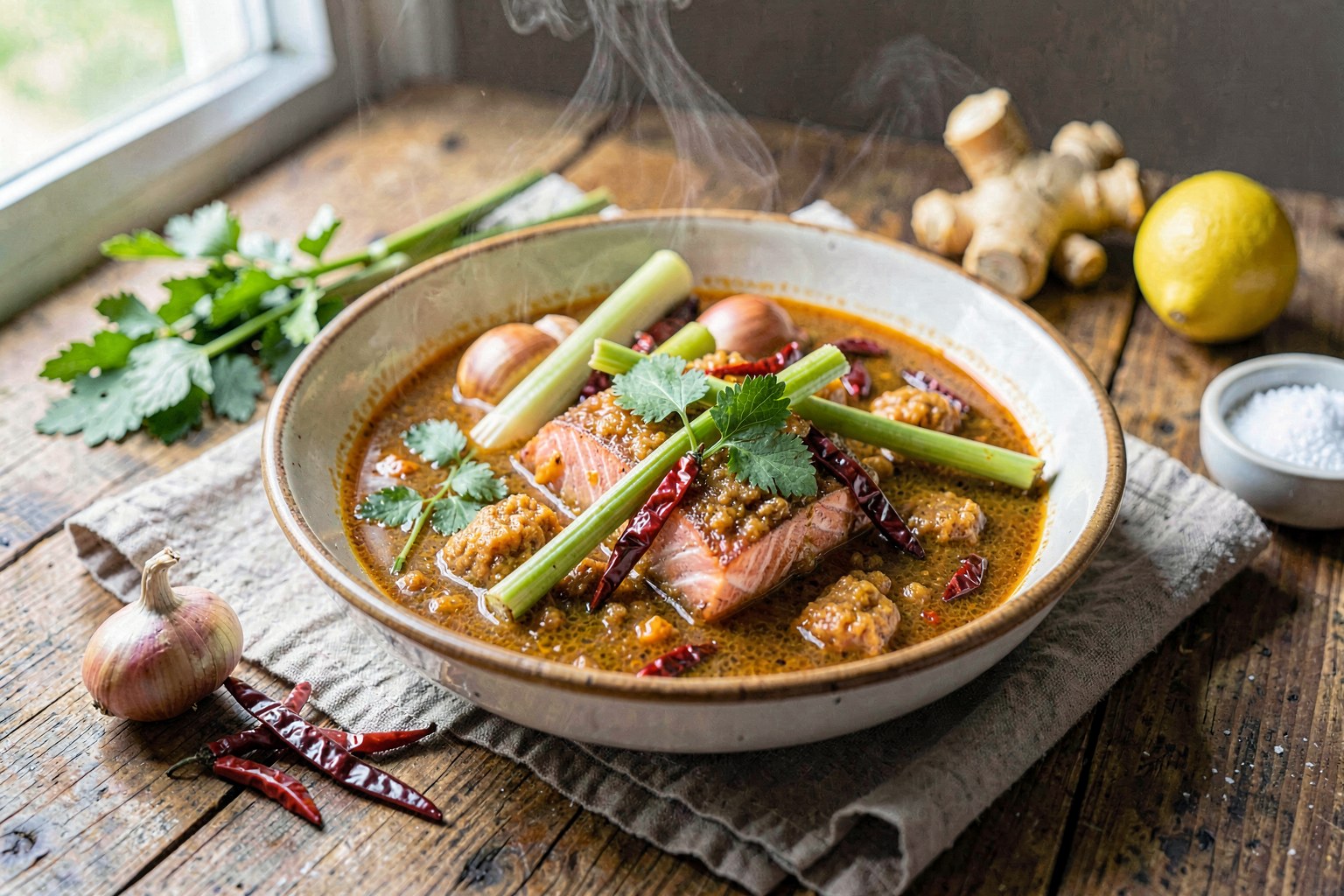
Gaeng Som: Northern Thai Sour Curry with Wild Salmon and Fresh Herbs
This vibrant, tamarind-forward curry hails from Northern Thailand, trading the coconut milk and palm sugar of the south for a broth built on fermented shrimp paste, fresh turmeric, and sharp citrus. It delivers a complex, sour-spicy-salty profile that wakes up the palate while delivering a massive dose of anti-inflammatory compounds from holy basil, ginger, and turmeric. We prioritize wild-caught salmon and cold-pressed extra-virgin olive oil to ensure every bite supports longevity and metabolic health without refined sugars or industrial seed oils.
A little context
Gaeng Som is a historic dish of the Isaan and Northern regions, traditionally relying on the sourness of tamarind and the funk of fermented shrimp paste (kapi) rather than the sweetness of palm sugar found in southern curries. We honor this tradition by strictly omitting the commercial palm sugar often added today, relying instead on the natural sweetness of ripe tomatoes and a tiny touch of raw honey if absolutely necessary, but the dish shines brightest without it. Furthermore, we replace the standard vegetable oil used in modern Thai restaurants with high-quality extra-virgin olive oil, respecting the dish's vegetable-forward roots while adhering to modern longevity standards.
The longevity story
The core of this dish is a polyphenol powerhouse: fresh turmeric and black pepper provide potent curcuminoids that reduce systemic inflammation, while the holy basil (kaphrao) contains eugenol and rosmarinic acid for gut and liver support. Wild-caught salmon contributes high-quality omega-3 fatty acids (EPA/DHA) essential for brain health and cellular membrane integrity, far superior to farmed alternatives. The use of tamarind and fresh chilies adds capsaicin and antioxidants that support metabolic rate, while the absence of refined sugar prevents insulin spikes, keeping this meal strictly low-glycemic and Blueprint-compliant.
Method
- 01
Prepare the Spice Paste
In a high-powered blender or using a traditional mortar and pestle, combine the fresh turmeric, galangal, lemongrass, soaked chilies, shallots, toasted shrimp paste, and sea salt. Blend or pound until a completely smooth, vibrant orange paste forms. Add a splash of water only if necessary to get the blades moving. This paste is the soul of the dish.
- 02
Simmer the Broth Base
In your heavy-bottomed pot, bring the organic stock to a gentle simmer over medium heat. Stir in the spice paste, ensuring it dissolves fully into the liquid. The broth will turn a deep, rich orange. Let it simmer for 10 minutes to allow the raw flavors of the aromatics to mellow and meld.
- 03
Add the Sourness and Hard Vegetables
Stir in the strained tamarind concentrate. Taste the broth; it should be sharply sour with a hint of heat. Add the long beans and winged beans (or green beans). Simmer for 5-7 minutes until the beans are bright green but still have a slight crunch.
- 04
Cook the Tomatoes
Gently add the tomato wedges to the pot. Simmer for another 3-4 minutes. You want the tomatoes to soften and release their juices into the broth, adding body and natural sweetness, but you do not want them to disintegrate completely.
- 05
Poach the Salmon
Reduce the heat to low. Gently slide the wild-caught salmon fillets into the simmering broth. Do not stir vigorously; instead, spoon the broth over the fish to cook it evenly. Poach for 5-8 minutes depending on thickness, until the fish is just opaque and flakes easily with a fork. Avoid overcooking to preserve the delicate texture and omega-3 integrity.
- 06
Finish with Fat and Herbs
Turn off the heat immediately. Stir in the extra-virgin olive oil to emulsify the broth and boost the polyphenol content. Toss in the holy basil and cilantro leaves, allowing the residual heat to wilt them and release their essential oils. The basil should not be cooked, but rather infused.
- 07
Serve Immediately
Ladle the curry into deep bowls, ensuring each serving gets a generous portion of fish and vegetables. Serve hot, ideally with a side of warm brown rice or jasmine rice if following a non-grain-free protocol, though this dish is rich enough to stand alone.
Nutrition facts
Per serving · 1 of 4- — Saturated
- 4 g
- — Polyunsaturated
- 4 g
- Carbohydrates
- 45 g
- — Fiber
- 10 g
- — Sugars
- 11 g
- Cholesterol
- 64 mg
- Sodium
- 1549 mg
- Potassium
- 1536 mg
Estimated from USDA FoodData Central for matched ingredients (94% ingredient coverage). Values vary with brand, preparation, and exact measurements.
Pro tips
- ✦Sourcing the Holy Basil: Look for Thai specialty markets for fresh 'kaphrao' (holy basil); it has a peppery, clove-like scent that regular sweet basil lacks. If you can't find it, use Thai basil, but the flavor profile will shift slightly.
- ✦Tamarind Check: Always buy tamarind concentrate or blocks with no added sugar. Read the label; it should only contain tamarind pulp and water.
- ✦Fish Texture: Wild salmon cooks faster than farmed. Check it early. If the flesh starts to flake apart when you touch it, it is done.
- ✦Paste Consistency: If using a blender, scrape down the sides frequently to ensure the turmeric and galangal are fully broken down for a smooth sauce.
- ✦Oil Timing: Never boil the olive oil. Adding it at the very end preserves the volatile antioxidants and prevents the oil from oxidizing.
Shop this recipe
As an Amazon Associate we earn from qualifying purchases.
Substitutions
- wild-caught sockeye salmon → wild-caught Arctic char or rainbow trout (both have excellent omega-3 profiles and hold up well to poaching.)
- shrimp paste (kapi) → miso paste (white or red) or nutritional yeast (for a vegan version; add 1 tbsp miso at the end to avoid boiling off the probiotics.)
- winged beans → broccoli florets or asparagus (add asparagus in the last 2 minutes to prevent overcooking.)
Storage
Store in a glass container in the refrigerator for up to 3 days. The flavors often improve on day 2. Freeze portions (without the fresh basil added yet) for up to 2 months; add fresh basil and a drizzle of EVOO upon reheating.
What to serve with it
- Hot green tea (sencha or matcha) to complement the turmeric and aid digestion
- Sparkling water with a wedge of lime and a pinch of sea salt
- A glass of dry, low-sulfite white wine like a natural Riesling if alcohol is permitted in your protocol
FAQ
Can I use farmed salmon?+
Technically yes, but farmed salmon often has a higher inflammatory omega-6 profile due to corn/soy feed and lower omega-3s. For a Blueprint-aligned meal, wild-caught is the superior choice for cellular health.
Why is this so sour?+
Gaeng Som is defined by its sourness (Som). Traditional recipes do not rely on sugar to balance the acid. If you need a hint of sweetness, a single pitted date blended into the broth or a few drops of raw honey can be used, but the dish is intended to be tart to stimulate digestion.
Can I make this ahead of time?+
You can prepare the spice paste and tamarind water up to 3 days in advance. However, poach the fish and add the fresh basil and olive oil only when you are ready to serve to maintain texture and nutrient integrity.
Share this recipe
Notes from the community
Sign in to leave a note.
No notes yet — be the first.
You might also like