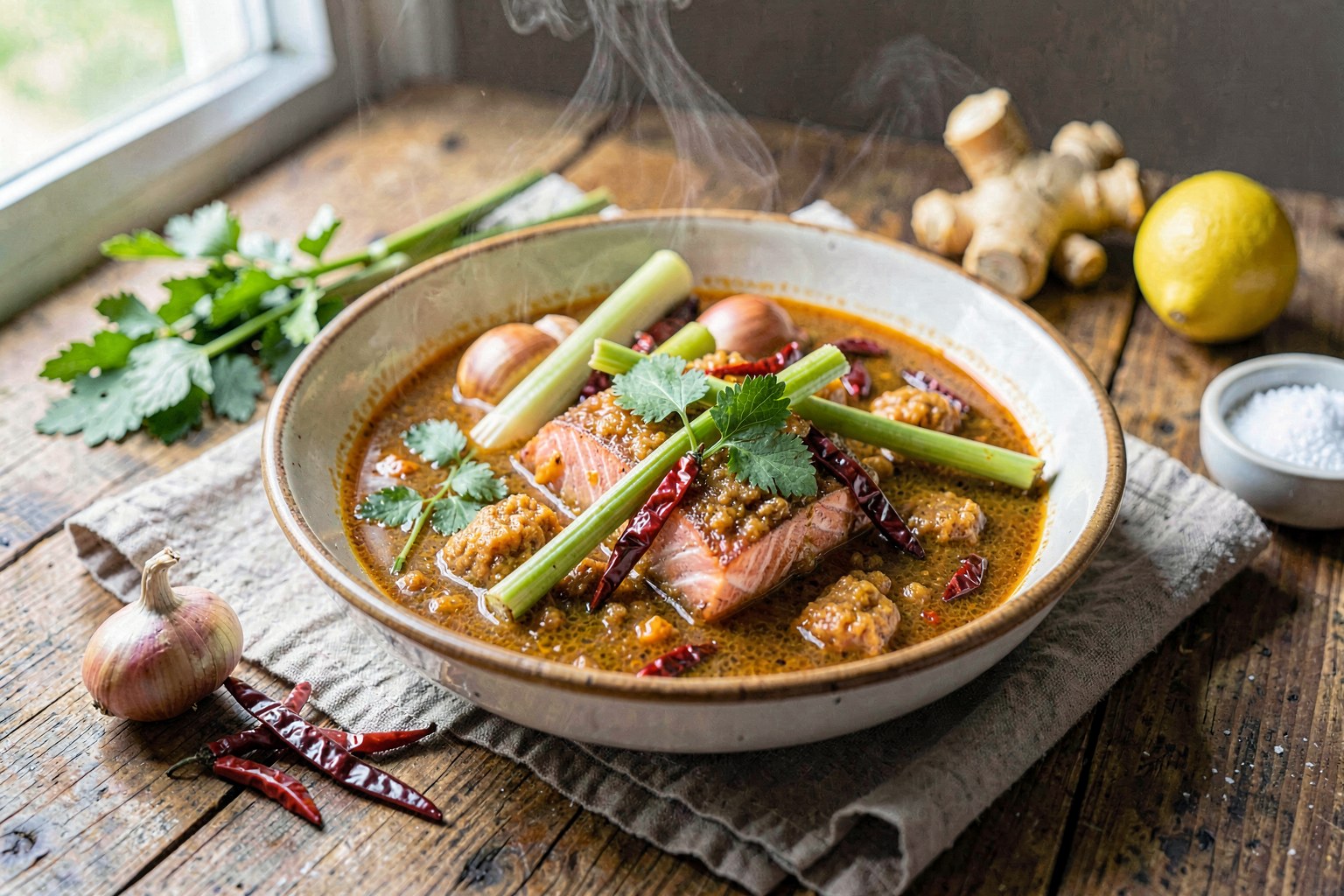
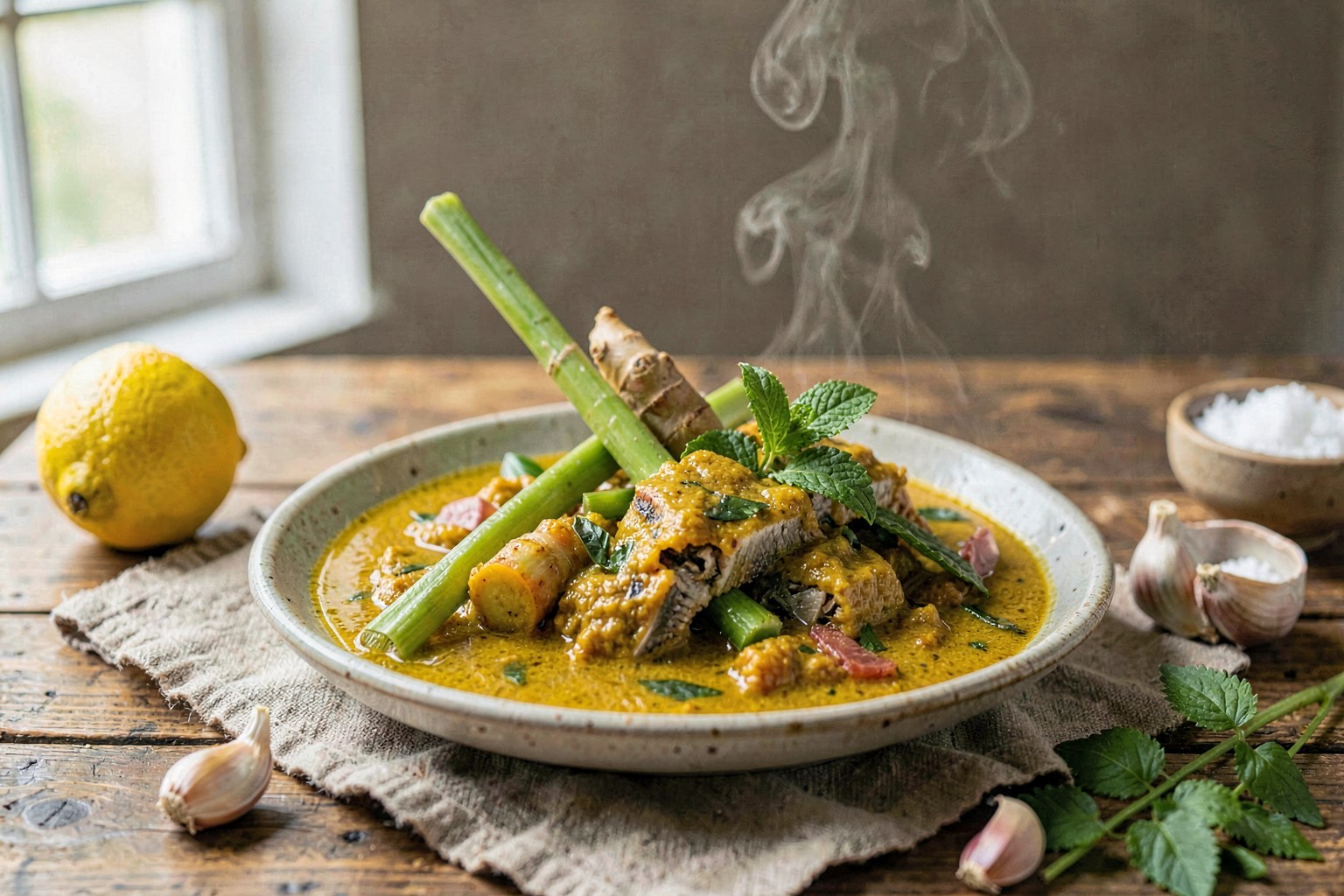
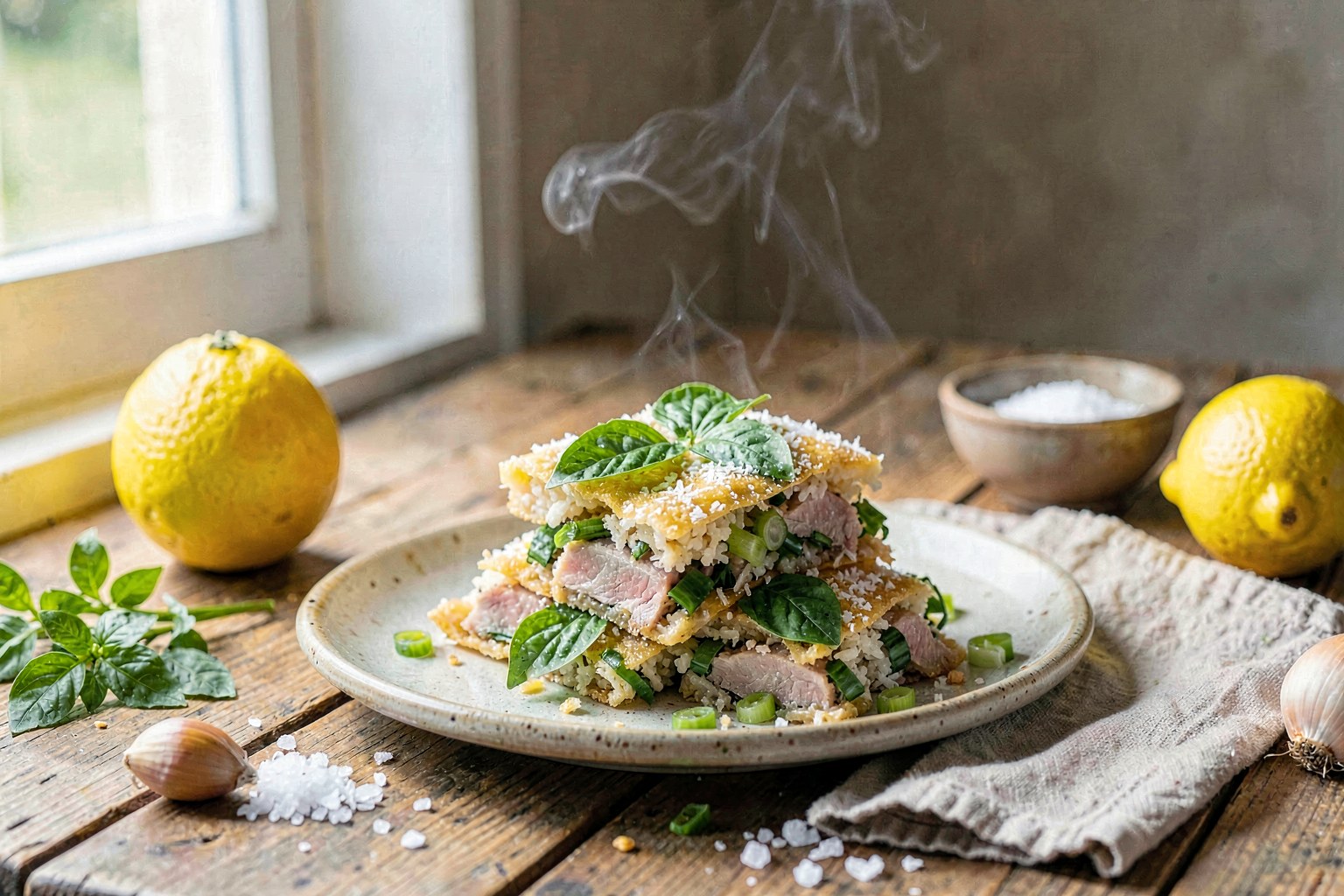
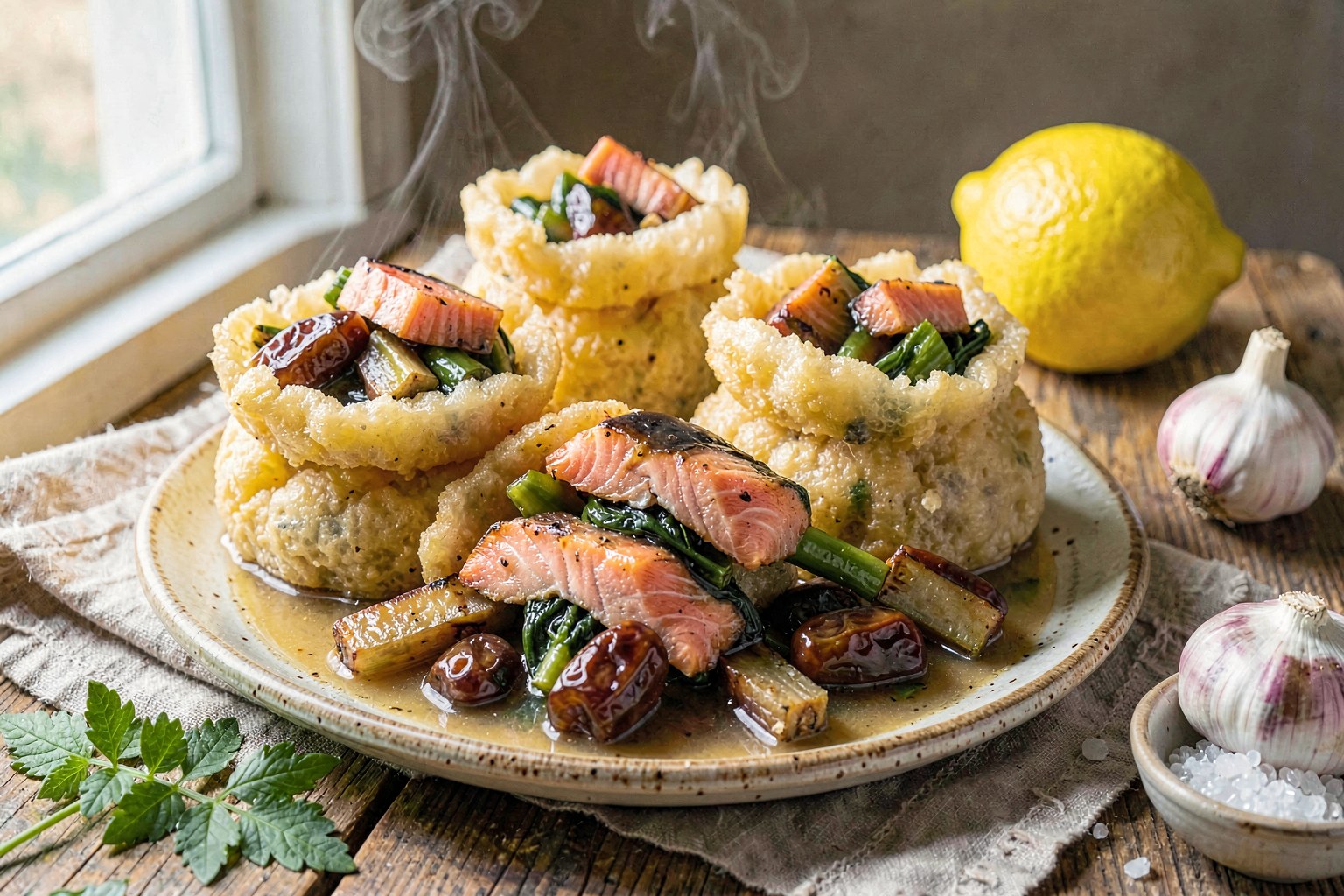
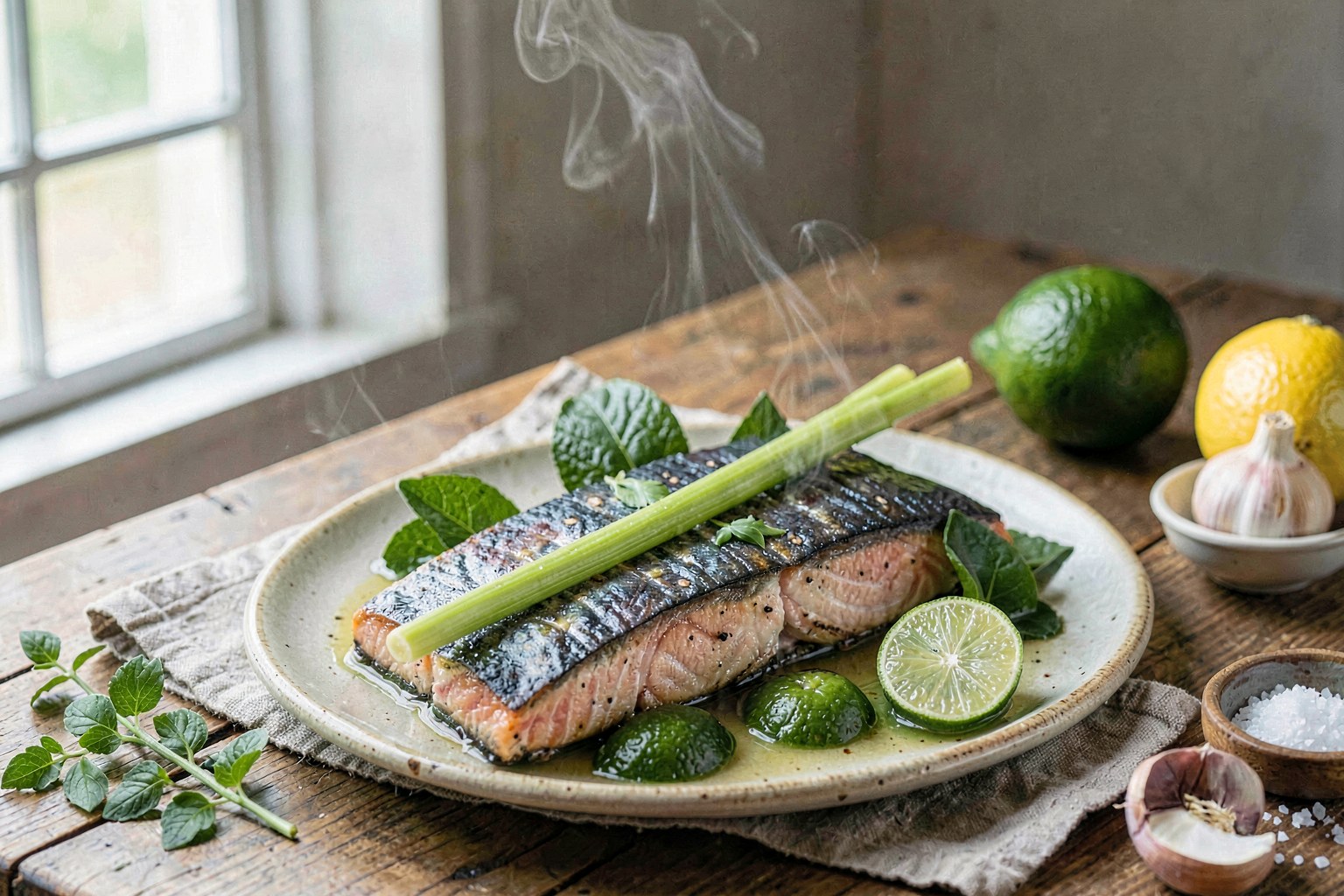
Cha Nam Khon: Wild-Caught Salmon with Lemongrass-Calamansi Infusion
This dish reimagines the Thai tradition of Cha Nam Khon—a cold, herb-infused water meant to cleanse the palate—by pairing it with pan-seared wild salmon. The result is a dinner that balances the rich, omega-3 dense fish with a sharp, citrusy lemongrass broth that cuts through the fat without added sugar or heavy spices.
A little context
In traditional Thai dining, Cha Nam Khon is a simple infusion of lemongrass, kaffir lime, and sometimes calamansi served alongside spicy or rich dishes to cool the palate. Historically, some modern variations add palm sugar or refined sugar to balance the acidity; we strictly omit this to honor the Blueprint philosophy of zero refined sugar, relying instead on the natural sweetness of ripe fruit if needed, though here the citrus provides sufficient balance. We have swapped any traditional seed-oil frying for searing in grass-fed ghee or high-smoke-point avocado oil to maintain the integrity of the fats.
The longevity story
The core of this meal lies in the synergy between wild salmon's long-chain omega-3 fatty acids (EPA/DHA) and the polyphenol-rich lemongrass and calamansi. Lemongrass contains citral, which supports gut motility and reduces inflammation, while the calamansi provides a potent dose of Vitamin C to aid iron absorption from the greens. We utilize extra-virgin olive oil for its oleocanthal content, a natural anti-inflammatory compound that mimics ibuprofen at a cellular level, ensuring the meal supports longevity rather than just filling the stomach.
Method
- 01
Prepare the Cold Infusion
In a large glass pitcher, combine the 1.5 L filtered water, bruised lemongrass stalks, torn kaffir lime leaves, and the squeezed juice of the calamansi. Stir gently, cover, and place in the refrigerator to steep for at least 45 minutes. The water should turn a pale gold and smell intensely citrusy.
- 02
Prep the Salmon
Remove the wild-caught sockeye salmon from the fridge 20 minutes before cooking to take the chill off. Pat the fillets completely dry with paper towels. Season the flesh side generously with sea salt and a light dusting of white pepper. Do not salt the skin side yet.
- 03
Sear the Salmon
Heat the cast-iron skillet over medium-high heat. Add the melted grass-fed ghee. Once the ghee is shimmering but not smoking, place the salmon fillets skin-side down. Press gently with a spatula for 10 seconds to ensure even contact. Cook undisturbed for 4-5 minutes until the skin is crisp and golden.
- 04
Flip and Finish
Flip the salmon carefully. Cook for another 2-3 minutes on the flesh side until the internal temperature reaches 52°C (125°F) for medium-rare, or 57°C (135°F) for medium. The fish should still be slightly translucent in the center. Remove from the pan and let rest for 5 minutes.
- 05
Assemble the Garnish
While the salmon rests, prepare the fresh herb mixture. In a small bowl, combine the sliced bird's eye chilies, fresh Thai basil, cilantro, and a pinch of sea salt. Drizzle with the coconut aminos and a teaspoon of the cold lemongrass water to create a moist relish.
- 06
Serve
Place the warm salmon on plates. Ladle a generous amount of the cold lemongrass-calamansi water into serving bowls or glasses alongside the fish. Top the salmon with the fresh herb-chili relish and a final drizzle of cold extra-virgin olive oil. Serve immediately.
Nutrition facts
Per serving · 1 of 4- — Saturated
- 10 g
- — Polyunsaturated
- 3 g
- Carbohydrates
- 19 g
- — Fiber
- 3 g
- — Sugars
- 9 g
- Cholesterol
- 87 mg
- Sodium
- 396 mg
- Potassium
- 1119 mg
Estimated from USDA FoodData Central for matched ingredients (70% ingredient coverage). Values vary with brand, preparation, and exact measurements.
Pro tips
- ✦When selecting lemongrass, choose stalks that are firm with a heavy bottom; if the top is dry and brown, it will lack the essential citral oils.
- ✦Do not overcook the salmon; wild sockeye is leaner than farmed and dries out quickly. Aim for a slightly translucent center.
- ✦Bruising the lemongrass is non-negotiable: use the flat side of a heavy knife to smash the stalks before slicing to release the maximum aroma into the cold water.
- ✦If you cannot find calamansi, a mix of key lime and a tiny amount of yuzu juice provides the closest flavor profile without adding sugar.
- ✦Serve the Cha Nam Khon water ice-cold; the temperature contrast against the warm salmon is the key sensory experience.
Shop this recipe
As an Amazon Associate we earn from qualifying purchases.
Substitutions
- wild-caught sockeye salmon → wild-caught Arctic char or rainbow trout (Arctic char has a similar fat profile and holds up well to searing; trout is softer and cooks faster.)
- grass-fed ghee → avocado oil (avocado oil has a higher smoke point if you prefer a neutral fat, though ghee adds a nutty depth.)
- calamansi → key limes + 1 tsp yuzu juice (yuzu adds the floral complexity missing in standard limes.)
Storage
Store the cold infusion in a sealed glass jar in the fridge for up to 4 days. Cooked salmon keeps for 2 days in a glass container; reheat gently or eat cold. Do not freeze the herb garnish.
What to serve with it
- Hot green tea (unsweetened) to complement the citrus notes
- Sparkling water with a slice of fresh ginger
- A dry, low-sulfite Pinot Noir
FAQ
Can I use farmed salmon?+
While you can, farmed salmon often has a less favorable omega-3 to omega-6 ratio due to corn/soy feed. Wild-caught is the preferred choice for the anti-inflammatory and polyphenol benefits of this recipe.
Is this spicy?+
It has a mild to moderate heat from the bird's eye chilies. You can remove the seeds and membranes to reduce the capsaicin content significantly while keeping the flavor.
Share this recipe
Notes from the community
Sign in to leave a note.
No notes yet — be the first.
You might also like