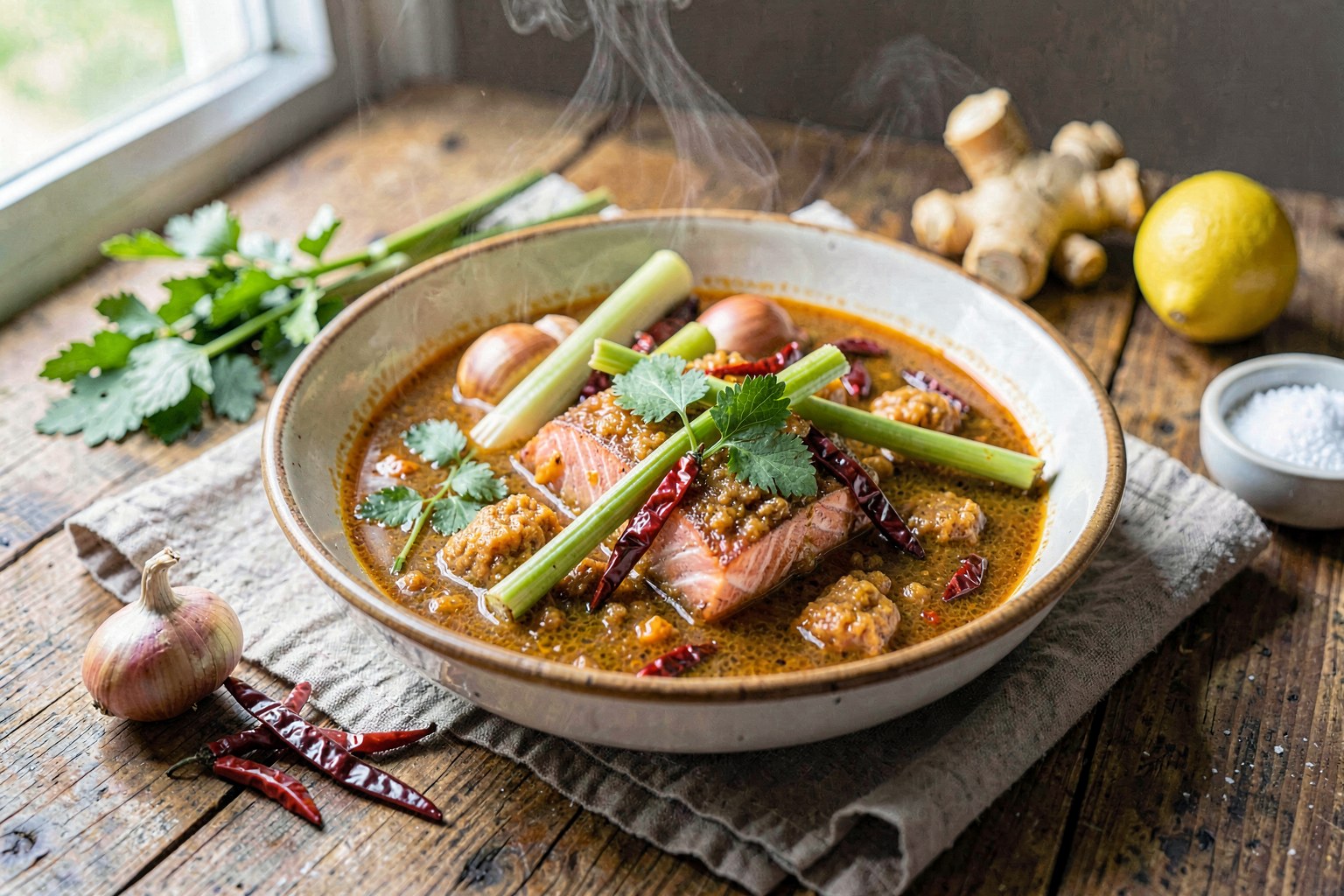
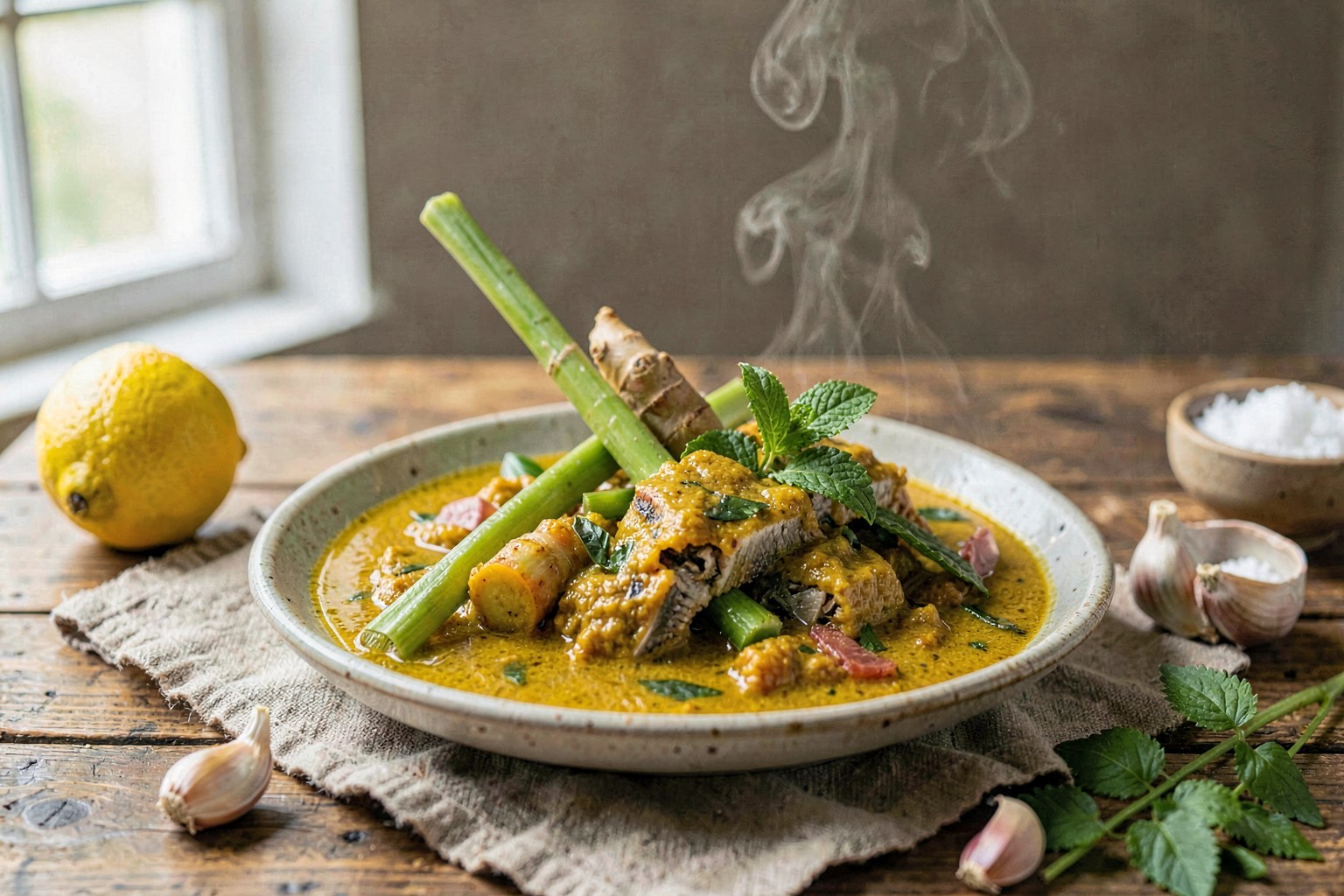
Gaeng Tai Pla: Northern Thai Fish Curry with Turmeric and Mint
A vibrant, fiery yellow-green curry from Northern Thailand that swaps heavy coconut milk for a broth built on fermented fish paste, fresh turmeric, and aromatic herbs. This dish delivers a complex, umami-rich punch with bright notes of mint, dill, and bird's eye chilies, all anchored by wild-caught fish and healthy fats.
A little context
Originating from the Lanna kingdom in Northern Thailand, traditional Gaeng Tai Pla is a pungent, fermented dish usually made with small river fish and often balanced with palm sugar. We honor this tradition by using organic, artisanal fermented fish paste and wild-caught salmon, stripping out the refined palm sugar and seed oils often found in modern adaptations. The result is a dish that respects the bold, funky soul of the original while aligning with a longevity-focused, whole-foods framework.
The longevity story
This recipe leverages the potent anti-inflammatory properties of curcumin found in fresh turmeric, enhanced by the piperine in black pepper for bioavailability. The inclusion of Tai Pla (fermented fish paste) introduces natural probiotics and enzymes that support gut microbiome diversity, while wild-caught salmon provides high-quality omega-3 fatty acids (EPA/DHA) essential for cellular membrane health. Fresh herbs like dill and mint add significant polyphenol density and digestive support without adding caloric load or refined sugars.
Method
- 01
Prepare the aromatic paste
In a high-powered blender, combine the fermented fish paste, fresh turmeric, galangal, lemongrass, garlic, bird's eye chilies, and cilantro roots. Add 60 ml of the stock and blend until a completely smooth, vibrant yellow-green paste forms. Scrape down sides as needed.
- 02
Sauté the paste
Heat 30 ml of extra-virgin olive oil in a heavy Dutch oven over medium heat. Add the blended paste and sauté for 5-7 minutes, stirring constantly, until the oil separates slightly and the raw aroma of the turmeric and galangal deepens. This step is crucial for unlocking the flavor compounds.
- 03
Build the broth
Pour in the remaining stock and bring to a gentle simmer. Add the quartered eggplant. Cover and simmer for 10-12 minutes until the eggplant is tender but not mushy.
- 04
Cook the fish
Gently add the wild-caught salmon cubes to the simmering broth. Do not stir vigorously; instead, gently shake the pot to submerge the fish. Simmer for 4-5 minutes, just until the fish is opaque and flakes easily with a fork. Overcooking will make the fish tough.
- 05
Finish with herbs
Remove the pot from heat immediately. Stir in the fish sauce (if needed) and black pepper. Fold in the fresh Thai basil, mint, and dill. The residual heat will wilt the herbs perfectly, preserving their bright color and volatile oils.
- 06
Rest and serve
Let the curry rest for 5 minutes to allow the flavors to meld. Drizzle with the remaining 30 ml of cold-pressed extra-virgin olive oil just before serving to maximize polyphenol benefits.
Nutrition facts
Per serving · 1 of 4- — Saturated
- 4 g
- — Polyunsaturated
- 3 g
- Carbohydrates
- 21 g
- — Fiber
- 7 g
- — Sugars
- 6 g
- Cholesterol
- 77 mg
- Sodium
- 2232 mg
- Potassium
- 1501 mg
Estimated from USDA FoodData Central for matched ingredients (88% ingredient coverage). Values vary with brand, preparation, and exact measurements.
Pro tips
- ✦When selecting fresh turmeric, look for roots that are firm, heavy for their size, and have bright orange flesh when cut; avoid any that are shriveled or moldy.
- ✦Fermented fish paste (Tai Pla) is extremely salty; always taste the broth before adding fish sauce.
- ✦For the best texture, cut the salmon into uniform cubes so they cook at the same rate.
- ✦If you cannot find fresh galangal, ginger is a fallback, but the curry will lack the distinctive citrus-pine notes essential to Northern Thai cuisine.
- ✦Add the fresh herbs at the very end; cooking them destroys their delicate polyphenols and turns them black.
Shop this recipe
As an Amazon Associate we earn from qualifying purchases.
Substitutions
- wild-caught sockeye salmon → wild-caught Arctic char or rainbow trout (Both offer similar high omega-3 profiles and firm texture suitable for curries.)
- fresh turmeric root → organic turmeric powder (Use 2 tbsp of high-quality powder, but note the flavor will be less bright and earthy. Fresh is strongly preferred.)
- Thai bird's eye chilies → serrano or jalapeño (Adjust quantity based on heat tolerance; these are milder but add good flavor.)
Storage
Store in a glass airtight container in the refrigerator for up to 3 days. Note that the flavor of fermented fish paste deepens overnight, making day 2 often superior. Do not freeze with fresh herbs; add fresh herbs after reheating.
What to serve with it
- Steamed jasmine rice (organic, traditional)
- Hot green tea (sencha or matcha) to complement the bitterness of the herbs
- Sparkling water with a wedge of lime and fresh mint
- A dry, mineral-forward white wine like Albariño or Grüner Veltliner
FAQ
Is the fermented fish paste safe for a low-sodium diet?+
It is naturally high in sodium due to the fermentation process. If you are strictly sodium-restricted, use a reduced amount of paste and rely on fresh aromatics for flavor, or rinse the paste thoroughly before blending.
Why is there no coconut milk in this recipe?+
Traditional Northern Thai curries like Gaeng Tai Pla often use a clear broth or a light fish stock rather than the heavy coconut milk found in Central Thai curries. This keeps the dish lighter, lower in saturated fat, and allows the complex fermented and herbal flavors to shine.
Share this recipe
Notes from the community
Sign in to leave a note.
No notes yet — be the first.
You might also like