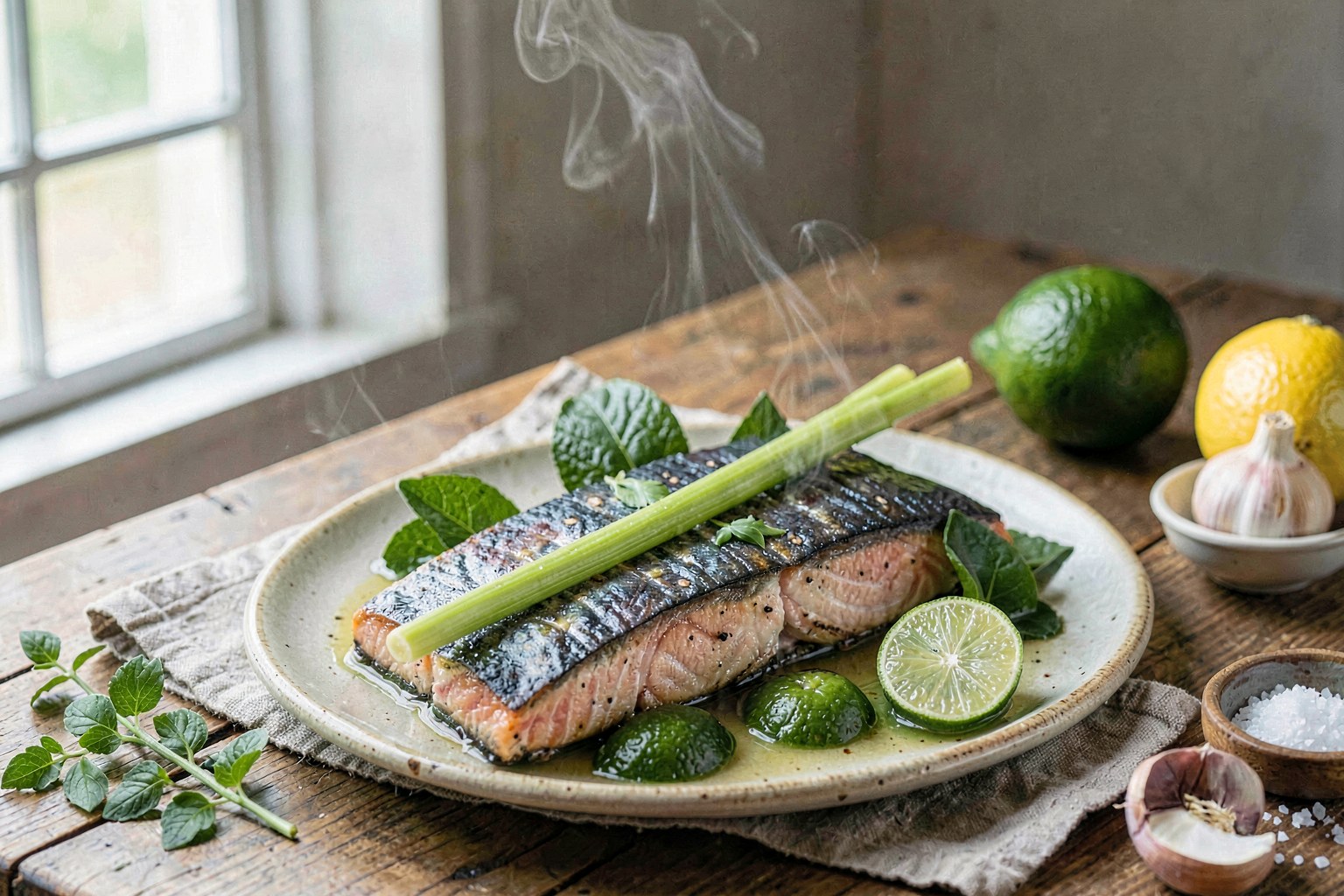
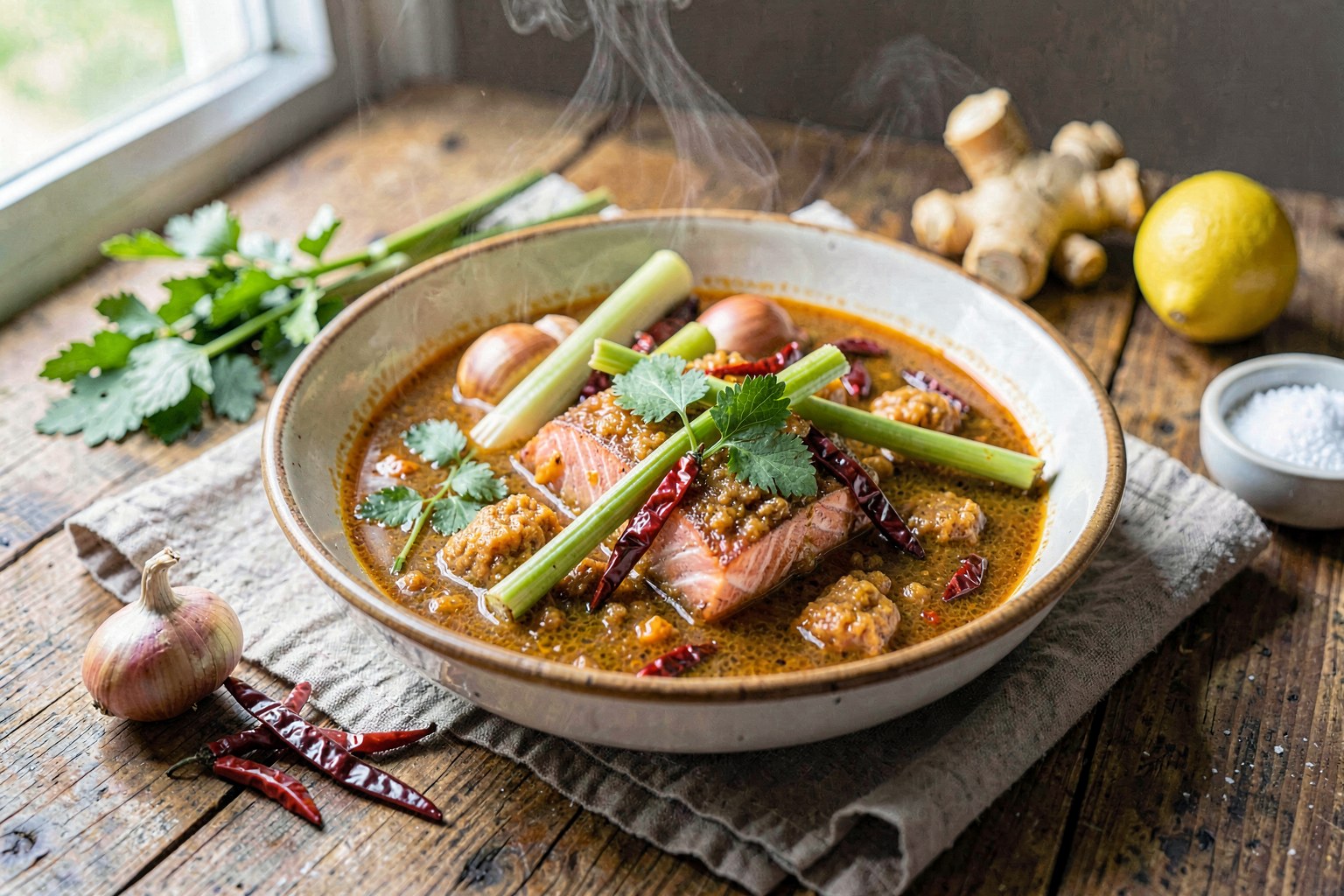
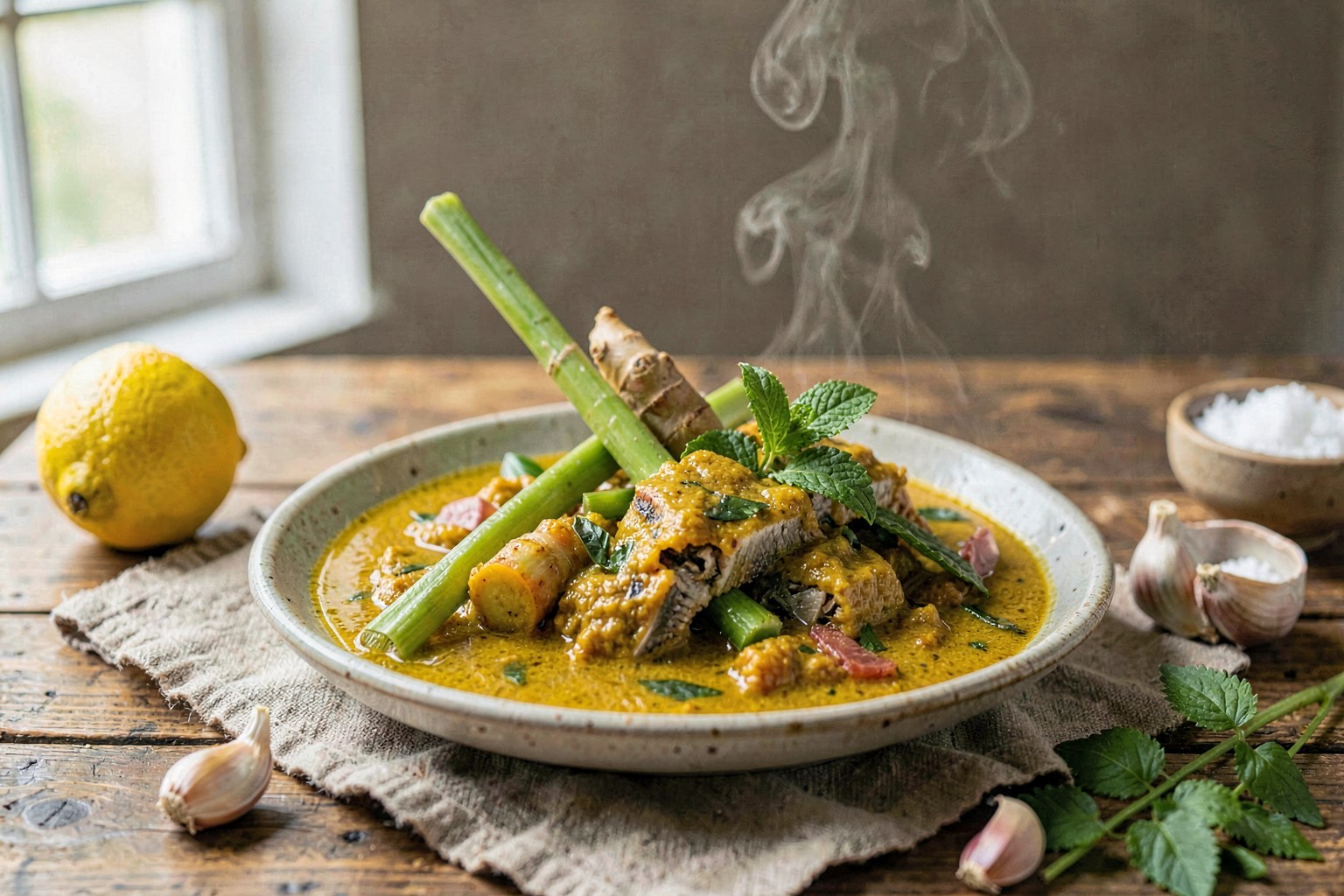
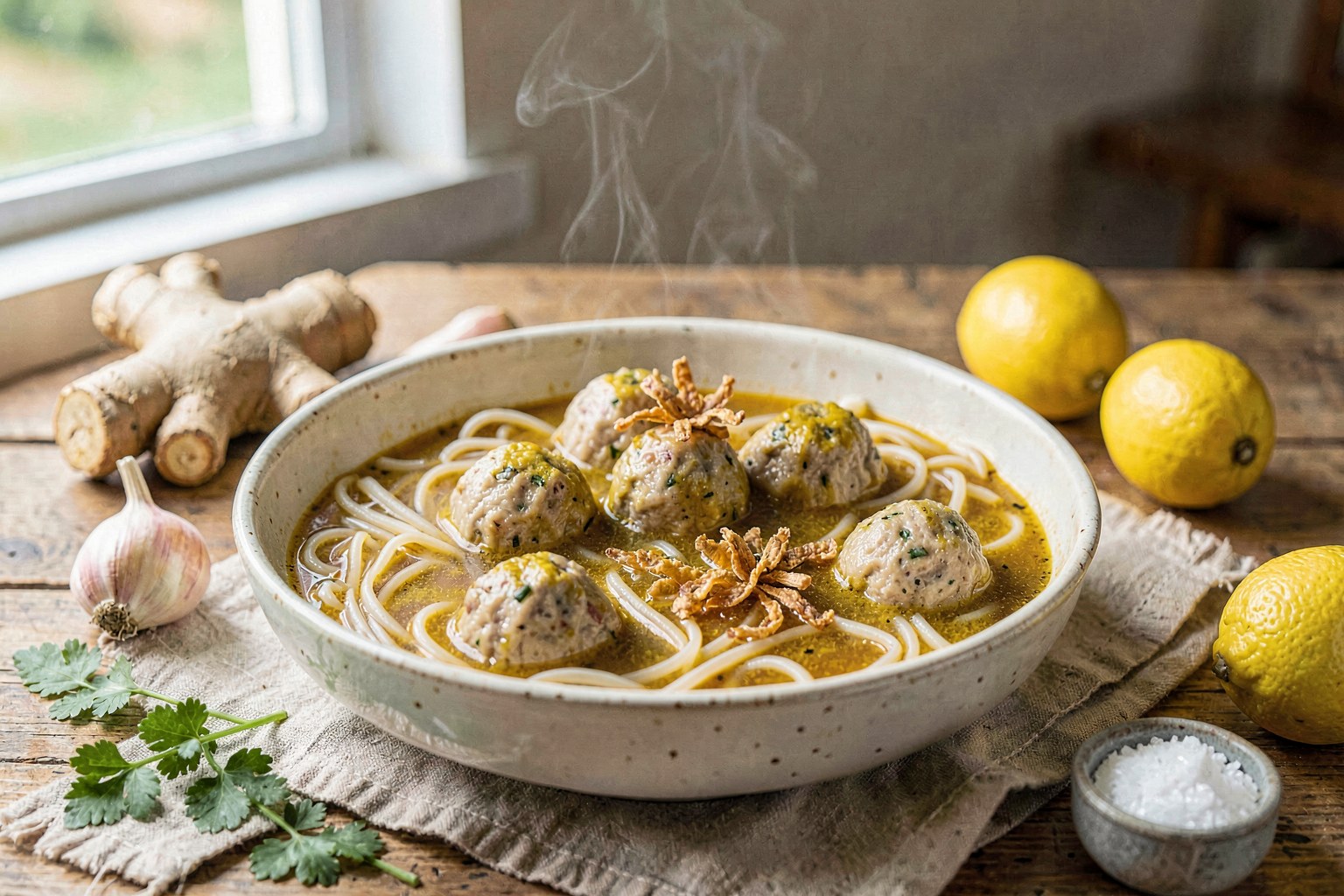
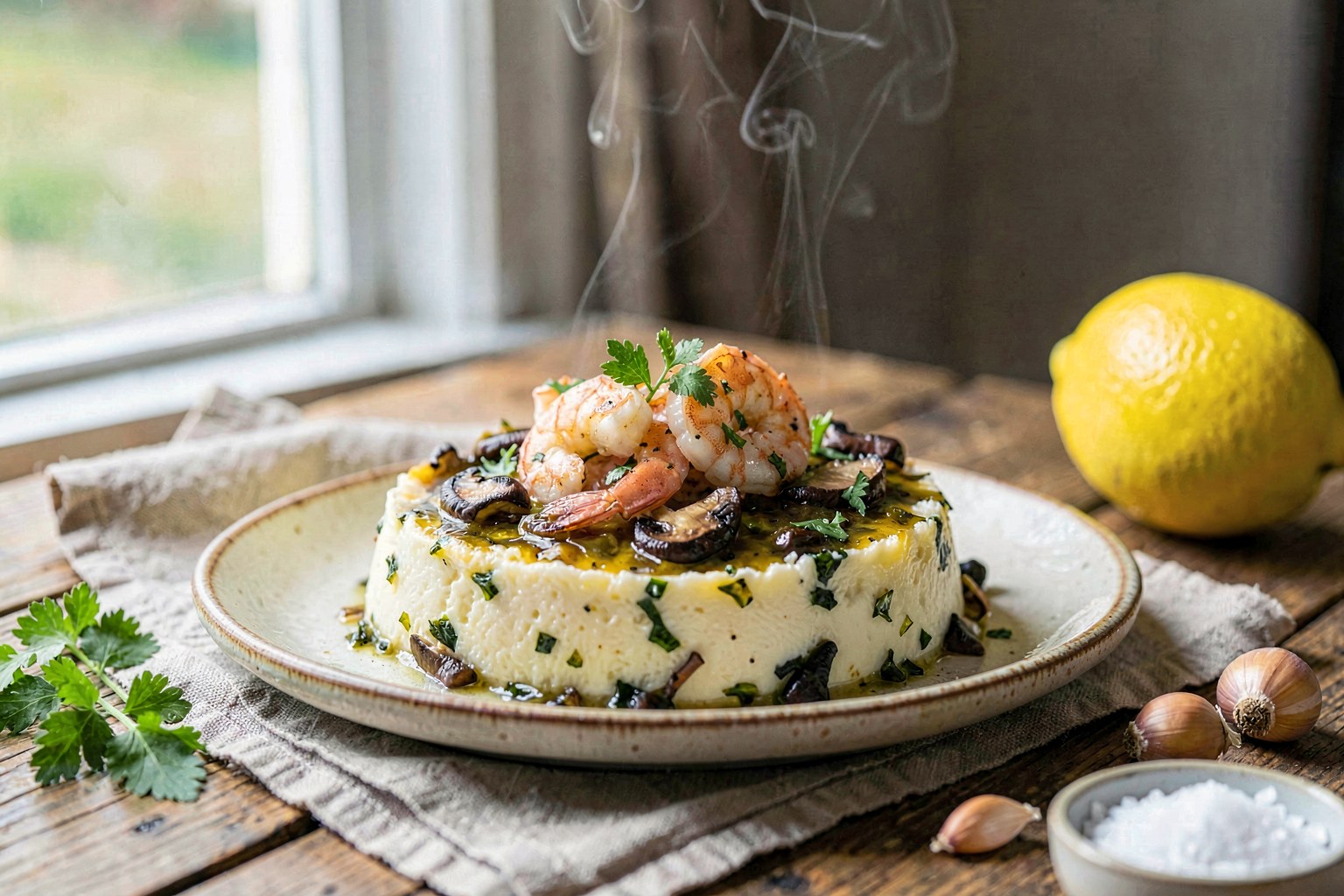
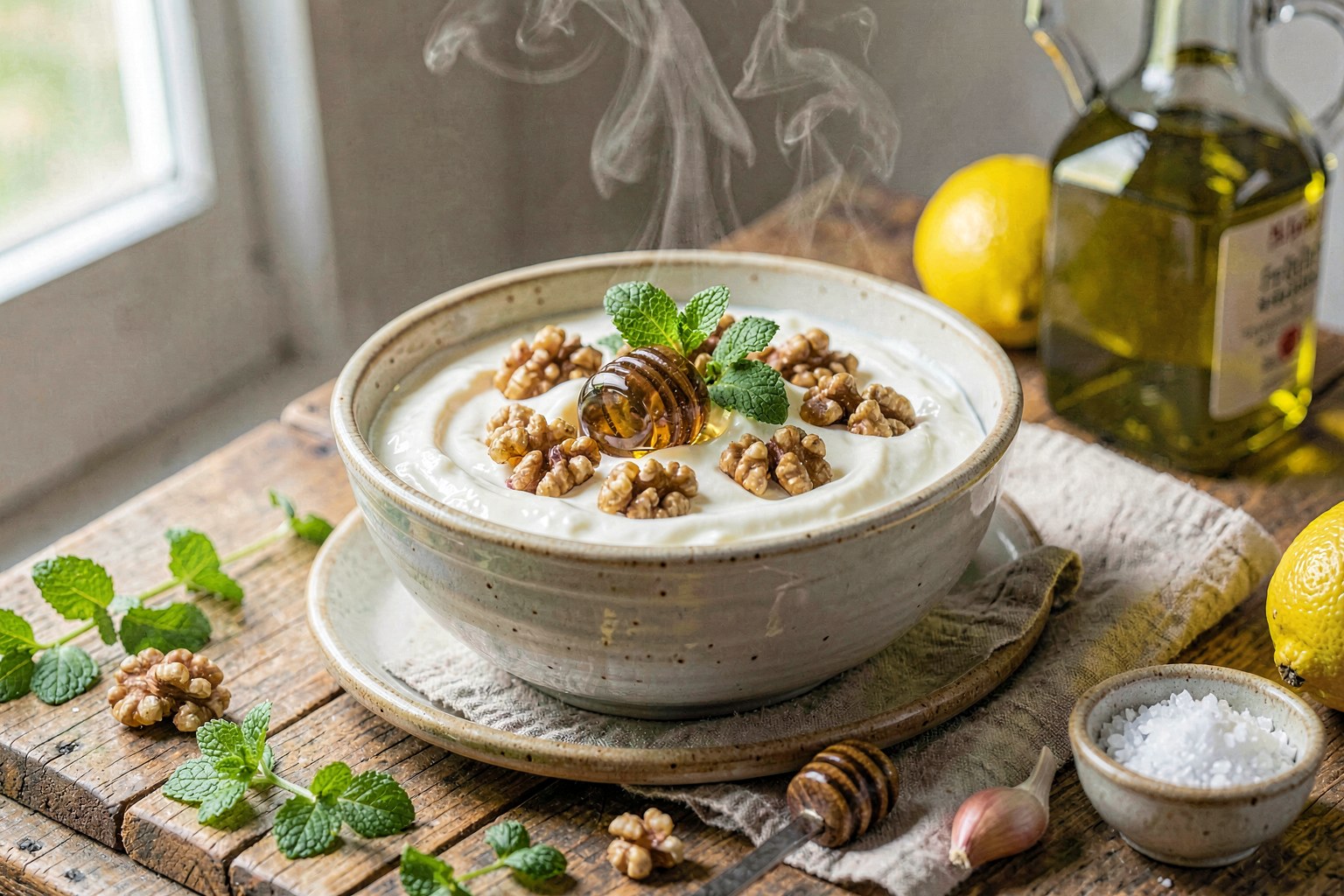
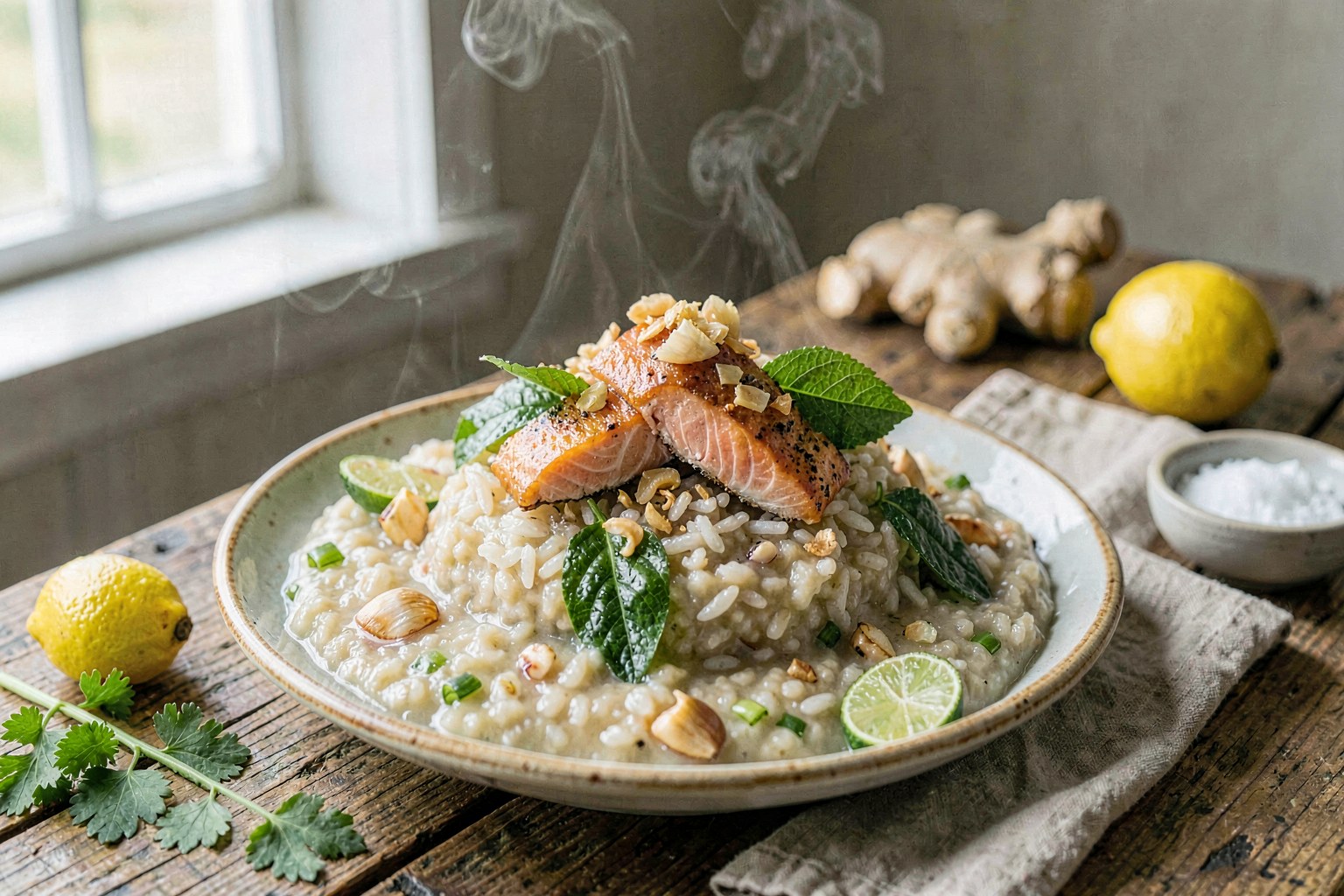
Khao Tom: Lemongrass & Wild Salmon Porridge with Fried Garlic
This savory rice porridge simmers jasmine rice with bruised lemongrass and kaffir lime leaves until creamy, topped with flaky wild-caught salmon and crispy garlic. It delivers a bright, citrus-forward flavor profile without a single gram of refined sugar, relying on the natural sweetness of the broth and the richness of quality fats.
A little context
Khao Tom is a traditional Thai comfort food, typically served for breakfast or when recovering from illness, often flavored with fish sauce and a pinch of sugar. We honor this tradition by stripping out the refined sugar and replacing seed-oil frying with extra-virgin olive oil, ensuring the dish remains a vehicle for healing rather than a spike in blood glucose. The result is a pure expression of the herbaceous aromatics that define Thai cuisine, unclouded by industrial additives.
The longevity story
This dish leverages the anti-inflammatory power of wild-caught salmon, rich in omega-3 fatty acids (EPA and DHA) essential for cellular membrane health. The base is fortified with polyphenols from fresh lemongrass and kaffir lime leaves, which support gut motility and reduce oxidative stress. By using extra-virgin olive oil for the garlic, we introduce hydroxytyrosol, a potent antioxidant, while avoiding the pro-inflammatory seed oils often found in traditional Thai frying.
Method
- 01
Create the Salmon Stock
Place the wild-caught sockeye salmon bones and skin (save the fillets for later) into a large pot. Add 2 liters of water, half of the bruised lemongrass, and 4 kaffir lime leaves. Bring to a boil, then immediately reduce to a low simmer for 20 minutes. Skim off any foam that rises to the top to ensure a clean broth. Strain through a fine-mesh sieve, discarding solids, and return the clear golden stock to the pot.
- 02
Simmer the Rice
Add the rinsed jasmine rice to the hot stock along with the remaining lemongrass, kaffir lime leaves, and sliced ginger. Bring to a gentle boil, then lower the heat to a very low simmer. Cover partially and cook for 35-40 minutes, stirring occasionally to prevent sticking, until the rice grains have burst and the porridge is creamy but still has texture. Add a splash of water if it becomes too thick.
- 03
Poach the Salmon
While the rice simmers, gently place the reserved salmon fillets into the simmering porridge. Poach for 5-7 minutes until the fish is just opaque and flakes easily. Do not overcook. Remove the fillets with a slotted spoon, flake the meat into large chunks, and set aside. Discard any bones or skin found in the porridge.
- 04
Fry the Garlic
In a small non-stick skillet, heat the extra-virgin olive oil over medium heat. Add the sliced garlic and fry, stirring constantly, until golden brown and crispy (about 3-4 minutes). Immediately remove from the oil with a slotted spoon and drain on a paper towel. The oil remaining in the pan is now garlic-infused; reserve it for drizzling.
- 05
Season and Assemble
Stir the coconut aminos or fish sauce into the porridge to taste. The broth should be savory and aromatic, not sweet. Ladle the hot porridge into bowls, ensuring each serving gets a generous portion of the poached salmon. Top with the crispy fried garlic, fresh cilantro, green onions, and sliced chili.
- 06
Finish with Polyphenols
Drizzle a teaspoon of the reserved garlic-infused olive oil over each bowl just before serving. Serve immediately while hot. The contrast of the warm, creamy rice and the crisp, garlicky topping creates a satisfying texture profile that wakes up the palate without sugar.
Nutrition facts
Per serving · 1 of 4- — Saturated
- 9 g
- — Polyunsaturated
- 2 g
- Carbohydrates
- 9 g
- — Fiber
- 1 g
- — Sugars
- 0 g
- Cholesterol
- 1 mg
- Sodium
- 16 mg
- Potassium
- 110 mg
Estimated from USDA FoodData Central for matched ingredients (45% ingredient coverage). Values vary with brand, preparation, and exact measurements.
Pro tips
- ✦Source wild-caught salmon specifically labeled 'sockeye' or 'king' for the highest omega-3 content and best texture; avoid farmed Atlantic salmon which often has a higher inflammatory profile.
- ✦When buying lemongrass, select stalks that are firm, heavy for their size, and have a strong citrus scent at the base; avoid stalks that are dry or have brown, woody tips.
- ✦Do not skip the skimming step when making the stock; removing the foam ensures the final porridge is clear and silky, not cloudy or greasy.
- ✦Fry the garlic slowly; if it burns, it becomes bitter. If you accidentally burn it, discard and start over, as burnt garlic ruins the delicate flavor balance.
- ✦If the porridge thickens too much upon standing, thin it with a splash of hot water or reserved stock rather than adding more oil.
Shop this recipe
As an Amazon Associate we earn from qualifying purchases.
Substitutions
- wild-caught sockeye salmon → wild-caught Arctic char or rainbow trout (these fish have similar fat profiles and flake beautifully in porridge.)
- jasmine rice → brown jasmine rice or red rice (increases fiber and polyphenols but requires 15-20 minutes longer cooking time and more liquid.)
- fish sauce → coconut aminos (essential for a lower sodium, soy-free, and sugar-free option while maintaining umami depth.)
Storage
Store in airtight glass containers in the refrigerator for up to 3 days. The rice will continue to absorb liquid, so reheat with a splash of water or stock. Freezing is not recommended as the texture of the poached salmon may become grainy upon thawing.
What to serve with it
- Hot sencha or genmaicha green tea to complement the grassy notes of the lemongrass.
- Sparkling water with a squeeze of fresh lime and a pinch of sea salt.
- A side of quick-pickled daikon radish (no sugar, vinegar only) for crunch.
FAQ
Why use olive oil to fry the garlic instead of traditional vegetable oil?+
Traditional Thai cooking often uses canola or soybean oil, which are high in omega-6 seed oils and unstable at high heat. Extra-virgin olive oil is rich in monounsaturated fats and polyphenols, and when used at moderate heat for frying garlic, it remains stable and adds a protective antioxidant layer to the dish.
Can I make this vegan?+
Yes, simply omit the salmon and use a rich mushroom or vegetable stock instead. You can add cubed firm tofu or tempeh for protein, though the texture will differ from the delicate fish.
Is this dish too starchy for a low-glycemic diet?+
While rice is a starch, the high fiber content of the whole grain (if using brown rice) and the presence of protein and healthy fats significantly blunts the glycemic response. Eating the salmon and garlic ensures a slower digestion rate compared to plain rice.
Share this recipe
Notes from the community
Sign in to leave a note.
No notes yet — be the first.
You might also like