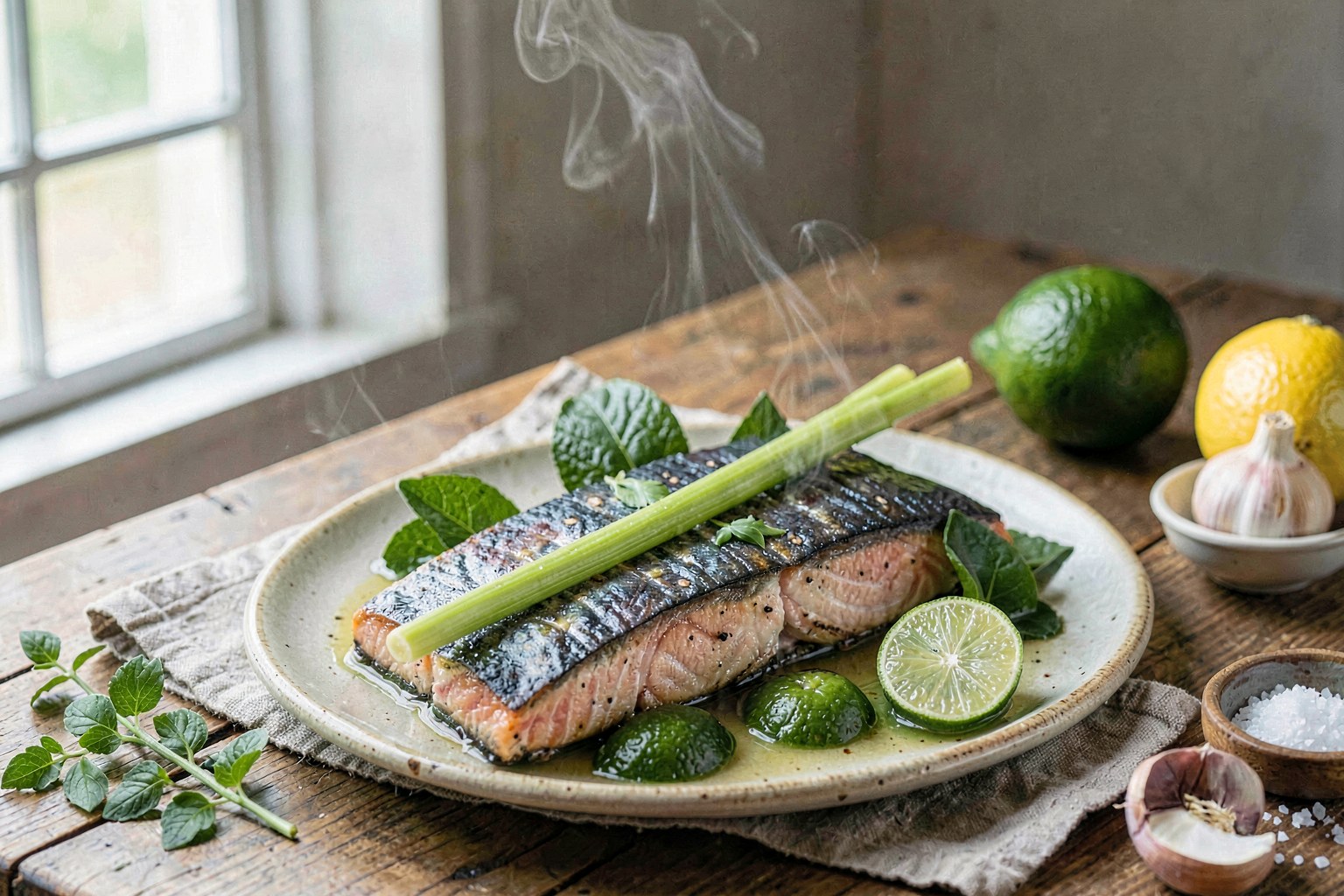
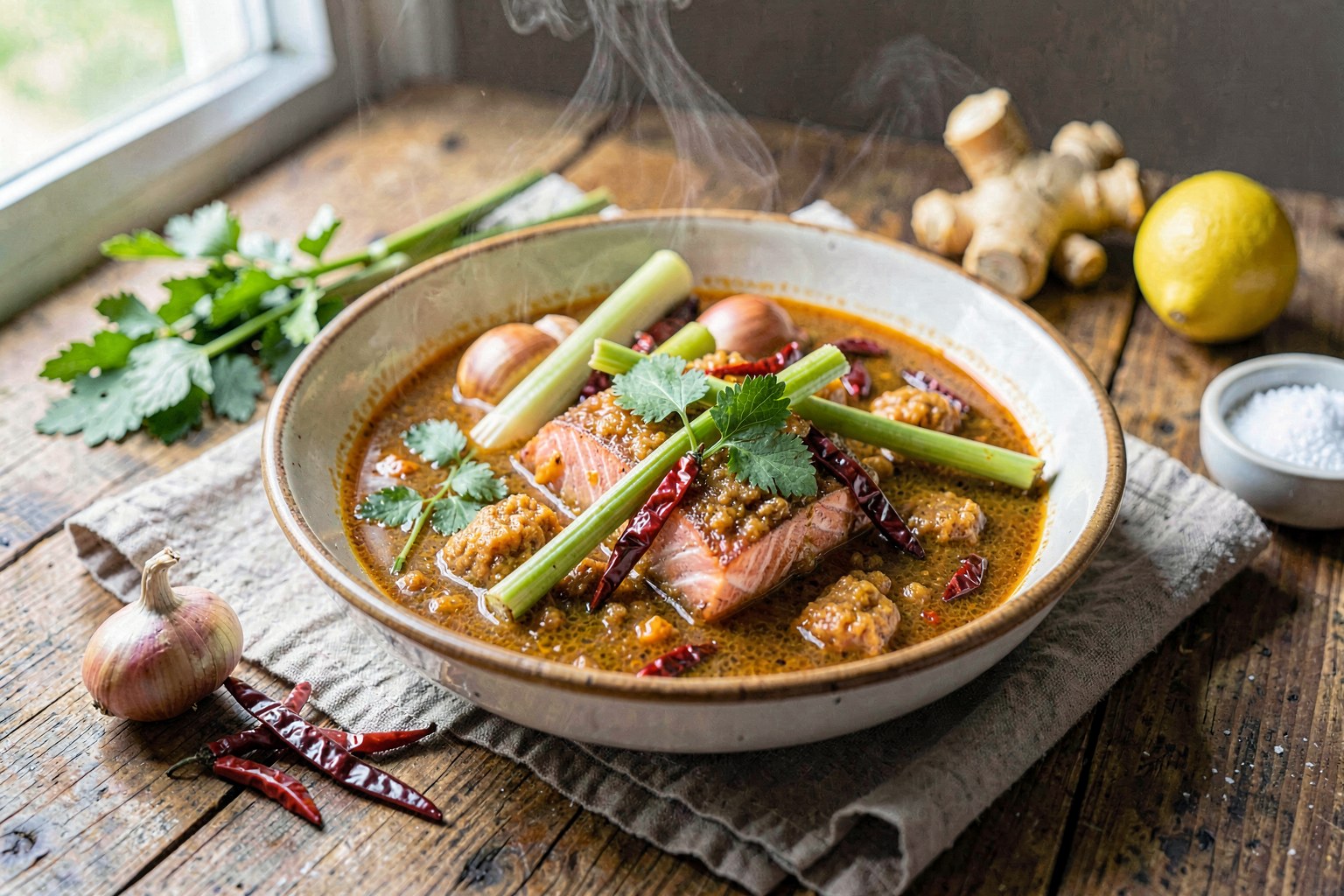
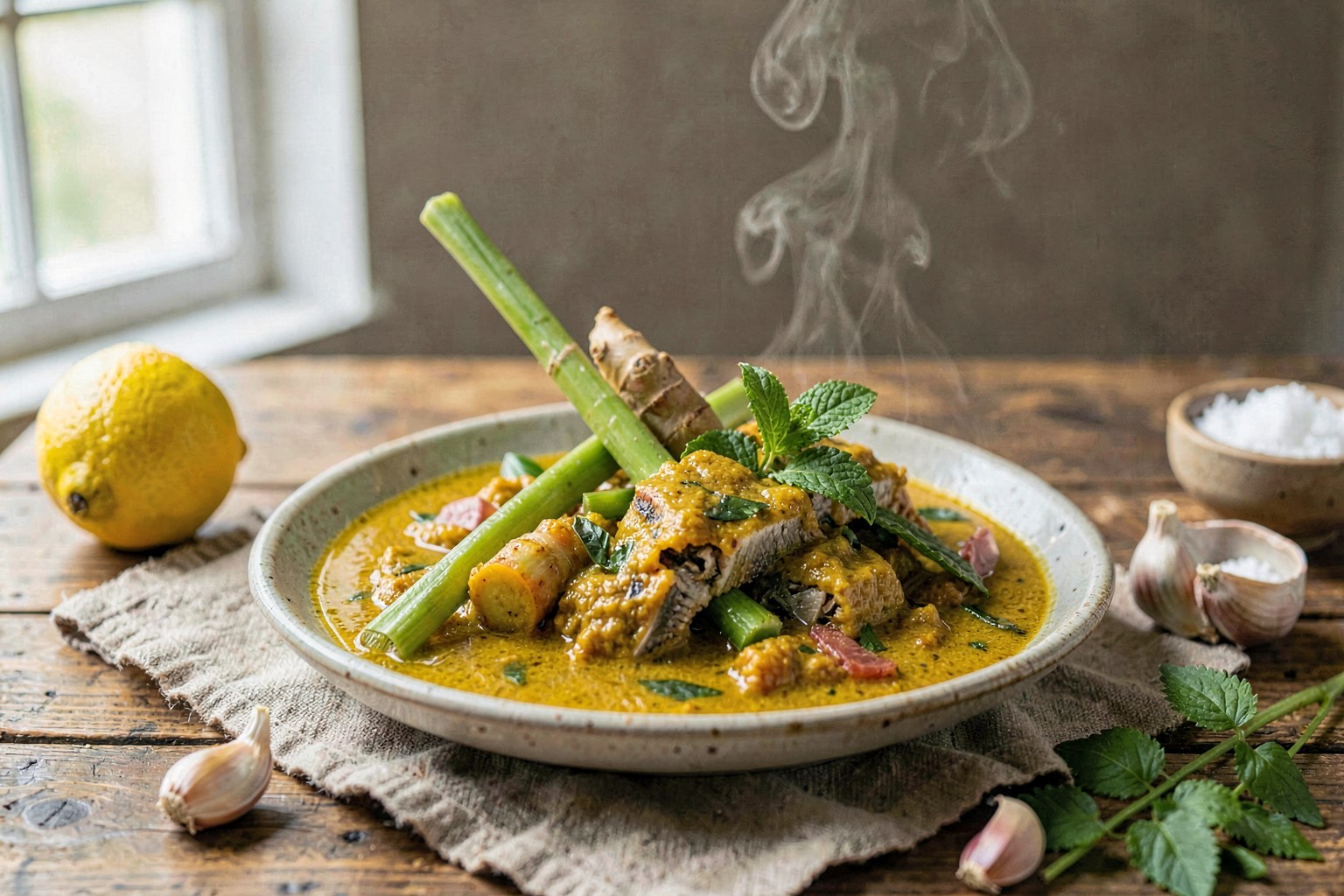
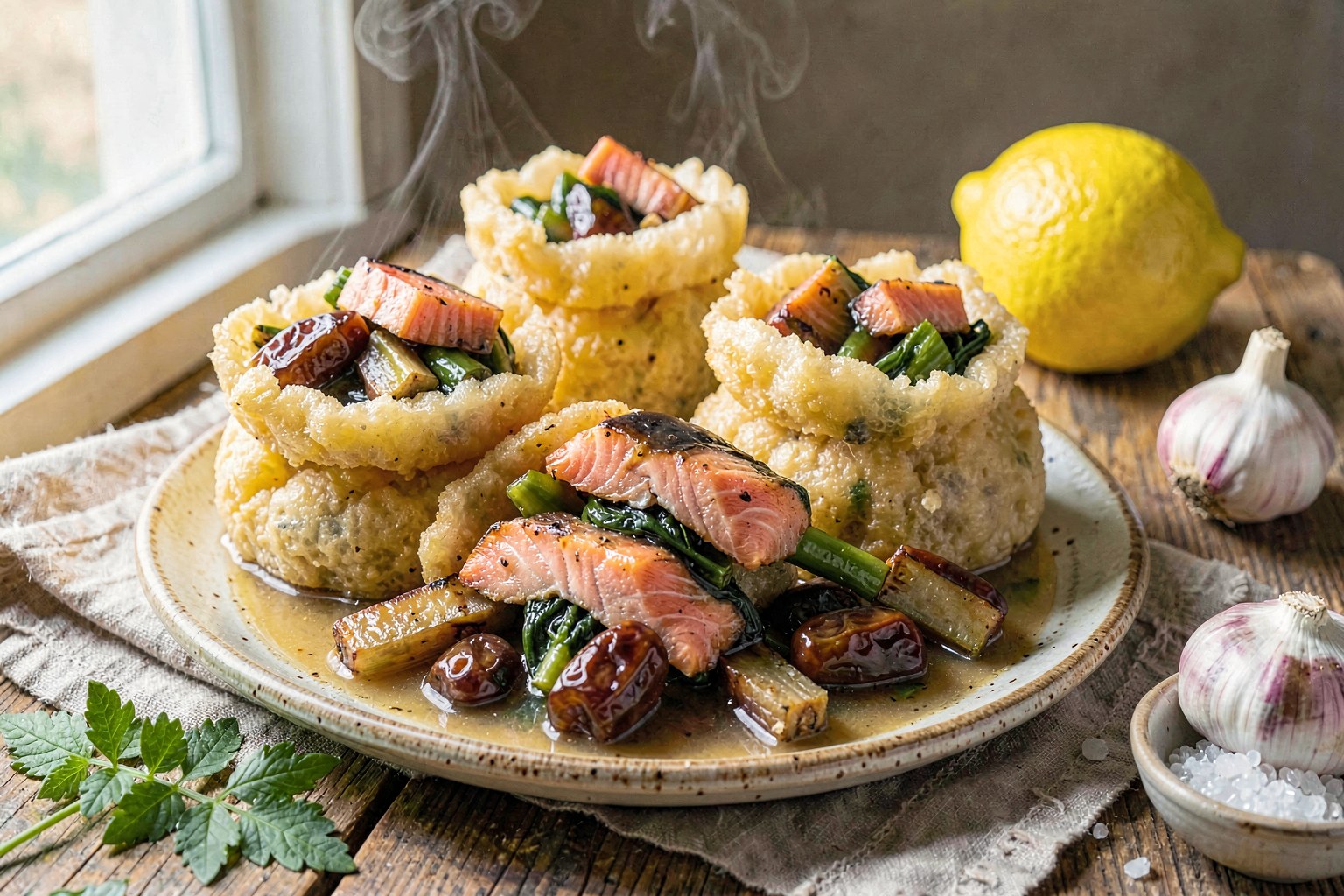
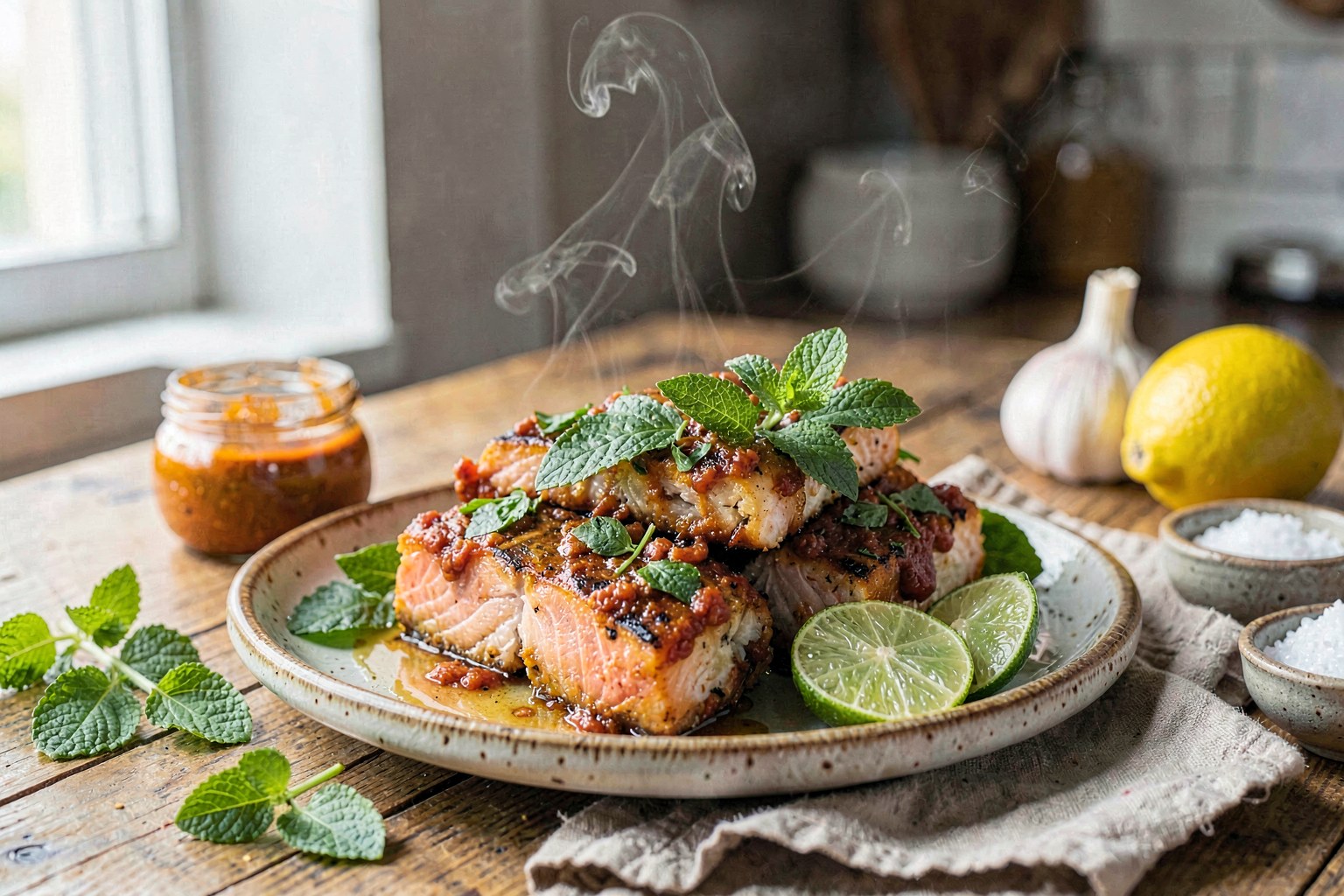
Tod Man Pla (Thai Fresh-Herb Fish Cakes) with Lime-Mint Infusion
These vibrant, aromatic fish cakes are bound with red curry paste, kaffir lime, and fresh turmeric, then pan-seared in ghee until golden. Served alongside a brisk, sugar-free Thai mint and lemongrass tea, this meal delivers a symphony of fresh herbs and omega-3s without the refined sugar or seed oils found in traditional street versions.
A little context
Tod Man is a beloved Thai street food staple, traditionally made with red curry paste that often contains palm sugar and fried in generic vegetable oils. We honor the tradition by using authentic paste (checking labels for no added sugar) or making our own, and searing the cakes in grass-fed ghee or avocado oil. The refreshing tea side, usually sweetened with cane sugar, is reimagined here with the natural sweetness of ripe fruit and the cooling power of mint to balance the heat of the curry.
The longevity story
This dish leverages the bioactive compounds in fresh turmeric and galangal to drive down systemic inflammation, while the wild-caught salmon provides high-quality EPA and DHA for cellular repair. The kaffir lime leaves and lemongrass offer significant polyphenol content that supports gut motility and antioxidant defense. By using ghee for searing instead of seed oils, we maintain a high smoke point without introducing inflammatory linoleic acids, preserving the integrity of the omega-3s in the fish.
Method
- 01
Prepare the fish emulsion
In a food processor, pulse the wild-caught salmon cubes until they form a coarse paste, about 15-20 seconds. Do not over-process into a smooth purée; you want visible texture. Add the coconut cream, red curry paste, minced kaffir lime leaves, grated turmeric, torn basil, diced green beans, and sea salt. Pulse 4-5 times just until the ingredients are evenly distributed and the mixture becomes sticky.
- 02
Chill the mixture
Transfer the fish mixture to a bowl, cover with plastic wrap, and refrigerate for at least 30 minutes. This step is critical for the cakes to hold their shape during frying.
- 03
Brew the herbal infusion
While the fish chills, bring 1 liter of water to a boil in a small pot. Remove from heat immediately. Add the bruised lemongrass stalks and mint leaves. If using dates, add them whole now. Cover and let steep for 15 minutes to extract the essential oils and polyphenols without boiling away the volatile aromatics.
- 04
Strain and flavor the tea
Strain the tea through a fine-mesh sieve into a pitcher. Squeeze the juice of the two limes into the warm tea. If you added dates, mash them against the sieve to extract any remaining sweetness, or discard them for a strictly unsweetened version. Allow the tea to cool to room temperature, then refrigerate until serving.
- 05
Form the cakes
Wet your hands with cold water to prevent sticking. Scoop about 60g (1/4 cup) of the fish mixture and form it into a flat, oval patty, about 1.5cm thick. Repeat with the remaining mixture to make 8 cakes.
- 06
Sear the fish cakes
Heat a cast-iron skillet over medium-high heat. Add the grass-fed ghee. Once the ghee is shimmering but not smoking, carefully place the fish cakes in the pan. Do not overcrowd; cook in batches if necessary. Sear for 3-4 minutes per side until a deep golden-brown crust forms and the internal temperature reaches 57°C (135°F) for medium or 63°C (145°F) for well-done.
- 07
Rest and serve
Transfer the cooked cakes to a wire rack or paper towel-lined plate to drain excess fat. Let them rest for 2 minutes to allow the juices to redistribute. Serve immediately with the chilled lime-mint tea poured over ice (optional) and a wedge of fresh lime on the side.
Nutrition facts
Per serving · 1 of 4- — Saturated
- 6 g
- — Polyunsaturated
- 2 g
- Carbohydrates
- 11 g
- — Fiber
- 3 g
- — Sugars
- 5 g
- Cholesterol
- 86 mg
- Sodium
- 515 mg
- Potassium
- 717 mg
Estimated from USDA FoodData Central for matched ingredients (71% ingredient coverage). Values vary with brand, preparation, and exact measurements.
Pro tips
- ✦Source your kaffir lime leaves fresh if possible; they are often sold frozen in Asian markets and retain their intense citrus aroma better than dried versions.
- ✦When choosing red curry paste, read the ingredient list carefully: if the third ingredient is 'sugar' or 'palm sugar', make your own paste using dried chilies, galangal, lemongrass, and shrimp paste (or coconut aminos for vegan) to stay Blueprint-aligned.
- ✦Do not over-process the fish in the food processor, or the cakes will become rubbery; the goal is a sticky paste, not a smooth mousse.
- ✦Select lemongrass that is firm with a bulb at the bottom; if the stalks are dry or woody, the outer layers can be tough and fibrous.
Shop this recipe
As an Amazon Associate we earn from qualifying purchases.
Substitutions
- wild-caught sockeye salmon → wild-caught Arctic char or rainbow trout (These fish have a similar fat profile and texture, holding up well to the curry paste.)
- grass-fed ghee → avocado oil (Avocado oil has a high smoke point and is neutral in flavor, suitable for searing.)
- Medjool dates → 1 tsp pure maple syrup or monk fruit (Use sparingly; the tea is refreshing even without added sweeteners due to the lime and mint.)
Storage
Store cooked fish cakes in a glass container in the refrigerator for up to 3 days. The tea can be stored for up to 48 hours; the flavor of the mint may fade slightly over time. Reheat fish cakes gently in an oven at 175°C (350°F) to avoid drying them out.
What to serve with it
- Serve with a side of steamed jasmine rice (white rice is traditional and acceptable here) or cauliflower rice for a lower-carb option.
- Pair with a glass of unsweetened green tea or sparkling water with a slice of cucumber.
- A small glass of dry red wine like Pinot Noir complements the earthy turmeric and rich salmon.
FAQ
Can I use canned red curry paste?+
Yes, but you must check the label. Many brands add palm sugar or cane sugar. Look for 'sugar-free' or 'no added sugar' versions, or make your own paste to ensure Blueprint compliance.
Why use ghee instead of coconut oil?+
While coconut oil is allowed, ghee has a higher smoke point and a richer flavor profile that complements the fish better. Coconut oil can sometimes impart a strong sweetness that clashes with the savory curry paste.
Share this recipe
Notes from the community
Sign in to leave a note.
No notes yet — be the first.
You might also like