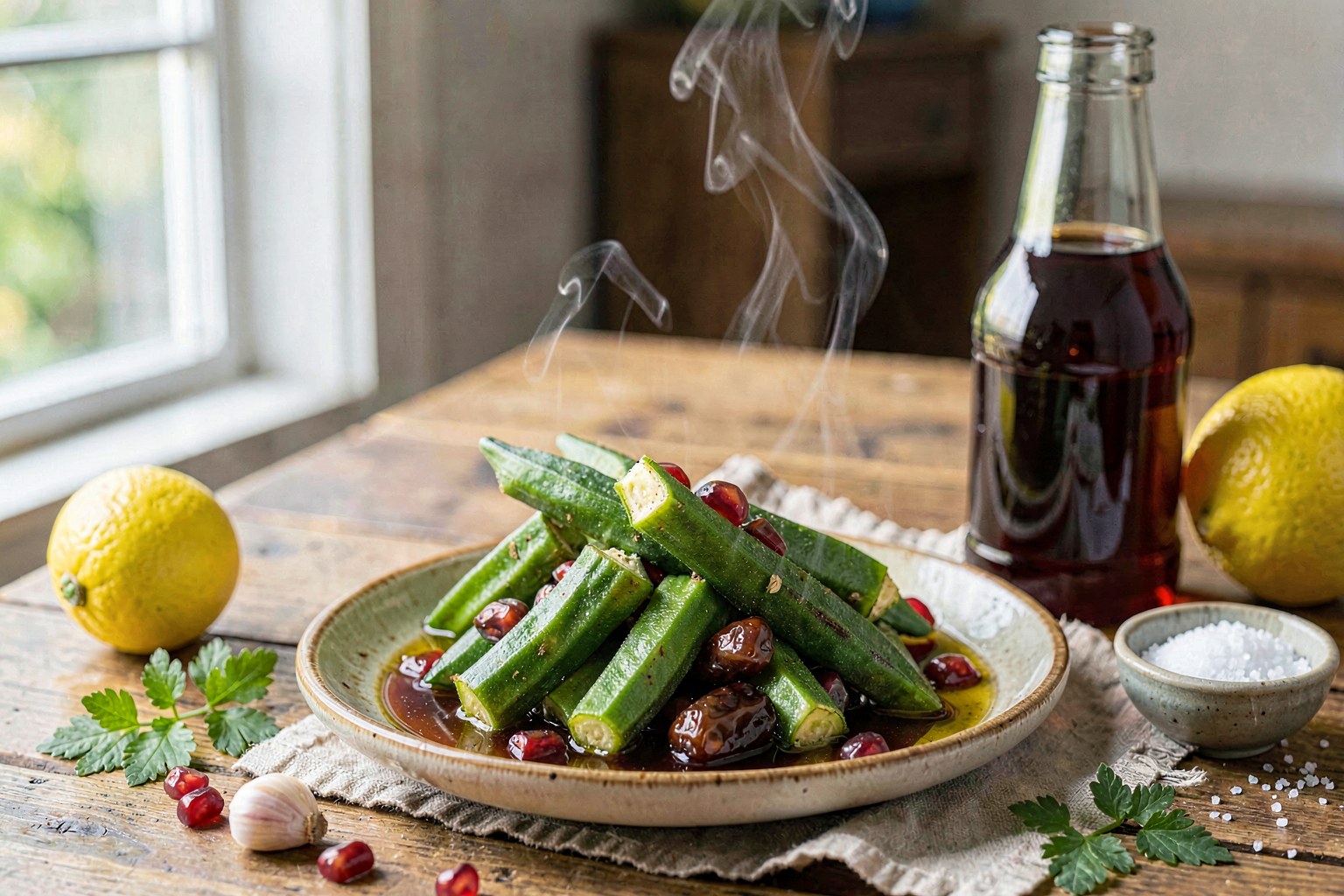
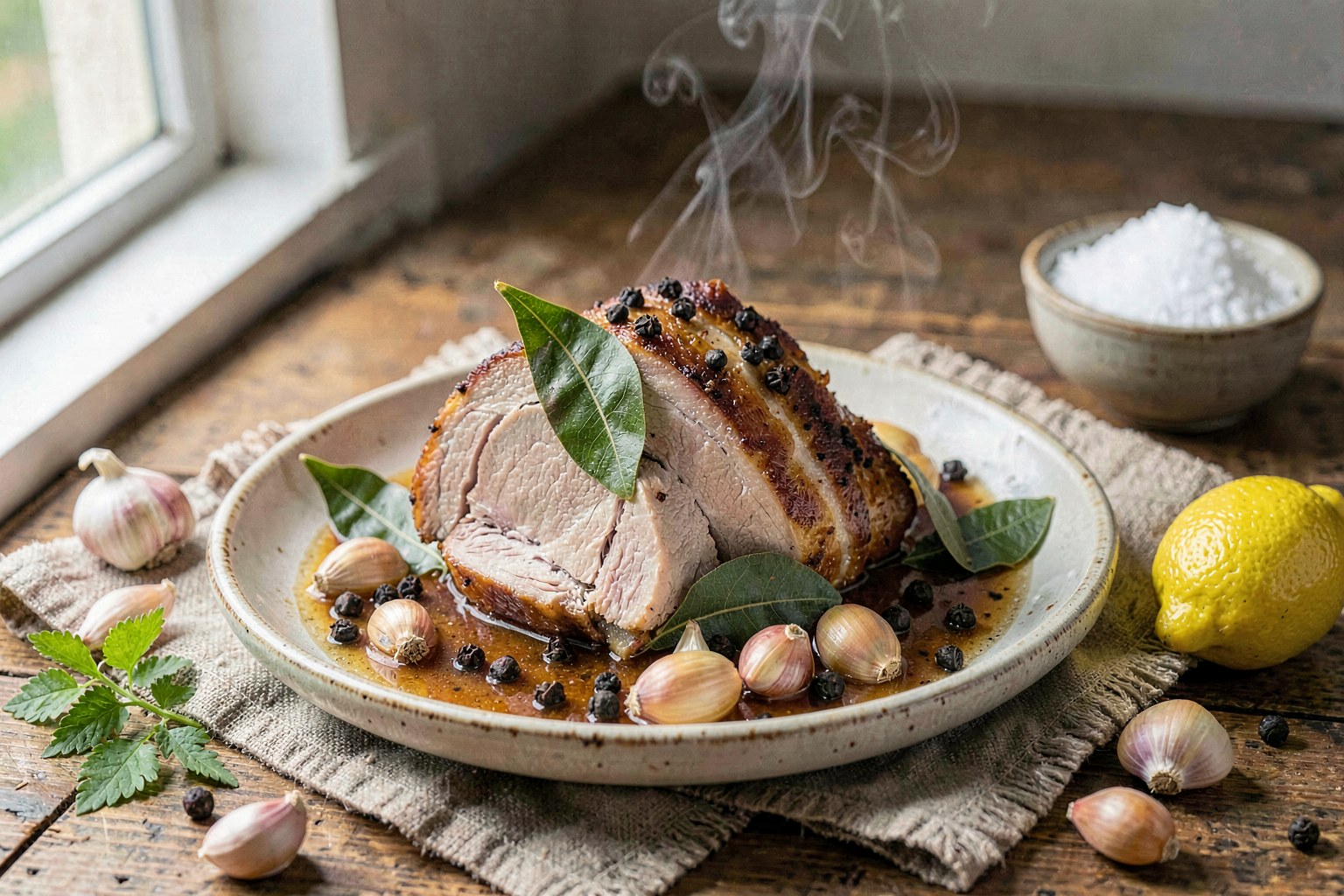
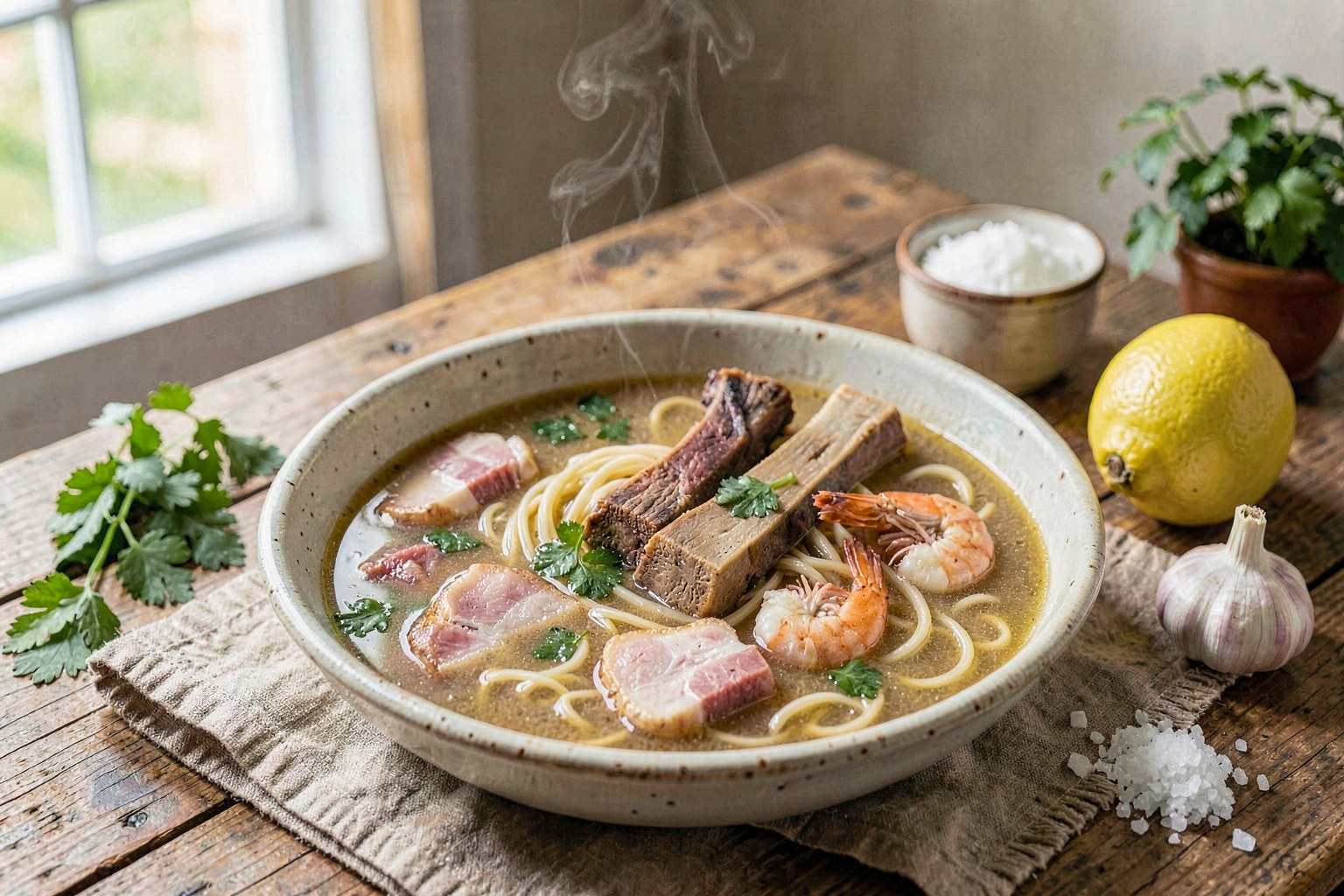
Farm-Fresh Bun Loc (Vietnamese Herb-Broth)
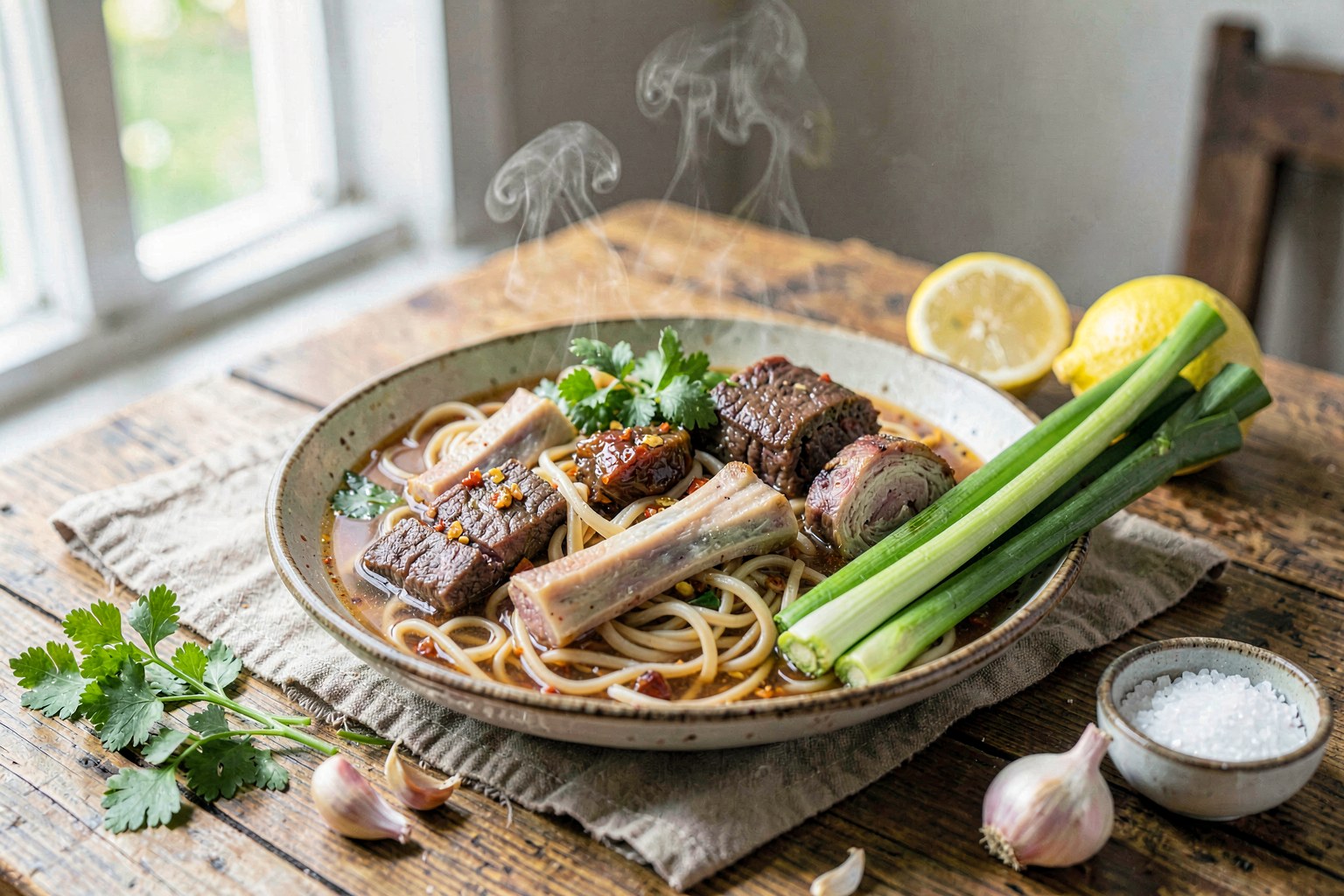
A rich, aromatic noodle soup rooted in Southern tradition but refined for longevity. This dish features a collagen-rich bone broth thickened gently with arrowroot, pasture-raised pork, and wild-caught shrimp, finished with an explosion of fresh herbs and healthy fats from coconut milk.
A little context
Bún Lọc is traditionally a Hue specialty, but this version leans into the Southern love for coconut richness. We honor the tradition by keeping the tapioca-thickened broth texture but replace refined sugar with date paste and swap industrial seed oils for avocado oil and ghee. The fermentation comes from a high-quality fish sauce rather than ultra-processed shrimp pastes, reducing sodium load while keeping the umami depth.
The longevity story
The collagen from the slow-simmered grass-fed bones supports gut lining integrity, while the wild-caught shrimp provides essential iodine and omega-3 fatty acids. Fresh herbs like perilla and mint are dense in polyphenols that combat oxidative stress, and the coconut milk offers medium-chain triglycerides (MCTs) for sustained energy without spiking insulin when paired with the fiber from the date paste sweetener.
Method
- 01
Simmer the Bone Broth
Place grass-fed marrow bones in the Dutch oven. Cover with 3 liters of cold filtered water. Add smashed ginger and lemongrass. Bring to a boil, skim foam for 10 minutes, then reduce to a low simmer. Cover and cook for 2 hours to extract collagen.
- 02
Strain and Season
Remove bones and aromatics. Strain broth through a fine-mesh sieve into a clean pot. Stir in fish sauce and date paste. Taste and adjust salt. Keep warm over low heat.
- 03
Sear the Pork
In a separate pan, heat 1 tbsp avocado oil over medium-high heat. Sear the pasture-raised pork belly slices until rendered and golden, about 3-4 minutes per side. Do not overcook. Set aside.
- 04
Cook the Shrimp
In the same pan, add remaining oil. Toss in wild-caught shrimp and cook for 2 minutes until just pink and opaque. Remove immediately to prevent toughness.
- 05
Thicken the Broth
Bring the broth to a gentle simmer. Whisk tapioca starch with cold water until smooth. Slowly drizzle into the broth while stirring constantly. Cook for 2 minutes until the broth turns slightly translucent and coats the back of a spoon.
- 06
Infuse Coconut
Stir in the full-fat coconut milk. Do not boil vigorously after adding coconut milk to prevent curdling. Keep at a low simmer.
- 07
Prepare Noodles
While broth simmers, soak rice vermicelli in warm water for 15 minutes until soft. Drain and rinse with cold water to prevent sticking.
- 08
Assemble Bowls
Divide noodles among 4 deep bowls. Ladle the thickened, coconut-infused broth over noodles. Top with seared pork and shrimp. Garnish generously with fresh mint, perilla, and cilantro. Serve immediately.
Nutrition facts
Per serving · 1 of 4- — Saturated
- 1 g
- — Polyunsaturated
- 1 g
- Carbohydrates
- 62 g
- — Fiber
- 5 g
- — Sugars
- 24 g
- Cholesterol
- 89 mg
- Sodium
- 2627 mg
- Potassium
- 404 mg
Estimated from USDA FoodData Central for matched ingredients (53% ingredient coverage). Values vary with brand, preparation, and exact measurements.
Pro tips
- ✦Source pork belly with the skin on for extra texture and collagen if you can find pasture-raised.
- ✦Perilla leaves can be hard to find; substitute with Thai basil if necessary, though the flavor profile will shift slightly.
- ✦Make the bone broth 2 days ahead; the flavor deepens and the fat solidifies on top for easy removal.
- ✦If the broth becomes too thick upon reheating, add a splash of warm water rather than more salt.
- ✦Ensure your date paste is 100% dates with no added oils or sugars to maintain the no-added-sugar protocol.
Shop this recipe
As an Amazon Associate we earn from qualifying purchases.
Substitutions
- grass-fed beef marrow bones → grass-fed chicken backs (lighter broth, reduces cook time to 1 hour)
- tapioca starch → arrowroot powder (slightly less sticky, same thickening power)
- pork belly → pasture-raised pork shoulder (leaner option, cube and braise for 1 hour)
Storage
Store broth and toppings separately in glass containers. Broth lasts 4 days; pork/shrimp 3 days. Noodles should be fresh. Reheat broth gently to avoid curdling coconut milk.
What to serve with it
- Warm green tea to aid digestion
- Sparkling water with lime wedge
- Dry Riesling if alcohol is desired
FAQ
Is tapioca starch considered ultra-processed?+
In this context, it is used minimally as a thickener similar to cornstarch but derived from cassava root. It is gluten-free and used in traditional cooking, fitting the whole-food criteria when used sparingly.
Can I make this vegan?+
Yes, substitute pork and shrimp with king oyster mushrooms and firm tofu, and use a high-quality mushroom-based umami sauce instead of fish sauce.
Share this recipe
Notes from the community
Sign in to leave a note.
No notes yet — be the first.
You might also like