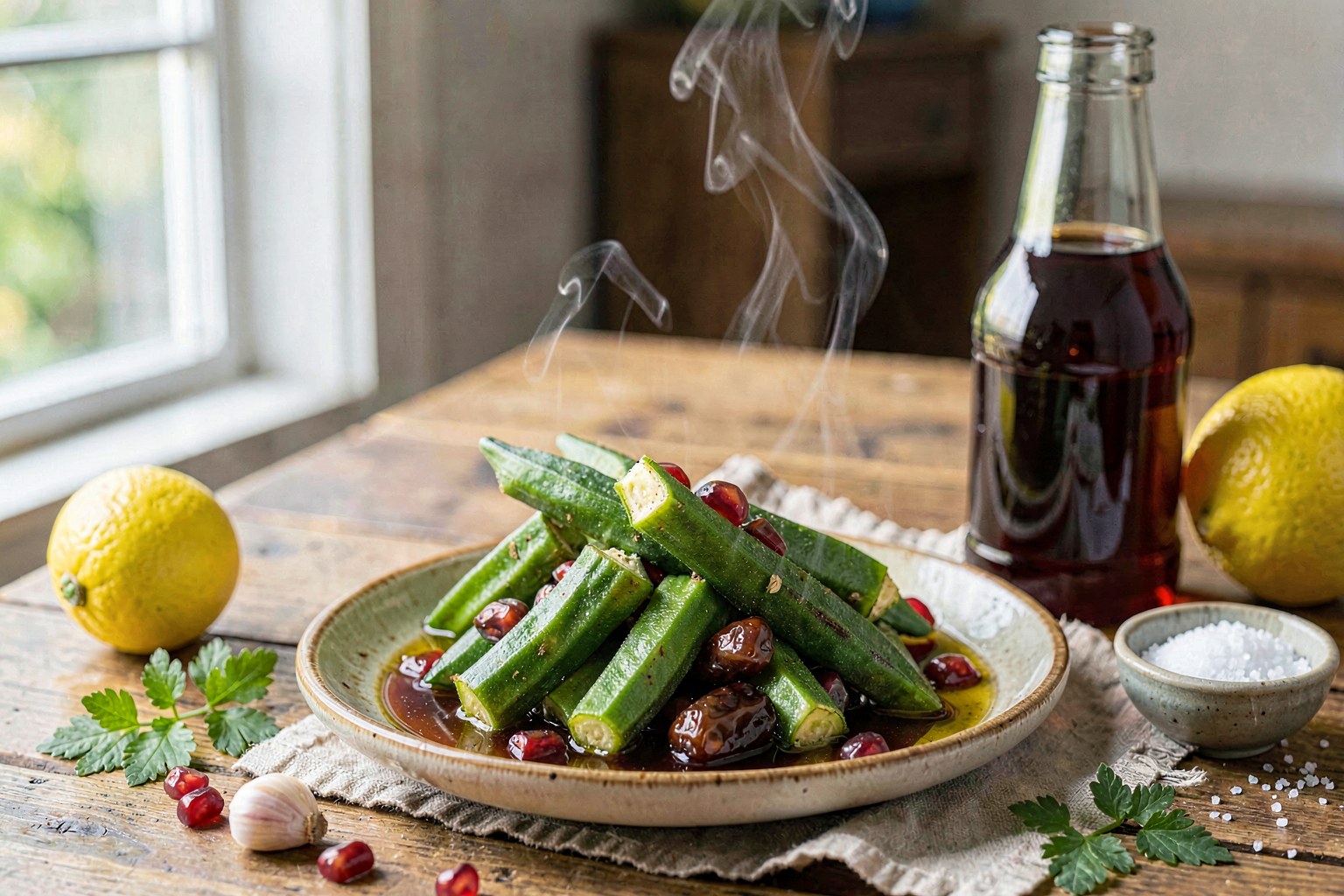
Bamieh (Levantine Garden Tradition) with Pan-Fried Fava Beans
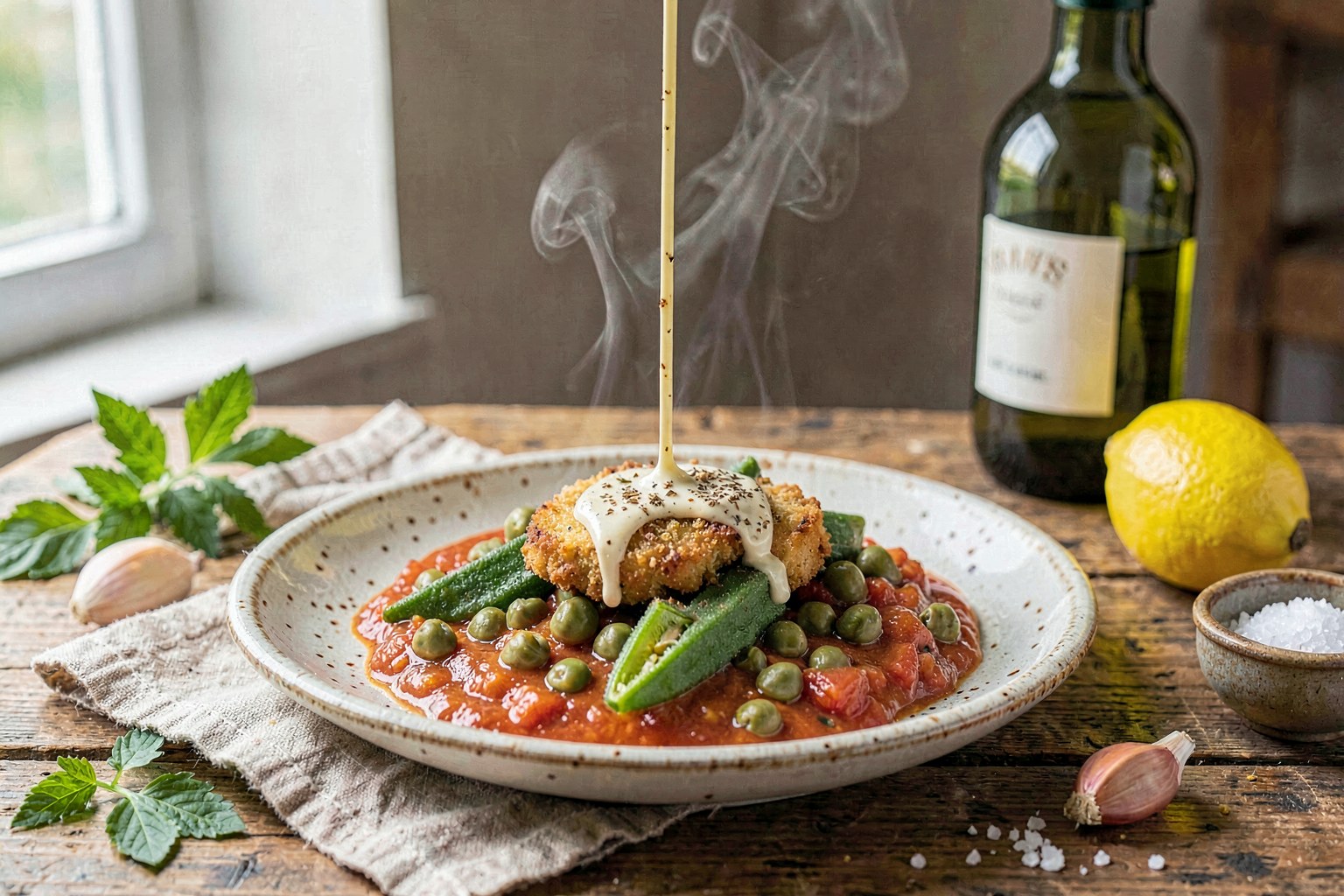
A vibrant Levantine stew where fresh okra simmers in a rich tomato base until tender, topped with pan-fried fava beans and a cooling tahini-garlic drizzle. This dish balances the earthy sweetness of garden-fresh vegetables with the savory depth of cumin and the bright acidity of lemon, offering a nutrient-dense dinner free from refined sugars and industrial seed oils.
A little context
Rooted in the Levantine tradition of 'Bamieh' (okra stew), this version honors the slow-simmering technique essential for breaking down okra's slime while replacing traditional seed oils with cold-pressed extra-virgin olive oil. We have omitted any added sugar often found in commercial tomato pastes, relying instead on the natural caramelization of fresh, in-season tomatoes and a touch of date syrup only if acidity requires balancing, ensuring the dish remains a true whole-food meal.
The longevity story
This recipe leverages the high polyphenol content of extra-virgin olive oil and lycopene from slow-cooked tomatoes to support cellular health. Fava beans provide a robust source of plant-based protein and fiber, while the addition of fresh okra offers mucilaginous compounds that support gut lining integrity. The dish is rich in magnesium and folate from the legumes and leafy greens, avoiding the inflammatory spikes associated with seed oils and processed thickeners.
Method
- 01
Prepare the Tomato Base
In the Dutch oven, heat 40 ml (3 tbsp) of extra-virgin olive oil over medium heat. Add the chopped fresh tomatoes, cumin, and a pinch of sea salt. Cook, stirring occasionally, for 15–20 minutes until the tomatoes break down and release their juices, creating a thick, fragrant base. If the mixture becomes too dry, add a splash of water.
- 02
Simmer the Okra
Gently stir in the prepared okra, ensuring they are submerged in the tomato sauce. Reduce heat to low, cover, and simmer for 25–30 minutes. The okra should be tender but not mushy. Avoid stirring too frequently to prevent the okra from becoming overly slimy; instead, gently shake the pot occasionally.
- 03
Pan-Fry the Fava Beans
While the stew simmers, heat 30 ml (2 tbsp) of olive oil in a small skillet over medium-high heat. Add the blanched, peeled fava beans. Sear for 3–4 minutes until they develop a golden-brown crust. In the last minute, add the minced garlic and toss for 30 seconds until fragrant. Remove immediately to prevent burning.
- 04
Make the Tahini Sauce
In a small bowl, whisk together the tahini, garlic paste, and lemon juice. The mixture will seize and become thick. Gradually whisk in the ice-cold water, one tablespoon at a time, until the sauce reaches a smooth, pourable consistency similar to warm honey. Season with a pinch of salt if needed.
- 05
Finish the Stew
Taste the okra stew; it should be bright and savory. Stir in the fresh lemon juice to balance the earthiness. The stew should be thick but saucy. If it is too thick, add a little warm water to reach your desired consistency.
- 06
Serve
Ladle the hot okra and tomato stew into shallow bowls. Top generously with the pan-fried fava beans and their garlic-infused oil. Drizzle the creamy tahini sauce over the top. Garnish with fresh parsley or cilantro if desired and serve immediately.
Nutrition facts
Per serving · 1 of 4- — Saturated
- 5 g
- — Polyunsaturated
- 8 g
- Carbohydrates
- 36 g
- — Fiber
- 12 g
- — Sugars
- 9 g
- Cholesterol
- 0 mg
- Sodium
- 196 mg
- Potassium
- 1138 mg
Estimated from USDA FoodData Central for matched ingredients (75% ingredient coverage). Values vary with brand, preparation, and exact measurements.
Pro tips
- ✦Sourcing: Look for 'young' okra (pods under 10 cm/4 inches); they are more tender and require less cooking time, preserving their texture.
- ✦Texture Control: To minimize sliminess, ensure the okra is completely dry before adding to the hot oil or sauce, and do not over-stir during the simmering phase.
- ✦Fava Prep: If using large fava beans, the inner skin can be tough; blanching and peeling them ensures a buttery texture that contrasts beautifully with the okra.
- ✦Acidity Balance: Traditional recipes sometimes use a pinch of sugar to balance tomato acidity. We use fresh lemon juice and the natural sweetness of slow-cooked tomatoes instead; if needed, a tiny amount of date syrup can be used as a last resort.
Shop this recipe
As an Amazon Associate we earn from qualifying purchases.
Substitutions
- fresh fava beans → shelled green peas or edamame (peas offer a similar sweet pop; edamame provides a firmer, nuttier texture)
- fresh tomatoes → high-quality canned whole peeled tomatoes (San Marzano) (ensure the label states 'no added sugar' or 'no calcium chloride' for the cleanest profile)
Storage
Store in an airtight glass container in the refrigerator for up to 4 days. The flavors often improve on the second day. Freeze portions for up to 3 months; thaw overnight in the fridge and reheat gently on the stove.
What to serve with it
- Serve with warm, unleavened whole-grain flatbread or a side of wild-caught grilled fish if not strictly vegan.
- Accompany with a glass of sparkling water with fresh lemon slices or a cup of unsweetened green tea to aid digestion.
- A small side salad of bitter greens (arugula or radicchio) with a lemon-EVOO dressing complements the richness of the tahini.
FAQ
Why are my okra so slimy?+
Okra releases mucilage when cut and over-stirred. To prevent this, keep the pods whole or halved lengthwise, ensure they are dry before cooking, and minimize stirring during the simmer. High acidity (lemon/tomato) also helps reduce slime.
Can I make this in a slow cooker?+
Yes, but add the okra in the last 30–45 minutes on high to prevent it from turning to mush. The fava beans should still be pan-fried separately for texture.
Share this recipe
Notes from the community
Sign in to leave a note.
No notes yet — be the first.
You might also like