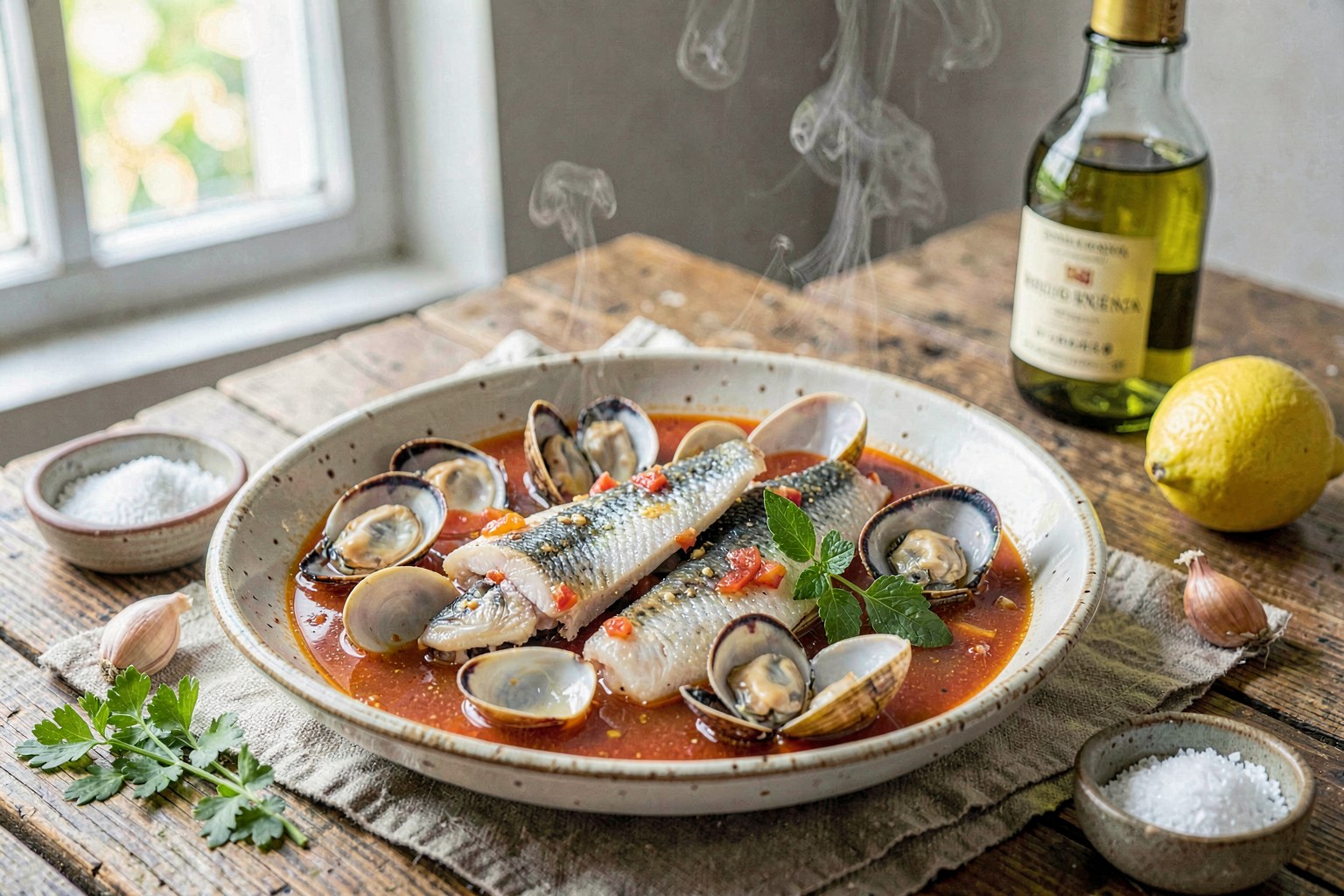
Brodetto alla Veneziana (Venetian Fish Stew)
A aromatic, slow-simmered Venetian fish stew featuring wild-caught white fish, mussels, and clams in a rich tomato and white wine broth. This version honors the coastal tradition by using only extra-virgin olive oil for fat and fresh herbs for depth, delivering a meal dense in omega-3s and polyphenols without refined sugars or seed oils.
A little context
Brodetto alla Veneziana is a historic lagoon stew where the freshness of the catch dictates the recipe; traditionally, it relies on the natural sweetness of ripe tomatoes and a splash of wine rather than added sugar. We have honored this tradition by strictly avoiding the common modern shortcut of adding sugar to balance acidity, instead using a splash of high-quality white wine and a pinch of sea salt to highlight the natural brininess of the shellfish. The substitution of seed oils with cold-pressed extra-virgin olive oil preserves the delicate flavor profile while ensuring the fat source supports longevity.
The longevity story
This dish is a powerhouse of marine omega-3 fatty acids (EPA/DHA) from the wild-caught fish and shellfish, which support cellular membrane integrity and reduce systemic inflammation. The extra-virgin olive oil provides oleocanthal and hydroxytyrosol, potent polyphenols that mimic the anti-inflammatory effects of ibuprofen. The lycopene in the cooked tomatoes becomes more bioavailable when paired with the healthy fats, while the garlic and parsley contribute allicin and flavonoids that support cardiovascular health.
Method
- 01
Prep the seafood
Scrub the mussels and clams under cold running water. Pull away any beards from the mussels. Discard any shells that are cracked or do not close firmly when tapped. Pat the fish chunks dry with paper towels and season lightly with sea salt.
- 02
Sauté the aromatics
Heat the extra-virgin olive oil in the Dutch oven over medium-low heat. Add the diced onion and a pinch of salt. Cook slowly for 10-12 minutes until translucent and soft, but not browned. Add the smashed garlic cloves and cook for another 2 minutes until fragrant.
- 03
Deglaze with wine
Increase heat to medium-high. Pour in the white wine and scrape the bottom of the pot to release any fond. Simmer for 3-4 minutes until the wine reduces by half, removing the raw alcohol taste.
- 04
Build the tomato base
Stir in the crushed tomatoes and the fish stock. Bring to a gentle simmer, then reduce heat to low. Cover and cook for 15 minutes to allow the flavors to meld and the acidity to mellow naturally.
- 05
Add the shellfish
Add the mussels and clams to the simmering broth. Cover the pot and cook for 5-7 minutes, shaking the pot occasionally, until the shells have opened. Remove the cooked shellfish with a slotted spoon and set aside in a bowl, discarding any that did not open.
- 06
Poach the fish
Gently nestle the fish chunks into the broth. Do not stir vigorously. Cover and simmer on low for 6-8 minutes, depending on the thickness of the fish, until the flesh is opaque and flakes easily with a fork.
- 07
Combine and finish
Return the cooked shellfish to the pot. Stir in the chopped parsley and torn basil. Taste the broth and adjust seasoning with sea salt and black pepper only if necessary. Serve immediately while hot.
Nutrition facts
Per serving · 1 of 4- — Saturated
- 6 g
- — Polyunsaturated
- 5 g
- Carbohydrates
- 32 g
- — Fiber
- 4 g
- — Sugars
- 8 g
- Cholesterol
- 132 mg
- Sodium
- 1562 mg
- Potassium
- 1804 mg
Estimated from USDA FoodData Central for matched ingredients (83% ingredient coverage). Values vary with brand, preparation, and exact measurements.
Pro tips
- ✦Source your fish from a trusted fishmonger who can verify it is wild-caught; look for firm flesh that springs back when pressed.
- ✦Do not skip the step of discarding unopened shells; they indicate the animal was dead before cooking and can harbor bacteria.
- ✦If your tomatoes are very acidic, a single pitted Medjool date can be blended into the sauce to provide natural sweetness and thickness without refined sugar.
- ✦Keep the heat low when poaching the fish; high heat will toughen the protein and break the delicate chunks.
Shop this recipe
As an Amazon Associate we earn from qualifying purchases.
Substitutions
- wild-caught halibut → wild-caught cod or sea bass (ensure the substitute is firm enough to hold its shape during poaching)
- mussels and clams → shucked fresh oysters or squid rings (add squid in the last 2 minutes to prevent rubberiness)
Storage
Store in an airtight glass container in the refrigerator for up to 2 days; the shellfish texture degrades quickly upon reheating. Freezing is not recommended due to the delicate nature of the poached fish and shellfish texture changes.
What to serve with it
- A glass of dry Vermentino or Pinot Grigio
- Sparkling water with a twist of lemon and fresh mint
- Steamed organic kale or sautéed chard with garlic
- A side of grilled asparagus with a drizzle of EVOO
FAQ
Can I use canned tomatoes with added sugar?+
No. Most canned tomatoes contain added sugar or calcium chloride which alters the texture. Check the label for 'no sugar added' or use fresh San Marzano tomatoes.
Why did my fish fall apart?+
The heat was likely too high or the fish was overcooked. Fish proteins tighten and squeeze out moisture quickly; low and slow is the key to poaching.
Share this recipe
Notes from the community
Sign in to leave a note.
No notes yet — be the first.
You might also like