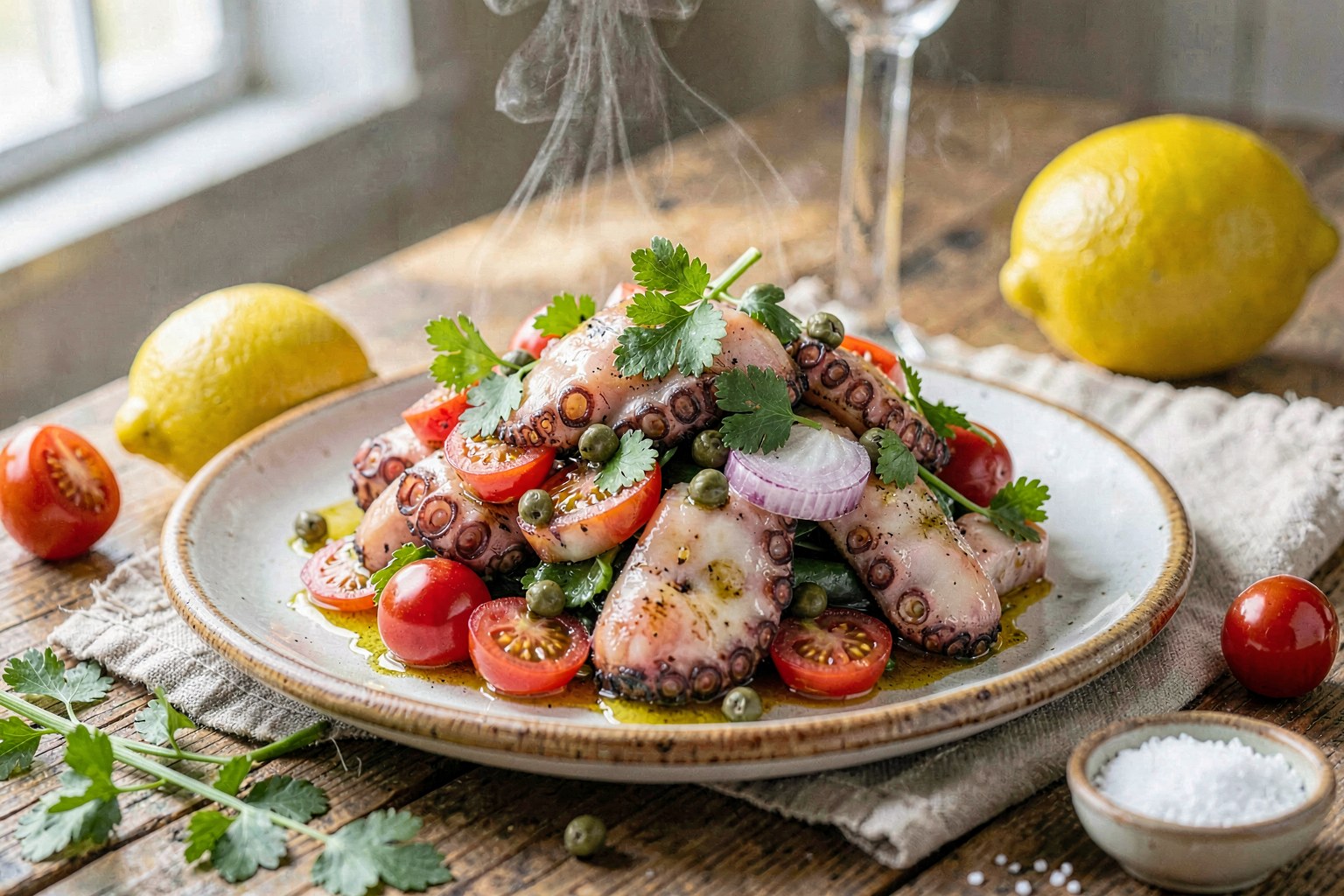
Coastal Insalata di Polpo with Wild-Caught Octopus
Tender, steamed wild octopus chunks tossed with sun-ripened cherry tomatoes, briny capers, and a generous emulsion of extra-virgin olive oil. This dish captures the clean, mineral-rich taste of the Mediterranean coast without a single drop of seed oil or refined sugar, focusing entirely on the purity of the protein and the polyphenol density of the dressing.
A little context
Rooted in the coastal traditions of Sicily and Calabria, this dish traditionally relies on the simplicity of the sea's bounty. We honor this by strictly avoiding the modern shortcuts of commercial bouillon or seed-oil-based dressings that often dilute the flavor. Instead, we use only cold-pressed EVOO and fresh, organic aromatics to let the natural sweetness of the tomatoes and the savory depth of the octopus shine, adhering to a whole-food philosophy that respects the ingredient's origin.
The longevity story
This recipe leverages the high-quality protein and vitamin B12 found in wild octopus while delivering a potent dose of omega-3 fatty acids and polyphenols from the extra-virgin olive oil (EVOO). The inclusion of capers and red onions adds quercetin and kaempferol, compounds known to support endothelial function and reduce systemic inflammation. By avoiding high-heat frying and seed oils, we preserve the delicate fatty acid profile of the seafood and prevent the formation of advanced glycation end products (AGEs).
Method
- 01
Prepare the Octopus
If using frozen octopus, thaw completely in the refrigerator overnight. Clean the octopus by removing the beak and any internal organs. Rinse thoroughly under cold running water. Pat dry.
- 02
The Three-Dip Method
Bring a large pot of unsalted water to a rolling boil. Grasp the octopus by the head and dip the tentacles into the boiling water three times, lifting it out between dips. This shocks the skin to prevent it from detaching and helps the tentacles curl beautifully.
- 03
Gentle Steaming
Submerge the entire octopus into the pot. Reduce heat to a low simmer (do not boil vigorously). Cover and cook for 40-45 minutes. Test for tenderness by piercing the thickest part of a tentacle with a fork; it should slide in with zero resistance.
- 04
Cool and Rest
Turn off the heat and let the octopus cool in the cooking liquid for 20 minutes. This gradual cooling keeps the meat moist. Remove the octopus, discard the liquid, and cut the tentacles and body into bite-sized chunks (approx. 2-3 cm).
- 05
Combine Vegetables
In a large glass bowl, combine the warm octopus chunks, halved cherry tomatoes, diced red onion, and rinsed capers. The residual heat from the octopus will slightly wilt the tomatoes, releasing their juices.
- 06
Emulsify the Dressing
In a small jar, vigorously shake the extra-virgin olive oil, fresh lemon juice, sea salt, and cracked black pepper until the mixture is creamy and emulsified. Pour this over the salad.
- 07
Toss and Finish
Gently toss the salad to coat every piece of octopus and tomato without mashing them. Fold in the chopped fresh parsley. Taste and adjust salt if necessary.
- 08
Rest Before Serving
Let the salad sit at room temperature for 10-15 minutes before serving. This allows the flavors to marry and the octopus to absorb the olive oil and lemon notes fully.
Nutrition facts
Per serving · 1 of 4- — Saturated
- 9 g
- — Polyunsaturated
- 15 g
- Carbohydrates
- 42 g
- — Fiber
- 4 g
- — Sugars
- 5 g
- Cholesterol
- 108 mg
- Sodium
- 2624 mg
- Potassium
- 1058 mg
Estimated from USDA FoodData Central for matched ingredients (78% ingredient coverage). Values vary with brand, preparation, and exact measurements.
Pro tips
- ✦Sourcing is key: Look for octopus labeled 'wild-caught' and 'MSC certified' to ensure sustainable harvesting practices and optimal nutrient density.
- ✦The 'Three-Dip' technique is non-negotiable for texture; it shocks the skin and ensures the tentacles curl without becoming rubbery.
- ✦Do not overcook; octopus can go from tender to chewy in minutes. If using a pressure cooker, reduce time to 20-25 minutes.
- ✦Select a high-quality, peppery extra-virgin olive oil; the polyphenols are most potent in the oil, so cheap brands defeat the health purpose.
- ✦Serve at room temperature, never cold from the fridge, as cold fat congeals and masks the delicate flavor of the seafood.
Shop this recipe
As an Amazon Associate we earn from qualifying purchases.
Substitutions
- wild-caught octopus → wild-caught squid (calamari) (cook for significantly less time (15-20 mins) to avoid toughness; texture will be firmer.)
- cherry tomatoes → heirloom tomatoes, chopped (use only when peak season; winter tomatoes lack the necessary sugar-acid balance.)
- green capers → caperberries (larger and less briny; slice them in half to balance the size with the octopus chunks.)
Storage
Store in an airtight glass container in the refrigerator for up to 3 days. Do not freeze, as the texture of the octopus will become mealy and the tomatoes will lose their structure upon thawing.
What to serve with it
- A glass of dry, mineral-rich white wine from Campania (Falanghina or Greco di Tufo).
- Sparkling water with a wedge of fresh lemon and a sprig of rosemary.
- A side of steamed broccolini with lemon zest to increase fiber and polyphenol intake.
- Green tea (sencha) served warm to aid digestion without caffeine overload.
FAQ
Can I use canned octopus?+
It is possible, but canned octopus often contains added preservatives and is cooked in a way that compromises texture. For a Blueprint-aligned meal, fresh or frozen wild-caught is vastly superior in nutrient retention and flavor.
Why no garlic in the traditional recipe?+
While some modern variations add garlic, the classic coastal version relies on the brine of the capers and the acidity of the lemon. We omit it here to keep the flavor profile clean and focused on the sea, though you can add fresh minced garlic if you tolerate it well.
Is this suitable for a low-carb diet?+
Yes, this dish is extremely low-glycemic, relying on the natural sugars in the tomatoes and capers, with zero added sugar or starch.
Share this recipe
Notes from the community
Sign in to leave a note.
No notes yet — be the first.
You might also like