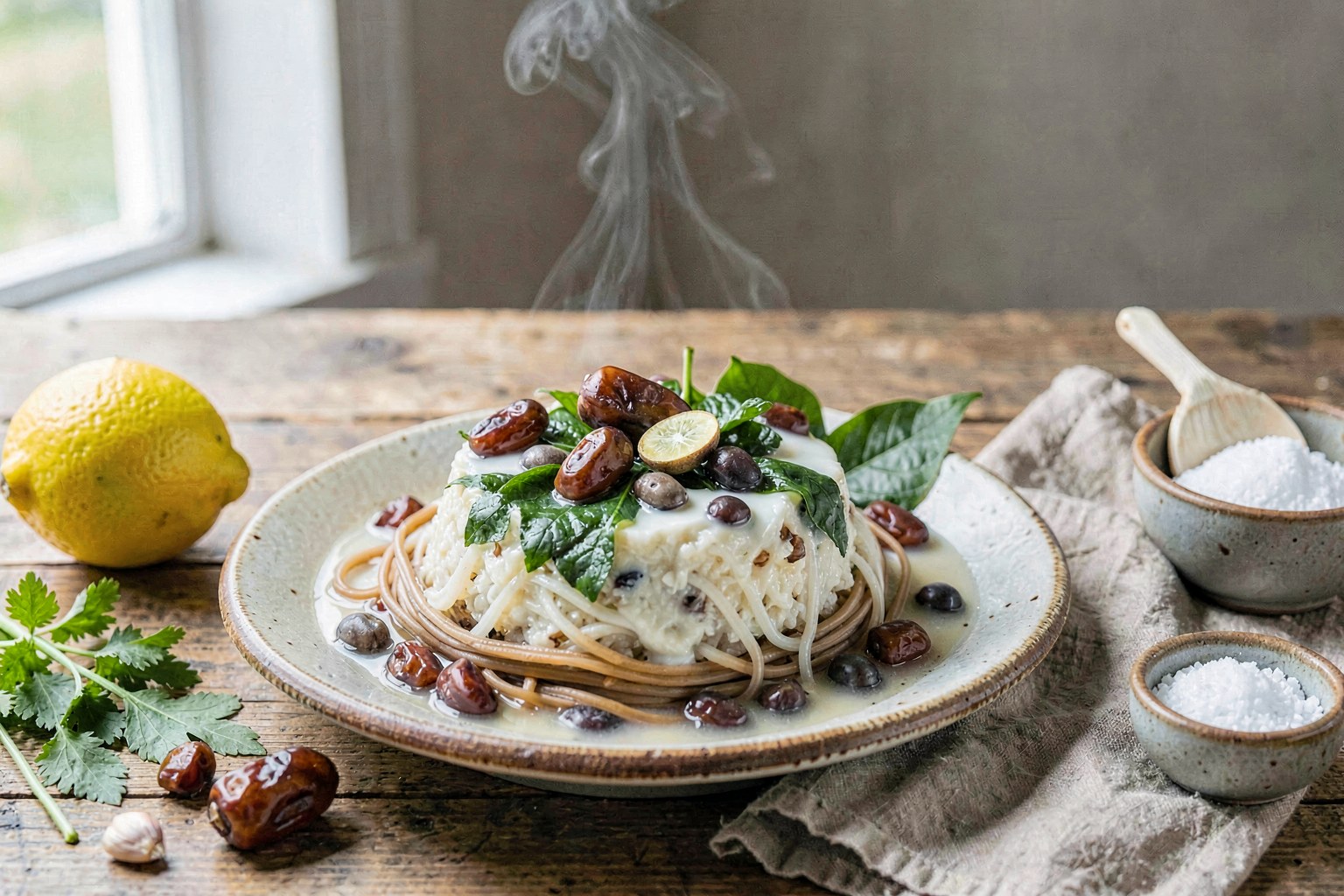
Chè Tơ: Herb-Broth Noodle Pudding with Pandan and Lotus Seeds
A savory-sweet Vietnamese herb-broth featuring tender rice noodles, creamy coconut milk, and aromatic pandan, anchored by nutrient-dense lotus seeds. This dish balances the cooling properties of coconut with the digestive benefits of fresh herbs, offering a comforting, polyphenol-rich dinner that honors the traditional Chè format without refined sugars or seed oils.
A little context
Chè is traditionally a Vietnamese sweet soup or pudding served as a dessert or snack, often loaded with refined sugar and canned coconut cream. In this Blueprint-aligned adaptation, we honor the soul of the dish—the harmony of herbal aromatics, chewy textures, and cooling broth—by substituting white sugar with whole-date syrup and monk fruit, and ensuring all fats come from organic, pasture-raised sources or cold-pressed coconut oil. We strip away the ultra-processed shortcuts of commercial bouillon and artificial thickeners, relying instead on slow-simmered herbal infusions and the natural starch of lotus seeds to create a deeply nourishing, farm-fresh meal.
The longevity story
This recipe leverages the high medium-chain triglycerides (MCTs) in full-fat coconut milk for sustained energy without glucose spikes, while lotus seeds provide a unique source of magnesium and potassium essential for nervous system regulation. The fresh pandan leaves and basil introduce significant polyphenol content with antioxidant and anti-inflammatory properties, supporting gut microbiome diversity. By replacing traditional refined sugar with whole dates and monk fruit, we maintain the dessert-like texture of Chè while keeping the glycemic load low and the nutrient density high.
Method
- 01
Prepare the Lotus Seeds
Drain the soaked lotus seeds. Place them in a Dutch oven with 1000 ml (4 cups) of filtered water and the knotted pandan leaves. Bring to a boil, then reduce to a low simmer. Cover and cook for 45 minutes, or until the seeds are tender but still hold their shape.
- 02
Infuse the Sweetness
While the seeds simmer, prepare the sweetener base. If using whole dates, add the chopped dates and monk fruit extract directly to the pot with the lotus seeds in the last 15 minutes of cooking. Stir gently to dissolve.
- 03
Strain the Broth
Remove the pot from heat. Carefully remove the pandan knots. Pour the mixture through a fine-mesh sieve into a clean bowl, reserving the liquid broth and the cooked lotus seeds separately. Discard the pandan fibers.
- 04
Cook the Noodles
In a separate pot of boiling water, cook the brown rice vermicelli according to package directions until al dente (usually 3-5 minutes after soaking). Drain immediately and rinse under cold water to stop the cooking process. Toss with a tiny drizzle of extra-virgin olive oil to prevent sticking.
- 05
Create the Creamy Base
Return the reserved herbal broth to the Dutch oven over low heat. Stir in the organic coconut milk and the 15 ml (1 tbsp) of extra-virgin olive oil. Warm gently until just steaming; do not boil vigorously as this can cause the coconut milk to separate.
- 06
Season and Balance
Taste the broth. Add the sea salt. The flavor should be a delicate balance of savory herbal notes, subtle sweetness from the dates, and the richness of coconut. Adjust with a pinch more monk fruit or salt if needed.
- 07
Assemble the Bowls
Divide the cooked rice noodles evenly among 4 serving bowls. Top with a generous portion of the cooked lotus seeds. Ladle the warm, creamy herb-coconut broth over the noodles and seeds, ensuring each bowl gets plenty of liquid.
- 08
Garnish and Serve
Immediately top each bowl with fresh Thai basil leaves, torn mint, and a sprinkle of toasted sesame seeds. Serve warm to enjoy the contrast of the hot broth and the cooling fresh herbs.
Nutrition facts
Per serving · 1 of 4- — Saturated
- 3 g
- — Polyunsaturated
- 2 g
- Carbohydrates
- 58 g
- — Fiber
- 2 g
- — Sugars
- 13 g
- Cholesterol
- 0 mg
- Sodium
- 519 mg
- Potassium
- 894 mg
Estimated from USDA FoodData Central for matched ingredients (83% ingredient coverage). Values vary with brand, preparation, and exact measurements.
Pro tips
- ✦Sourcing Pandan: If you cannot find fresh pandan leaves, look for frozen bundles at Asian markets; avoid artificial pandan extract which often contains synthetic vanillin and lacks the complex polyphenols of the fresh leaf.
- ✦Texture Control: Do not overcook the lotus seeds; they should have a slight bite (al dente) to provide a satisfying contrast to the soft noodles.
- ✦Coconut Integrity: Always warm the coconut milk gently. Boiling high-fat coconut milk can break the emulsion, resulting in an oily, separated broth.
- ✦Date Sweetness: Taste your dates before adding them; some batches are drier than others. If your dates are very dry, soak them in warm water for 10 minutes before chopping to ensure they dissolve smoothly into the broth.
Shop this recipe
As an Amazon Associate we earn from qualifying purchases.
Substitutions
- brown rice vermicelli → glass noodles (mung bean starch) (offers a chewier, more translucent texture; ensure they are gluten-free)
- dried lotus seeds → fresh lotus seeds (reduce simmer time to 15 minutes; fresh seeds have a higher water content and more delicate flavor)
- monk fruit extract → pure maple syrup (1 tsp) (if a lower glycemic index is not the primary concern, a small amount of raw maple syrup works, but dates are preferred for fiber)
Storage
Store the broth and noodles separately in glass containers in the refrigerator for up to 3 days. The noodles will absorb the broth over time, so reheat gently with a splash of water or coconut milk to restore consistency. Freezing is not recommended due to the texture changes in the coconut milk and noodles.
What to serve with it
- Hot jasmine tea with a slice of fresh ginger
- Sparkling water with a wedge of lime and a sprig of lemongrass
- A glass of dry, low-sugar green tea kombucha
FAQ
Why use olive oil in a sweet-savory dessert soup?+
In the traditional 'Chè Tơ' concept, a hint of savory depth is often achieved with salt or herbs. Here, the extra-virgin olive oil adds monounsaturated fats and polyphenols that complement the coconut and herbs, bridging the gap between a sweet dessert and a nourishing dinner without adding a distinct 'olive' flavor.
Can I make this completely sugar-free?+
Yes, by omitting the dates and relying solely on monk fruit or stevia, though you will lose the fiber and the specific mouthfeel that dates provide. We recommend keeping the dates for the whole-food integrity of the recipe.
Share this recipe
Notes from the community
Sign in to leave a note.
No notes yet — be the first.
You might also like