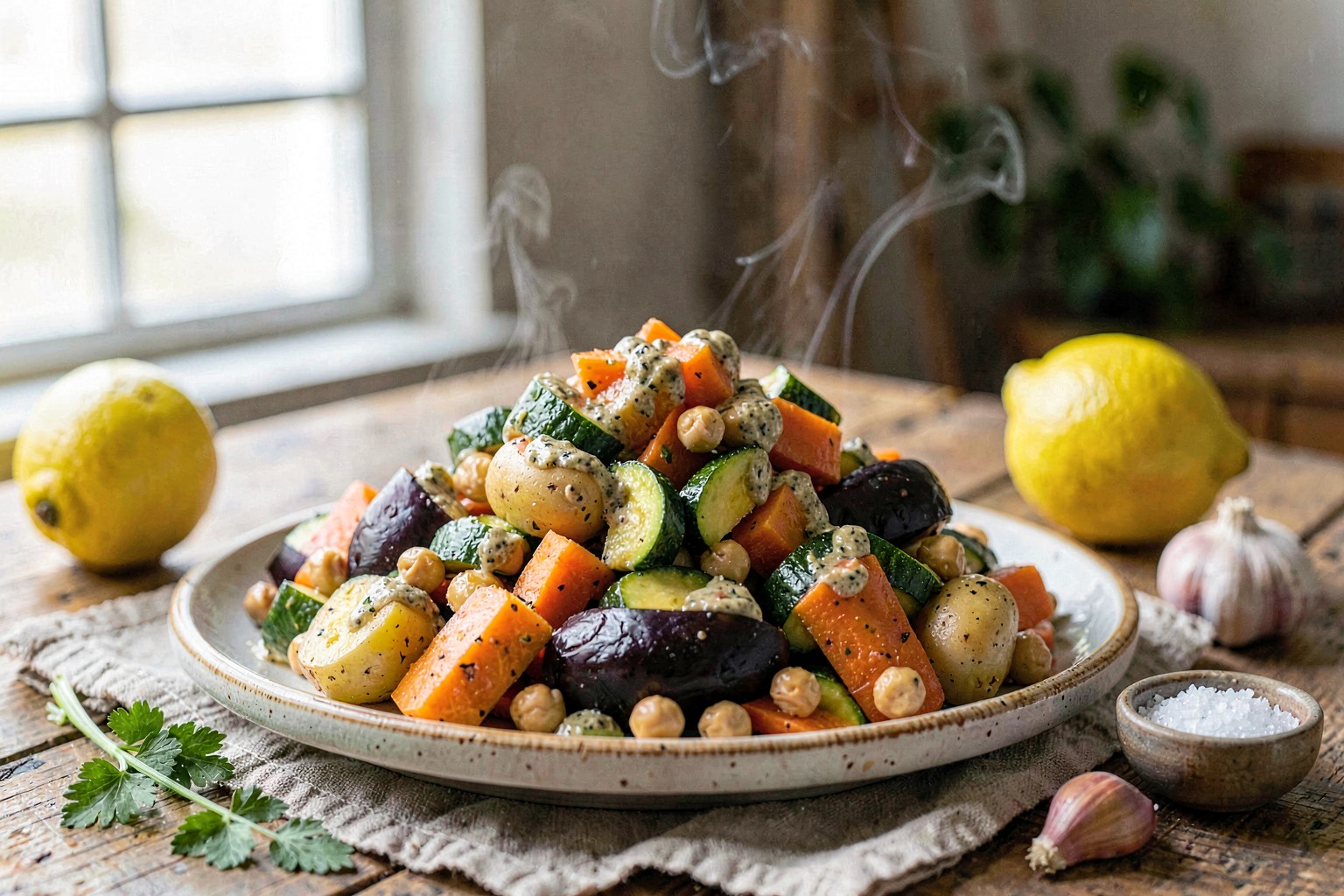
Deraj (Moroccan Souq Vegetable Salad)
A vibrant, layered Moroccan cooked salad featuring sautéed root vegetables and squash tossed in a garlicky tahini dressing. This dish balances earthy sweetness with bright acidity, relying on extra-virgin olive oil rather than industrial seed oils for richness and polyphenol density.
A little context
Deraj is a staple of Moroccan street food culture, traditionally served as a meze or side dish in souqs. We honor the tradition by keeping the vegetable-forward nature intact but swap traditional seed oils for high-quality cold-pressed olive oil and omit any refined sugar often found in commercial dressings. The result is a cleaner, nutrient-dense version that respects the original flavor profile without the inflammatory load.
The longevity story
This recipe leverages the polyphenol content of extra-virgin olive oil and fresh garlic to support cardiovascular health and reduce inflammation. The variety of colorful vegetables provides a broad spectrum of fiber and micronutrients, while tahini adds calcium and healthy fats for satiety. By avoiding refined sugars and seed oils, we maintain a low-glycemic profile that supports metabolic stability and longevity.
Method
- 01
Prep the vegetables
Wash and cut all vegetables into uniform 2 cm pieces to ensure even cooking. Keep potatoes, eggplant, zucchini, and carrots separate.
- 02
Par-cook the potatoes
Place potatoes in the stockpot, cover with cold water and salt. Bring to a boil, reduce heat, and simmer for 10 minutes until tender but not falling apart. Drain and set aside.
- 03
Sauté the eggplant
Heat the cast-iron skillet over medium-high heat with 2 tablespoons of olive oil. Add eggplant and cook for 8-10 minutes until golden brown and tender. Remove to a bowl.
- 04
Sauté the carrots
In the same skillet, add 1 tablespoon of olive oil. Add carrots and cook for 5-7 minutes until softened but still holding shape. Remove to the bowl with eggplant.
- 05
Sauté the zucchini
Wipe skillet clean if needed, add 1 tablespoon of olive oil. Add zucchini and cook for 4-5 minutes until just tender. Do not overcook. Remove to the bowl.
- 06
Prepare the sauce
In a small bowl, whisk together tahini, minced garlic, lemon juice, and remaining olive oil. Add 60 ml of warm water gradually until a creamy, pourable consistency is reached.
- 07
Combine chickpeas
If using canned chickpeas, rinse thoroughly under cold water and pat dry. If cooking from dry, ensure they are fully tender. Add to the vegetable bowl.
- 08
Assemble the salad
Pour the tahini sauce over the warm vegetables and chickpeas. Toss gently to coat, being careful not to mash the potatoes.
- 09
Season and garnish
Taste and adjust salt and lemon. Sprinkle with fresh parsley and cumin. Serve warm or at room temperature.
- 10
Rest before serving
Allow the salad to rest for 10 minutes to let flavors meld before plating.
Nutrition facts
Per serving · 1 of 4- — Saturated
- 9 g
- — Polyunsaturated
- 16 g
- Carbohydrates
- 96 g
- — Fiber
- 16 g
- — Sugars
- 30 g
- Cholesterol
- 32 mg
- Sodium
- 3313 mg
- Potassium
- 1246 mg
Estimated from USDA FoodData Central for matched ingredients (92% ingredient coverage). Values vary with brand, preparation, and exact measurements.
Pro tips
- ✦Source your olive oil from a producer with a harvest date on the bottle to ensure high polyphenol content.
- ✦Salt the eggplant cubes and let them sit for 20 minutes before cooking to draw out bitterness and excess moisture.
- ✦Cook vegetables in batches rather than crowding the pan; crowding steams the food instead of searing it.
- ✦Use a wooden spoon to stir the tahini sauce to prevent scratching your mixing bowl.
Shop this recipe
As an Amazon Associate we earn from qualifying purchases.
Substitutions
- Yukon Gold potatoes → sweet potatoes (adds more beta-carotene, slightly sweeter profile)
- tahini paste → almond butter (for a nuttier profile, ensure it is unsweetened and unsalted)
- chickpeas → white beans (cannellini beans work well for a softer texture)
Storage
Store in an airtight glass container in the refrigerator for up to 4 days. Do not freeze as the texture of the zucchini and potatoes will degrade upon thawing.
What to serve with it
- Green tea (sencha or matcha) to complement the polyphenols
- Sparkling water with a wedge of lemon
- Dry red wine with low sulfite content
FAQ
Why cook vegetables separately instead of together?+
Different vegetables have different cooking times and water content. Cooking them separately prevents the zucchini from turning to mush while waiting for the carrots to soften.
Can I make this ahead of time?+
Yes, this dish tastes better the next day as the flavors meld. Store in the fridge and let come to room temperature before serving.
Is this recipe low-glycemic?+
Yes, by using moderate amounts of potatoes and pairing them with fiber-rich chickpeas and healthy fats, the glycemic impact is significantly reduced.
Share this recipe
Notes from the community
Sign in to leave a note.
No notes yet — be the first.
You might also like