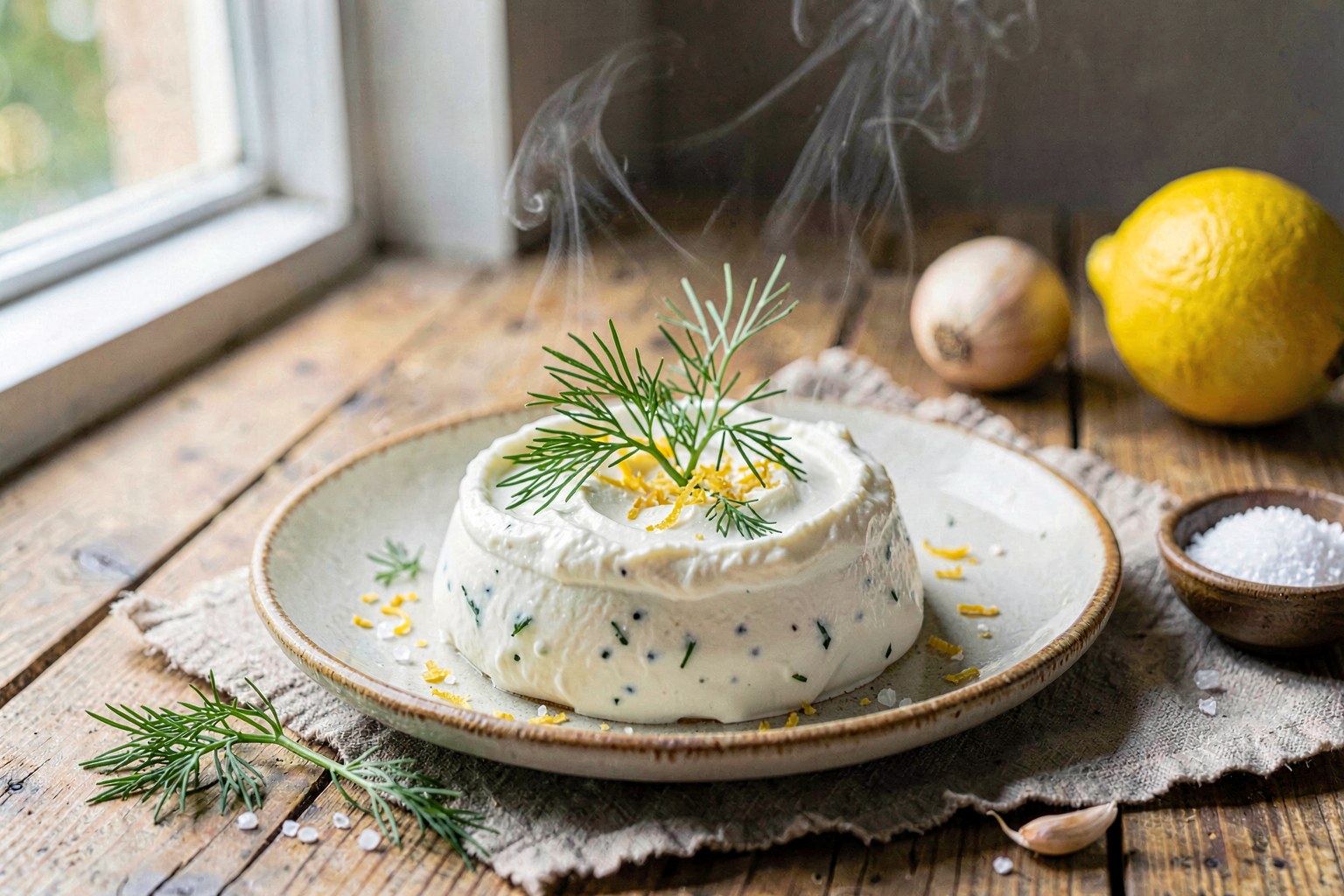
Nordic Clean Dill-Infused Fermented Sour Cream
A tart, probiotic-rich cream base infused with fresh dill and lemon zest, designed to cut through the richness of fatty fish and roasted meats. This version strips away the stabilizers and added sugar of commercial versions, relying on slow fermentation and high-quality grass-fed dairy for a clean, bright finish.
A little context
Rooted in the Scandinavian tradition of using cultured dairy to balance rich winter foods, this recipe honors the original lactic-fermentation process but rejects the modern shortcut of adding corn syrup or modified food starch to commercial sour cream. We use only raw, grass-fed cream and fresh organic dill, allowing the natural fermentation to create the desired tang without any refined sugar or artificial thickeners.
The longevity story
This condiment leverages the gut-health benefits of live-culture fermentation, introducing beneficial lactobacilli to support digestion. The fresh dill provides apiol and carvone, compounds with antioxidant and anti-inflammatory properties, while the grass-fed cream delivers conjugated linoleic acid (CLA) and fat-soluble vitamins A and K2. By avoiding seed oils and refined sugars, we preserve the integrity of the dairy fats, ensuring a high-polyphenol, anti-inflammatory profile that aligns with longevity protocols.
Method
- 01
Sterilize the vessel
Wash the glass jar and lid thoroughly with hot, soapy water, then rinse with boiling water to ensure a sterile environment for fermentation.
- 02
Combine base and starter
In a clean bowl, whisk the 500 g (1 lb) of grass-fed cream with the 30 g (2 tbsp) of live-culture kefir or yogurt until fully incorporated and smooth.
- 03
Add aromatics and salt
Fold in the chopped dill stems (reserving the leaves for later), the microplaned lemon zest, and the 5 g (1 tsp) of sea salt. The salt helps draw out moisture and encourages the right bacterial growth.
- 04
Jar and cover
Pour the mixture into the sterilized glass jar, leaving about 2 cm (3/4 inch) of headspace. Cover the top with the clean cotton cloth and secure with a rubber band.
- 05
Ferment
Place the jar in a warm spot (20-22°C / 68-72°F), away from direct sunlight. Let it sit for 24 to 48 hours. The cream is ready when it has thickened significantly and tastes pleasantly tart.
- 06
Finish and chill
Once fermented to your liking, stir in the reserved fresh dill leaves, seal the jar with a lid, and refrigerate for at least 4 hours to allow the flavors to meld and the texture to set.
Nutrition facts
Per serving · 1 of 4- — Saturated
- 26 g
- — Polyunsaturated
- 2 g
- Carbohydrates
- 6 g
- — Fiber
- 0 g
- — Sugars
- 4 g
- Cholesterol
- 129 mg
- Sodium
- 517 mg
- Potassium
- 175 mg
Estimated from USDA FoodData Central for matched ingredients (100% ingredient coverage). Values vary with brand, preparation, and exact measurements.
Pro tips
- ✦Source your cream from a local dairy if possible; look for 'A2' or 'grass-fed' labels to ensure the highest K2 and CLA content.
- ✦If the cream separates slightly during fermentation, this is normal; simply whisk it back together before refrigerating.
- ✦Taste the cream every 12 hours after the 24-hour mark; if it gets too sour, refrigerate immediately to stop the fermentation process.
- ✦Select dill that is vibrant green with no yellowing leaves; the stems hold the most flavor and are perfect for infusing during the ferment.
Shop this recipe
As an Amazon Associate we earn from qualifying purchases.
Substitutions
- raw, grass-fed heavy cream → organic full-fat coconut cream (For a dairy-free, paleo version; fermentation time may vary slightly and texture will be less creamy.)
- fresh dill → fresh flat-leaf parsley and tarragon (For a different herbal profile, though dill is traditional for Nordic fish pairings.)
Storage
Keep refrigerated in a sealed glass container for up to 7 days; do not freeze as the texture will break upon thawing.
What to serve with it
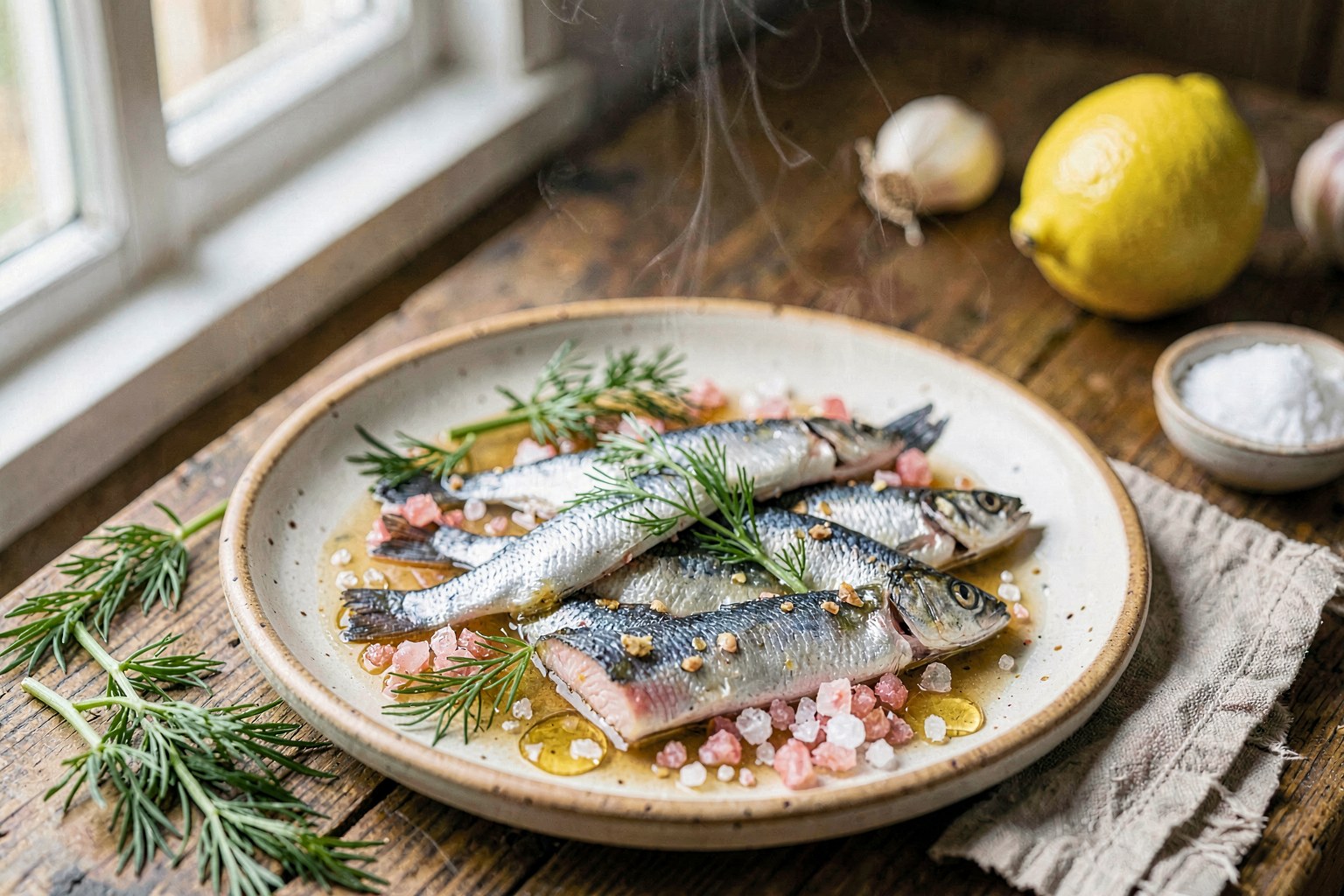
- Wild-caught smoked salmon or seared Arctic char
- Roasted root vegetables with grass-fed butter
- Matcha tea or unsweetened sparkling water with a slice of lemon
- Dry, mineral-rich Riesling or a glass of bone broth-based consommé
FAQ
Can I use store-bought sour cream instead of fermenting?+
Store-bought sour cream often contains stabilizers and may have been pasteurized after culturing, killing the live probiotics. Fermenting your own ensures a live, active culture and allows you to control the sugar and salt content completely.
How do I know if the fermentation went wrong?+
If you see any pink, orange, or fuzzy mold, discard the batch. A slight separation of whey is normal and can be stirred back in. If it smells rancid or putrid rather than tangy and fresh, it has spoiled.
Share this recipe
Notes from the community
Sign in to leave a note.
No notes yet — be the first.
You might also like