Fermented Turnips (Nordic Clean Tradition)
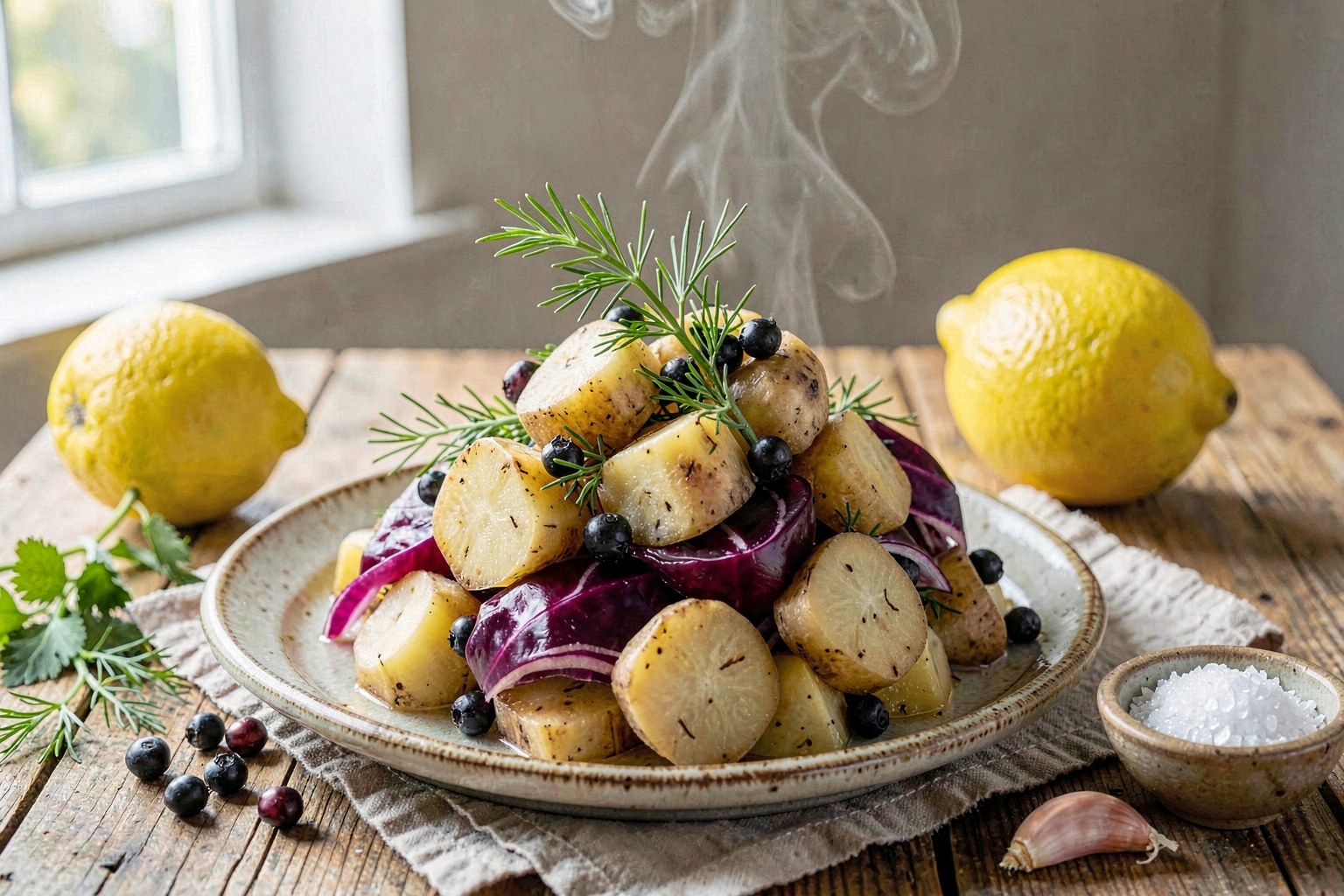
Crisp, tangy turnips lacto-fermented with juniper berries and fresh dill. This probiotic-rich side dish cuts through heavy meals while supporting gut health without refined sugars or seed oils.
A little context
In Nordic tradition, root vegetables were historically preserved through winter using salt and fermentation rather than sugar-heavy pickling. We honor this by using a pure salt brine and relying on the natural sugars in the turnips, stripping out the refined sugar often found in modern supermarket pickles.
The longevity story
Lacto-fermentation cultivates beneficial lactobacillus bacteria that aid digestion and nutrient absorption. Juniper berries provide high levels of polyphenols with anti-inflammatory properties, while fresh dill adds digestive enzymes. Turnips are rich in fiber and vitamin C, which are preserved better in raw fermentation than in cooking.
Method
- 01
Sterilize the jar
Wash the glass jar and weights in hot soapy water, then rinse thoroughly. Place in a pot of boiling water for 5 minutes to sterilize, then remove with tongs and let air dry on a clean towel.
- 02
Prepare the brine
In a small saucepan, heat the filtered water until warm (not boiling), then stir in the sea salt until fully dissolved. Let the brine cool completely to room temperature to avoid killing the beneficial bacteria.
- 03
Pack the vegetables
Toss the turnip matchsticks and red cabbage with the crushed juniper berries, dill, and garlic. Pack tightly into the sterilized jar, pressing down firmly to remove air pockets.
- 04
Pour and weigh
Pour the cooled brine over the vegetables until they are completely submerged. Place the fermentation weight on top to ensure no pieces float above the liquid line.
- 05
Ferment
Cover the jar with an airlock lid or a clean cloth secured with a rubber band. Place in a cool, dark spot at room temperature (18-22°C) for 3 to 5 days. Taste daily after day 3.
- 06
Store and serve
Once tangy to your liking, move the jar to the refrigerator. The fermentation slows significantly but continues slowly. Consume within 2 weeks for best crispness.
Nutrition facts
Per serving · 1 of 4- — Saturated
- 0 g
- — Polyunsaturated
- 0 g
- Carbohydrates
- 5 g
- — Fiber
- 2 g
- — Sugars
- 2 g
- Cholesterol
- 0 mg
- Sodium
- 20 mg
- Potassium
- 199 mg
Estimated from USDA FoodData Central for matched ingredients (43% ingredient coverage). Values vary with brand, preparation, and exact measurements.
Pro tips
- ✦Select firm, unblemished turnips; soft spots indicate decay that can ruin the batch.
- ✦Use non-iodized sea salt; iodine inhibits the growth of lactobacillus needed for fermentation.
- ✦Ensure vegetables stay fully submerged; exposure to air leads to kahm yeast or mold.
- ✦If the brine level drops, top it up with a little extra salted water (20g salt per 1L water).
- ✦Serve cold for a refreshing crunch, or bring to room temp to maximize flavor complexity.
Substitutions
- organic turnips → organic radishes or daikon (similar crisp texture and mild peppery flavor)
- juniper berries → black peppercorns and caraway seeds (mimics the Nordic earthy profile if juniper is unavailable)
Storage
Refrigerate in the sealed jar for up to 2 months. The flavor deepens over time but texture softens. Do not freeze as it destroys the probiotic cultures.
What to serve with it
- Grilled wild-caught salmon
- Sprouted rye bread toast
- Warm roasted root vegetables
- Green tea or plain sparkling water with lemon
FAQ
Is this actually fermented or just pickled?+
This is a lacto-ferment, not a vinegar pickle. The salt brine encourages natural bacteria to convert sugars into lactic acid, creating probiotics.
Can I use table salt?+
No. Table salt often contains anti-caking agents and iodine which can inhibit fermentation. Use pure sea salt or Himalayan pink salt.
What if I see mold?+
If any fuzzy mold appears on the surface, discard the batch. White cloudy sediment at the bottom is normal and safe.
Share this recipe
Notes from the community
Sign in to leave a note.
No notes yet — be the first.
You might also like