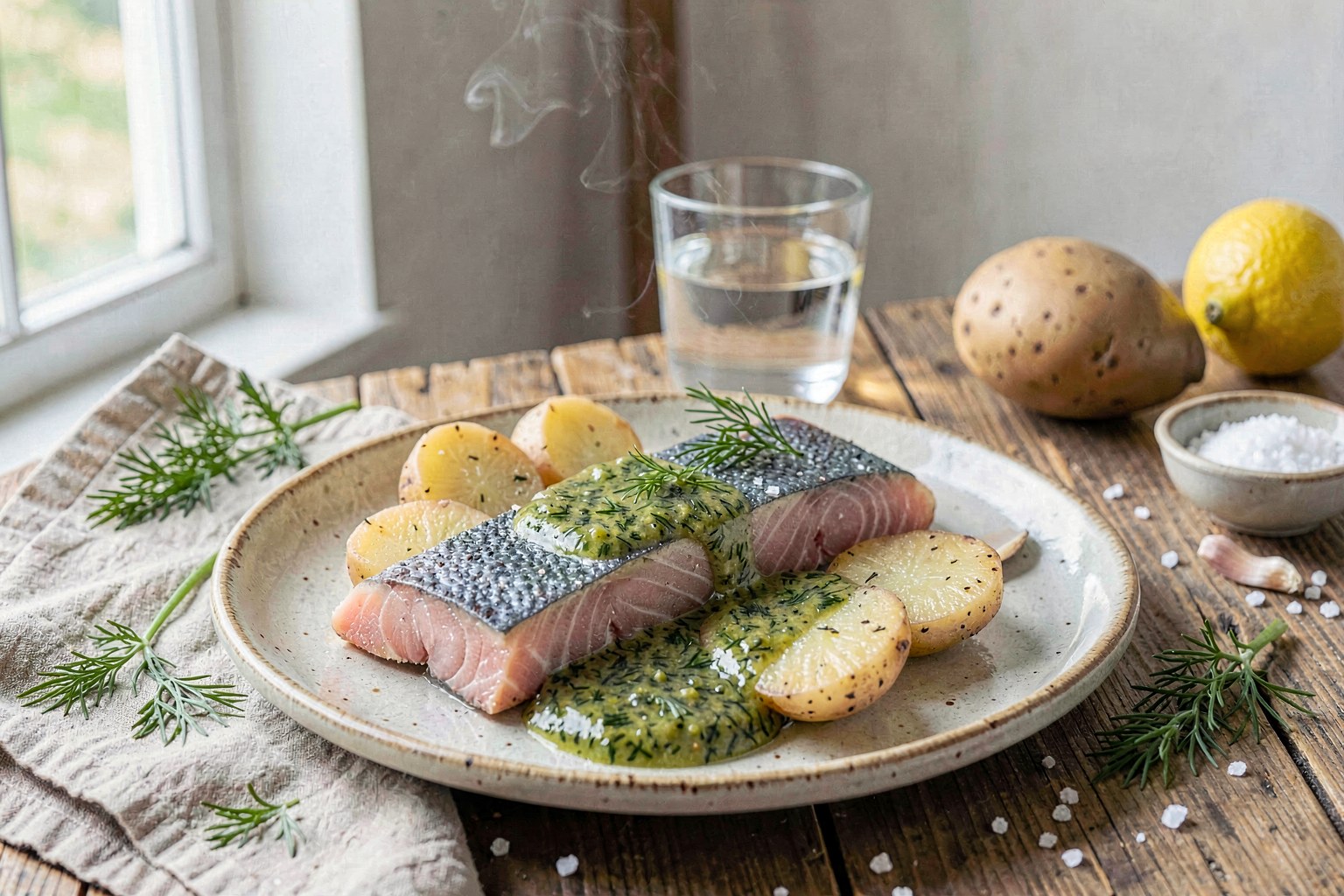
Fisktallrik: Nordic Clean Cod with Dill & Fermented Cucumber
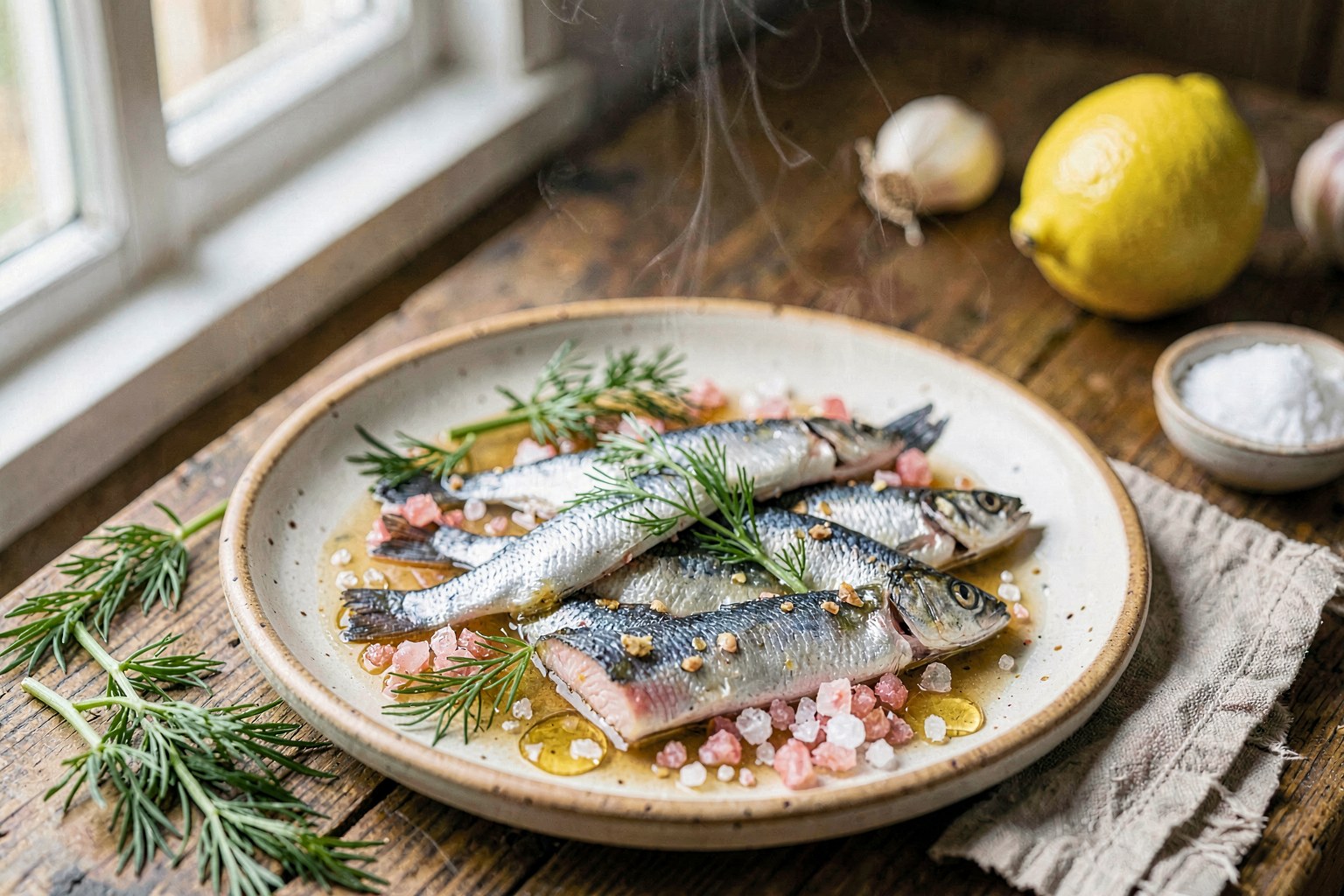
A reimagined Swedish fish plate featuring tender, poached wild-caught cod served alongside waxy new potatoes and a rich, emulsified dill sauce made with extra-virgin olive oil instead of seed oils. This dish pairs the clean, briny flavor of the fish with the probiotic crunch of homemade fermented cucumbers, stripping away the refined sugar and industrial fats common in modern interpretations.
A little context
Rooted in the Scandinavian tradition of the 'fiskskål,' this recipe honors the simplicity of boiling fish and potatoes but rejects the modern shortcut of adding white sugar to the pickling brine and using canola oil for the sauce. Traditional Swedish pickling often relies on sugar to balance acidity; here, we achieve a complex, tangy-sweet profile using the natural sugars of ripe fruit or a touch of pure maple syrup, ensuring the dish remains aligned with longevity protocols without sacrificing the authentic Nordic flavor profile.
The longevity story
This meal is a powerhouse of bioavailable omega-3 fatty acids from the wild-caught cod, which support cognitive function and reduce systemic inflammation. The extra-virgin olive oil in the sauce provides robust polyphenols like oleocanthal, acting as a natural anti-inflammatory agent. Fermented cucumbers introduce live probiotics to support gut microbiome diversity, while the waxy potatoes offer resistant starch when cooled, aiding in blood sugar regulation. Fresh dill adds essential antioxidants, including apigenin, which supports cellular repair mechanisms.
Method
- 01
Prepare the fermented cucumbers
At least 24 hours before cooking, combine 600 ml filtered water, 18 g sea salt, smashed garlic, and dill sprigs in a clean glass jar. Submerge sliced cucumbers and weigh them down. Cover loosely and let ferment at room temperature for 24–48 hours until tangy but still crisp. Refrigerate until ready to serve. This creates live probiotics essential for gut health.
- 02
Prep the fish and potatoes
Pat the wild-caught cod fillets completely dry with paper towels. Place potatoes in a large pot and cover with cold water by 2 inches. Add 1 tbsp of flaky sea salt to the potato water. Bring to a boil, reduce to a simmer, and cook for 15–20 minutes until potatoes are tender but not falling apart. Drain and keep warm.
- 03
Poach the cod
In the same large pot (cleaned), add 2 L filtered water, remaining 1 tbsp salt, dill stems, and lemon halves. Bring to a bare simmer (do not boil). Gently lower the cod fillets into the water. Cook for 6–8 minutes. The fish is done when it reaches an internal temperature of 54°C (130°F) and flakes easily. Remove immediately and place on a warm plate.
- 04
Create the dill emulsion
While the fish cooks, combine 2 pasture-raised egg yolks, 1 tbsp apple cider vinegar, and 1 tsp Dijon mustard in a blender or bowl. Blend until frothy. With the motor running (or whisking vigorously), slowly drizzle in 120 ml cold extra-virgin olive oil until the mixture thickens into a creamy, mayonnaise-like consistency. Fold in the 30 g chopped fresh dill leaves. Taste and adjust salt if needed.
- 05
Assemble the plate
Place two warm potatoes on each of four plates. Top with a warm poached cod fillet. Generously spoon the dill emulsion over the fish and potatoes. Arrange a side of the fermented cucumber pickles on the plate. Garnish with an extra sprig of fresh dill and a crack of black pepper.
- 06
Serve immediately
Serve while the fish is still warm but not hot, allowing the flavors of the cold fermented pickles and cool emulsion to contrast with the warm components. Enjoy with a glass of sparkling water with lemon or a dry, low-sugar white wine.
Nutrition facts
Per serving · 1 of 4- — Saturated
- 7 g
- — Polyunsaturated
- 6 g
- Carbohydrates
- 27 g
- — Fiber
- 4 g
- — Sugars
- 2 g
- Cholesterol
- 86 mg
- Sodium
- 2158 mg
- Potassium
- 1556 mg
Estimated from USDA FoodData Central for matched ingredients (56% ingredient coverage). Values vary with brand, preparation, and exact measurements.
Pro tips
- ✦Sourcing is key: Look for 'pole-and-line' or 'dredge-caught' cod to ensure the fish is free from heavy metals and bycatch issues common in trawling.
- ✦Temperature control: Do not overcook the cod; it continues to cook slightly after removal. Pull it at 54°C (130°F) for a buttery, translucent center.
- ✦Emulsion stability: Ensure your egg yolks and oil are at similar temperatures (room temp vs cold oil) to prevent breaking. If the sauce breaks, start a new yolk in a clean bowl and slowly whisk the broken sauce into it.
- ✦Dill selection: Choose bunches where the leaves are vibrant green and the stems are firm. Avoid bunches with yellowing leaves or slimy stems, as this indicates age and lost polyphenol potency.
- ✦Potato texture: Waxy varieties like Yukon Gold or red potatoes hold their shape better for this dish than starchy russets, which may disintegrate during boiling.
Shop this recipe
As an Amazon Associate we earn from qualifying purchases.
Substitutions
- wild-caught cod → wild-caught halibut or haddock (Both have a similar flaky texture and mild flavor profile suitable for poaching.)
- pasture-raised egg yolks → pasture-raised whole egg (Use 1 whole egg instead of 2 yolks; the sauce will be slightly less rich but still emulsify well.)
- fermented cucumbers → quick-pickled cucumbers with 1 tsp pure maple syrup (If short on time, pickle in vinegar, water, salt, and a touch of maple syrup for 2 hours. You lose the probiotics but keep the sugar-free integrity.)
Storage
Store cooked fish and potatoes in an airtight glass container in the refrigerator for up to 3 days. The dill emulsion can be stored separately for 3 days. Fermented cucumbers last indefinitely in the fridge. Do not freeze the emulsion as it may separate upon thawing.
What to serve with it
- Green tea (sencha) to complement the fish without overwhelming the delicate flavor
- Sparkling water with a wedge of lemon and fresh mint
- A dry, unoaked Chardonnay or a crisp Riesling (low residual sugar)
- A side of steamed green beans with a squeeze of lemon
FAQ
Why use olive oil instead of butter for the sauce?+
Traditional Swedish 'gräddfil' or cream sauces use dairy, but for a Blueprint-aligned, anti-inflammatory profile, we use extra-virgin olive oil. It provides a superior polyphenol profile and stable monounsaturated fats without the inflammatory potential of industrial seed oils or the saturated fat load of heavy cream, while still achieving a rich, creamy texture via emulsion.
Can I use canned pickles?+
No. Canned pickles are typically pasteurized (killing the beneficial bacteria) and loaded with refined sugar or corn syrup. Making your own fermented pickles takes only 24 hours and provides the essential probiotics required for gut health.
Is this recipe gluten-free?+
Yes, provided you use a certified gluten-free mustard. The other ingredients (fish, potatoes, oil, vinegar, dill) are naturally gluten-free.
Share this recipe
Notes from the community
Sign in to leave a note.
No notes yet — be the first.
You might also like