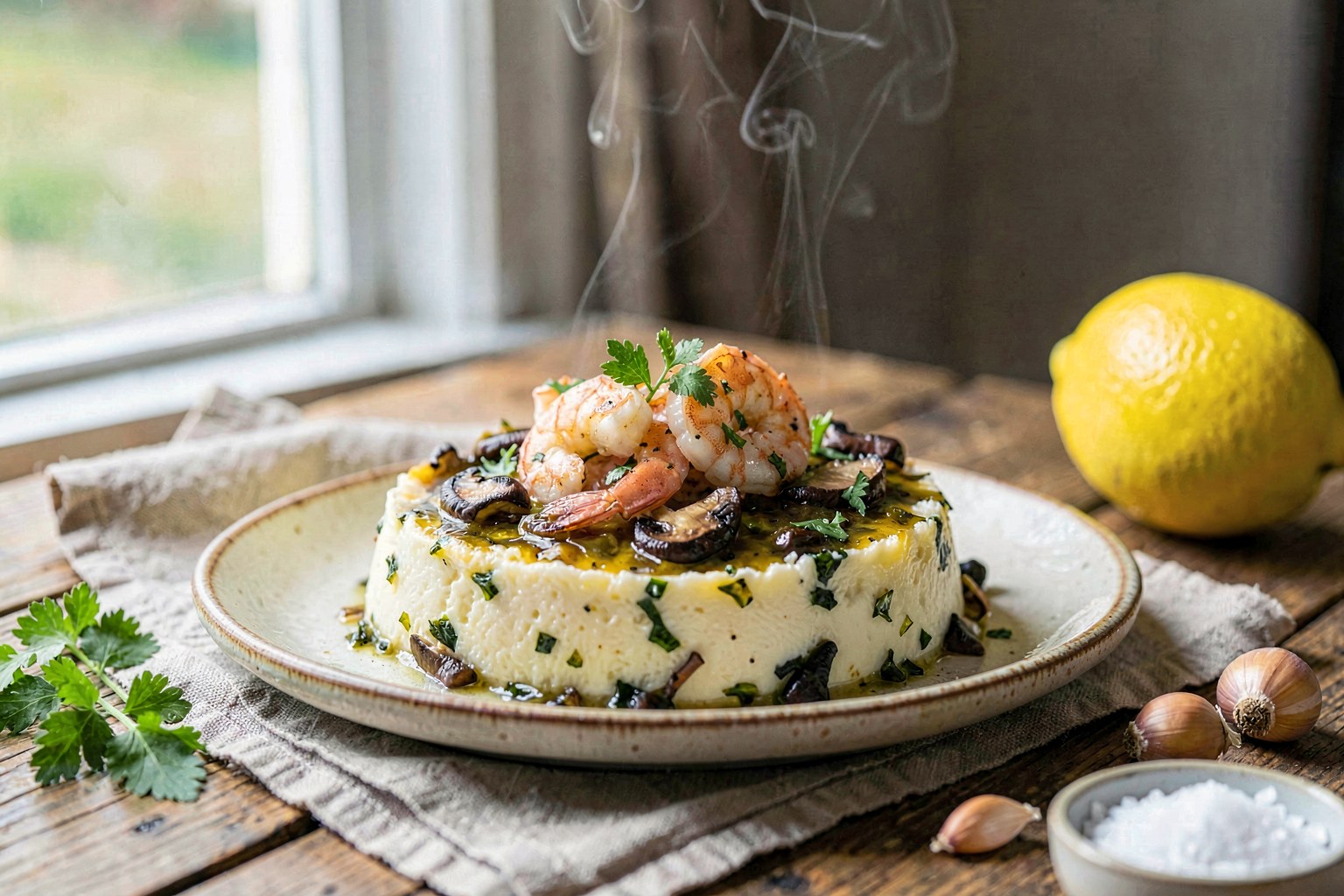
Golden Turmeric Millet Khichdi (Ayurvedic Modern)
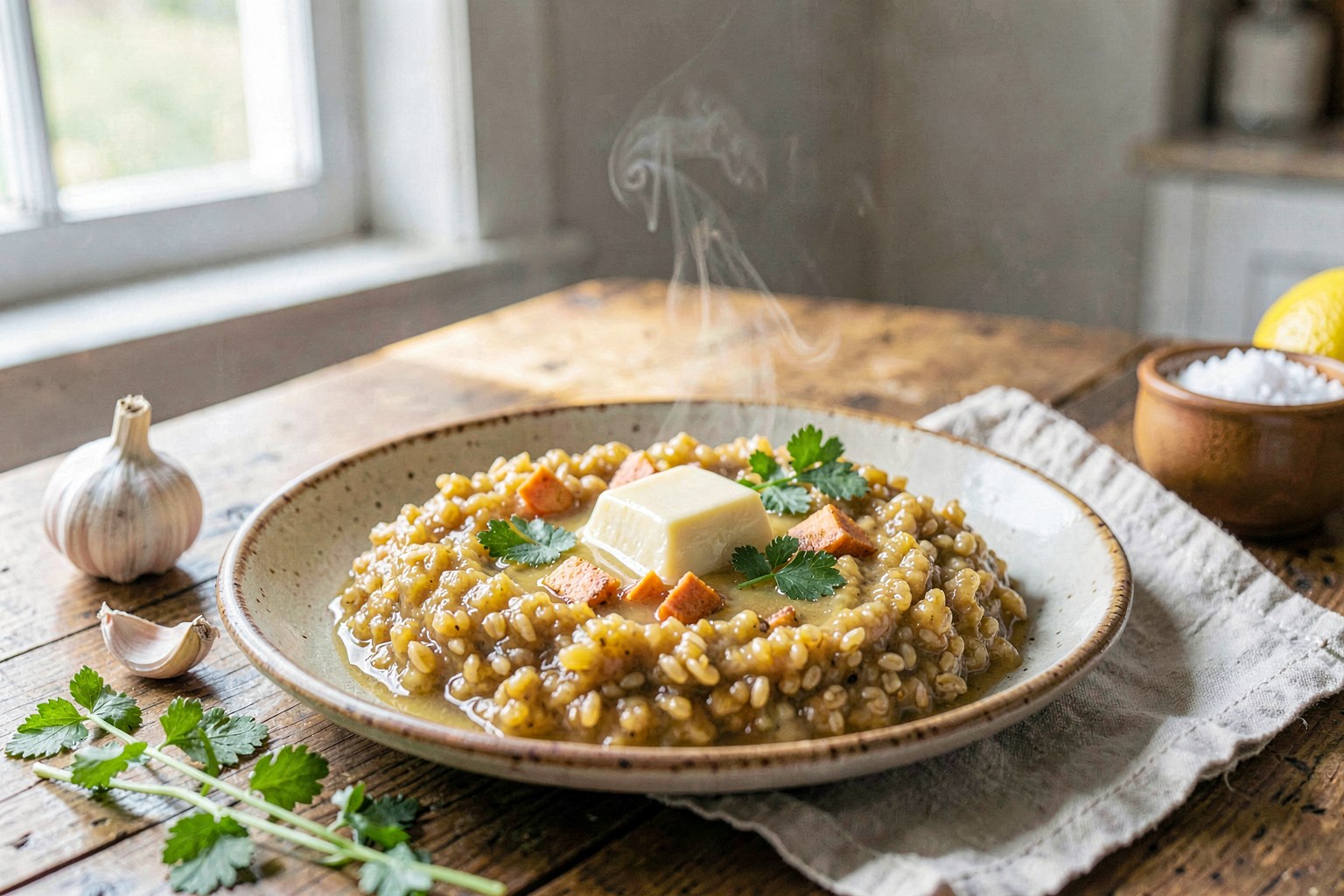
A nourishing, golden-hued porridge where sprouted millet simmers slowly in grass-fed ghee and fresh turmeric until it breaks down into a creamy, digestible comfort. This dish balances earthy cumin and zesty ginger with the subtle sweetness of whole dates, creating a breakfast that fuels longevity without spiking blood sugar.
A little context
Rooted in the Vedic tradition of Khichdi, a staple for Vata-pacifying and post-illness recovery, this version honors the original intent of easy digestion while modernizing the fat and grain sources. We have replaced traditional white rice with sprouted millet for a lower glycemic impact and substituted refined sugar often found in sweetened versions with whole dates. By strictly using grass-fed ghee instead of seed oils or butter substitutes, we maintain the traditional lipid profile essential for absorbing fat-soluble vitamins and supporting the gut lining.
The longevity story
This recipe leverages the bioavailability of curcumin from fresh turmeric, which is significantly enhanced by the presence of piperine in black pepper and the lipid-soluble nature of grass-fed ghee. Millet provides a low-glycemic source of magnesium and fiber, supporting stable energy levels and gut motility. The use of sprouted grains reduces phytates, improving mineral absorption, while fresh ginger and cumin stimulate digestive enzymes (agneyi) to prevent bloating. No refined sugars are used; sweetness comes solely from whole dates, ensuring a slow release of glucose.
Method
- 01
Prepare the millet
Ensure the millet has been soaked for at least 4 hours to reduce phytates. Drain and rinse thoroughly under cold running water until the water runs clear. Set aside.
- 02
Temper the spices
In your Dutch oven over medium-low heat, melt the grass-fed ghee. Add the cumin seeds and let them sizzle for 30 seconds until fragrant. Add the julienned ginger and grated turmeric paste, stirring for another minute to release their essential oils.
- 03
Toast the grain
Add the drained millet to the pot. Stir constantly for 2-3 minutes, coating every grain in the spiced ghee. This toasting step adds a nutty depth and prevents the porridge from becoming gluey.
- 04
Simmer
Pour in the organic vegetable broth and add the sea salt. Bring to a boil, then immediately reduce the heat to low. Cover the pot with a tight-fitting lid and simmer gently for 25-30 minutes, stirring occasionally to prevent sticking, until the millet is tender and the liquid is mostly absorbed.
- 05
Add sweetness and greens
Stir in the chopped dates and freshly cracked black pepper. Cook for another 5 minutes. Finally, fold in the chopped spinach or kale. Cover and let the residual heat wilt the greens for 2 minutes.
- 06
Rest and serve
Remove from heat and let the khichdi rest, covered, for 5 minutes. This allows the starches to fully gelatinize, creating a creamy texture. Serve warm, drizzled with a tiny extra teaspoon of ghee if desired.
Nutrition facts
Per serving · 1 of 4- — Saturated
- 9 g
- — Polyunsaturated
- 1 g
- Carbohydrates
- 26 g
- — Fiber
- 4 g
- — Sugars
- 8 g
- Cholesterol
- 45 mg
- Sodium
- 1951 mg
- Potassium
- 561 mg
Estimated from USDA FoodData Central for matched ingredients (80% ingredient coverage). Values vary with brand, preparation, and exact measurements.
Pro tips
- ✦Sourcing the millet: Look for 'sprouted' millet specifically, or soak dry organic millet in water with a splash of lemon juice for 4-6 hours to activate the sprouting enzymes.
- ✦Fresh vs. dried turmeric: Fresh turmeric root is far superior for this dish as it contains higher concentrations of curcuminoids and a brighter, less earthy flavor profile than the dried powder.
- ✦Texture check: If the millet absorbs the liquid too quickly before it is tender, add warm water in 60ml (1/4 cup) increments until the desired porridge consistency is reached.
- ✦Ghee quality: Ensure your ghee is grass-fed; the fat-soluble vitamins (A, D, E, K) and butyrate content are significantly higher in pasture-raised dairy.
- ✦Date selection: Choose Medjool dates that are soft and pliable; if they are dry, soak them in warm water for 10 minutes before chopping to ensure they melt into the porridge.
Shop this recipe
As an Amazon Associate we earn from qualifying purchases.
Substitutions
- sprouted millet → sprouted quinoa or buckwheat groats (Quinoa is higher in protein but has a slightly bitter skin if not rinsed well; buckwheat offers a stronger, earthier flavor.)
- grass-fed ghee → organic coconut oil or avocado oil (Coconut oil adds a slight sweetness; avocado oil is more neutral. Ghee remains the best choice for Ayurvedic digestion.)
- spinach/kale → chard or collard greens (These heartier greens may require an extra 2-3 minutes of cooking to fully wilt.)
Storage
Store in an airtight glass container in the refrigerator for up to 4 days. Reheat gently with a splash of water or broth to restore creaminess. Freezes well for up to 2 months; thaw overnight in the fridge.
What to serve with it
- A cup of fresh ginger-lemon tea
- Warm herbal tea with ashwagandha
- Plain organic kefir or coconut yogurt on the side
- Sparkling water with a wedge of lime
FAQ
Is this recipe suitable for a strict low-carb diet?+
Millet is a grain and contains carbohydrates, though it is lower glycemic than rice or wheat. For a strict low-carb or keto approach, substitute the millet with cauliflower rice, though the texture and traditional profile will change significantly.
Can I make this vegan?+
Yes, simply substitute the grass-fed ghee with organic coconut oil or avocado oil. The dish remains fully compliant with the Blueprint-aligned and whole-food principles.
Share this recipe
Notes from the community
Sign in to leave a note.
No notes yet — be the first.
You might also like