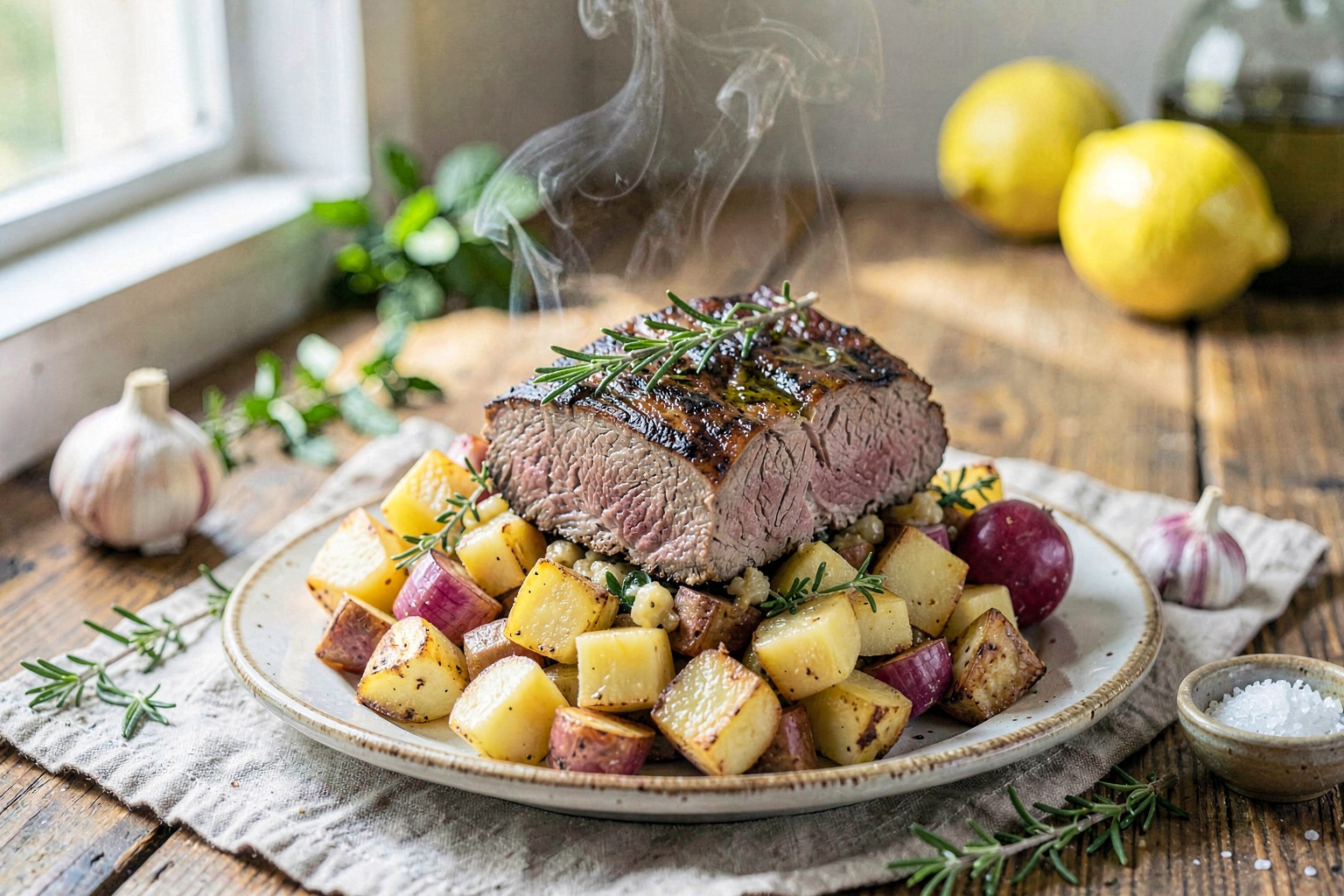
Grass-Fed Beef & Root Vegetable Hash (California Farm tradition)
Slow-roasted grass-fed beef chuck rests atop crispy cubes of heritage potato and caramelized parsnips. Finished with a rosemary-infused extra virgin olive oil and fresh thyme, this dish balances savory depth with the natural sweetness of root vegetables. It is a hearty California farm staple rebuilt for longevity and metabolic health.
A little context
Traditional California farm hashes often rely on seed oils for high-heat frying and sugar-laden glazes to caramelize vegetables. We honor the slow-roasting technique essential for tough cuts like chuck but replace inflammatory fats with antioxidant-rich extra virgin olive oil. Natural vegetable sugars are allowed to caramelize without added refined sweeteners, preserving the authentic savory profile.
The longevity story
Grass-fed beef provides conjugated linoleic acid (CLA) and omega-3 fatty acids absent in grain-fed cuts, supporting metabolic flexibility and reducing inflammation. The root vegetables supply resistant starch and fiber, which feed beneficial gut bacteria when cooled slightly before eating. Extra virgin olive oil delivers oleocanthal and hydroxytyrosol, potent polyphenols that protect cellular integrity. This combination prioritizes nutrient density over empty calories, aligning with longevity protocols.
Method
- 01
Season the beef
Pat beef cubes dry with paper towels. Season liberally with sea salt and black pepper. Let rest at room temperature for 20 minutes to ensure even cooking.
- 02
Sear the meat
Heat 30 ml (2 tbsp) extra virgin olive oil in the cast-iron skillet over medium-high heat. Sear beef cubes on all sides until deep brown, about 3-4 minutes total. Remove beef and set aside.
- 03
Braise the beef
Add the bone broth and rosemary sprigs to the hot skillet, scraping up browned bits (fond). Return beef to the pan, cover, and transfer to a preheated oven at 160°C (325°F) for 60 minutes.
- 04
Prep the roots
While beef braises, toss potato and parsnip cubes with remaining 30 ml (2 tbsp) olive oil, salt, and pepper. Spread on a baking sheet.
- 05
Roast the vegetables
Place vegetable tray in the oven alongside the beef for the final 30 minutes of cooking until potatoes are crispy and parsnips are tender.
- 06
Combine and finish
Remove from oven. Stir minced garlic and fresh thyme leaves into the beef mixture. Let rest for 5 minutes before serving with the roasted roots.
Nutrition facts
Per serving · 1 of 4- — Saturated
- 7 g
- — Polyunsaturated
- 3 g
- Carbohydrates
- 30 g
- — Fiber
- 5 g
- — Sugars
- 4 g
- Cholesterol
- 114 mg
- Sodium
- 316 mg
- Potassium
- 1288 mg
Estimated from USDA FoodData Central for matched ingredients (44% ingredient coverage). Values vary with brand, preparation, and exact measurements.
Pro tips
- ✦Select beef with a deep red color and firm fat deposits; soft or yellow fat indicates grain-feeding.
- ✦Do not crowd the skillet when searing beef, or it will steam instead of brown.
- ✦Toss the root vegetables in oil immediately before roasting to prevent oxidation.
- ✦Use a thermometer to check beef; 63°C (145°F) is medium-rare, but for chuck, aim for 85°C (185°F) for tenderness.
Shop this recipe
As an Amazon Associate we earn from qualifying purchases.
Substitutions
- grass-fed beef chuck → grass-fed bison stew meat (leaner protein, reduce braise time by 15 minutes)
- parsnips → organic turnips (lower glycemic impact, similar texture when roasted)
- extra virgin olive oil → avocado oil (higher smoke point for searing, lower polyphenol content)
Storage
Store in a glass container in the fridge for up to 3 days. Reheat gently on the stovetop with a splash of broth. Freezes well portioned for up to 2 months.
What to serve with it
- Hot matcha green tea
- Sparkling water with fresh lemon wedge
- Dry Pinot Noir red wine
- Simple green salad with apple cider vinegar dressing
FAQ
Can I use grain-fed beef?+
You can, but grain-fed beef has a higher omega-6 to omega-3 ratio and often contains inflammatory compounds from corn-based feed. Grass-fed is superior for anti-inflammatory goals.
Why extra virgin olive oil for searing?+
High-quality EVOO has a higher smoke point than commonly believed and contains protective polyphenols that prevent oxidation at moderate heat.
Can I make this in a slow cooker?+
Yes, sear the beef first, then braise on low for 6-8 hours. Add the vegetables for the last 2 hours to prevent mushiness.
Share this recipe
Notes from the community
Sign in to leave a note.
No notes yet — be the first.
You might also like