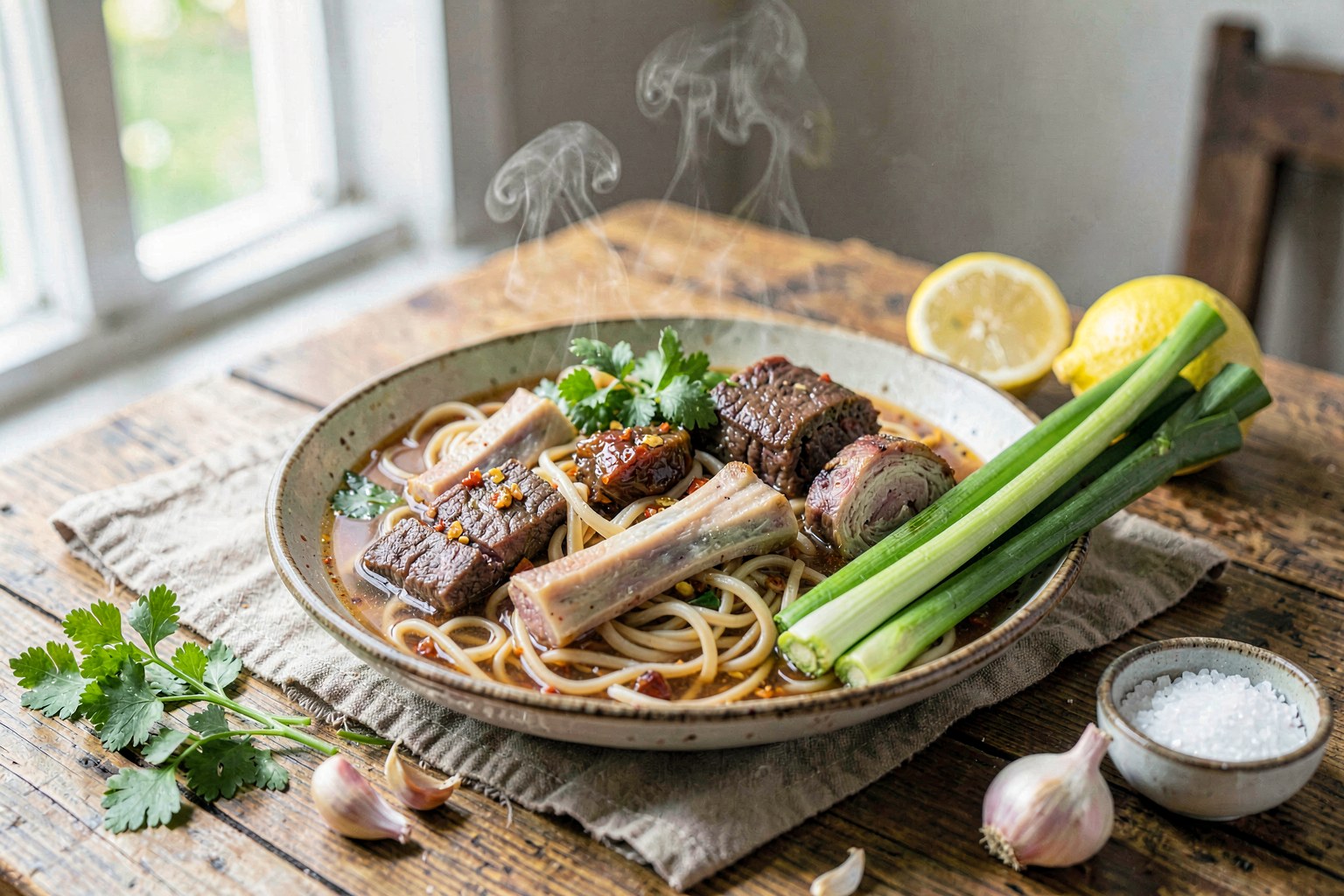
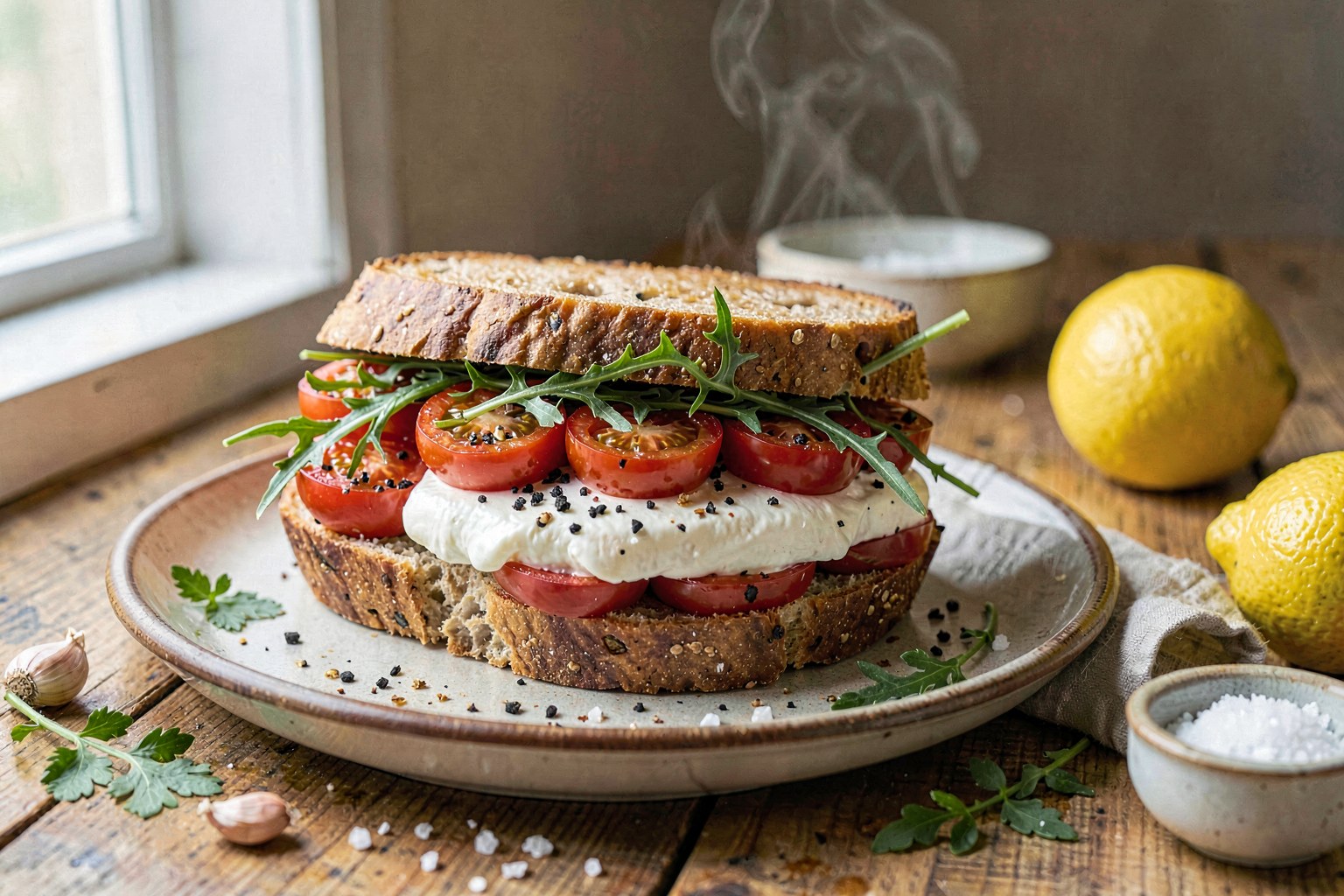
Heirloom Tomato & Arugula Panini with Fresh Mozzarella
This California-inspired panini layers warm, slow-roasted heirloom tomatoes with peppery arugula and creamy, pasture-raised fresh mozzarella between slices of fermented sourdough. The bread is crisped in extra-virgin olive oil until golden, delivering a satisfying crunch without the need for seed oils or industrial additives.
A little context
Rooted in the 'California Farm-to-Table' movement of the 1970s, this recipe honors the tradition of highlighting peak-season produce by roasting tomatoes to concentrate their umami sweetness rather than adding refined sugar. Traditional Italian panini often rely on butter or seed-oil sprays; here, we strictly use high-quality extra-virgin olive oil to achieve the golden crust while maintaining an anti-inflammatory profile. We have stripped away the commercial balsamic glazes often found in deli versions, which are frequently thickened with corn syrup, replacing them with the natural sweetness of slow-roasted heirloom fruit.
The longevity story
This dish leverages the lycopene in tomatoes, which becomes significantly more bioavailable when roasted with the healthy fats found in extra-virgin olive oil (EVOO). The fresh mozzarella provides high-quality casein and calcium, while the arugula contributes sulforaphane precursors and nitrates for vascular health. The sourdough fermentation process breaks down phytates, improving mineral absorption and reducing the glycemic impact compared to standard wheat bread. Finally, the polyphenol density from the EVOO and dark-leafy greens supports a robust antioxidant defense system.
Method
- 01
Roast the Tomatoes
Preheat your oven to 200°C (400°F). Arrange the sliced heirloom tomatoes on a parchment-lined baking sheet. Drizzle generously with 30 ml (2 tbsp) extra-virgin olive oil, then season with sea salt and black pepper. Roast for 35–45 minutes until the edges are caramelized and the centers are soft but not mushy. Remove and let cool slightly.
- 02
Prepare the Bread
While tomatoes roast, brush one side of each sourdough slice with the remaining extra-virgin olive oil. This creates the barrier that prevents sogginess and ensures a golden, polyphenol-rich crust.
- 03
Warm the Mozzarella
Take your fresh mozzarella slices out of the refrigerator 15 minutes before assembly. Allowing them to come closer to room temperature ensures they melt evenly without releasing too much whey, which can make the bread soggy.
- 04
Layer the Panini
On the unbuttered side of 4 bread slices, layer a slice of mozzarella, a generous portion of the warm roasted tomatoes, a sprinkling of dried oregano (if using), and a handful of fresh arugula. Top with the remaining bread, oil-side up.
- 05
Press and Toast
Heat your cast-iron skillet or panini press over medium heat. Place the sandwiches in the pan. If using a skillet, place a heavy weight (like another pan filled with cans) on top. Cook for 3–4 minutes per side until the bread is deeply golden brown and the mozzarella has just begun to melt.
- 06
Rest and Serve
Remove from heat and let the paninis rest for 2 minutes. This allows the cheese to set slightly so it doesn't ooze out immediately upon cutting. Slice diagonally to expose the layers of roasted tomato and arugula, then serve immediately.
Nutrition facts
Per serving · 1 of 4- — Saturated
- 5 g
- — Polyunsaturated
- 2 g
- Carbohydrates
- 25 g
- — Fiber
- 3 g
- — Sugars
- 22 g
- Cholesterol
- 0 mg
- Sodium
- 722 mg
- Potassium
- 790 mg
Estimated from USDA FoodData Central for matched ingredients (89% ingredient coverage). Values vary with brand, preparation, and exact measurements.
Pro tips
- ✦Select heirloom tomatoes that feel heavy for their size and have a fragrant, earthy smell at the stem; this indicates peak ripeness and maximum nutrient density.
- ✦Do not skip the resting period for the mozzarella; cold cheese cools the bread too fast, preventing the interior from warming through before the crust burns.
- ✦If your sourdough is very thick, score the center of the bread lightly with a knife before pressing to ensure even compression without crushing the crust.
- ✦Use a high-quality, early-harvest extra-virgin olive oil for the brushing; its high polyphenol count is a key component of the Blueprint diet.
- ✦For a gluten-free version, substitute with a certified GF sourdough made from brown rice or buckwheat flour, ensuring it is fermented for at least 12 hours.
Substitutions
- fresh pasture-raised mozzarella → fresh burrata or vegan cashew mozzarella (Burrata adds more creaminess; cashew mozzarella works for dairy-free but ensure it is not processed with seed oils.)
- heirloom tomatoes → Roma or Campari tomatoes (If heirlooms are out of season, use high-quality organic Roma tomatoes; roast them slightly longer to concentrate flavor.)
- sourdough bread → sprouted grain bread (e.g., Ezekiel) (Sprouted grains offer higher bioavailability of nutrients and a lower glycemic response.)
Storage
Store leftovers in a glass container in the refrigerator for up to 2 days. Reheat in a dry cast-iron skillet over low heat to restore crispness; avoid microwaving to prevent soggy bread and rubbery cheese.
What to serve with it
- Hot green tea (sencha or matcha) for an extra boost of EGCG polyphenols.
- Sparkling water with a wedge of fresh lemon and a pinch of sea salt.
- A small glass of dry red wine (Pinot Noir or Sangiovese) containing resveratrol, if alcohol is part of your routine.
FAQ
Why roast the tomatoes instead of using them raw?+
Roasting breaks down the cell walls of the tomato, significantly increasing the bioavailability of lycopene, a potent antioxidant, especially when paired with the fat from the olive oil.
Can I make this vegan?+
Yes, substitute the mozzarella with a high-quality cashew-based fresh cheese that contains no seed oils, and ensure the sourdough is egg-free.
Is the sourdough truly gluten-free?+
No, traditional sourdough is made from wheat. However, the long fermentation process reduces gluten content and phytates, making it easier to digest for some, but it is not safe for those with celiac disease unless a certified GF grain is used.
Share this recipe
Notes from the community
Sign in to leave a note.
No notes yet — be the first.
You might also like