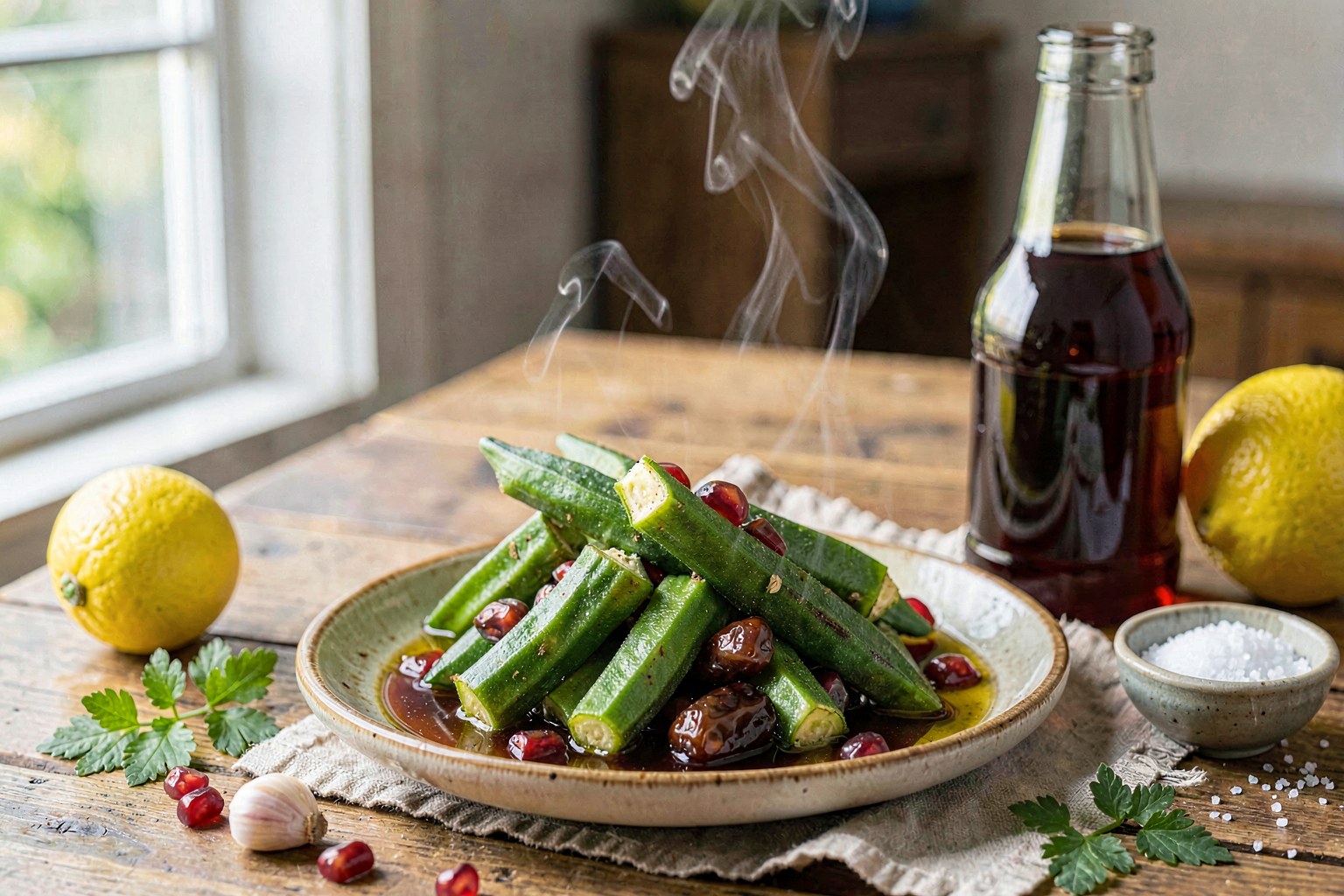
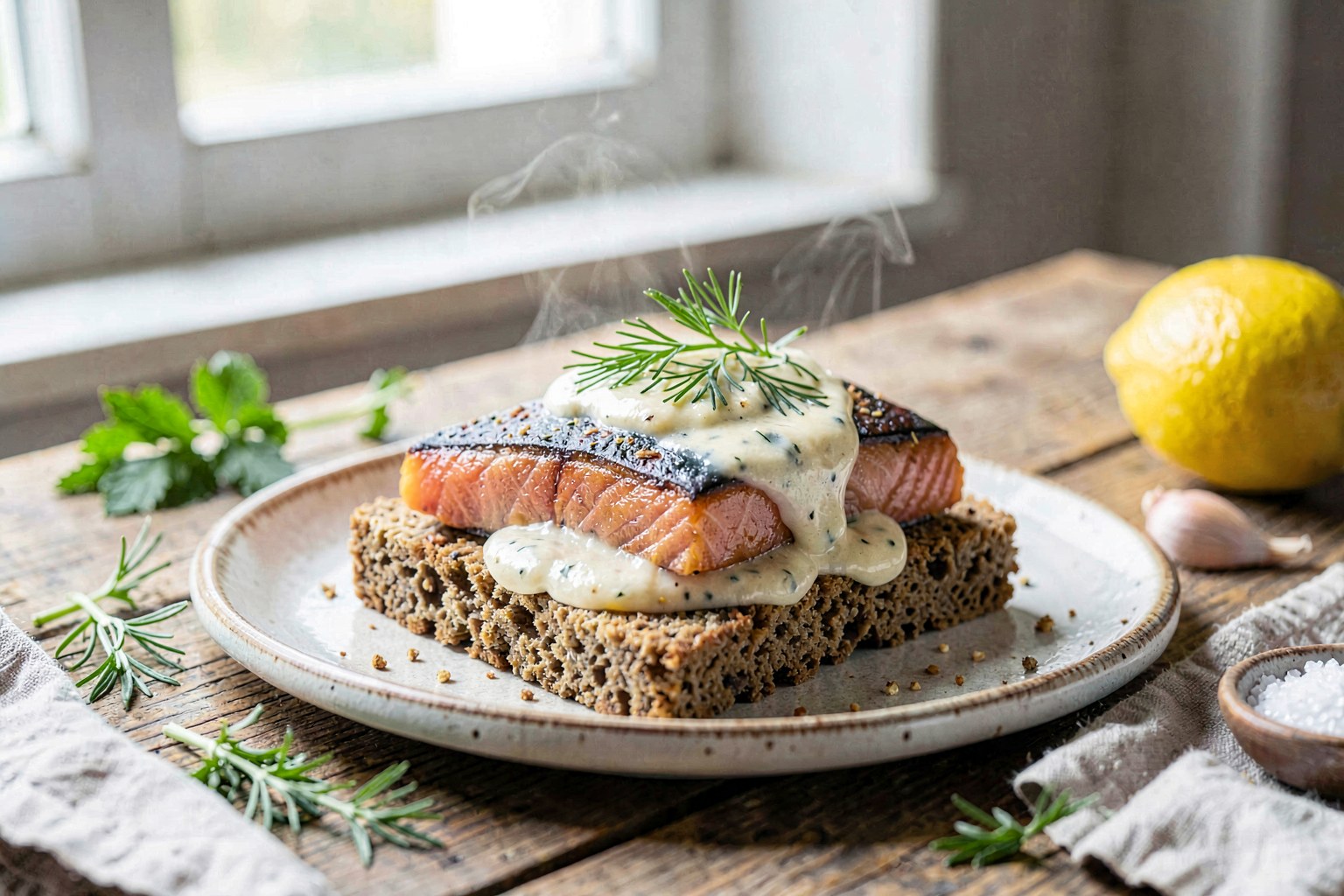
Rye Crispbread with Creamy Dill & Wild Salmon
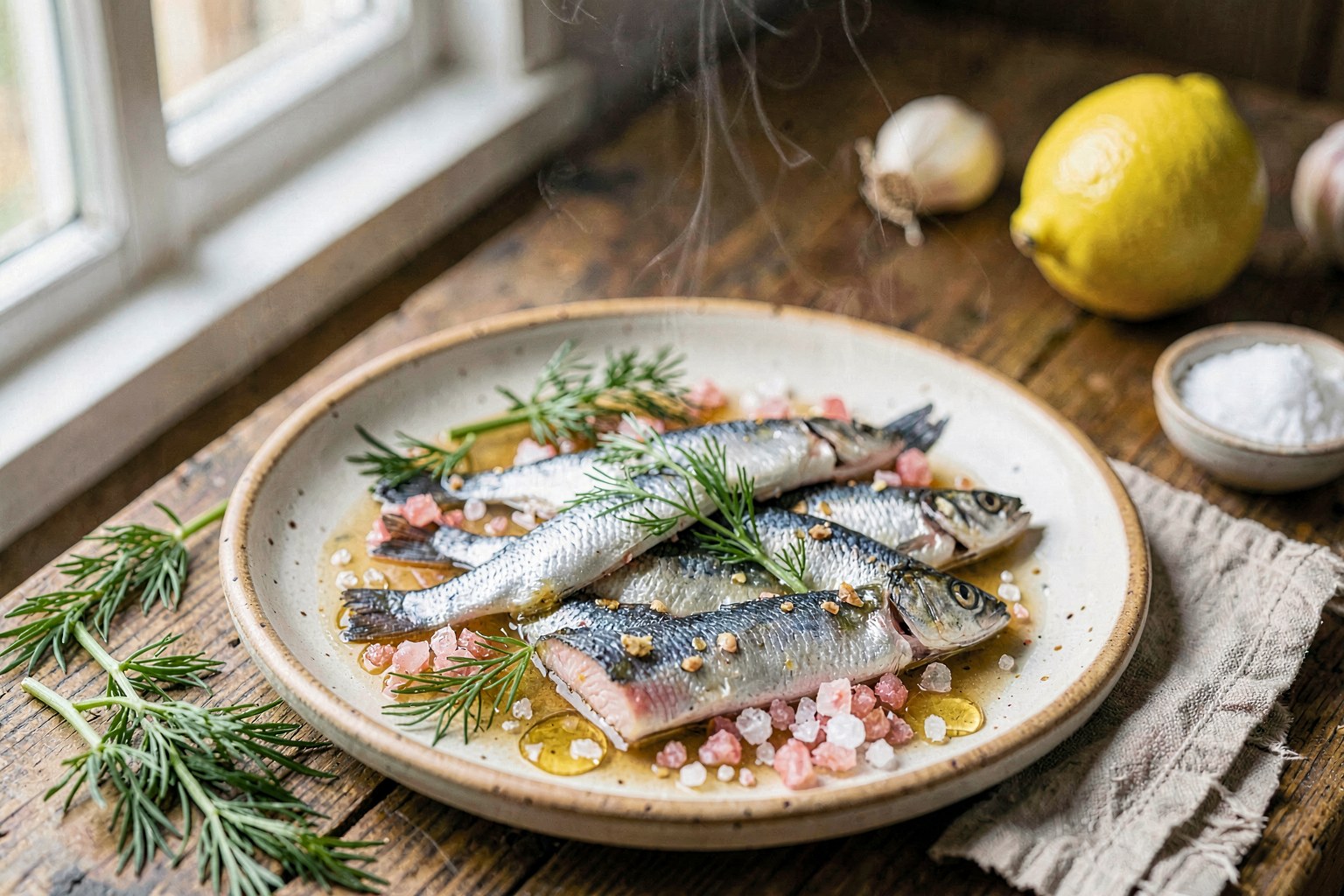
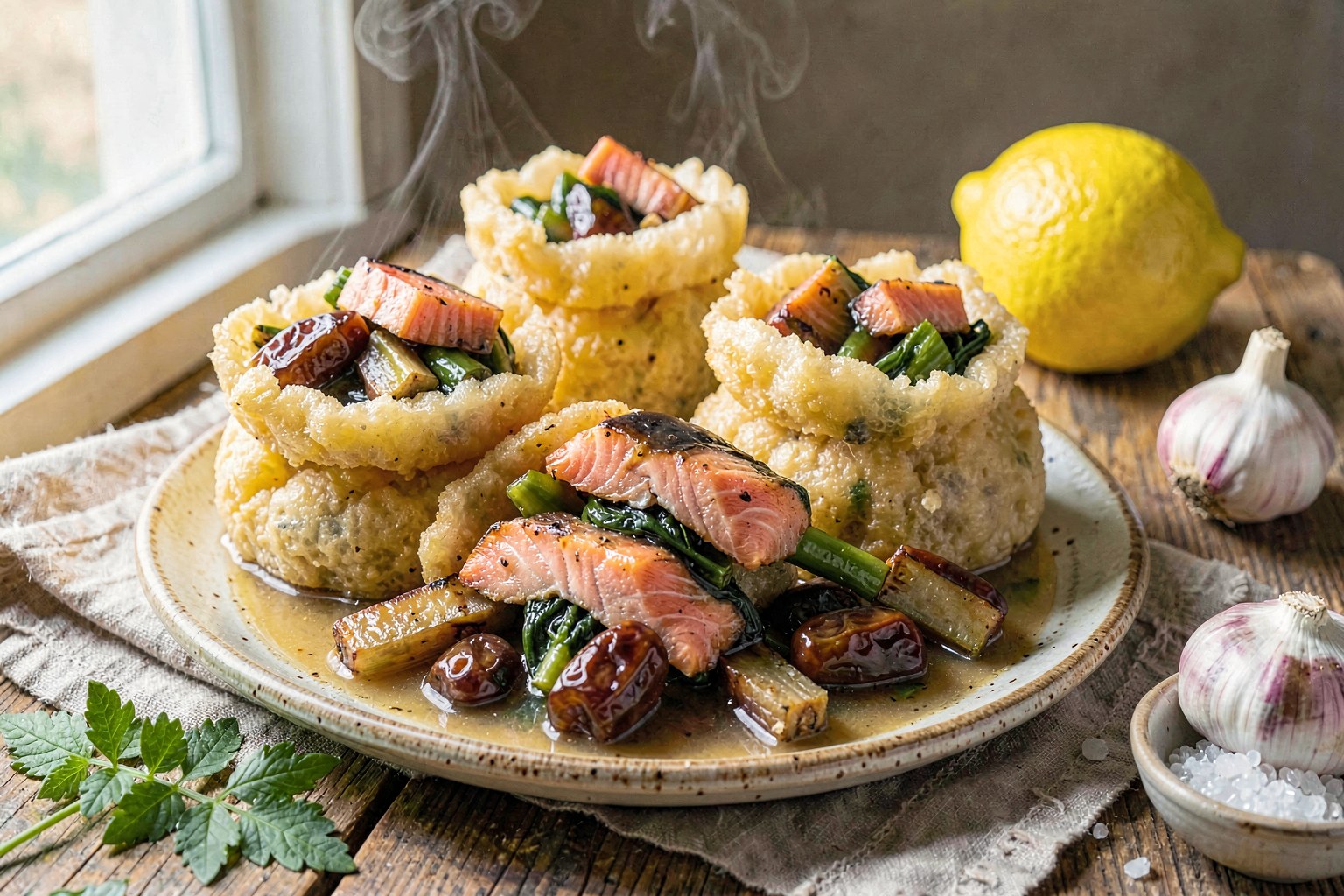
This Nordic-inspired dinner features house-made, fiber-rich rye crispbread topped with pan-seared wild-caught salmon and a rich, fermented cream sauce. The dish balances the earthy, nutty crunch of sprouted rye with the silky texture of a dairy-based sauce, delivering a meal that is deeply savory, satisfying, and free from refined sugars or industrial seed oils.
A little context
Rooted in the Swedish tradition of 'skorpor' and creamy fish sauces, this recipe honors the Nordic reliance on preserved grains and fatty fish for survival in harsh climates. We have modernized the approach by swapping industrial seed oils for grass-fed butter and extra-virgin olive oil, and replacing refined sugar often found in malted breads with the natural sweetness of date syrup or a touch of raw honey. The result is a dish that respects the original flavor profile while adhering to strict longevity and clean-eating standards.
The longevity story
The cornerstone of this dish is the wild-caught salmon, providing high bioavailability EPA and DHA omega-3s essential for reducing systemic inflammation and supporting cognitive longevity. The rye crispbread, made from sprouted whole grains, offers a lower glycemic impact than wheat and a dense profile of polyphenols and magnesium. The sauce utilizes full-fat cream (or fermented dairy), which supports gut health through butyrate production and nutrient absorption, while fresh dill and lemon provide antioxidant flavonoids that further protect cellular integrity.
Method
- 01
Activate the Rye Dough
In a medium bowl, whisk together the sprouted rye flour, barley malt syrup (or date syrup), and sea salt. Gradually add the warm water, mixing with a wooden spoon until a shaggy dough forms. Cover with a damp cloth and let rest at room temperature for 30 minutes to allow the enzymes in the sprouted flour to activate.
- 02
Roll and Score
Preheat your oven to 200°C (400°F) with a baking stone or steel inside. Divide the dough into 8 equal portions. On a lightly floured surface (use extra rye flour), roll each portion out as thinly as possible—aim for 1-2 mm thickness. Use a fork to dock the dough all over to prevent bubbling, then score into squares or rectangles with a sharp knife.
- 03
Bake the Crispbread
Transfer the rolled dough onto parchment paper. Slide onto the hot baking stone. Bake for 12-15 minutes, rotating the tray halfway through, until the bread is golden brown and sounds hollow when tapped. Remove and let cool completely on a wire rack; they will crisp up further as they cool.
- 04
Prepare the Salmon
While the bread bakes, pat the wild-caught salmon fillets completely dry with paper towels. Season both sides generously with sea salt and let them sit at room temperature for 15 minutes. This ensures even cooking and a better sear.
- 05
Sear the Salmon
Heat the extra-virgin olive oil in a cast-iron skillet over medium-high heat until shimmering. Place the salmon skin-side down. Press gently with a spatula for 10 seconds to ensure full contact. Cook undisturbed for 4-5 minutes until the skin is deeply golden and crispy. Flip and cook for another 2-3 minutes until just cooked through (internal temp 52°C/125°F for medium).
- 06
Make the Gräddsås
In the same skillet (remove excess oil if necessary, leaving 1 tbsp), reduce heat to low. Add the grass-fed butter and the heavy cream. Whisk gently to combine, scraping up any browned bits (fond) from the salmon. Simmer for 2 minutes until the sauce thickens slightly. Remove from heat and stir in the fresh dill and lemon juice.
- 07
Assemble and Serve
Place two crispbread rounds on each warmed plate. Top with a warm salmon fillet. Spoon the creamy dill sauce generously over the fish, allowing some to pool around the bread. Garnish with a final pinch of flaky sea salt and a sprig of fresh dill.
Nutrition facts
Per serving · 1 of 4- — Saturated
- 6 g
- — Polyunsaturated
- 3 g
- Carbohydrates
- 37 g
- — Fiber
- 12 g
- — Sugars
- 1 g
- Cholesterol
- 80 mg
- Sodium
- 1604 mg
- Potassium
- 846 mg
Estimated from USDA FoodData Central for matched ingredients (82% ingredient coverage). Values vary with brand, preparation, and exact measurements.
Pro tips
- ✦Sourcing: Look for 'wild-caught' on the label, specifically from the US, Canada, or Alaska; avoid farmed Atlantic salmon which often contains higher levels of contaminants and lower omega-3s.
- ✦Texture: If the dough tears while rolling, it is too dry; add water 1 tsp at a time. If it sticks, add more rye flour.
- ✦Sauce Consistency: If the sauce becomes too thick, thin it with 1 tbsp of warm water or fish stock (homemade) rather than milk.
- ✦Dill Selection: Choose dill with bright green, feathery fronds and no yellowing; the flavor is most potent just before the plant flowers.
Substitutions
- sprouted rye flour → sprouted spelt flour or buckwheat flour (buckwheat makes it gluten-free but changes the flavor profile to be more earthy; spelt is a close relative to wheat.)
- wild-caught sockeye salmon → wild-caught Arctic char or rainbow trout (both are excellent fatty fish with similar cooking times and omega-3 profiles.)
- heavy cream → full-fat coconut cream (canned) (creates a dairy-free version; the coconut flavor will be subtle if using the thick cream part only.)
Storage
Store crispbread in an airtight glass jar for up to 2 weeks. Cooked salmon and sauce can be refrigerated in a glass container for up to 2 days; reheat gently in a low oven to prevent the salmon from drying out.
What to serve with it
- Hot green tea (sencha or matcha) to complement the polyphenols
- Sparkling water with a wedge of lemon and a sprig of dill
- A dry, unoaked Chardonnay or a pale German Riesling (low residual sugar)
FAQ
Can I use regular rye flour instead of sprouted?+
Yes, but sprouted flour is easier to digest and has a lower glycemic index. If using regular flour, ensure it is 100% whole grain, not rye flour blend.
Why is the sauce so simple?+
Traditional Nordic sauces rely on the quality of the cream and butter, not thickeners or starches. The reduction creates the texture naturally.
Share this recipe
Notes from the community
Sign in to leave a note.
No notes yet — be the first.
You might also like