Nordic Clean Krispbrygd: Ancient Rye & Malt Crispbread
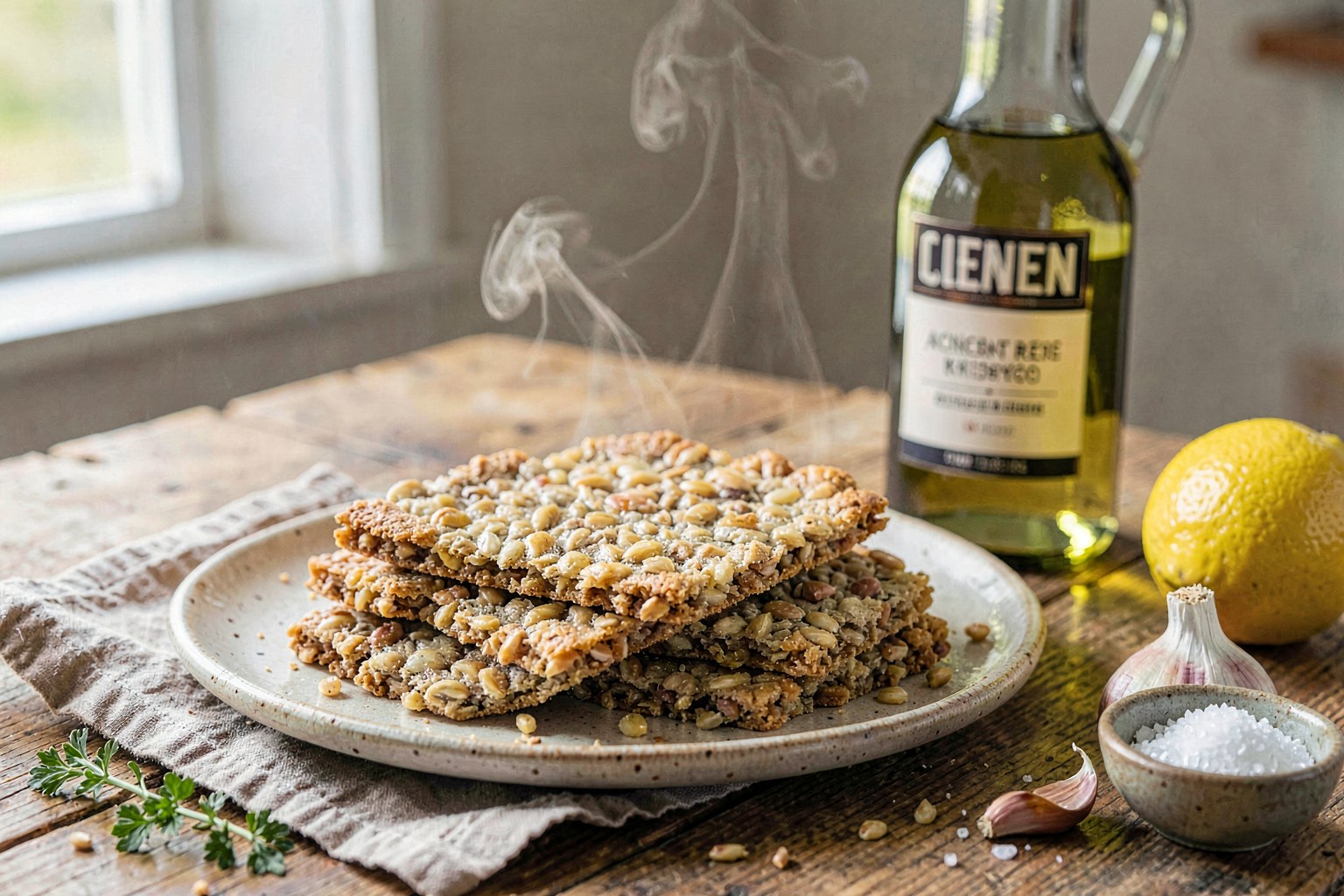
These ultra-thin, golden-brown crispbreads are crafted from sprouted rye flour and organic barley malt, offering a deep, nutty complexity without a hint of refined sugar. Baked until shatteringly crisp, they serve as the perfect low-glycemic vessel for pastured butter, aged Nordic cheeses, or wild-caught fish spreads. This version honors the Scandinavian tradition of longevity by relying solely on whole grains and natural fermentation to achieve a glycemic load that supports metabolic health.
A little context
Krispbrygd is a staple of the Nordic diet, historically baked in massive sheets and broken into pieces to accompany meals. Traditional recipes often included small amounts of refined sugar or white flour to ensure rapid rising and crispness; we have honored the spirit of the tradition by using sprouted whole-grain rye and a touch of organic malt for flavor depth. We have strictly excluded seed oils and refined sugars, replacing industrial fats with cold-pressed extra-virgin olive oil to align with modern longevity science while preserving the authentic, earthy flavor profile.
The longevity story
The foundation of this recipe lies in sprouted rye, which reduces phytic acid and increases bioavailability of zinc, magnesium, and B vitamins. The addition of organic barley malt provides natural sweetness through enzymatic conversion of starches to simple sugars, eliminating the need for added sweeteners while delivering polyphenols that support gut microbiome diversity. By using only extra-virgin olive oil for the fat component, we introduce hydroxytyrosol and oleuropein, potent antioxidants that reduce systemic inflammation. The fermentation process inherent in sourdough-style rye dough further lowers the glycemic index, making this a stable energy source for longevity-focused diets.
Method
- 01
Activate the Malt
In a small bowl, whisk the warm filtered water and organic barley malt extract until fully dissolved. The mixture should smell faintly of caramelized grain.
- 02
Form the Dough
In a medium mixing bowl, combine the sprouted rye flour, sea salt, and crushed caraway seeds. Make a well in the center and pour in the malt mixture and extra-virgin olive oil. Mix with a sturdy spoon, then knead by hand for 3-4 minutes until a smooth, non-sticky dough forms. If too dry, add water 1 tsp at a time; if too sticky, dust lightly with more rye flour.
- 03
Rest the Dough
Cover the dough with a damp linen cloth and let it rest at room temperature for 20 minutes. This relaxes the gluten network, making it easier to roll paper-thin without springing back.
- 04
Preheat and Prepare
Preheat your oven to 200°C (400°F). If using a baking steel or stone, place it in the oven during preheating. Line a large baking sheet with high-quality parchment paper.
- 05
Roll Thin
Divide the dough into 4 equal portions. Working with one portion at a time, roll it out between two sheets of parchment paper until it is translucently thin (1-2mm). The edges should be almost invisible. Use a fork to dock the entire surface, creating small holes that prevent bubbling.
- 06
First Bake
Carefully transfer the parchment with the rolled dough onto the baking sheet (or directly onto the hot stone if your parchment is heat-safe). Bake for 10-12 minutes until the edges begin to turn golden brown. The center should still be slightly pliable.
- 07
Cool and Score
Remove from the oven and let cool on the sheet for 2 minutes. While still warm but firm, use a pizza cutter or sharp knife to score the bread into desired shapes (squares or rounds). Do not separate them yet.
- 08
Second Bake for Crispness
Return the baking sheet to the oven for 5-8 minutes. Watch closely; the goal is a deep golden color and a sound that 'crackles' when tapped. The bread must be completely dry to be crisp.
- 09
Final Break and Cool
Remove from the oven. Once cool enough to handle, break along the score lines. Transfer to a wire rack to cool completely. The bread will crisp up further as it cools.
Nutrition facts
Per serving · 1 of 4- — Saturated
- 1 g
- — Polyunsaturated
- 1 g
- Carbohydrates
- 46 g
- — Fiber
- 15 g
- — Sugars
- 2 g
- Cholesterol
- 1 mg
- Sodium
- 490 mg
- Potassium
- 457 mg
Estimated from USDA FoodData Central for matched ingredients (83% ingredient coverage). Values vary with brand, preparation, and exact measurements.
Pro tips
- ✦Sourcing matters: Look for 'sprouted rye flour' from a brand that uses organic, non-GMO grain; the sprouting process is what makes this anti-inflammatory compared to standard rye flour.
- ✦Rolling technique: If the dough tears while rolling, patch it with a tiny bit of water and flour, then re-roll; the whole-grain nature means it won't be as elastic as white flour.
- ✦Don't rush the second bake: The second bake is what removes the residual moisture. If they are chewy, they need 2-3 more minutes, even if they look done.
- ✦Storage: Keep in an airtight glass jar with a paper towel to absorb any ambient moisture; they stay crisp for 2 weeks.
Substitutions
- sprouted rye flour → organic whole grain rye flour + 1 tsp probiotic powder (This mimics the sprouting process by initiating a short fermentation in the water before mixing.)
- barley malt extract → 1 tbsp date syrup (Use sparingly; date syrup adds sweetness but less enzymatic activity than malt.)
Storage
Store in an airtight glass container at room temperature for up to 2 weeks. Do not refrigerate, as humidity will soften the crispbread. If they lose crunch, re-bake for 3 minutes at 180°C (350°F).
What to serve with it
- Pastured butter and smoked wild-caught salmon with dill
- Aged Gouda or Nordic goat cheese with fresh berries
- Fermented sauerkraut and a drizzle of EVOO
- Serve alongside a glass of dry red wine or unsweetened green tea
FAQ
Can I make this gluten-free?+
Traditional rye contains gluten. To make this gluten-free, substitute the rye flour with a blend of sorghum, buckwheat, and teff flours, though the texture and flavor profile will differ significantly from the Nordic original.
Why did my bread puff up like a balloon?+
You likely missed docking the dough with a fork or the dough was too thick. The steam trapped inside expands the bread. Ensure you roll it paper-thin and pierce it thoroughly.
Share this recipe
Notes from the community
Sign in to leave a note.
No notes yet — be the first.
You might also like