Labneh with Za'atar & Crushed Olives (Levantine Garden)
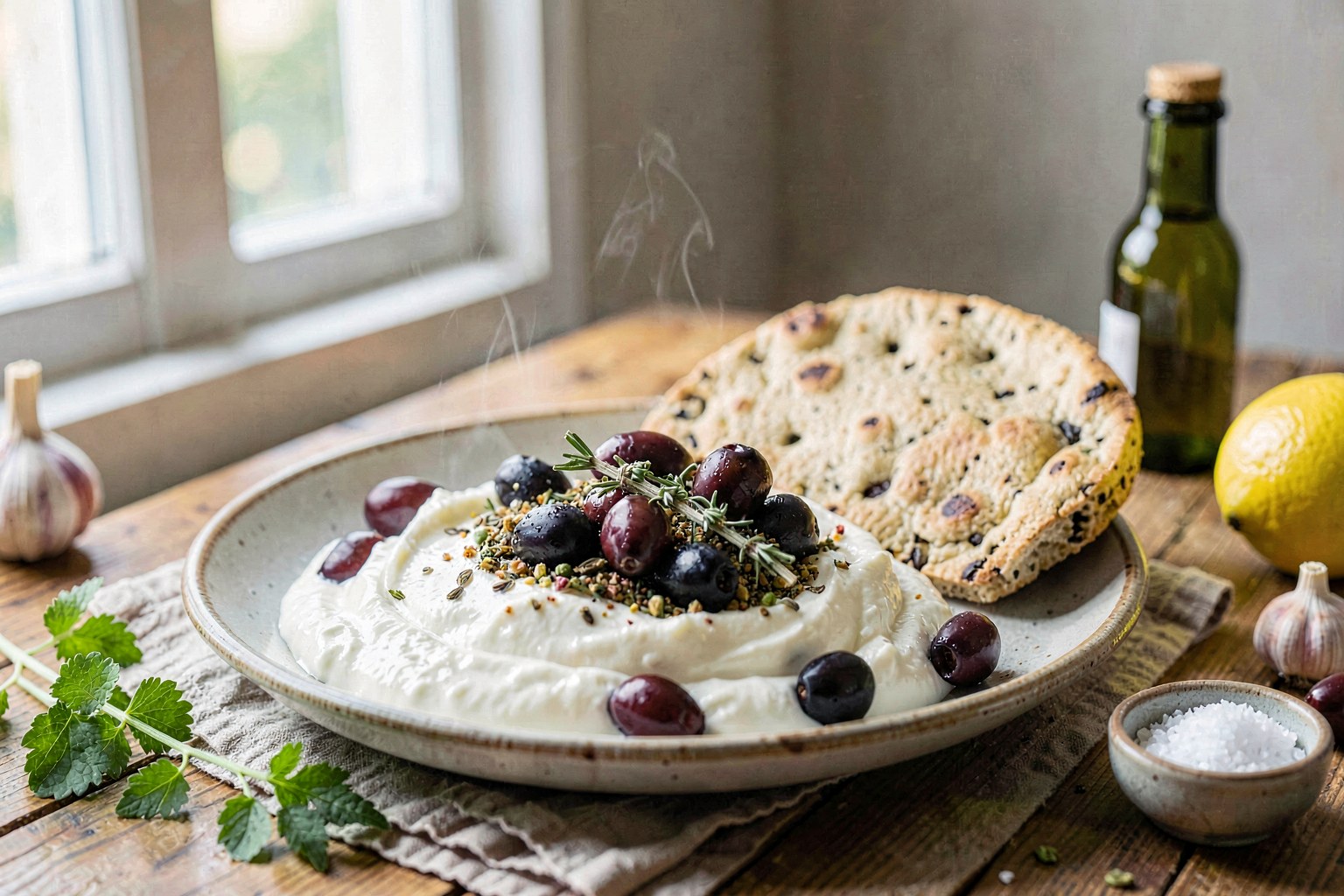
Creamy, tangy strained yogurt topped with herb-forward za'atar, high-polyphenol extra-virgin olive oil, and brine-cured olives. Served with warm sprouted grain pita for a breakfast rich in probiotics and healthy fats.
A little context
Rooted in Levantine tradition where yogurt is strained for hours to concentrate flavor and nutrients. We honor this by avoiding commercial za'atar blends that often hide seed oils or anti-caking agents, and by using sprouted flour pita instead of refined white bread.
The longevity story
This dish leverages the probiotics in fermented yogurt to support gut microbiome diversity and digestion. The extra-virgin olive oil and sumac (in the za'atar) provide potent polyphenols that combat oxidative stress and inflammation. Grass-fed dairy offers conjugated linoleic acid (CLA) and fat-soluble vitamins when sourced correctly.
Method
- 01
Strain the Yogurt
Line a fine-mesh strainer with cheesecloth over a bowl. Pour 500 g grass-fed yogurt into the cloth. Tie the corners and suspend over the bowl. Refrigerate for 12-24 hours to achieve a cream-cheese consistency. Discard whey or save for smoothies.
- 02
Prepare Za'atar
In a small bowl, mix 30 g dried thyme, 15 g ground sumac, and 15 g toasted sesame seeds. If buying pre-made, verify no seed oils or anti-caking agents are added. This blend provides the signature tang and antioxidant profile.
- 03
Warm the Pita
Preheat a cast-iron skillet over medium heat. Warm the sprouted pita for 1-2 minutes per side until pliable and slightly charred. Avoid toasting until brittle; you want steam-softness.
- 04
Assemble the Bowl
Scoop the thickened labneh into a shallow serving bowl. Create a well in the center. Drizzle generously with 60 ml extra-virgin olive oil. Sprinkle the za'atar blend liberally over the surface.
- 05
Add Olives and Garnish
Top with 100 g crushed kalamata olives. Scatter fresh mint leaves for a cooling contrast. Serve immediately with the warm pita on the side for dipping.
Nutrition facts
Per serving · 1 of 4- — Saturated
- 4 g
- — Polyunsaturated
- 2 g
- Carbohydrates
- 15 g
- — Fiber
- 3 g
- — Sugars
- 9 g
- Cholesterol
- 8 mg
- Sodium
- 276 mg
- Potassium
- 356 mg
Estimated from USDA FoodData Central for matched ingredients (67% ingredient coverage). Values vary with brand, preparation, and exact measurements.
Pro tips
- ✦Source yogurt with minimal ingredients: just milk and cultures. Avoid stabilizers like gelatin or carrageenan.
- ✦Make your own za'atar to ensure no sunflower or soybean oil is hidden in the blend.
- ✦Save the strained whey; it is rich in protein and can be used in smoothies or to cook grains.
- ✦Look for sumac with a deep red color; pale sumac is often old and lacks the necessary acidity.
Shop this recipe
As an Amazon Associate we earn from qualifying purchases.
Substitutions
- grass-fed yogurt → unsweetened coconut yogurt (ensure thick consistency; add chia seeds to thicken if needed)
- sprouted whole-grain pita → almond flour flatbread (for a grain-free, keto-friendly alternative)
Storage
keep strained yogurt in an airtight glass container in the fridge for up to 5 days; pita should be wrapped in linen and eaten within 24 hours
What to serve with it
- hot green tea with lemon
- sparkling water with fresh mint
- black coffee without sweetener
FAQ
Can I use store-bought labneh?+
Only if the label confirms no seed oils, stabilizers, or added sugar. Homemade is preferred for control over the fat quality.
Is dairy allowed on a Blueprint diet?+
Yes, if it is organic, grass-fed, and full-fat. The focus is on quality sourcing and avoiding inflammatory additives.
Share this recipe
Notes from the community
Sign in to leave a note.
No notes yet — be the first.
You might also like