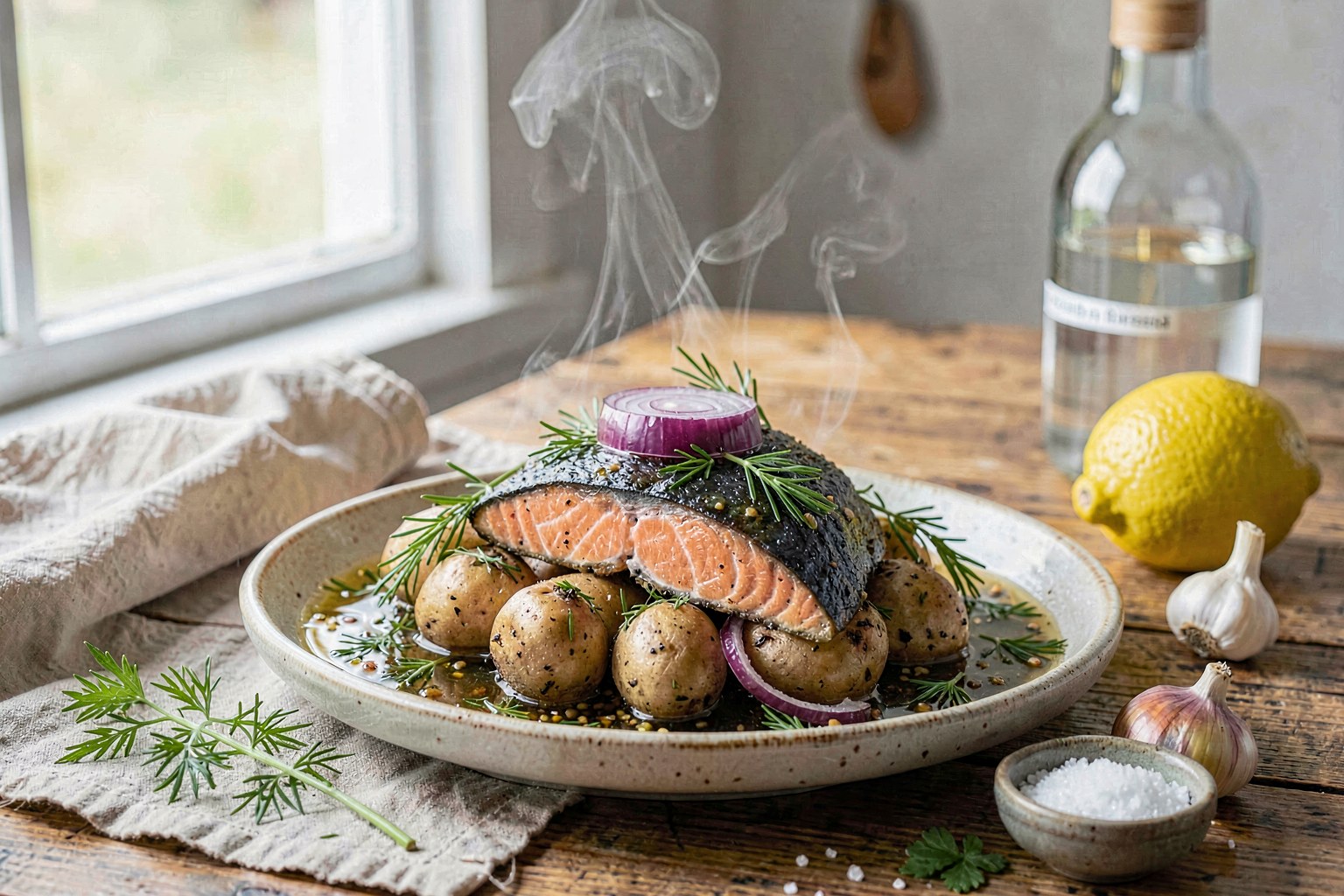
Nordic Clean Laksesild (Wild Cured Salmon)
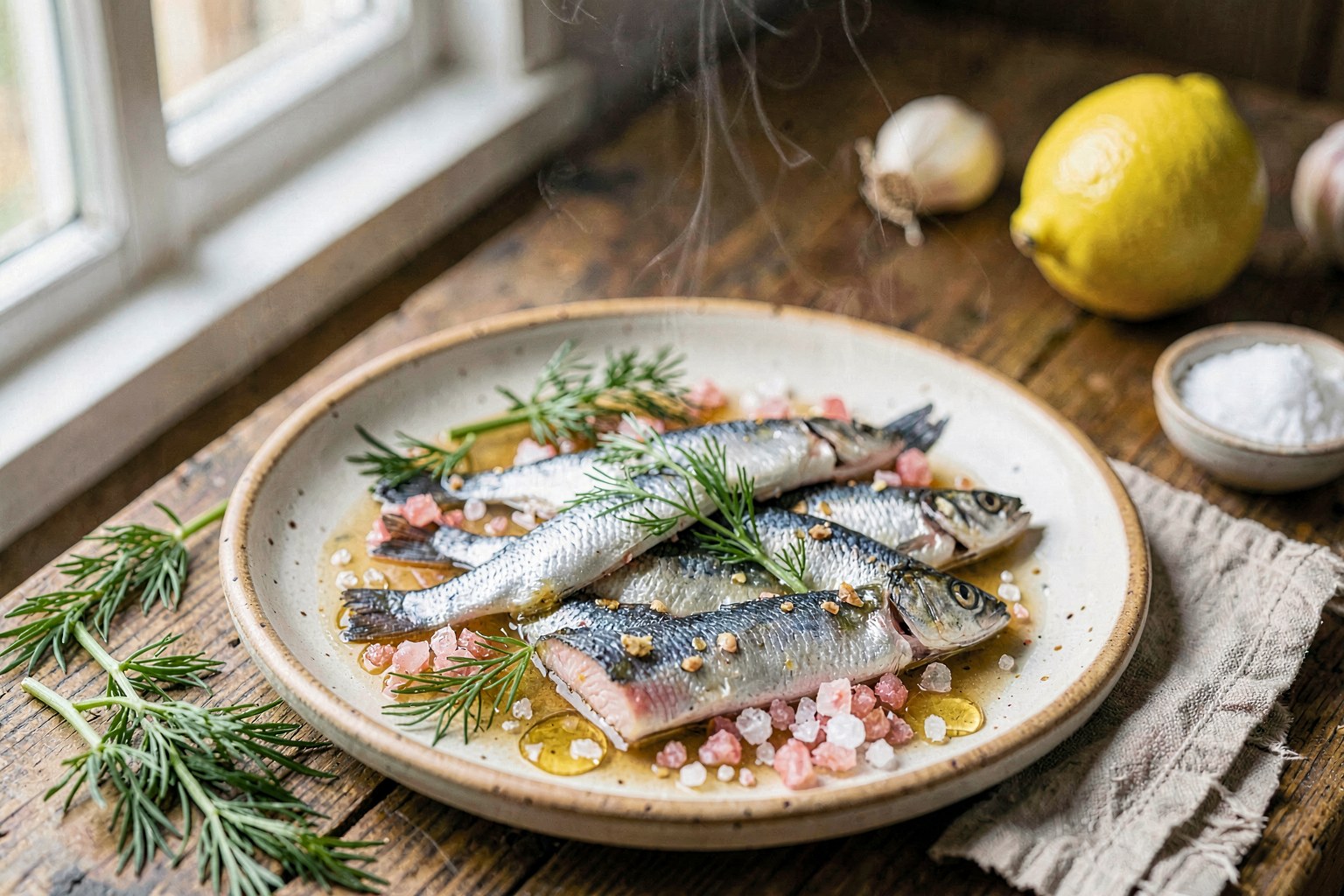
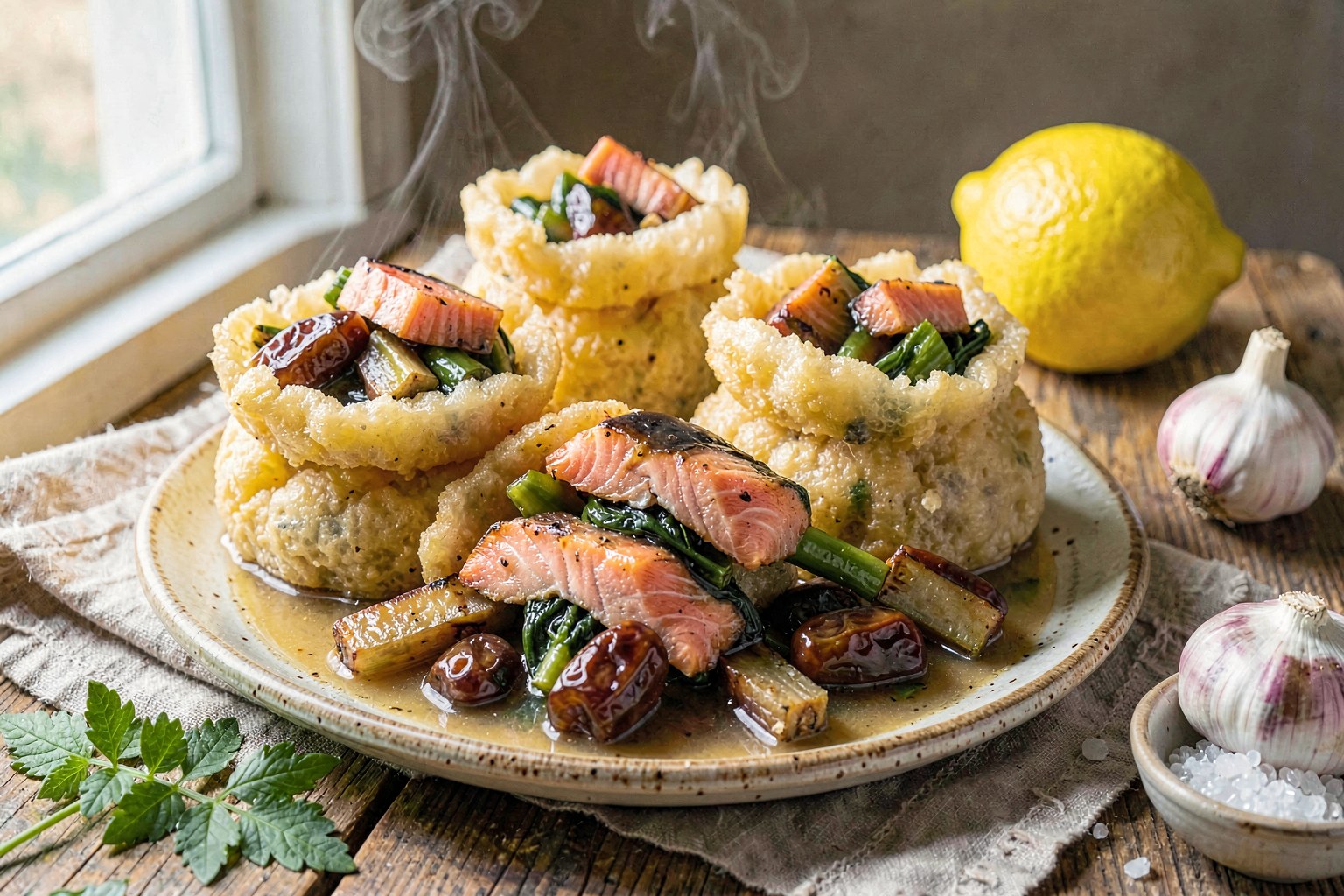
A modern interpretation of the Danish classic, featuring wild-caught salmon cured in a tangy, polyphenol-rich brine with fresh dill and red onion. Served atop crisp roasted tubers and topped with a sugar-free lingonberry compote for a balance of savory, acidic, and tart flavors.
A little context
Traditional Laksesild is a staple of Danish smørrebrød, typically cured in vinegar and sugar. We honor this heritage by using a vinegar cure but replace refined sugar with date syrup to avoid glycemic spikes. While traditional sild often uses herring, we prioritize wild-caught salmon for its superior omega-3 profile and lower contaminant load, aligning with longevity-focused nutrition.
The longevity story
This dish centers on wild-caught salmon, providing high-quality EPA and DHA omega-3s essential for cardiovascular and cognitive function. The apple cider vinegar brine supports digestion and blood sugar regulation, while the lingonberries and extra-virgin olive oil deliver anthocyanins and oleocanthal for potent antioxidant protection. Fresh dill adds carotenoids and supports liver detoxification pathways.
Method
- 01
Prepare the brine
In a small saucepan, combine the apple cider vinegar, water, date syrup, and sea salt. Warm gently over low heat just until the salt and syrup dissolve (do not boil). Allow to cool completely to room temperature.
- 02
Slice and cure the salmon
Using a sharp knife or mandoline, slice the wild-caught salmon into 1cm thick strips. Place in a glass dish, layer with the red onion half-moons and chopped dill. Pour the cooled brine over the top, ensuring all fish is submerged. Cover and refrigerate for at least 2 hours, or up to 24 hours.
- 03
Roast the potatoes
Preheat oven to 200°C (400°F). Toss the halved fingerling potatoes with extra-virgin olive oil and sea salt. Place cut-side down in a hot cast-iron skillet. Roast for 30-40 minutes until golden and crisp on the bottom and tender inside.
- 04
Make the compote
While potatoes roast, combine lingonberries and date syrup in a small saucepan. Simmer over low heat for 10 minutes until berries burst and form a loose jam. Cool to room temperature.
- 05
Assemble
Remove salmon from the brine and drain excess liquid. Arrange the cured salmon and onion-dill mixture over the hot crisp potatoes. Top with a spoonful of lingonberry compote and extra fresh dill. Serve immediately.
Nutrition facts
Per serving · 1 of 4- — Saturated
- 2 g
- — Polyunsaturated
- 2 g
- Carbohydrates
- 14 g
- — Fiber
- 2 g
- — Sugars
- 9 g
- Cholesterol
- 64 mg
- Sodium
- 1559 mg
- Potassium
- 662 mg
Estimated from USDA FoodData Central for matched ingredients (75% ingredient coverage). Values vary with brand, preparation, and exact measurements.
Pro tips
- ✦Source wild-caught sockeye specifically; avoid farmed salmon as it often contains artificial colorants and has a lower omega-3 profile.
- ✦Ensure the apple cider vinegar is organic and unpasteurized to retain the 'mother' for gut health benefits.
- ✦Slice the salmon against the grain for a more tender texture.
- ✦Do not skip the cooling step for the brine; hot liquid will cook the fish instead of curing it.
Shop this recipe
As an Amazon Associate we earn from qualifying purchases.
Substitutions
- wild-caught sockeye salmon → wild Arctic char or rainbow trout (same fat profile, similar sear and cure time)
- lingonberries → high-quality dried cranberries (soak in warm water for 10 mins first to rehydrate)
Storage
Store cured fish and potatoes separately in glass containers in the fridge for up to 3 days. The fish may become firmer over time. Do not freeze the cured fish as texture will degrade.
What to serve with it
- Dry Riesling or Grüner Veltliner wine
- Sparkling water with lemon and mint
- Matcha green tea
- Unsweetened kefir
FAQ
Can I use farmed salmon?+
You can, but the omega-3 profile is significantly weaker and the feed is typically corn/soy-based. Wild-caught is the point of this recipe for longevity benefits.
Is this actually fermented?+
Traditional Laksesild is vinegar-cured (pickled), not lacto-fermented. We use vinegar with the 'mother' to support gut microbiome balance without the long wait time of true fermentation.
Share this recipe
Notes from the community
Sign in to leave a note.
No notes yet — be the first.
You might also like