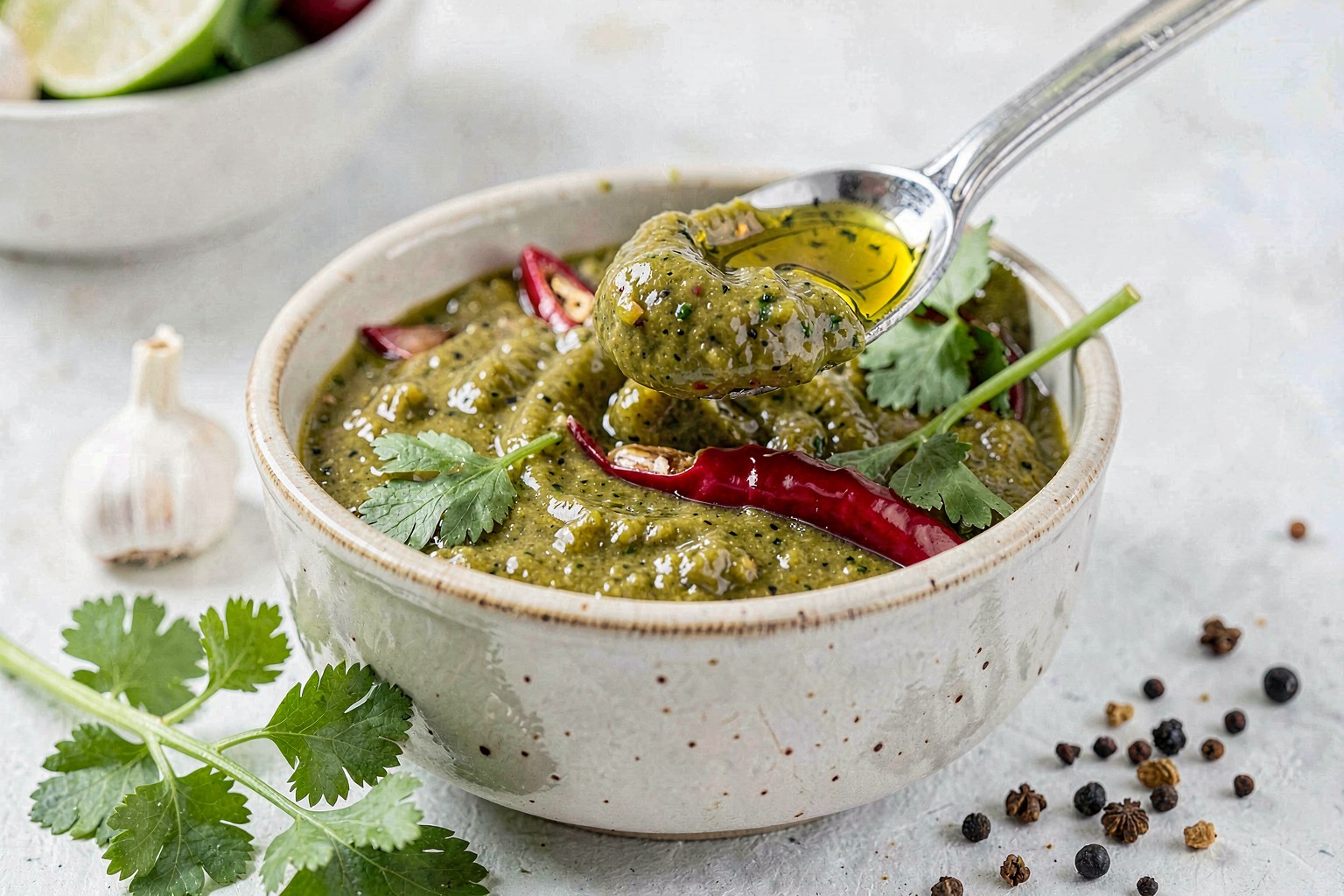
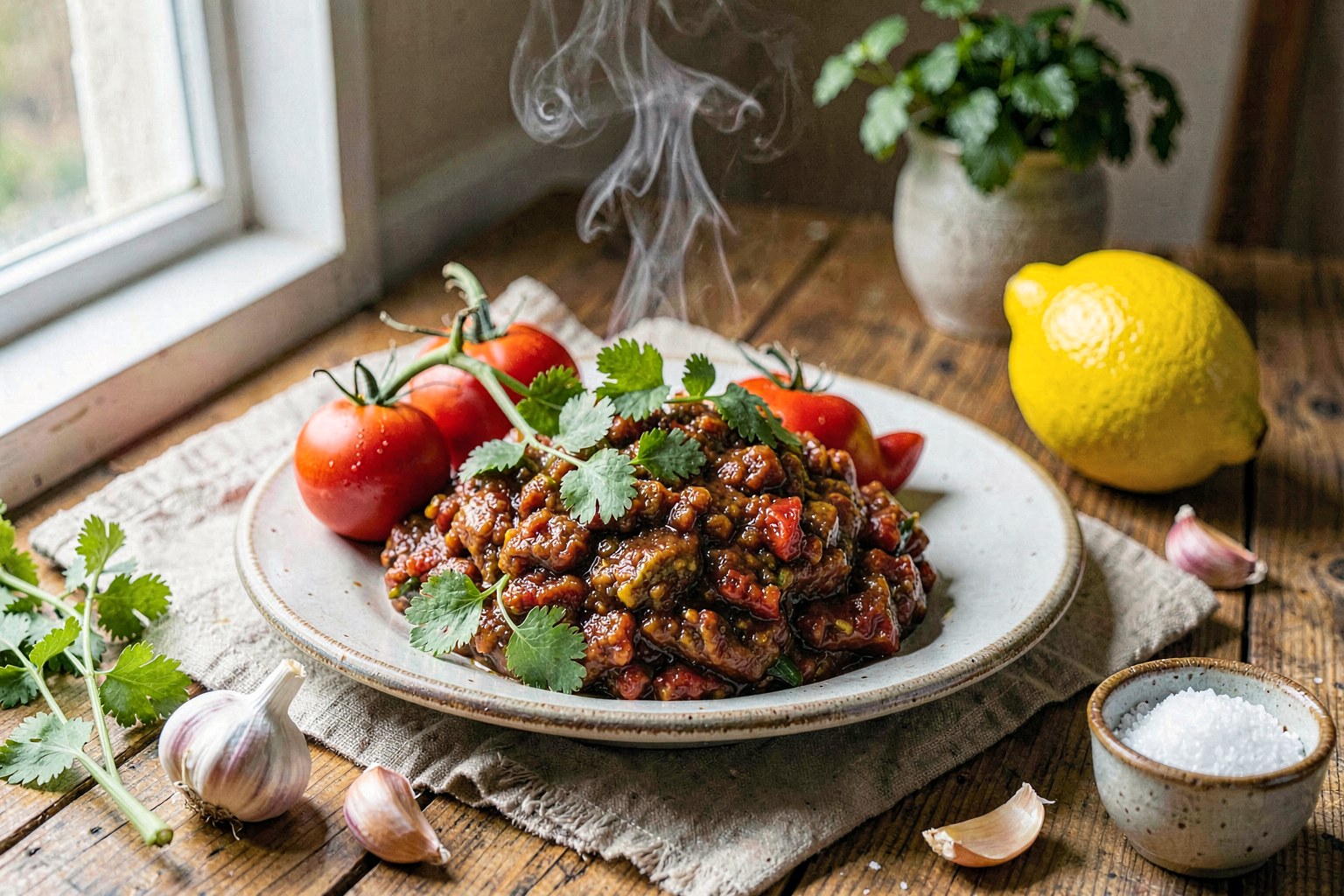
Llajua de la Sierra (Peruvian Andean Chili Paste)
This vibrant, fiery condiment from the Bolivian and Peruvian highlands transforms simple meals with the intense heat of fresh rocoto peppers and the earthy depth of wild herbs. Crafted without refined sugars or industrial seed oils, it relies on the natural sweetness of ripe tomatoes and the anti-inflammatory power of extra-virgin olive oil to balance the heat, creating a polyphenol-rich sauce that honors ancient Andean preservation techniques.
A little context
Llajua is a staple of the Andean highlands, traditionally made in a stone molcajete or clay pot with local rocoto peppers, locoto, and herbs like huacatay. While some modern adaptations add sugar to balance acidity, this version relies on the natural fructose of fully ripe, vine-ripened tomatoes and a splash of raw apple cider vinegar for brightness, strictly adhering to the Blueprint philosophy of avoiding refined sugars. We have replaced any industrial vegetable oils often used in commercial versions with cold-pressed, polyphenol-dense extra-virgin olive oil to protect the heat-sensitive nutrients.
The longevity story
The core of this recipe is the synergy between capsaicin from fresh rocoto peppers and lycopene from ripe, sun-ripened tomatoes, both potent anti-inflammatory compounds. Capsaicin boosts metabolic rate and supports gut motility, while the tomatoes, when gently cooked in extra-virgin olive oil, release their bioavailable antioxidants more effectively than when raw. The addition of fresh epazote or culantro provides eugenol, a compound with natural analgesic and digestive properties, making this a functional food that aids digestion while adding complex flavor.
Method
- 01
Prepare the aromatics
Wear gloves to handle the rocoto peppers. Remove stems and slice open; scrape out the white membranes and seeds to control the heat level (keep them for maximum fire). Roughly chop the peppers, garlic, cilantro, and epazote.
- 02
Roast the tomatoes
Place the quartered tomatoes on a baking sheet. Roast in the oven at 200°C (400°F) for 20-25 minutes until the skins blister and the flesh is soft. This concentrates the natural sugars and deepens the flavor profile without adding any refined sweeteners.
- 03
Grind the base
In your stone molcajete, combine the roasted tomatoes, garlic, and a pinch of salt. Grind in a circular motion until a coarse paste forms. This mechanical action breaks down the cell walls, releasing the lycopene and allicin.
- 04
Incorporate the heat and herbs
Add the chopped rocoto peppers to the mortar. Continue grinding until the peppers are fully integrated but still retain a slight texture. Fold in the fresh cilantro and epazote, crushing them gently just enough to bruise the leaves and release their oils.
- 05
Simmer and emulsify
Transfer the mixture to a small saucepan. Add the extra-virgin olive oil and raw apple cider vinegar. Place over low heat and simmer gently for 15-20 minutes, stirring occasionally. Do not let it boil vigorously, as this degrades the delicate polyphenols in the oil and herbs.
- 06
Adjust and rest
Taste the llajua. If it needs more brightness, add a few drops of vinegar. If it is too sharp, let it cool completely; the flavors will mellow and meld as it sits at room temperature for at least 1 hour before serving.
Nutrition facts
Per serving · 1 of 4- — Saturated
- 2 g
- — Polyunsaturated
- 2 g
- Carbohydrates
- 9 g
- — Fiber
- 3 g
- — Sugars
- 4 g
- Cholesterol
- 0 mg
- Sodium
- 762 mg
- Potassium
- 364 mg
Estimated from USDA FoodData Central for matched ingredients (88% ingredient coverage). Values vary with brand, preparation, and exact measurements.
Pro tips
- ✦Always wear nitrile gloves when handling rocoto or habanero peppers; the capsaicin oil can cause severe burning if it touches your eyes or sensitive skin.
- ✦Source your rocoto peppers from a Latin American grocer or grow them yourself; if unavailable, habaneros provide the closest fruit-forward heat profile.
- ✦The quality of the olive oil is paramount here; use a high-polyphenol, early-harvest EVOO stored in a dark glass bottle to ensure the health benefits remain intact.
- ✦For the most authentic texture, avoid using a blender; the stone molcajete creates a rustic, textured paste that holds the oil better than a smooth puree.
- ✦Let the llajua rest in the fridge for 24 hours before serving; the flavors will deepen and the heat will distribute more evenly throughout the batch.
Shop this recipe
As an Amazon Associate we earn from qualifying purchases.
Substitutions
- rocoto peppers → fresh habanero or red serrano peppers (habanero offers similar fruity heat; serrano is milder and less fruity but more accessible.)
- epazote → fresh culantro (recao) or a pinch of dried oregano (culantro has a similar earthy, citrusy profile; dried oregano is a last resort but adds distinct flavor.)
- extra-virgin olive oil → avocado oil (avocado oil has a higher smoke point and neutral flavor, though it lacks the specific polyphenol profile of EVOO.)
Storage
Store in a sterilized glass jar in the refrigerator, covered with a thin layer of olive oil to prevent oxidation. Keeps for up to 2 weeks. Can be frozen in ice cube trays for up to 3 months.
What to serve with it
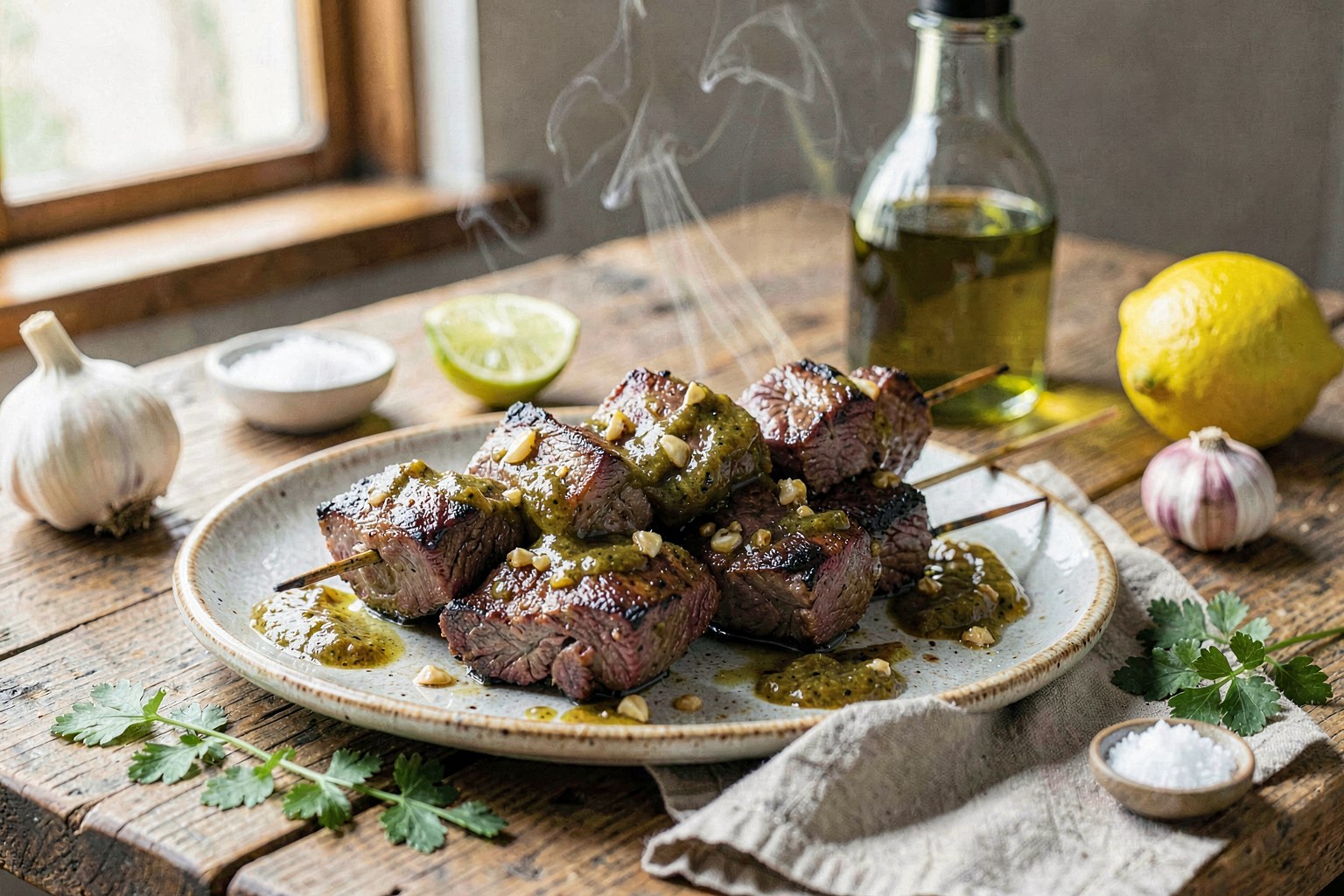
- Serve alongside grilled wild-caught salmon or pasture-raised chicken.
- Pair with steamed quinoa or roasted sweet potatoes.
- Enjoy with a glass of sparkling water with a wedge of lime or a dry, low-sugar red wine.
- Perfect accompaniment to a bowl of lentil stew or roasted root vegetables.
FAQ
Can I make this ahead of time?+
Yes, llajua actually improves with time. The flavors meld and the heat becomes more integrated after 24 hours in the fridge.
Is this recipe spicy?+
The heat level is entirely customizable. Removing the seeds and membranes of the rocoto peppers significantly reduces the capsaicin content while retaining the flavor.
Why use stone grinding instead of a blender?+
Blenders generate heat and shear the ingredients too finely, which can oxidize the oils and destroy the delicate texture. A molcajete preserves the integrity of the fresh ingredients.
Share this recipe
Notes from the community
Sign in to leave a note.
No notes yet — be the first.
You might also like