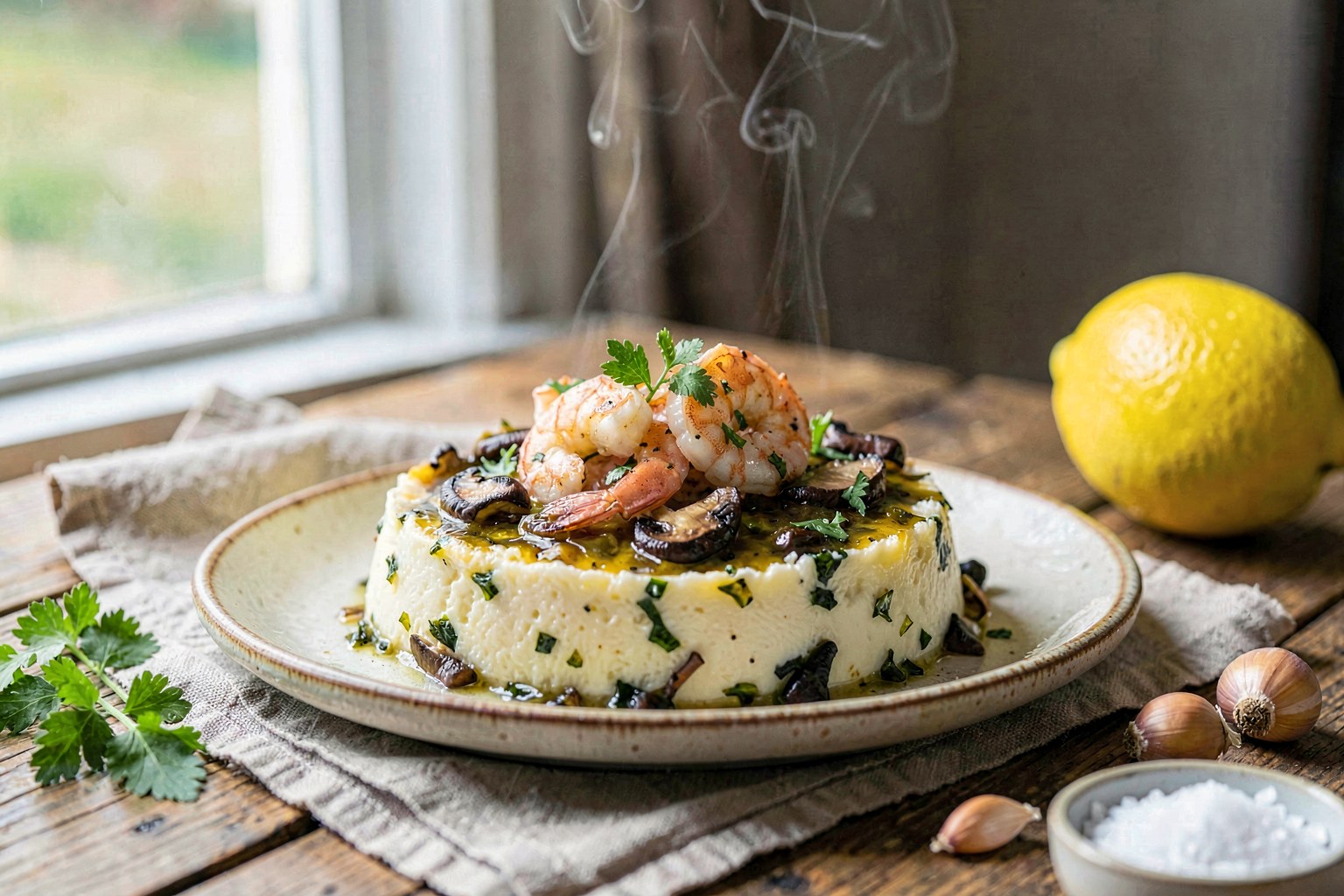
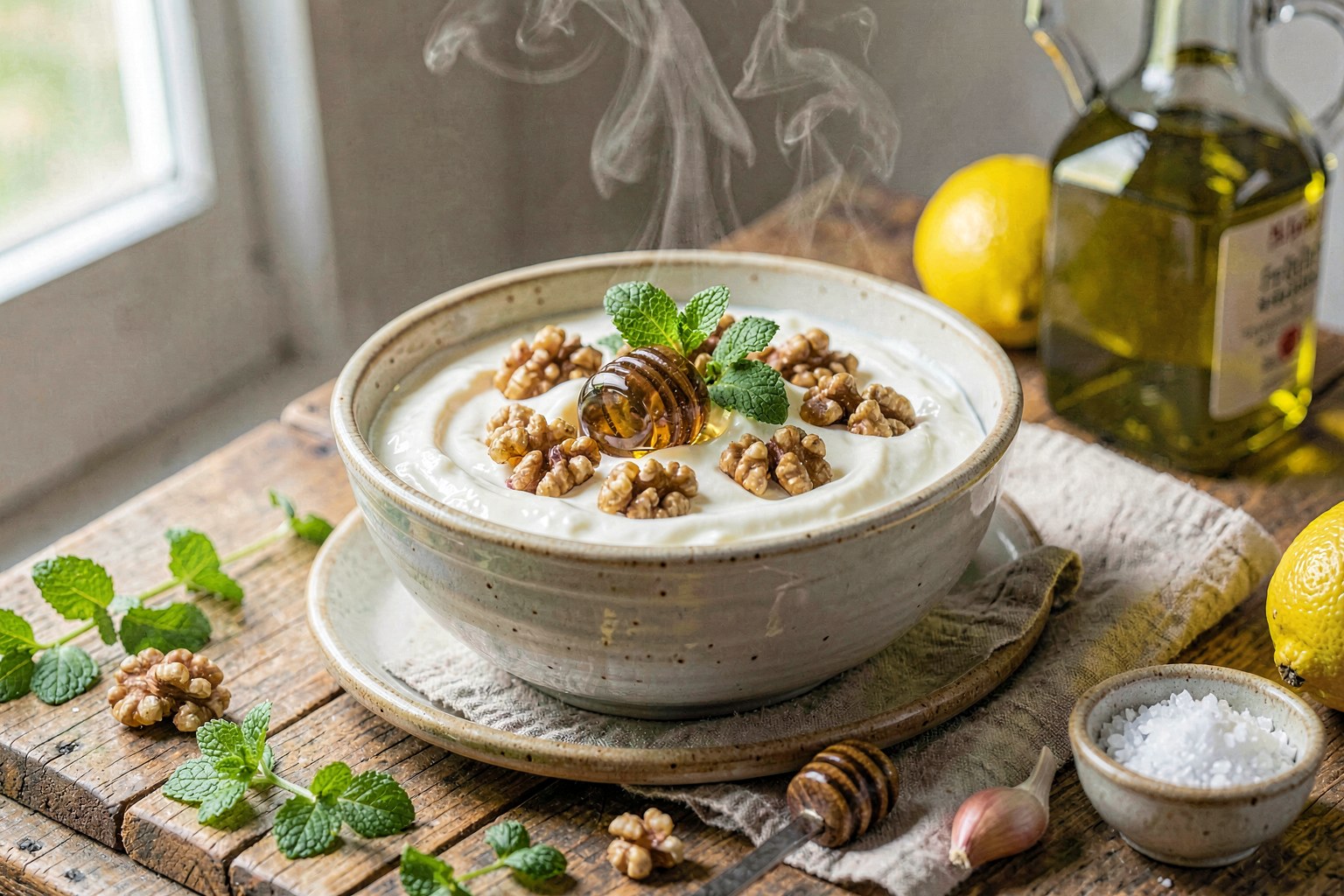
Sun-Drenched Za'atar Manakish with Cold-Pressed Olive Oil
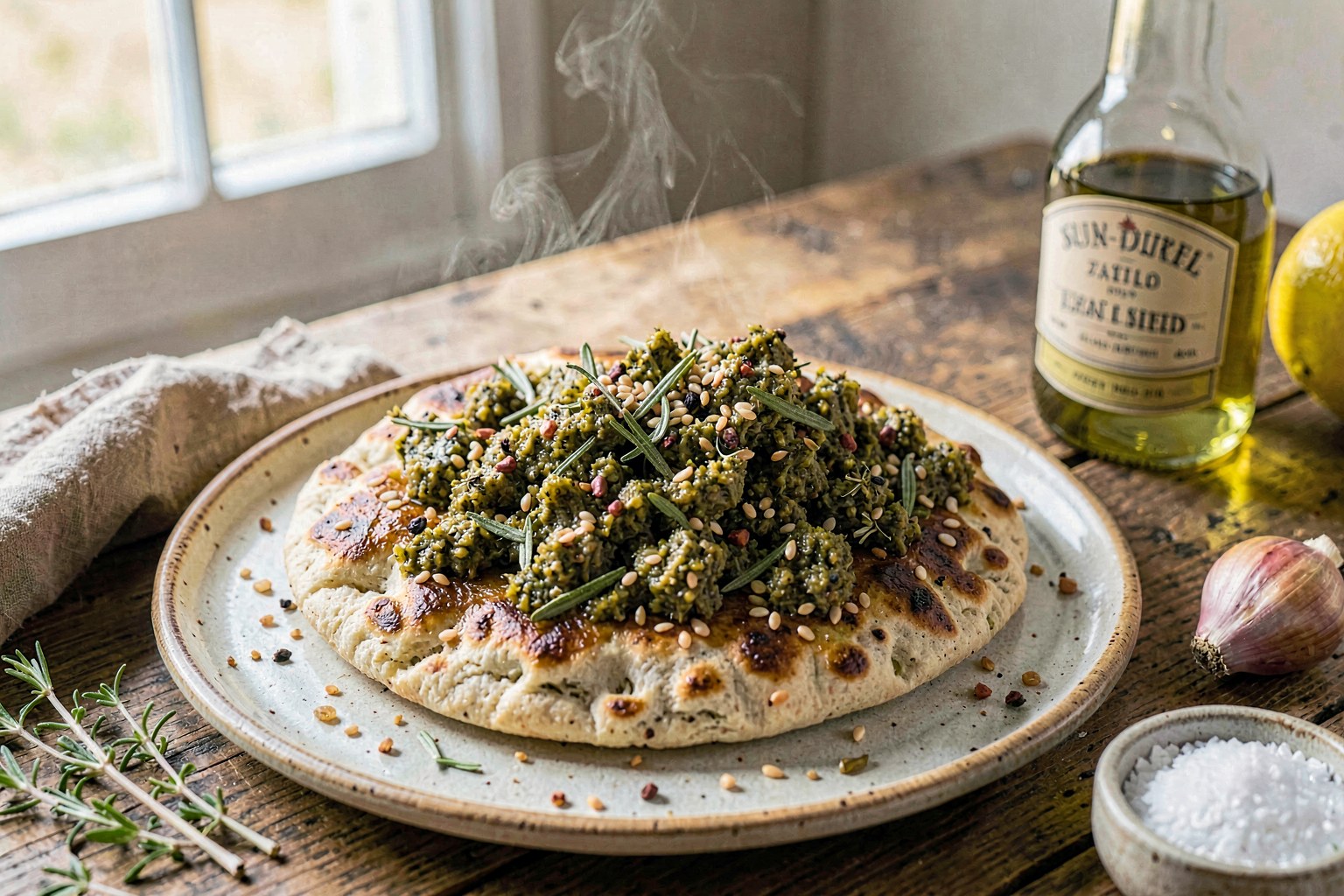
This Levantine breakfast features a chewy, sprouted-wheat flatbread blistered in a scorching hot oven and slathered with a vibrant paste of wild thyme, sumac, and toasted sesame seeds. The bread is crisped to perfection and drenched in high-polyphenol extra-virgin olive oil, delivering a savory, herbaceous flavor profile that fuels the body without spiking blood sugar.
A little context
Manakish is the traditional morning bread of the Levant, historically baked in communal stone ovens and eaten by hand before the sun fully rises. We honor this tradition by using a high-heat home oven to mimic the stone oven's crust and strictly adhering to the original fat profile of pure olive oil, eliminating the seed oils and refined sugars often found in modern commercial versions. The dough is leavened with a simple sourdough starter or yeast to ensure digestibility, avoiding the ultra-processed shortcuts of instant dough mixes.
The longevity story
The nutritional power of this dish lies in the synergy of its components: sumac and wild thyme provide potent antioxidants and anti-inflammatory compounds, while the generous dose of extra-virgin olive oil delivers oleocanthal, a natural anti-inflammatory agent similar to ibuprofen. The use of sprouted flour increases bioavailability of minerals like zinc and magnesium and reduces phytic acid, supporting better gut health and nutrient absorption. Toasted sesame seeds contribute calcium and healthy fats, rounding out a meal that stabilizes energy levels rather than causing a crash.
Method
- 01
Activate the yeast
In a small bowl, whisk the warm water, yeast, and a pinch of the spelt flour. Let sit for 10 minutes until foamy and fragrant. If it doesn't bubble, your yeast is dead; discard and start over.
- 02
Mix the dough
In a large mixing bowl, combine the remaining spelt flour and sea salt. Add the yeast mixture and the 15 ml olive oil. Mix with a wooden spoon until a shaggy dough forms, then turn out onto a lightly floured surface.
- 03
Knead to elasticity
Knead by hand for 8–10 minutes until the dough is smooth, elastic, and passes the windowpane test (stretches thin without tearing). It should be slightly tacky but not sticky. Avoid adding excess flour, which dries out the bread.
- 04
First rise
Place the dough in a lightly oiled bowl, cover with a damp cloth, and let rise at room temperature for 1–1.5 hours, or until doubled in size. For better flavor development, you can refrigerate this for 24 hours and let it come to room temp before shaping.
- 05
Preheat the oven
Position a rack in the lower third of the oven. Place your pizza stone or steel inside and preheat to the maximum temperature (260°C / 500°F) for at least 45 minutes. The stone must be screaming hot.
- 06
Prepare the za'atar paste
In a small bowl, mix the 100g za'atar blend with the 60 ml extra-virgin olive oil. It should have the consistency of a loose paste, not a dry powder. Stir in the optional toasted sesame seeds now if using.
- 07
Divide and shape
Punch down the risen dough and divide it into 4 equal balls. On a lightly floured surface, stretch or roll each ball into a thin oval or round, about 3–4 mm thick. Do not over-flour; the surface should be tacky enough to hold the topping.
- 08
Apply the topping
Working quickly, spread a generous layer of the za'atar paste over the entire surface of the dough, leaving a tiny border if you prefer a crust. The oil will soak into the dough immediately.
- 09
Bake to blister
Slide the manakish onto the preheated stone. Bake for 8–12 minutes until the edges are deeply golden brown and the oil is bubbling. The top should look slightly crisp, not soggy.
- 10
Serve immediately
Remove from the oven and drizzle with an extra teaspoon of high-quality olive oil if desired. Serve warm, torn by hand, alongside fresh labneh or sliced cucumbers and tomatoes.
Nutrition facts
Per serving · 1 of 4- — Saturated
- 7 g
- — Polyunsaturated
- 3 g
- Carbohydrates
- 21 g
- — Fiber
- 4 g
- — Sugars
- 0 g
- Cholesterol
- 24 mg
- Sodium
- 567 mg
- Potassium
- 164 mg
Estimated from USDA FoodData Central for matched ingredients (100% ingredient coverage). Values vary with brand, preparation, and exact measurements.
Pro tips
- ✦Sourcing the za'atar is critical: look for blends where the sumac has a deep burgundy color and the thyme is dark green, not faded gray; this indicates high polyphenol content.
- ✦Do not skip the preheating time for the stone; a cold stone results in a dense, doughy interior rather than a light, airy crumb.
- ✦If your dough feels too dry while kneading, wet your hands with water rather than adding more flour to maintain the hydration balance.
- ✦For the ultimate Blueprint alignment, choose an EVOO with a polyphenol count over 400mg/kg, often labeled as 'early harvest' or 'high polyphenol'.
- ✦If you don't have a pizza stone, flip a heavy baking sheet upside down and preheat it to mimic the stone's thermal mass.
Shop this recipe
As an Amazon Associate we earn from qualifying purchases.
Substitutions
- sprouted spelt flour → sprouted einkorn or organic whole wheat flour (einkorn has a lower gluten content and is often easier to digest; whole wheat yields a nuttier, heartier bread.)
- active dry yeast → 100g active sourdough starter (substitute the water weight accordingly; requires a longer fermentation time (4–8 hours) for the best flavor and gut benefits.)
- extra-virgin olive oil → avocado oil (high heat only) (avocado oil is neutral but lacks the specific polyphenols of EVOO; EVOO is preferred for the health profile.)
Storage
Store cooled manakish in an airtight glass container or beeswax wrap in the fridge for up to 3 days. Reheat in a toaster oven or skillet to restore crispness. Freeze individually wrapped for up to 2 months.
What to serve with it
- Freshly brewed green tea or matcha
- Sparkling water with a wedge of lemon and mint
- Homemade fermented labneh with cucumber slices
- A small bowl of fresh berries for a polyphenol boost
FAQ
Can I make this gluten-free?+
Yes, substitute the spelt flour with a high-quality 1:1 gluten-free blend (like those using brown rice flour and tapioca starch), but note the texture will be more crumbly and less chewy.
Why does my manakish turn out soggy?+
This usually happens if the oven isn't hot enough or the stone wasn't preheated long enough. The heat must be intense enough to cook the dough faster than the oil can soak in and make it heavy.
Is za'atar naturally gluten-free?+
Most traditional blends are, but some commercial brands add wheat flour as a filler. Always read the label to ensure it contains only herbs, sumac, sesame, and salt.
Share this recipe
Notes from the community
Sign in to leave a note.
No notes yet — be the first.
You might also like