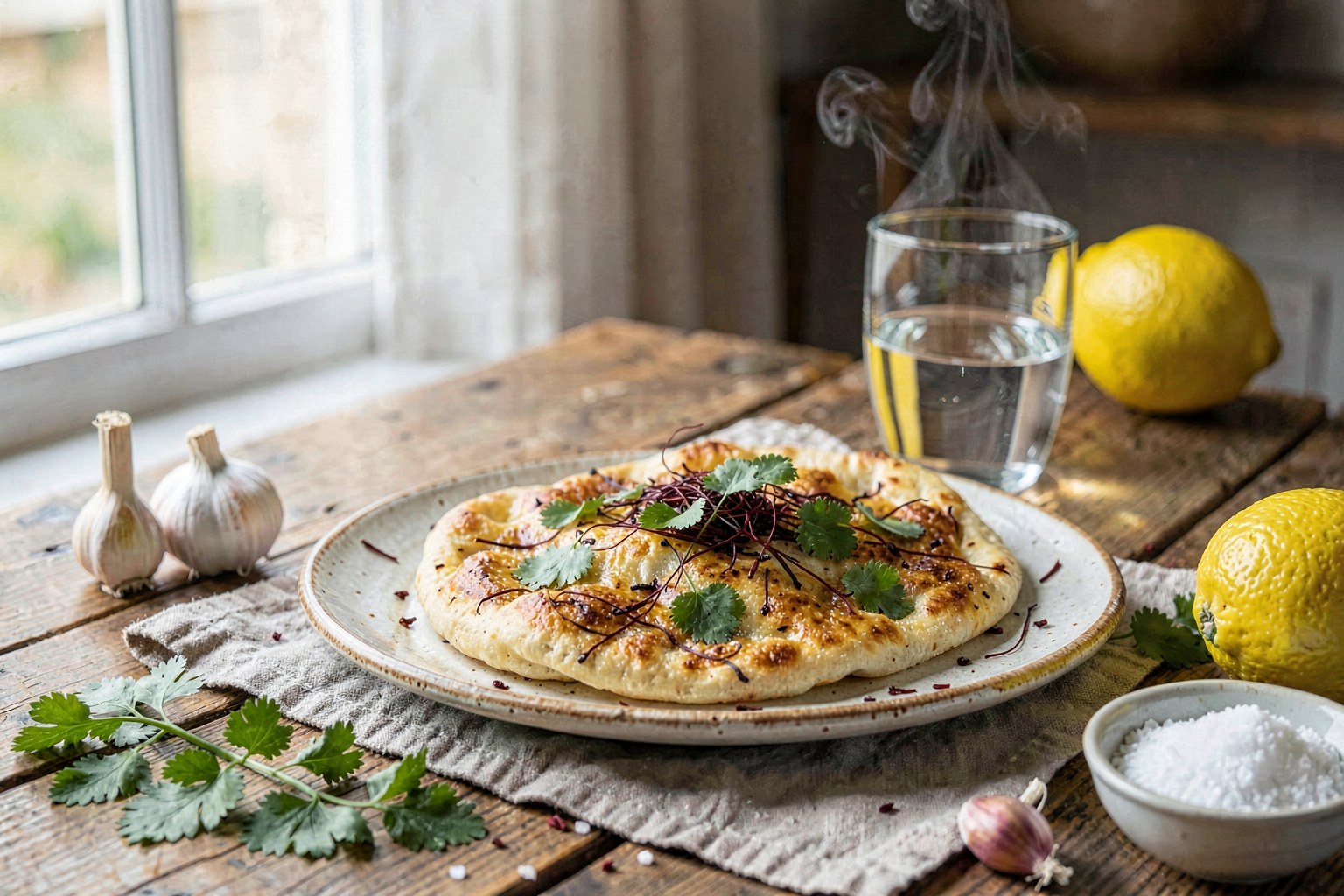
Nan-e Saffron-e Kashan (Persian Saffron & Cilantro Flatbread)
A golden, aromatic flatbread from the Kashan tradition, enriched with toasted saffron threads and fresh cilantro, then shallow-fried in grass-fed ghee. This savory morning bite offers a complex floral aroma and a tender, slightly chewy texture without a trace of refined sugar or industrial seed oils.
A little context
Originating from the historic city of Kashan, Iran, this bread was traditionally made for tea time or festive mornings. We honor the tradition by using the authentic spice blend of saffron and cardamom but have stripped out the refined sugar often added to modern versions and replaced industrial seed oils with nutrient-dense grass-fed ghee. The result is a purer expression of the saffron's floral notes, suitable for a longevity-focused diet.
The longevity story
This recipe leverages the potent crocins and safranal in saffron, compounds proven to support mood regulation and act as strong antioxidants. The use of grass-fed ghee provides butyrate for gut lining repair and fat-soluble vitamins (A, D, K2) in a stable cooking medium. Fresh cilantro adds chlorophyll and heavy-metal chelation properties, while the whole-grain spelt flour offers a lower glycemic impact and more fiber than white flour, supporting sustained energy release.
Method
- 01
Bloom the Saffron
In a small bowl, crush the saffron threads with the mortar and pestle until they are a fine powder. Add 2 tbsp of warm water and the ground cardamom. Let this steep for 15 minutes until the water turns a deep, vibrant gold. This step extracts the water-soluble crocins.
- 02
Mix the Dough
In a large mixing bowl, combine the sprouted spelt flour and sea salt. Pour in the warm saffron-cardamom mixture and the melted grass-fed ghee. Begin mixing, then gradually add the remaining warm water. Knead by hand for 5-7 minutes until a smooth, slightly tacky dough forms. It should not be sticky, but soft.
- 03
Rest and Hydrate
Cover the bowl with a damp linen cloth and let the dough rest at room temperature for 30 minutes. This allows the gluten in the spelt to relax and the flour to fully hydrate, ensuring a tender crumb.
- 04
Add the Herbs
Uncover the dough and gently fold in the finely chopped fresh cilantro. Do not overwork the dough at this stage; just distribute the herbs evenly. The green flecks will contrast beautifully with the golden saffron dough.
- 05
Portion and Shape
Divide the dough into 8 equal pieces (approx. 75g each). Roll each piece into a ball, then cover and rest for another 10 minutes. On a lightly floured surface (use extra spelt flour), roll each ball into a thin oval or circle, about 3-4 mm thick. Do not make them too thick, or they will not crisp up properly.
- 06
Prepare the Pan
Heat your cast-iron skillet over medium heat. Add 1 tbsp of extra-virgin olive oil and 1 tbsp of melted ghee. Wait until the ghee foams slightly but does not smoke. The fat should coat the bottom of the pan generously.
- 07
Shallow Fry
Place one rolled-out flatbread into the hot pan. Cook for 2-3 minutes until the bottom is golden brown and speckled with dark spots. Flip carefully using a spatula.
- 08
Finish and Serve
Cook the second side for another 2 minutes until golden and cooked through. Remove to a wire rack (do not stack while hot, or they will steam and get soggy). Repeat with remaining dough, adding more ghee and oil to the pan as needed. Serve warm with plain full-fat yogurt and a drizzle of raw honey if desired.
Nutrition facts
Per serving · 1 of 4- — Saturated
- 10 g
- — Polyunsaturated
- 1 g
- Carbohydrates
- 21 g
- — Fiber
- 3 g
- — Sugars
- 0 g
- Cholesterol
- 45 mg
- Sodium
- 6 mg
- Potassium
- 138 mg
Estimated from USDA FoodData Central for matched ingredients (100% ingredient coverage). Values vary with brand, preparation, and exact measurements.
Pro tips
- ✦Sourcing saffron: Buy from a reputable spice merchant that lists the country of origin (Iran is the gold standard) and look for 'Sargol' grade, which is pure red stigma without the yellow style that adds bitterness.
- ✦Do not rush the saffron steep; the heat and water time are what unlock the antioxidant capacity and the signature golden hue.
- ✦If the dough feels too dry after resting, add water 1 tablespoon at a time; spelt flour absorbs moisture differently depending on the humidity.
- ✦Serve immediately with a side of fermented vegetables or plain yogurt to add a probiotic boost to the meal.
Shop this recipe
As an Amazon Associate we earn from qualifying purchases.
Substitutions
- sprouted spelt flour → whole grain einkorn flour (einkorn is an ancient grain with better digestibility and lower gluten content, excellent for those sensitive to modern wheat.)
- grass-fed ghee → pastured butter (ensure the butter is unsalted; ghee is preferred for higher smoke point, but butter works if heat is managed carefully.)
- fresh cilantro → fresh flat-leaf parsley (parsley offers a different, slightly more peppery flavor profile but still provides high chlorophyll content.)
Storage
Store cooled flatbreads in an airtight glass container in the refrigerator for up to 3 days. Reheat in a dry cast-iron skillet for 1 minute per side to restore crispness. They freeze well wrapped individually in parchment paper for up to 2 months.
What to serve with it
- Hot green tea (sencha or matcha) to complement the saffron and boost polyphenol intake
- Plain, full-fat Greek yogurt or skyr with a few crushed walnuts
- Fresh cucumber slices and radish
- Sparkling water with a squeeze of lemon and a drop of stevia
FAQ
Can I use saffron powder instead of threads?+
It is possible, but ensure it is 100% pure saffron with no fillers. Threads are preferable because they are harder to adulterate and release flavor more slowly and deeply when crushed.
Why use ghee instead of oil?+
Ghee contains no milk solids, making it lactose-free and heat-stable, while providing butyrate for gut health. It also carries the saffron flavor better than neutral seed oils.
Is spelt gluten-free?+
No, spelt contains gluten, though it is an ancient grain often better tolerated than modern wheat. For a gluten-free version, use a blend of almond and cassava flour, though the texture will be denser.
Share this recipe
Notes from the community
Sign in to leave a note.
No notes yet — be the first.
You might also like