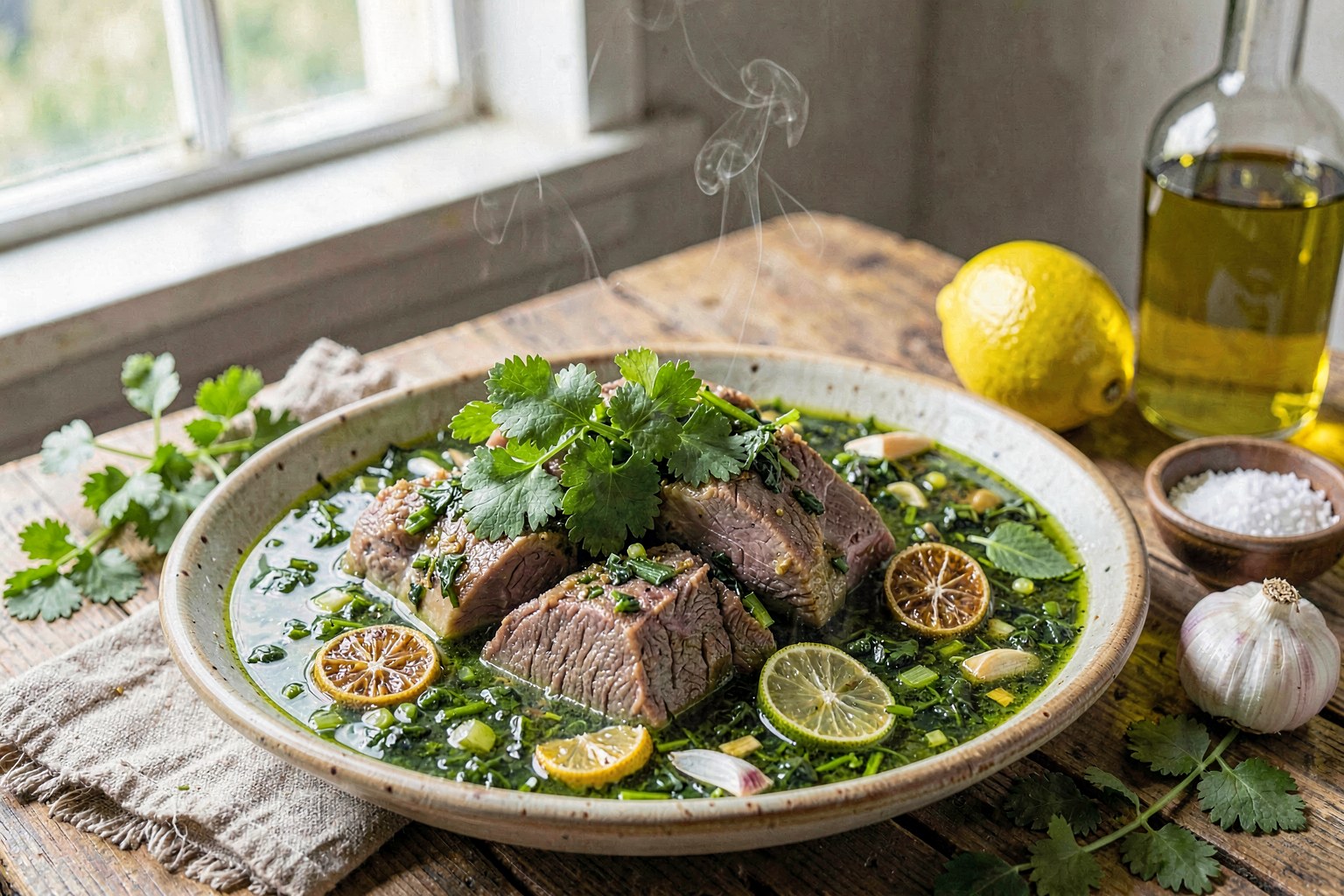
Ghormeh Sabzi-e-Yazd: Saffron-Infused Herb Stew with Wild-Caught Lamb
This Yazdi variation of the classic Persian herb stew features a deep, emerald-green broth made from a massive volume of fresh herbs, slow-simmered with tender, grass-fed lamb and tart dried limes. Served over a bed of saffron-infused basmati rice, the dish balances earthy, herbal notes with a bright, citrusy acidity, free from refined sugars and seed oils.
A little context
Originating from the arid, saffron-rich region of Yazd, this version honors the ancient Persian tradition of slow-cooking herbs until they turn black-green and mellow, while adhering to modern longevity standards. We have replaced any traditional clarifying agents or sugar used to balance the tartness with the natural sweetness of whole dates if absolutely needed, though the dried limes usually provide sufficient complexity. The cooking fats are strictly limited to grass-fed ghee or extra-virgin olive oil, eliminating the inflammatory seed oils often found in modern adaptations.
The longevity story
This stew is a powerhouse of polyphenols, primarily from the massive volume of parsley, cilantro, leeks, and fenugreek, which offer potent anti-inflammatory and antioxidant support. The use of dried limes (limoo amani) provides a rich source of vitamin C and citric acid, which aids in iron absorption from the grass-fed lamb. Grass-fed meat contributes a superior fatty acid profile, including higher levels of omega-3s and CLA compared to grain-fed alternatives, while the slow-cooking process breaks down tough connective tissues into bioavailable collagen and gelatin for gut lining integrity.
Method
- 01
Prepare the Herb Base
In a food processor, pulse the washed and dried herbs (parsley, cilantro, fenugreek, leeks) until finely chopped but not puréed. You need a massive volume; the herbs will reduce significantly during cooking. Set aside.
- 02
Sear the Lamb
Heat 2 tbsp of extra-virgin olive oil or grass-fed ghee in the Dutch oven over medium-high heat. Season the grass-fed lamb cubes generously with sea salt. Sear in batches until deeply browned on all sides, about 3-4 minutes per batch. Remove and set aside.
- 03
Sweat the Herbs
Reduce heat to medium-low. Add the remaining oil to the pot. Add the chopped herb mixture. Stir frequently for 15-20 minutes. The herbs must sweat down, lose their raw brightness, and turn a dark, deep green. This step is critical for the authentic texture and flavor profile.
- 04
Simmer the Stew
Return the seared lamb to the pot. Add enough water to just cover the meat and herbs (about 1.5 liters). Add the pierced dried limes. Bring to a boil, then immediately reduce to a very low simmer. Cover and cook for 45 minutes, or until the lamb is tender and the oil has separated and floated to the top (a sign of doneness).
- 05
Prepare the Saffron Rice
While the stew simmers, bring a large pot of salted water to a boil. Add the soaked basmati rice. Par-boil for 7 minutes until the grains are tender on the outside but firm inside. Drain immediately.
- 06
Steam the Rice
Return the drained rice to the pot or a steamer basket. Drizzle the strained saffron infusion over the rice. Cover the pot with a clean kitchen towel and the lid to trap steam. Cook on low heat for 15 minutes until the rice is fluffy and golden.
- 07
Final Seasoning and Serve
Taste the stew. Adjust salt if necessary. The flavor should be earthy, herbal, and tangy from the limes. Serve the stew ladled generously over the saffron rice, ensuring each bowl gets some of the floating herb oil.
Nutrition facts
Per serving · 1 of 4- — Saturated
- 8 g
- — Polyunsaturated
- 3 g
- Carbohydrates
- 27 g
- — Fiber
- 12 g
- — Sugars
- 2 g
- Cholesterol
- 111 mg
- Sodium
- 1388 mg
- Potassium
- 2379 mg
Estimated from USDA FoodData Central for matched ingredients (86% ingredient coverage). Values vary with brand, preparation, and exact measurements.
Pro tips
- ✦The 'darkening' of the herbs is non-negotiable; if they remain bright green, the stew will taste raw and bitter. Patience here yields the signature Yazdi depth.
- ✦Source dried limes (limoo amani) from a specialty Middle Eastern grocer; they have a distinct smoky, citrus complexity that lemon juice cannot replicate.
- ✦When buying the herb mix, ensure the fenugreek leaves are fresh and not wilted; they provide the bitter-savory backbone of the dish.
- ✦If the stew is too thick, add hot water, not cold, to maintain the emulsion of the herb oils.
- ✦For a Blueprint-aligned boost, drizzle a final teaspoon of high-polyphenol extra-virgin olive oil over the hot stew just before serving.
Shop this recipe
As an Amazon Associate we earn from qualifying purchases.
Substitutions
- grass-fed lamb shoulder → grass-fed beef chuck or wild-caught beef marrow bones (Lamb is traditional, but beef works well if you prefer a milder red meat flavor.)
- extra-virgin olive oil → grass-fed ghee or tallow (Ghee has a higher smoke point for the initial sear and adds a nutty richness.)
Storage
Store in airtight glass containers in the refrigerator for up to 4 days; flavors deepen significantly after 24 hours. Freeze portions for up to 3 months. Reheat gently on the stovetop with a splash of water.
What to serve with it
- Hot green tea (sencha or gunpowder) to complement the herbal notes
- Sparkling water with a wedge of fresh lime
- A glass of dry, low-sulfite Pinot Noir or Sangiovese
- A side of plain, whole-milk Greek yogurt or labneh
FAQ
Why do the dried limes need to be pierced?+
Piercing the dried limes allows the tart, aromatic juices to release into the stew and prevents the whole fruit from bursting or becoming too bitter during the long simmer.
Can I make this without a food processor?+
Yes, but it will take significantly longer. You must mince the herbs by hand very finely to ensure they break down properly and release their oils during the sweating process.
Share this recipe
Notes from the community
Sign in to leave a note.
No notes yet — be the first.
You might also like