Fenugreek
A versatile legume seed and leaf with a distinct maple-like bitterness used widely in South Asian, Middle Eastern, and North African cooking.
What it is
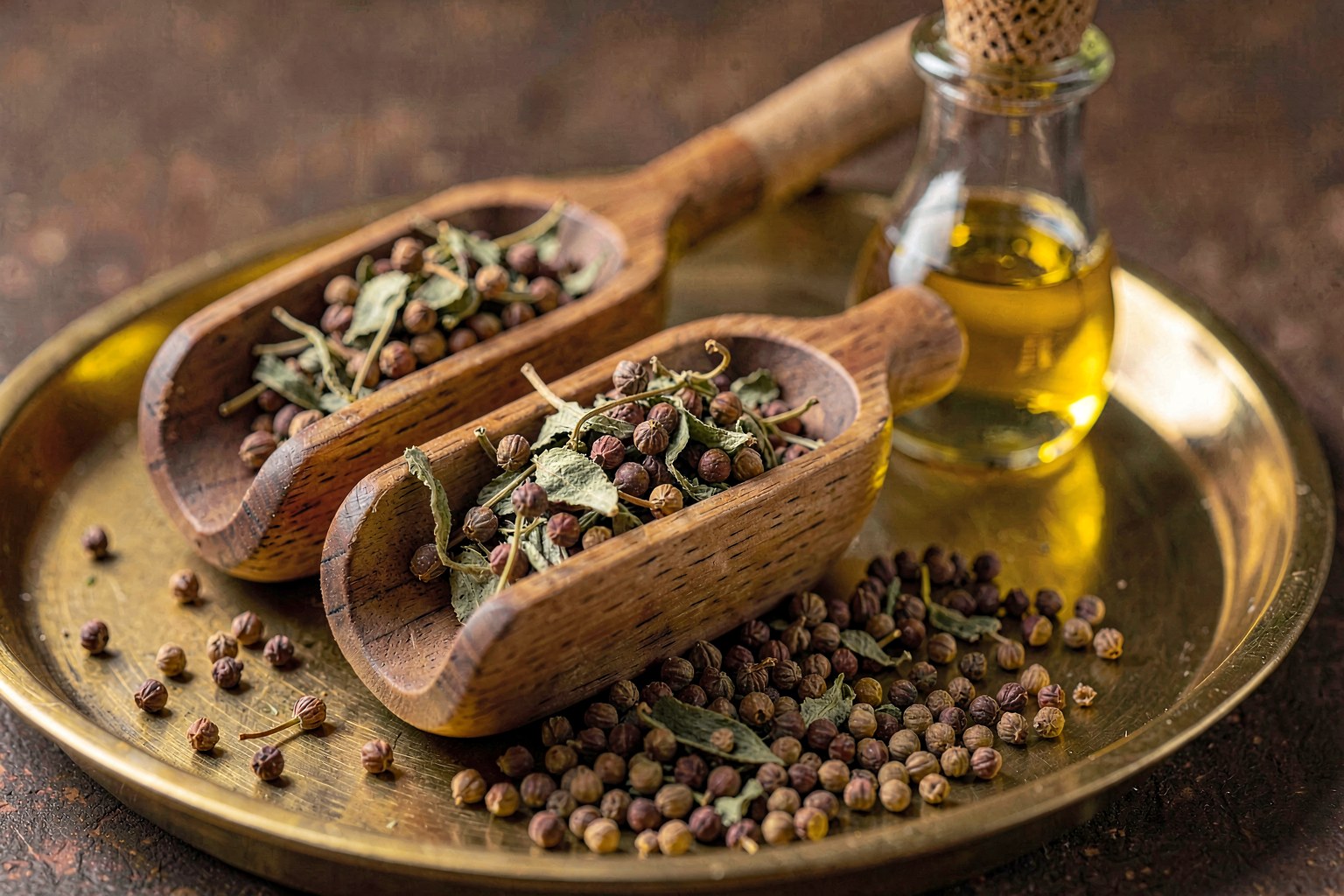
Fenugreek (Trigonella foenum-graecum) is a legume grown primarily for its seeds and leaves, known in India as methi. The seeds are small, hard, and yellowish-brown, while the leaves are delicate and fern-like. Both parts offer a distinct flavor profile characterized by a bitter, earthy base with a subtle maple-like sweetness. Culinary traditions rely heavily on this ingredient to add depth and complexity. In South Asian cooking, toasted seeds form the base of curry powders and pickles, while fresh leaves are sautéed into curries. In the Middle East and North Africa, the seeds are often ground into spice blends like hawaj or used in bread doughs. The bitterness is a feature, not a bug, providing a savory counterpoint to rich meats and heavy creams. Processing significantly alters the flavor. Raw seeds are intensely bitter and resinous, but dry-toasting them unlocks a nutty aroma and mellows the harshness. Fresh leaves must be used quickly as they wilt and oxidize rapidly. The dried leaf form, known as kasuri methi, is rubbed between hands to release oils before sprinkling over finished dishes like butter chicken.
How to buy
Prioritize whole seeds over pre-ground powder, as fenugreek loses potency quickly once crushed. Look for seeds that are uniform in golden-brown color; avoid any with dark spots or a dull, grayish hue. For dried leaves (kasuri methi), check that the packaging is opaque and airtight, as light degrades the color and flavor. Mainstream grocery stores often stock stale fenugreek in the spice aisle. For the best quality, visit an Indian or Middle Eastern specialty grocer where turnover is higher. Online retailers specializing in bulk spices are also reliable options, provided they guarantee freshness. Fresh leaves are rarely found outside of Asian markets and should be vibrant green with no slime or yellowing.
Storage
Store whole seeds in an airtight glass jar away from heat and light, where they will retain potency for up to two years. Ground fenugreek and dried leaves should be kept in the refrigerator to prevent rancidity and preserve their volatile oils, lasting about six months. Discard immediately if the aroma fades to nothing or develops a sour, musty smell.
How to use
Always toast whole seeds in a dry pan over medium heat until they darken slightly and release aroma; this prevents the raw bitterness from overwhelming the dish. Use sparingly, starting with 1/4 teaspoon per serving, as the flavor intensifies during cooking. If using fresh leaves, add them at the very end of cooking to maintain texture and color. A common mistake is burning the seeds, which turns them black and acrid. Keep the heat moderate and shake the pan constantly. When using dried kasuri methi, crush it between your palms to release the essential oils before adding it to the pot or garnishing.
Where it comes from
Fenugreek originates from the Mediterranean and Western Asia but is a staple in Indian cuisine, where it is considered both a spice and a medicinal herb. It is essential to the flavor profile of Ethiopian berbere and Middle Eastern spice mixes. Many cultures value it for its purported health benefits, including lactation support and blood sugar regulation, though its primary role in the kitchen is as a foundational aromatic that bridges sweet and savory profiles.
Substitutions
- Mustard seeds + Celery seed — Mimics the bitterness and earthiness but lacks the maple sweetness
- Curry powder + Maple syrup — Approximates the flavor profile in cooked dishes when seeds are unavailable