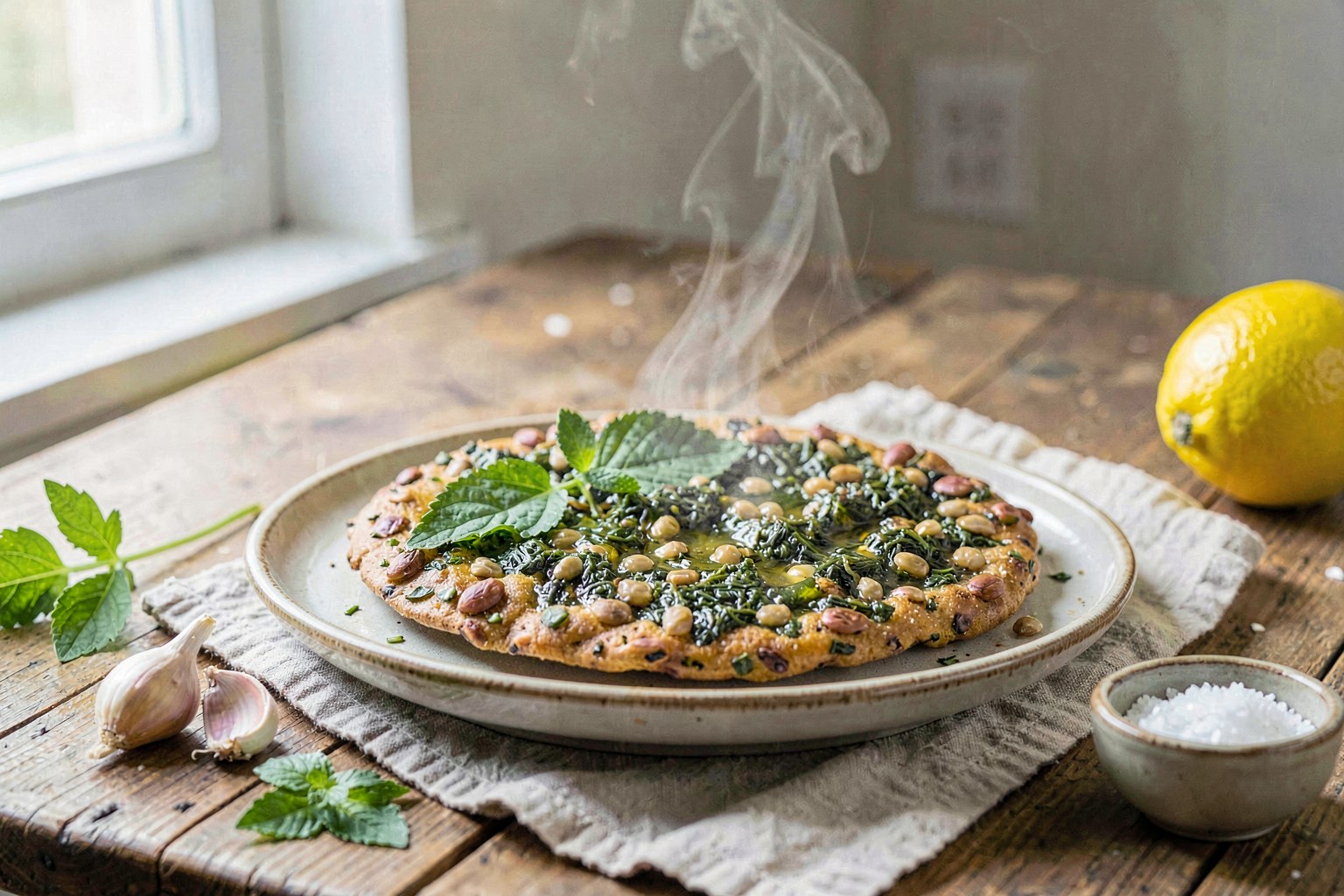
Methi Thepla (Ayurvedic Modern Tradition)
A savory, spiced flatbread made with fresh fenugreek leaves and sprouted whole grains, cooked in grass-fed ghee. This warming breakfast supports digestion and provides sustained energy without refined carbohydrates or inflammatory seed oils.
A little context
Originating from the Gujarat region of India, traditional thepla is a travel-friendly staple often made with refined wheat flour and neutral seed oils. We honor the tradition by using sprouted whole wheat and chickpea flour to lower the glycemic load, replacing seed oils with grass-fed ghee for warmth, and omitting the pinch of sugar often added to balance fenugreek's bitterness.
The longevity story
Fresh fenugreek (methi) contains 4-hydroxyisoleucine, which helps regulate insulin sensitivity, while the high fiber content supports gut motility. The spice blend delivers curcumin and gingerols, potent anti-inflammatory compounds that reduce systemic inflammation. Cooking with grass-fed ghee provides butyrate, a short-chain fatty acid essential for colon health, while sprouted flour improves mineral bioavailability compared to standard wheat.
Method
- 01
Prep the greens
Rinse the fenugreek leaves thoroughly to remove grit. Spin dry or pat with a clean towel. Finely chop the leaves until they resemble a coarse paste.
- 02
Mix the dry base
In a large bowl, whisk together the sprouted whole wheat flour, chickpea flour, cumin seeds, turmeric, and sea salt.
- 03
Combine wet ingredients
Add the chopped fenugreek, grated ginger, minced garlic, green chilies, yogurt, and olive oil to the flour mixture. Mix until crumbly.
- 04
Knead the dough
Add warm water gradually (approx. 60-80 ml / 1/4 cup) until a soft, pliable dough forms. Knead for 5 minutes until smooth. Cover and rest for 15 minutes.
- 05
Portion the dough
Divide the dough into 8 equal balls (approx. 65g each). Dust your work surface lightly with chickpea flour to prevent sticking.
- 06
Roll the theplas
Flatten a ball and roll it out to a 6-inch circle. The dough is sticky due to the greens, so dust lightly with flour as needed, but avoid drying it out.
- 07
Cook the first side
Heat the cast-iron skillet over medium heat. Place the rolled thepla on the skillet. Cook for 30-45 seconds until light brown spots appear.
- 08
Flip and add ghee
Flip the thepla. Brush the cooked side lightly with melted grass-fed ghee. Cook for another 30 seconds.
- 09
Finish cooking
Flip again. Brush the second side with ghee. Press gently with a spatula to ensure even cooking. Cook until both sides are golden and crisp.
- 10
Rest and serve
Stack the cooked theplas under a clean kitchen towel to keep them soft. Serve immediately while warm.
Nutrition facts
Per serving · 1 of 4- — Saturated
- 5 g
- — Polyunsaturated
- 2 g
- Carbohydrates
- 49 g
- — Fiber
- 5 g
- — Sugars
- 3 g
- Cholesterol
- 23 mg
- Sodium
- 534 mg
- Potassium
- 880 mg
Estimated from USDA FoodData Central for matched ingredients (83% ingredient coverage). Values vary with brand, preparation, and exact measurements.
Pro tips
- ✦Select fresh fenugreek that is vibrant green and crisp; avoid yellowing or wilted leaves as they taste bitter.
- ✦If the dough feels too dry, wet your hands with water rather than adding more flour to maintain texture.
- ✦Store leftover ghee in a sealed glass jar in the fridge for up to 3 months.
- ✦For meal prep, cook the theplas fully, let them cool completely, and freeze between parchment paper sheets.
Shop this recipe
As an Amazon Associate we earn from qualifying purchases.
Substitutions
- fresh fenugreek leaves → dried fenugreek leaves (kasuri methi) (use 2 tbsp dried, crumbled; texture will be less moist)
- grass-fed ghee → coconut oil (for a dairy-free option, though flavor will change)
- sprouted whole wheat flour → whole spelt flour (similar nutrient profile and gluten structure)
Storage
Cool completely and store in a glass container in the fridge for up to 4 days. Reheat in a dry skillet to restore crispness. Freezes well for 2 months.
What to serve with it
- Green tea with lemon
- Unsweetened almond milk
- Side of cucumber raita (grass-fed yogurt)
- Warm turmeric milk (golden milk) without sugar
FAQ
Why use sprouted flour?+
Sprouting breaks down phytic acid, making minerals like iron and zinc more absorbable and reducing the glycemic impact compared to standard white flour.
Can I make this gluten-free?+
Yes, substitute the sprouted wheat with a 1:1 gluten-free flour blend (brown rice + tapioca), but expect a different texture.
Is fenugreek safe for everyone?+
Fenugreek is generally safe, but those on blood-thinning medication should consult a doctor due to its natural coumarin content.
Share this recipe
Notes from the community
Sign in to leave a note.
No notes yet — be the first.
You might also like